12 Candidates of the "2007 French Presidential Election" Part 6
(Top left) Ségolène Royal of the Socialist Party, image from segoleneroyal2007.net. (Top right) Francois Bayrou of the UDF center-right, image from www.Bayrou.fr. (Center) Nicolas Sarkozy of the UMP party, image from sarkozy2007.for…
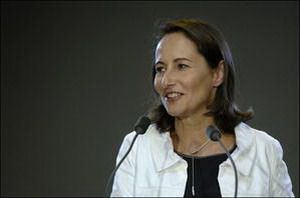

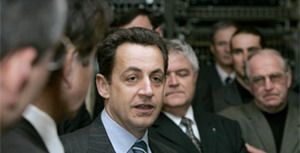

(Top left) Ségolène Royal of the Socialist Party, image from segoleneroyal2007.net. (Top right) Francois Bayrou of the UDF center-right, image from www.Bayrou.fr. (Center) Nicolas Sarkozy of the UMP party, image from sarkozy2007.forumactif.com. (Bottom) Jean-Marie Le Pen of the far-right National Front, image from www.frotnational.com. After more than a month of sponsorship by 500 elected mayors and local officials (as stipulated in Chapter 2 of the French Constitution), the Constitutional Council President officially announced the 12 candidates for the 2007 French presidential election on Monday, March 19. They are: Nicolas Sarkozy (52) of the UMP; Ségolène Royal (53) of the Socialist Party; Francois Bayrou (55) of the UDF center-right; Jean-Marie Le Pen (78) of the far-right National Front; Philippe de Villiers (58) of the MPF far-right; Dominique Voynet (48) of Les Verts; Marie-George Buffet (57) of the Communist Party (PCF); Olivier Besancenot (32), the postman of the LCR revolutionary party; Arlette Laguiller (67) of the Workers' Struggle (LO); Gérard Schivardi (56) of the Workers' Party (PT); Frédéric Nihous (39) of the Hunters and Traditionalists (CPNT); and José Bové (53), anti-liberal. The average age is around 53, with Jean-Marie Le Pen (78) being the oldest and Olivier Besancenot (32) the youngest.
The most striking aspect of 2007 is the presence of four female presidential candidates (all left-leaning, clearly revealing the traditional machismo of the French right). Unlike past elections where they were merely token figures, Ségolène Royal’s potential election as France’s first female president seems almost unimaginable. There are five right-wing and far-right candidates (center-right candidate Francois Bayrou belongs to the right), and seven left-wing and far-left candidates. Consequently, the left, especially the Socialist Party, fears a repeat of the 2002 upset. While the first round naturally features diverse political viewpoints on France’s future, these smaller parties and candidates will likely influence the second-round runoff. Their vote percentages become resources for major party coordination and political interest allocation, especially since parliamentary elections follow immediately.
The presidential campaign enters the official pre-election period starting today (the formal election period begins in early April). Under the Constitution, all candidates have equal access to mass media (especially all French TV and radio), whereas previously media favored popular candidates. This is now the time for lesser-known candidates to articulate their policies. Recall the strong performance of minor candidates in 2002 (when there were 16 candidates, compared to 12 this year), who quickly won over voters and saw their poll numbers rise unexpectedly, adding surprises to the race. Will there be another extraordinary surprise this year? Current polls show the four main candidates account for 90%: Nicolas Sarkozy (UMP) at a steady 29%; Ségolène Royal (Socialist) averaging 26%; Francois Bayrou (UDF center-right) surprisingly at 22%; and Jean-Marie Le Pen (National Front) rising to 12.5%. Olivier Besancenot (LCR) is the dark horse among minor candidates at 2.5%, preferred by extremists even over PCF’s Marie-George Buffet. Votes for minor candidates are largely protest votes against the current political system. Since 2002, voter apathy has grown in all elections, with abstentions or blank ballots exceeding 50%. While the merits of democracy are evident, its flaw—electing a president representing everyone with only 30% of the vote—is uncorrectable. Who can truly accept this? Is this the regret of democratic politics?