Florian Fouche Solo Exhibition "Low-Bass Constellation"
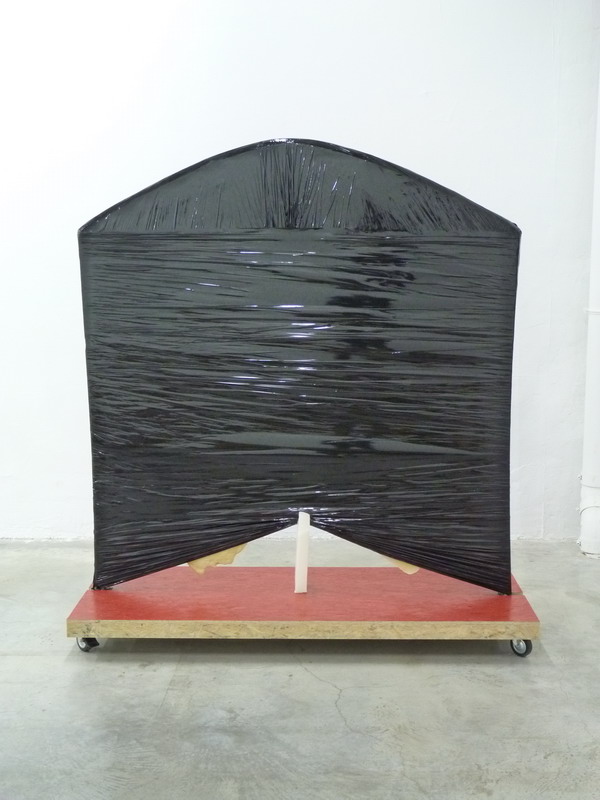
Infernum Object Sculpture 190x160x35cm 2009
Florian Fouche's solo exhibition "Low-Bass Constellation" runs from April 1 to May 2 at the Palais de Tokyo in Paris. The Palais de Tokyo is a temple of contemporary art in Paris and, for me, an observatory of European contemporary art, as its exhibitions aim to articulate current situations and propose future prospects. Each exhibition addresses diverse artistic trends and fluctuating political, economic, and social circumstances, depicting the diversity, breadth, or depth of exploration in the present. Besides regularly exploring topical and pioneering themes, the venue hosts two or three solo exhibitions by emerging artists each month in the front hall's "Modules" series. These emerging artists are young elites from across Europe (mostly under thirty), some still studying and others having dropped out. From these diverse and multifaceted exhibitions, one can glimpse forming artistic trends and possibilities for the future, exerting considerable influence and inspiration in nurturing new talent.
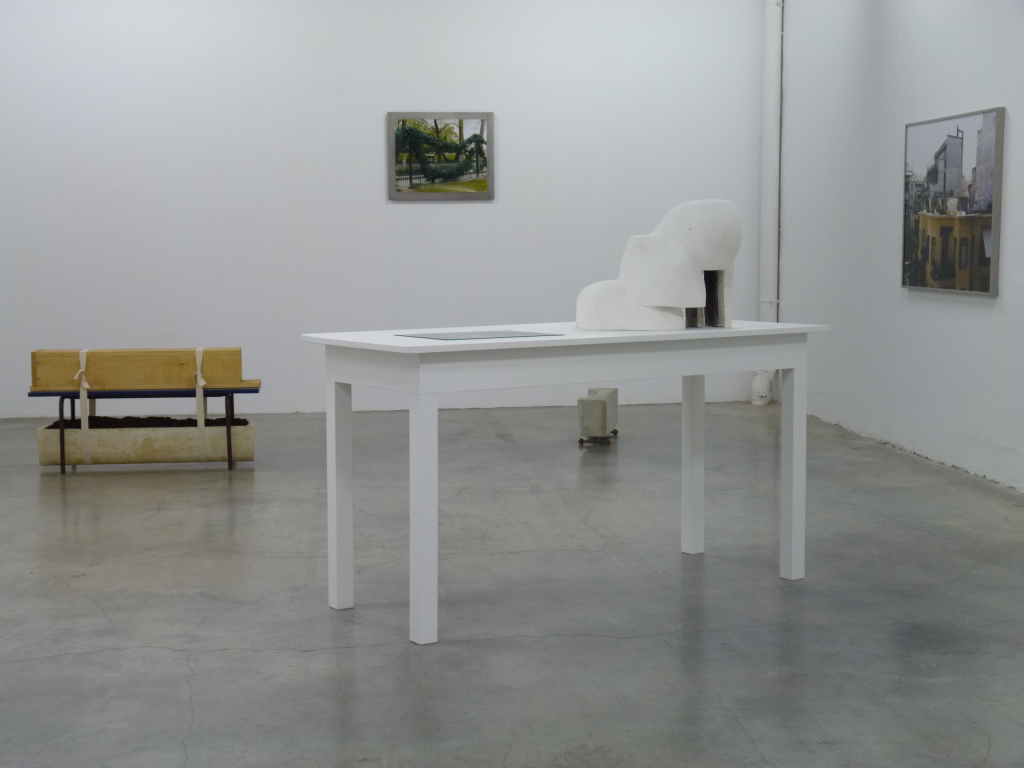
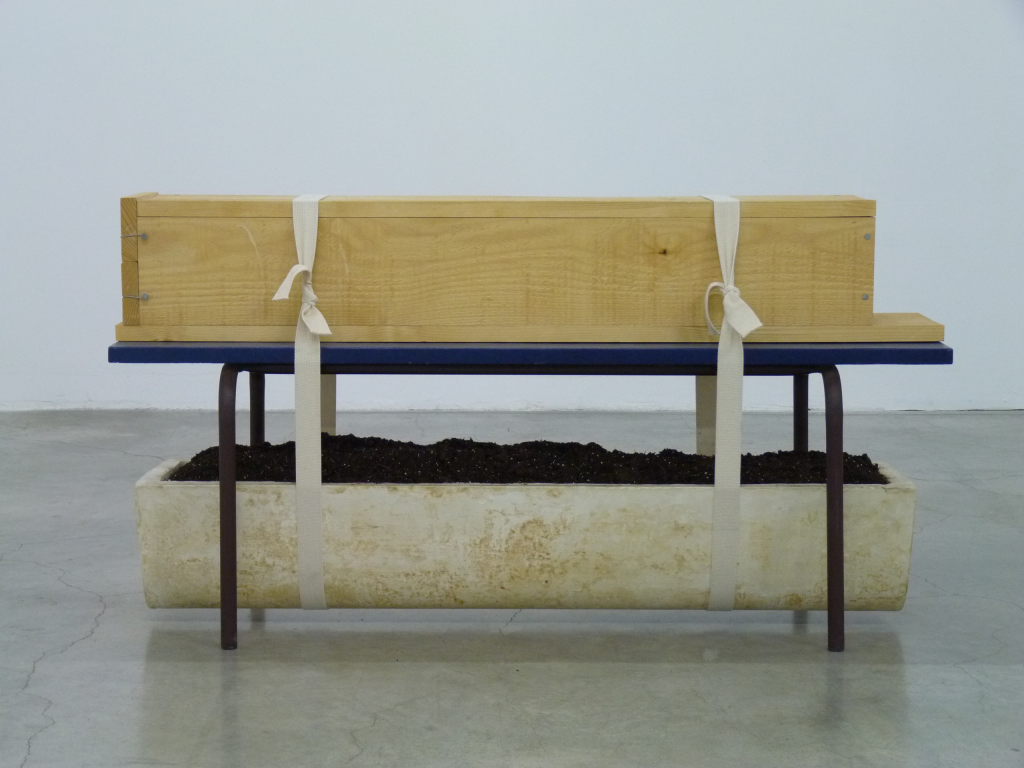
Florian Fouche (born 1983) is a French emerging artist who demonstrates a pluralistic sculptural vocabulary: composite structures, convergence of different elements, material participation, and replica objects, clearly dialectic between figurative and abstract. His poetic "Low-Bass Constellation" metaphorically presents works, or the extraordinary relationship between works and space. Five sculptures of different styles each radiate a unique world. The ingenious "The Last Hive": a geometric rectangular wooden board placed on a long bench, with a long flowerpot filled with soil suspended beneath the bench by two cloth ropes, contrasting forms suggesting urban or village settings. The enigmatic "Infernum": constructed from a large irregular black plastic frame on red roller skates, combining a guillotine and screen imagery, full of visual intensity, drama, and death rituals. Recalling ancient and modern times, the work "Uhccip uhcam /Piccham chuU" presents a white fortress-type architectural model on a white table, alongside a photograph of an architectural model, introducing a novel perspective on ancient Inca civilization architecture through its theme. The unusual "Open Model" consists of three slender sugarcane boards vertically arranged to form a triangular structure, metaphorically representing rural geometry within geometric and architectural order.
Three photographs on the wall provide a distant view of sculptural reality, under the forms of the urban world and natural parts. The photographs focus on these details: the side of a staircase, a string of floral plant decorations, and a floating sheet: seemingly detached from their background, they elucidate the existence of objects without concern.