2018 AICA International Association of Art Critics: Taipei World Congress Agenda
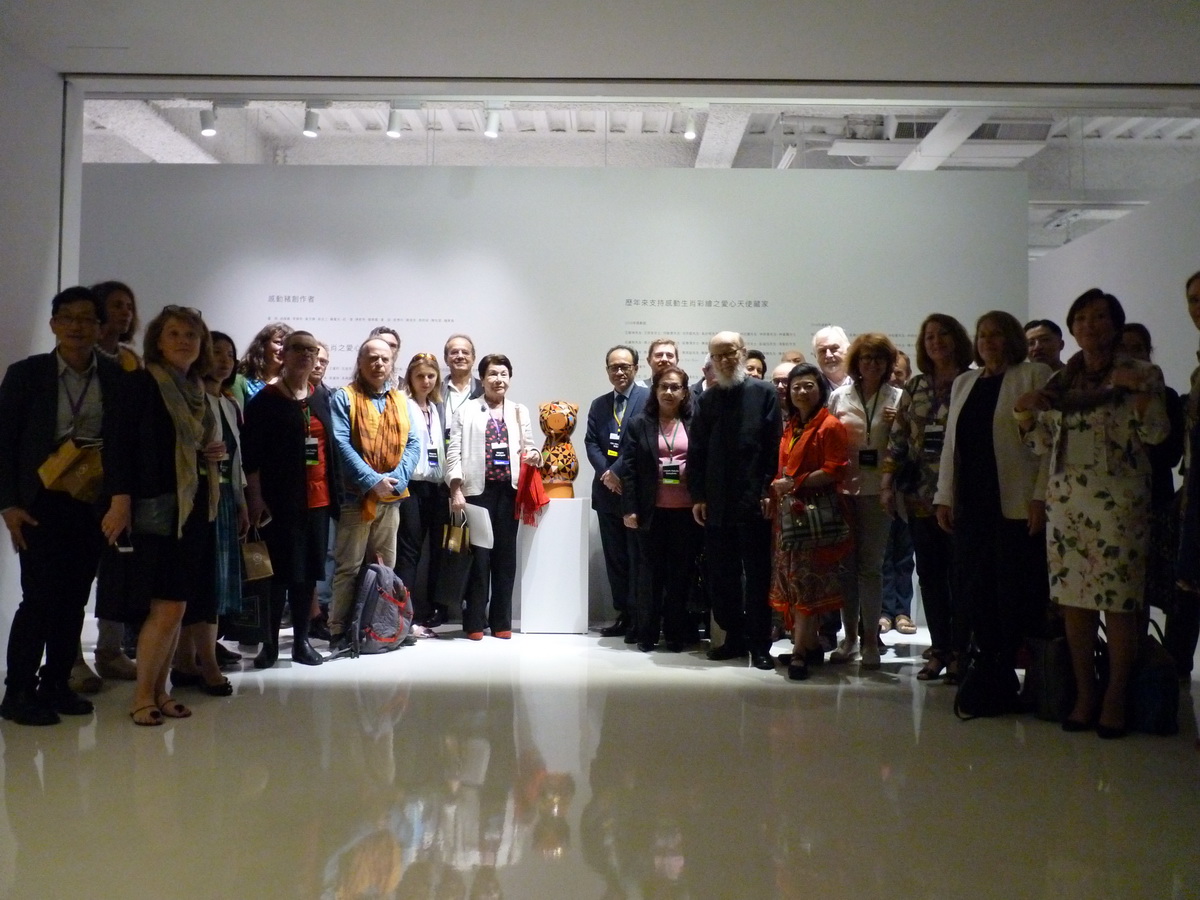
A group photo of all attending international scholars and delegates taken during their visit to the Hsueh Hsueh Cultural Creative Center and at the dinner.
Text and photos by Chen Chi-Hsiang. The 2018 AICA World Congress was held again in Taipei, marking the most grand international event in Taiwan’s art scene at year-end. This 51st International Art Critics Conference gathered critics from over 20 countries worldwide in Taipei, holding special significance for Taiwan by enhancing its international visibility and helping to build its future. It also represents the result of the Taiwan branch’s united efforts, led by President Lin and the board members, to resist Chinese interference in the Taiwan branch’s right to speak at international conferences in recent years. Their perseverance led to a vote by the General Assembly granting Taiwan the host rights for this year’s World Congress, allowing it to continue exerting influence internationally and showcasing its rich soft power.
The Taiwan branch previously hosted the World Congress in 2004 under the theme “Regionalization of Art Criticism – Its Possibilities and Global Positioning.” Gaining the host rights again in 2018 demonstrates the stable development of our art industry and criticism, recognized by the international general assembly. This year, keeping pace with the times, the annual theme is “Art Criticism in the Age of Virtuality and Democracy,” exploring discussions on how new media art (especially digital art and artificial intelligence) technological developments impact democracy and daily life. During this Taipei World Congress, the Asia-Pacific International Art Critics Award was established to encourage emerging critics, and the Outstanding Art Critics Contribution Award was presented for this session.
The AICA Taipei World Congress agenda took place on November 14–15 at the Yuhsien Hall of National Taipei University of Education over two days. The first day focused on council affairs, which I did not attend. The second day centered on Taiwan’s consensus strategy, requiring all international critic members to participate in electing the Secretary-General, two Vice-Presidents, and ten International Councilors. Taking advantage of this opportunity to consolidate Taiwan’s recent status, besides hosting the World Congress, the Taiwan branch actively engaged in AICA General Assembly affairs. Taiwan branch president Lin Shih-Ming became a Vice-President of the AICA General Assembly, and three Taiwan branch members were elected as International Councilors, laying the foundation for the future prospects of the Taiwan branch. Resisting Chinese interference depends on the Taiwan branch’s active operations and performance within the General Assembly, which holds important significance for building future regional and global cultural and artistic platforms. We look forward to continuing to strive for Taiwan’s recognition.
After a full day of the International Art Critics Annual Conference agenda and elections, the conference proceedings were successfully completed. All attending international scholars and delegates visited the Hsueh Hsueh Cultural Creative Center together and attended a dinner, engaging in private dialogue and exchange.