The Grand Moulin New District
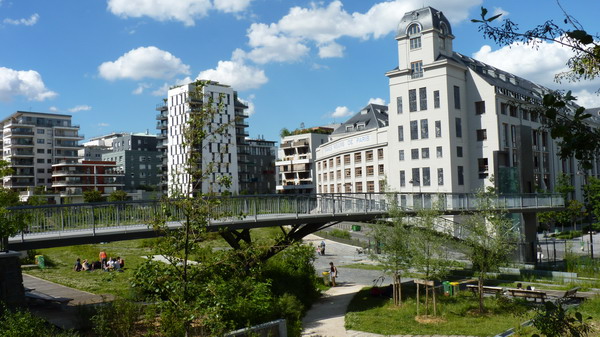
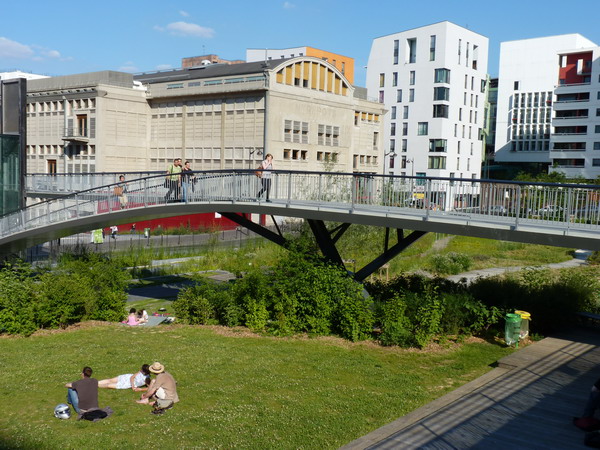
Grand Moulin - Abbe Pierre Garden is located between the flour mill-Paris VII University and a series of modern buildings.
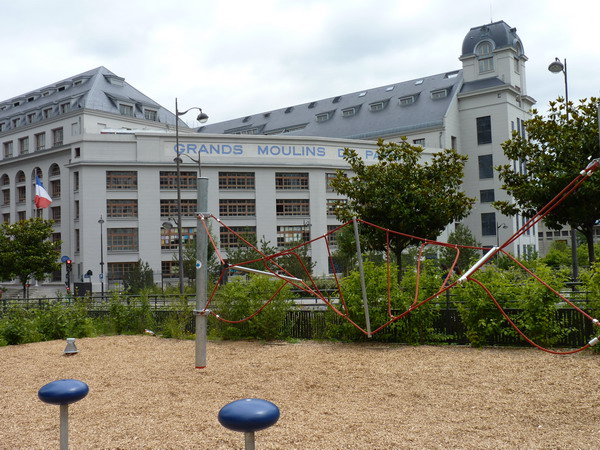
Opposite the main park lies a children’s leisure space. Paris, this classical and elegant metropolis, continues to expand vigorously and optimistically into the Greater Paris region, undergoing renewal and transformation in its aging districts. In this land-scarce city, almost all factories have relocated long ago, and vacant spaces are increasingly reused and replaced. Particularly on the northern and southern edges of Paris, over the past thirty years, the undergrounding of state railways or the warehouses near railway stations and their peripheral wastelands have been successfully renewed into emerging districts. For instance, in the 1990s, the Bercy area (Paris’s former largest wine cellar warehouse), from the indoor sports complex and Bercy Park to the St-Emilion-themed Bercy leisure village, has successfully become a model for new cultural and commercial communities in Paris. After the establishment of the Bibliothèque nationale de France (Mitterrand National Library), Europe’s largest library, at the edge of Paris’s 13th arrondissement in the 1990s, the abandoned fringe areas were rapidly driven forward. Especially with the recent continued undergrounding of the Austerlitz train station, along with the large warehouses and long-vacant flour and brick kiln factories along the line, new buildings and public facilities in the emerging community have sprung up like mushrooms over the past twenty years. The past fringes have gradually become today’s emerging districts. The core of metropolitan life has also changed with the urban renewal and growth. The emergence of the Grand Moulin new district has become an emerging academic and residential area. The former Grand Moulin flour mill and its series of large vacant warehouse spaces have been revitalized, becoming Paris VII University. The brick kiln factory near the Paris ring road has become the Paris School of Architecture; preserving the original appearance of the past architecture, it is surrounded by private office buildings and private residences that are quite modern or postmodern in style.
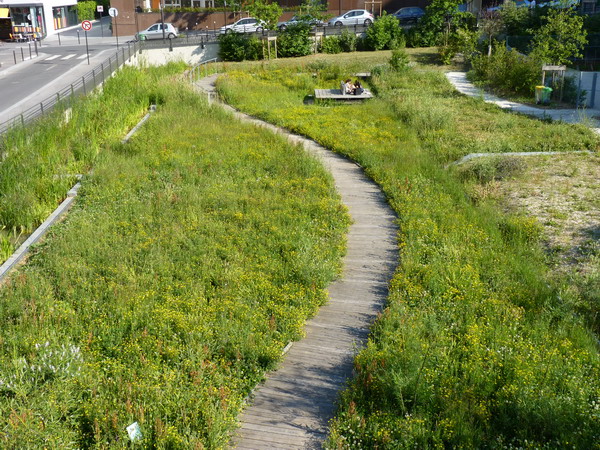
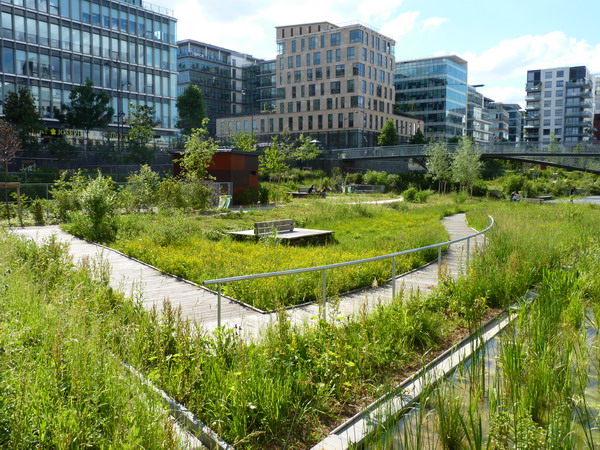
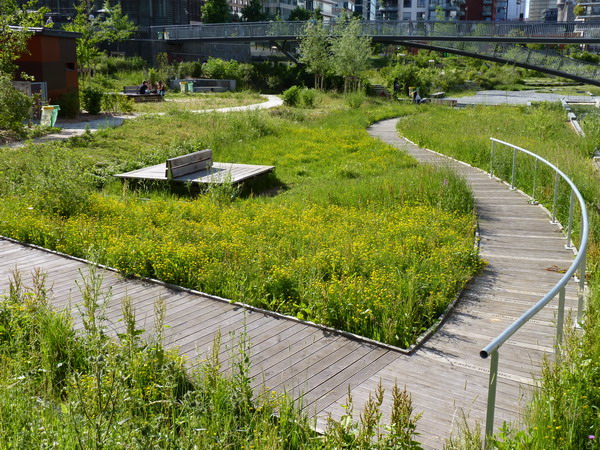
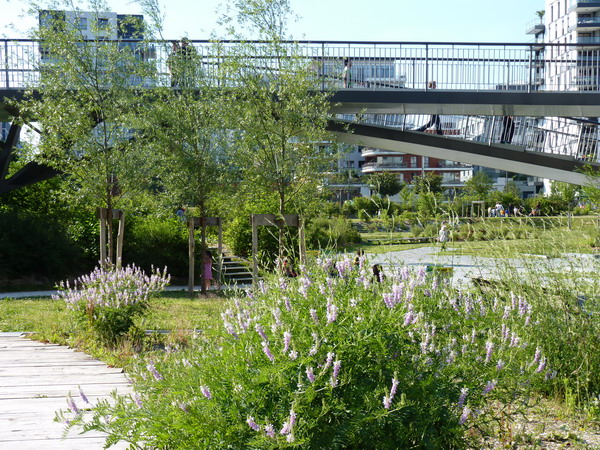
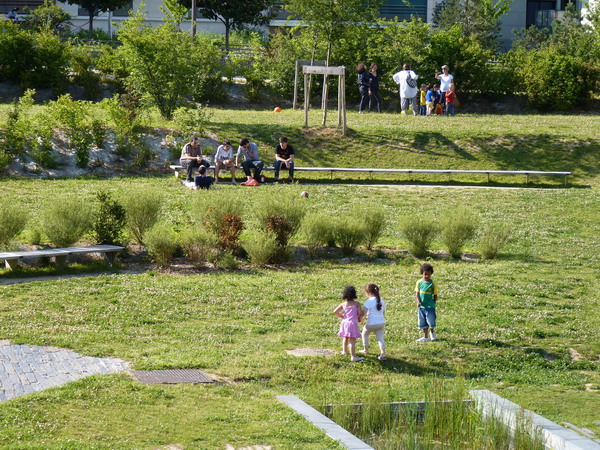
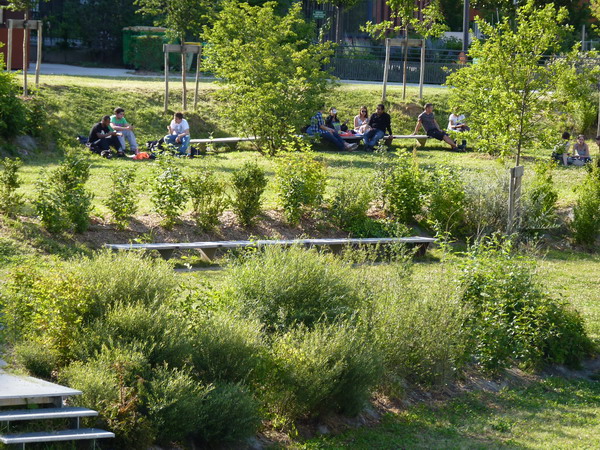
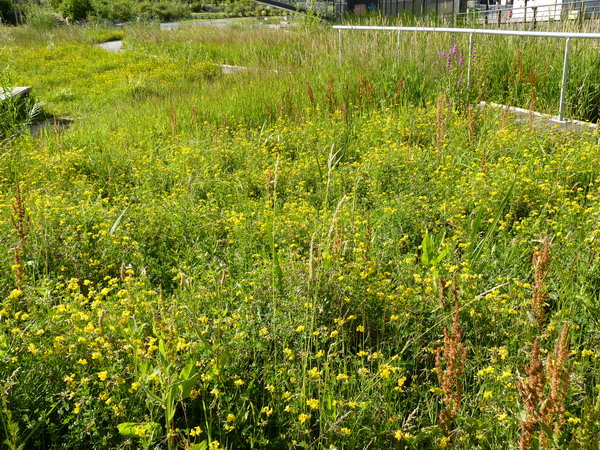
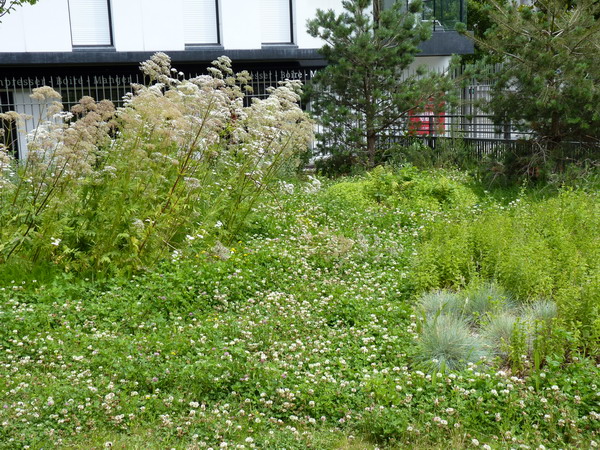
The Grand Moulin - Abbe Pierre Garden is located between the flour mill-Paris VII University and a series of modern buildings. Due to the sloping terrain, a pedestrian bridge crosses through the middle. The lush green park is shaped like a narrow rectangle, forming several layers of wave-like structures, with patches of verdant wildflowers blooming brilliantly. On the right, a wooden boardwalk path runs through, featuring two leisure lounge chairs (where one can lie down for sunbathing or sit with friends to chat). Along the edge is a narrow, shallow pond planted with aquatic plants. On the left, a three-tiered slope structure features small shrubs planted on each tier, along with a series of long wooden benches and seats surrounding lawns of colorful wildflowers. It is a good place for students and local residents to relax, as well as a space for children to play. Opposite the main park, surrounded by modern apartments, lies the extension of this garden, which serves as a comprehensive children’s leisure space equipped with various sports equipment, surrounded by lush green wildflowers. Clearly, the construction of the Grand Moulin - Abbe Pierre Garden reflects contemporary environmental awareness, where natural ecology and the urban environment form the main body, and wildflowers play their most natural role, shaping a new vision of urban ecology.