Spain's Andalucia
Surprised to encounter many Carmen statues in Seville.
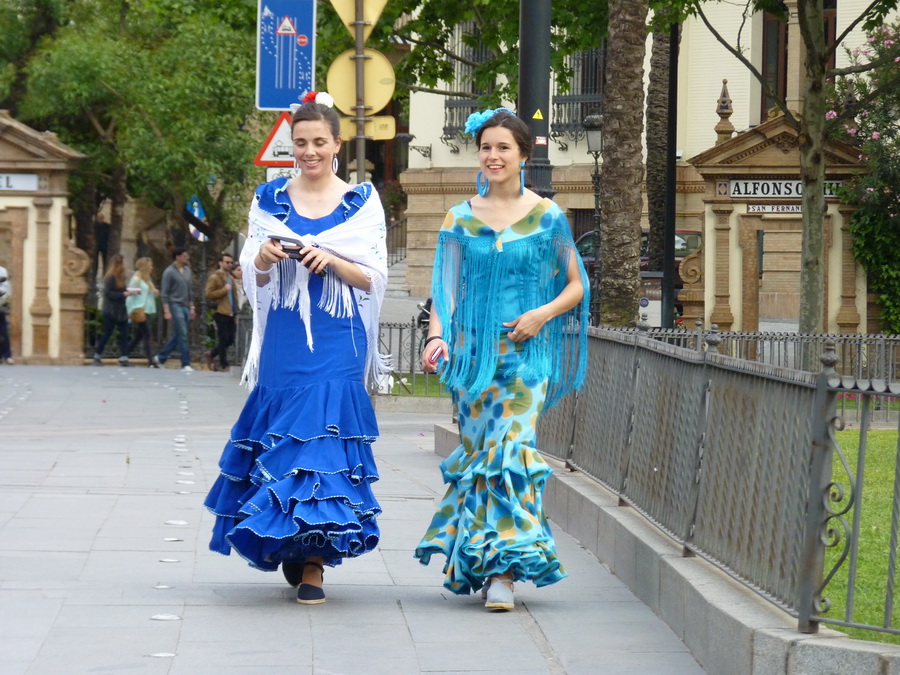
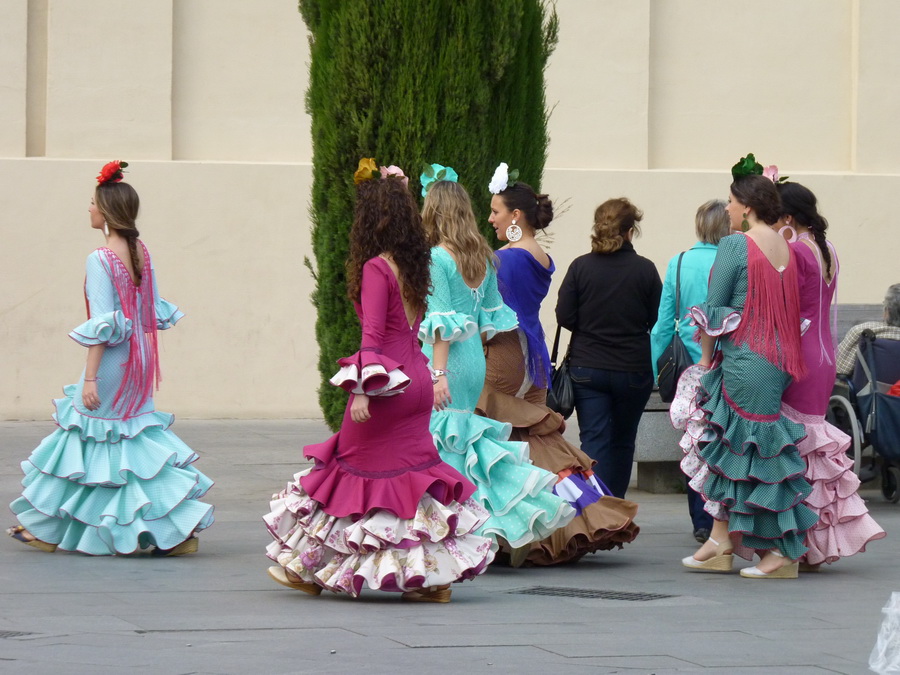
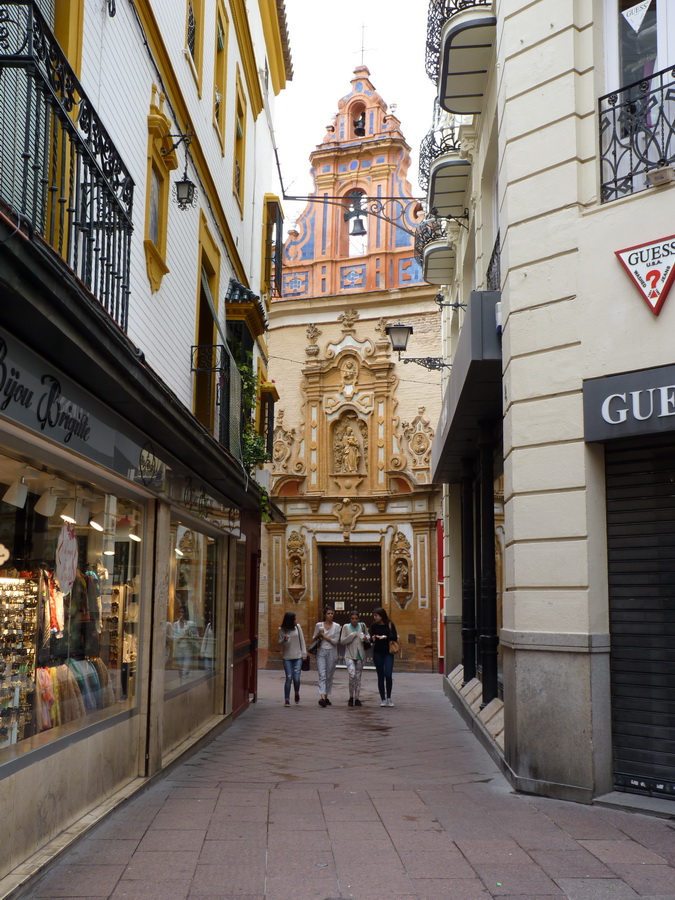
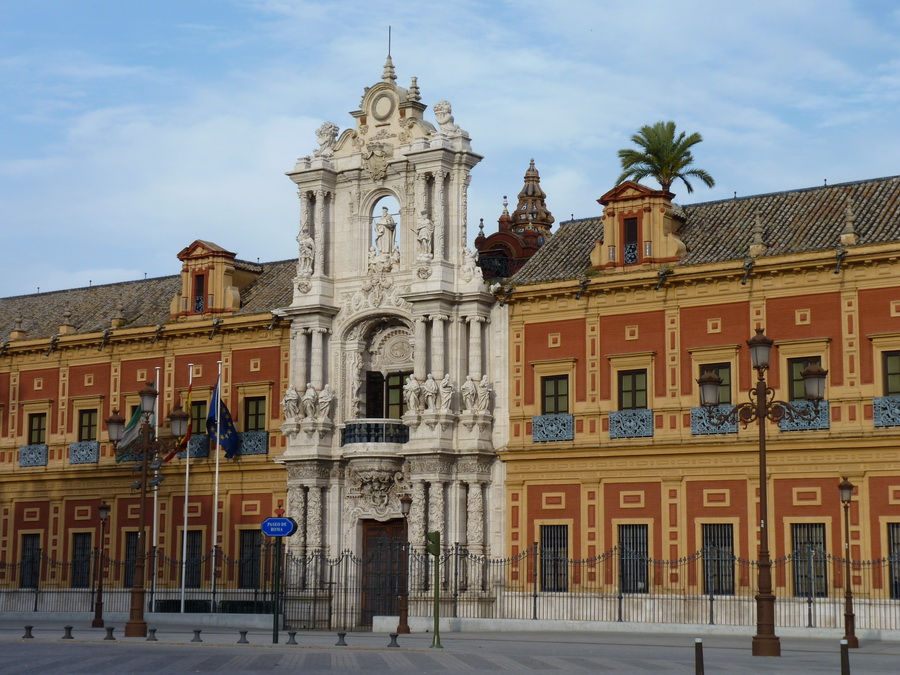
By Chen Chi-Hsiang. The warm climate, flora, and people’s hospitality of Andalucia remind me of my hometown, Taiwan. As the sunniest region in Spain, it was once ruled by Arabs during the Middle Ages, leaving behind exquisite Moorish architecture, perfect gardens, and cultural customs that have blended with Spanish culture to form Andalucia’s unique humanistic scenery and aesthetic. Its geography makes one feel as if transported to the distinctive atmosphere of North Africa, making it a global travel destination. Exploring its hidden gems centers on Seville, expanding to two small towns nearby. We first visited Cordoba for sightseeing, then Granada to seek tranquility; seeing the Alhambra Palace and its classic gardens in person is worth more than hearing about them a hundred times. Returning from Granada to Seville, we encountered the Carmen opera theater.
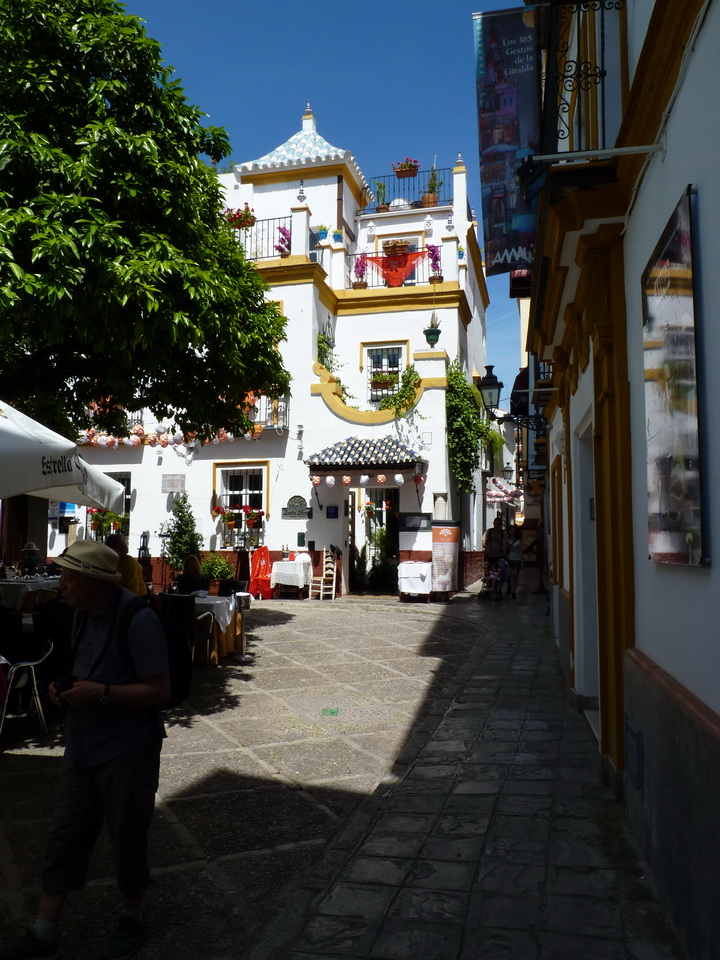
Whenever Spain’s Andalucia is mentioned, people think of the passionate, dramatic “Carmen.” This famous opera is set in Seville, a city made familiar by the play. I was surprised to encounter numerous Carmen statues throughout the city, fueling my imagination of Carmen. Seville is the hometown of 17th-century Spanish painters Velazquez and Zurbaran, and was the European Capital of Culture in 1992, hosting the World Expo that same year. The metropolis is divided into two halves; the most tourist-friendly is the old district, a maze-like collection of alleys where even with a sense of direction and maps, one often gets lost. The modern area of Seville lies on the right bank of the Guadalquivir River, site of the 1992 World Expo and now the Contemporary Art Museum of Andalucia. Climbing the Metropol Parasol offers a distant view of the new bridge shaped like a sailboat.
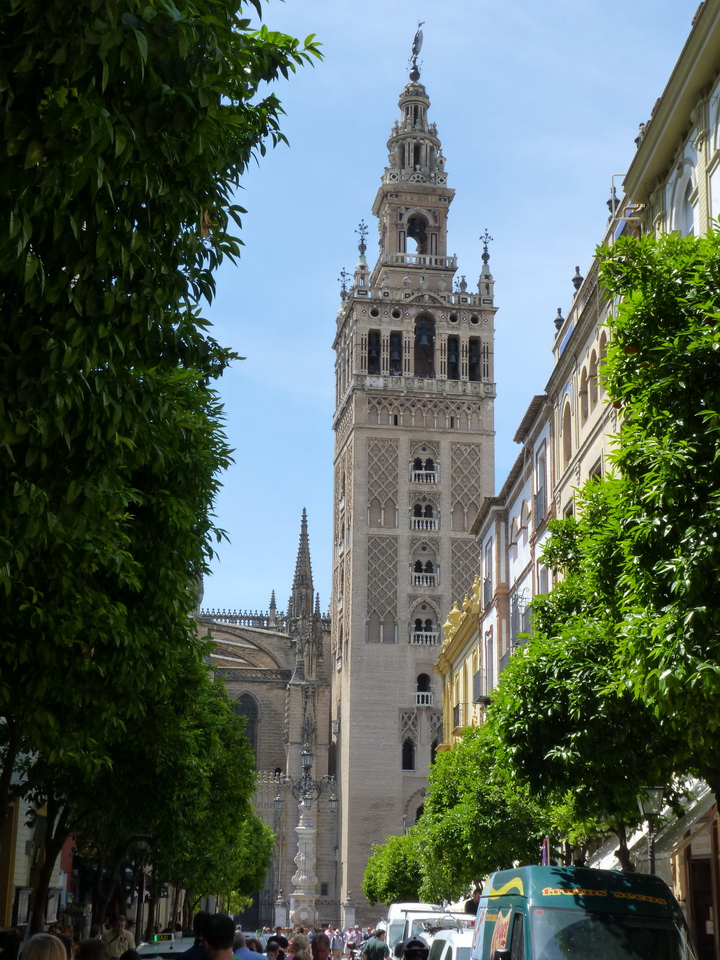
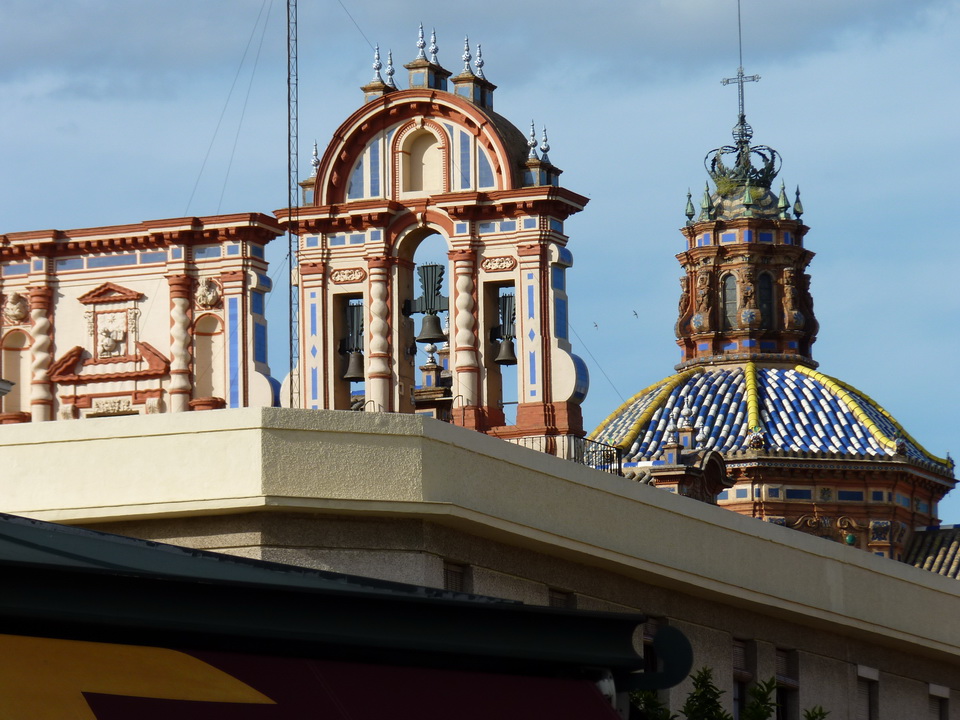
Seville is a place with strong religious traditions, filled with colorful churches and convents of all sizes in its streets and alleys. The cathedral, towering over the entire metropolis, is particularly striking. Besides its Gothic exterior, almost everything else resembles Renaissance architecture, reminiscent of Florence, Italy. The most representative building is the Arab palace and garden (Real Alcazar) locked within medieval city gates next to the church. Its antique charm transports visitors through a time tunnel to typical medieval Arab civilization, awakening spiritual consciousness and praising humanity’s grand intellect and refined arts.
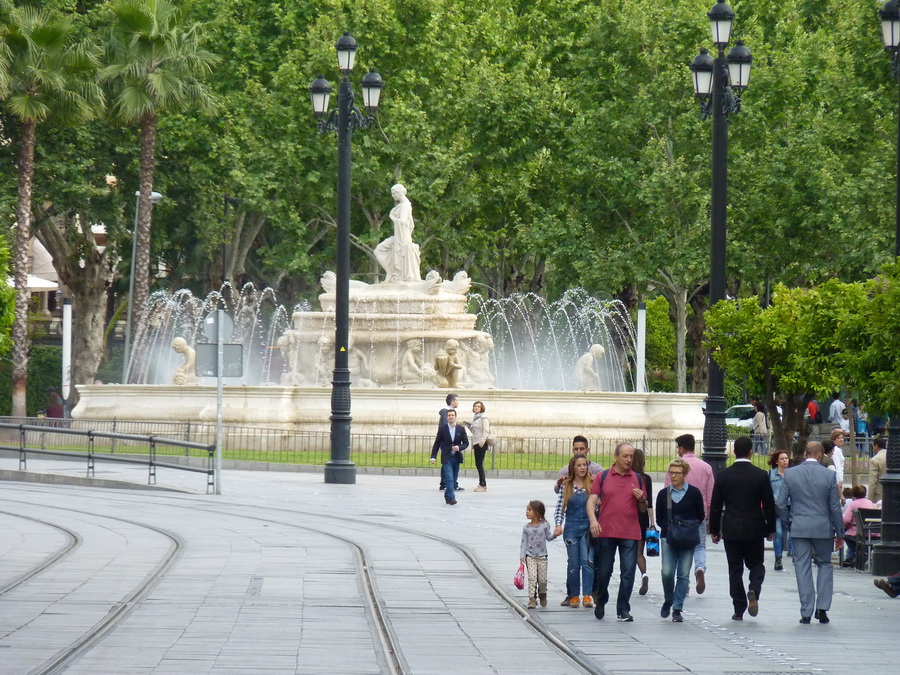
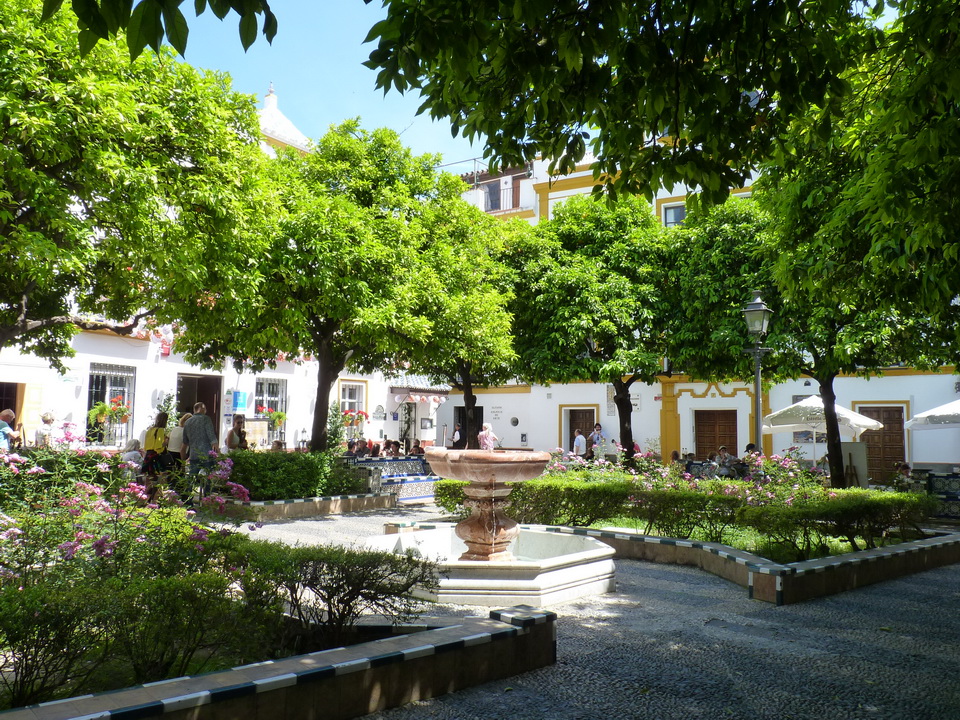
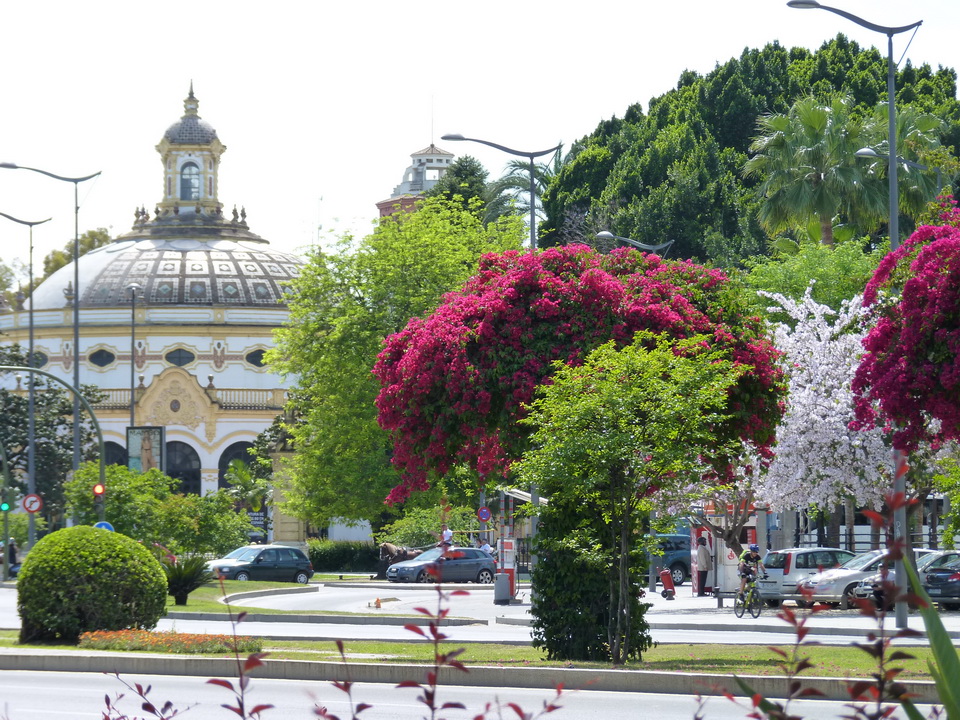
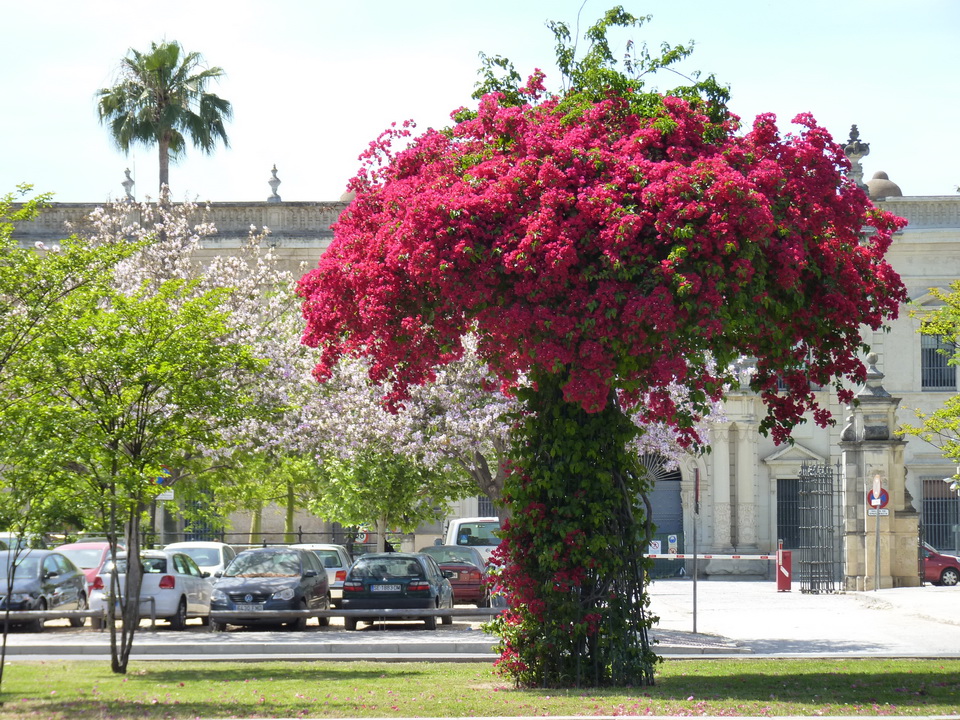
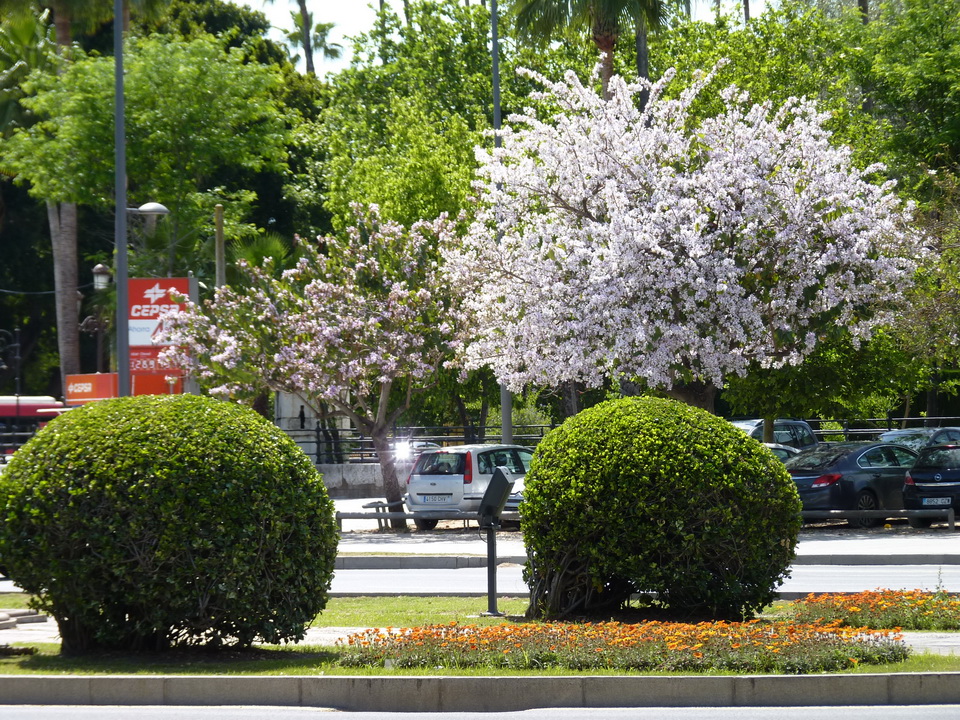
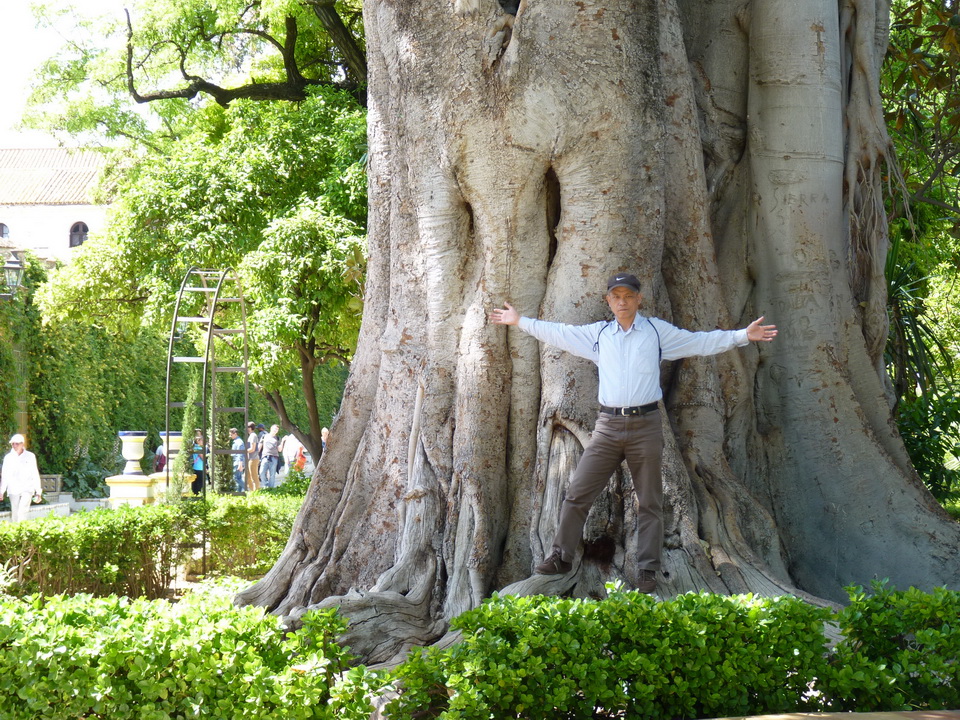
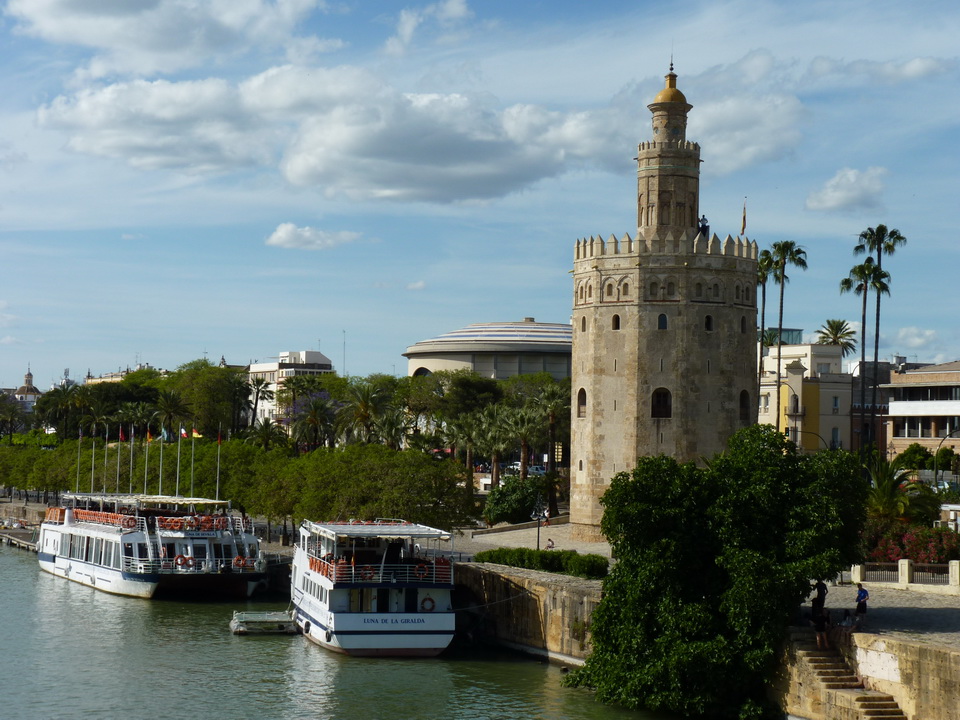
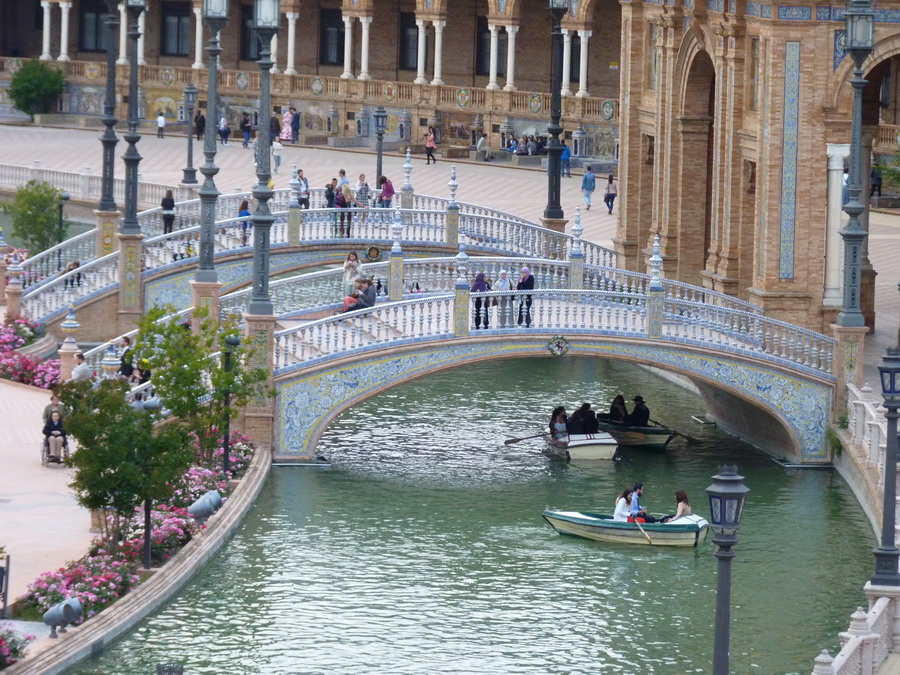
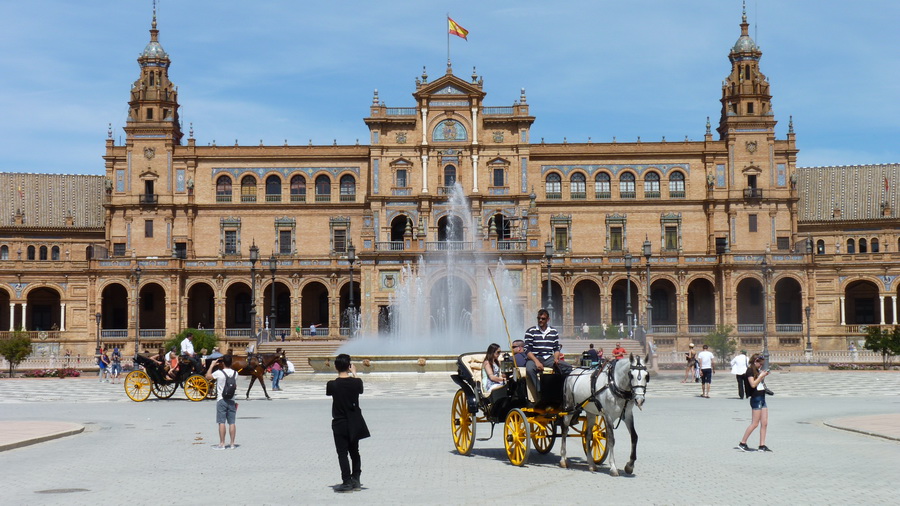
Seville is a city suitable for leisurely strolls, bustling and rich in culture, becoming the most attractive tourist area in Spain (rivalling Barcelona). A winding Guadalquivir River cuts through the city, offering bright riverside scenery, green parks of various sizes, and diverse tree-lined pedestrian paths. Especially during this springtime when the goddess of spring dances, the climate is mild and warm without cherry blossoms; instead, vibrant purple Indian almond trees bloom brilliantly, attracting tourists’ eyes. Most notable to me are bougainvillea cases used as street trees—truly worth observing elsewhere, thinking that many places in Taiwan also deserve our learning. Among the numerous green spaces and parks, the most famous are the classic Arab garden of Real Alcazar, the breathtaking Pilatos Palace Garden, and the lush Maria Luisa Park in front of the Plaza de España. Many centuries-old trees astonish visitors; especially in the Pilatos Palace Garden, three trunks thicker than my thighs and branches surpassing my arms create a dazzling, confusing expanse of purple, wow! Indoor potted ornamental plants also become magnificent giants (please refer to the pictures), truly unimaginable, with a natural sacred beauty beyond words, so stunning.
Travel everywhere brings surprises, broadening horizons and vision. Indeed, seeing is better than hearing ten thousand times; traveling ten thousand miles is better than reading ten thousand books. Such knowledge and experience provide direct, bodily and spiritual sensations.