András Halász: Extraordinary "Everyday Realism"
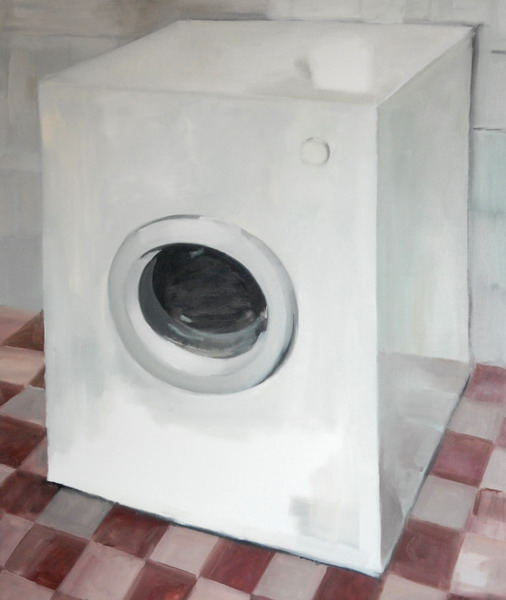
Between figurative and abstract, painting of everyday objects: Washing Machine, oil on canvas, 60x80 cm, 2007.

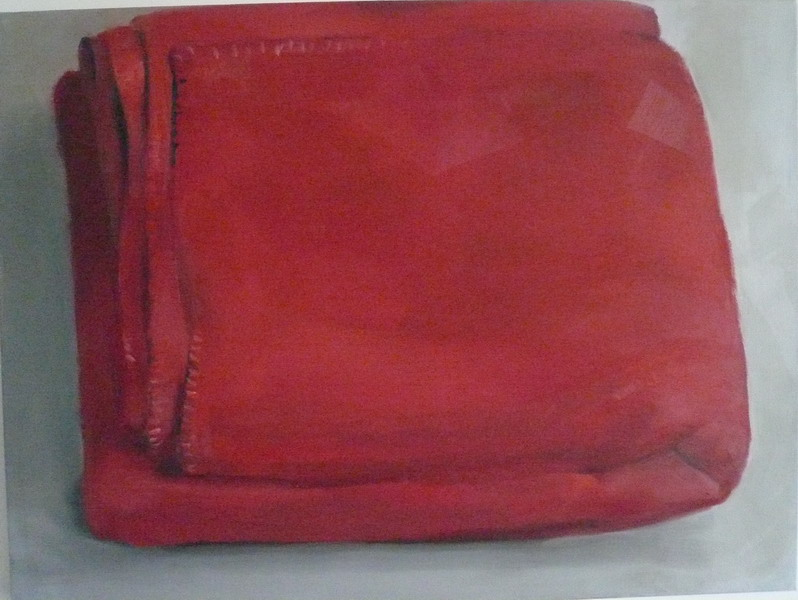
The most pure red blanket - minimalist form painting, oil on canvas, 60x80 cm, 2005-06. András Halász (born 1946 in Budapest, Hungary) is a representative painter of extraordinary everyday realism today. By quietly observing the scenes and objects around him, he transforms mundane things into paintings with a keen eye, embodying deep daily life and existential consciousness within the realms of figurative and abstract, form and color, imagination and space.
Born under socialism where art served society, he shaped the social realist art of the time—official art. Meanwhile, avant-garde art similar to Western progressive movements was banned, underground, and marginalized; free creation was suffocated by autocracy, unable to expand the horizon of thought or gallop through the imaginative space of art. Young András Halász belonged to the latter group; with an avant-garde spirit, he actively broadened artistic horizons. During his studies at the Academy of Fine Arts in Budapest, he established a plastic arts activity similar to international «Fluxus» performance art, called «Rózsa».
After graduating in 1976, he engaged in diverse artistic explorations: exhibitions, photography, prints, etc., which were quite conceptual and attracted attention from unofficial art circles. In 1978, he exhibited at the Youth Cultural Center in Székesfehérvár. He began collaborating with artist Zsigmond Károlyi to found the philosophical environmental movement called "Loss of Consciousness," mocking socialism at the time. The following year, after participating in an exhibition themed "Religion" with large-format photographic works, András Halász, feeling constrained, decided to go abroad. He first went to the art capital Paris, then to New York, USA, opening up an international macroscopic view of art and thought, allowing his imagination to soar.
In the 1980s, under the postmodern trend of returning to painting, András Halász entered the world of painting in 1982. His most famous painting at this time was "Black on Black," sensitively presenting a series of blacks in different tones. Works in the 1990s were organized around chance techniques, direct experience, and ontological archetypes. The 38-series graphic information pictures presented physical and philosophical harmonious relationships and unexpected phenomena within mathematical geometric disc methods. Next came the 1993 "Chelsea Billiard" series, painted on green carpet with dimensions exactly matching a billiard table, visually presenting reality. The following year, imagining his memories of military service in Budapest, the "Sleeping Soldier" series ironically depicted soldiers on coffee-colored covers. This was followed by the "New York is my Vietnam" graphic information series based on his personal life.
When Eastern Europe was liberated one by one with liberal democracy and the Berlin Wall fell, amidst an atmosphere of freedom and liberation, András Halász resolutely returned to his hometown Budapest to exhibit, holding a retrospective at the Ernst Museum. He exhibited new works—the Double Painting series—showcasing his studio space and imaginative world, contrasting two different social states and situations. Before the end of the 1990s, such conceptual paintings gradually faded away, while pure painting emerged prominently.
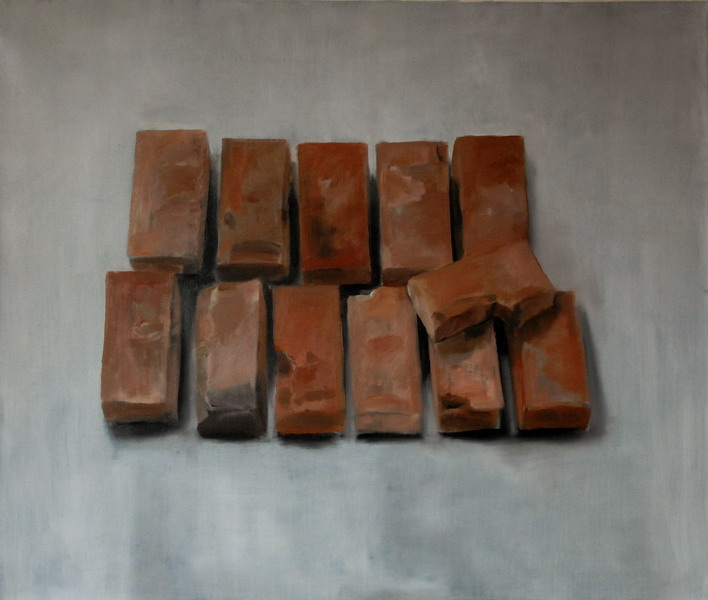
Under the new atmosphere of the new century, returning to the periphery of everyday life realism, the "Still Life" series depicts mundane everyday objects around him: such as sheets, wardrobes, computers, chairs, tables, washing machines, bubble wrap, bricks, and plastic bottles. Through purely plastic painting using the most traditional techniques, these objects are poetically manifested in an image-based, structured, and color-plane manner. In the atmosphere of contemplation, the artist stated: "The objects I paint have no meaning, silent gloom, Zen citations, or unexpected biblical inspiration."