Fra Angelico (Angelico 1387-1455) - The Annunciation (c. 1438)
The Annunciation (c. 1438), fresco, 216×321 cm, San Marco Museum, Florence. Fra Angelico's name means "Brother Angel"; he was a master who profoundly interpreted the spirit of Christ. In this new era of the Renaissance, he actively explored a completely new concept of space in his works, which posse
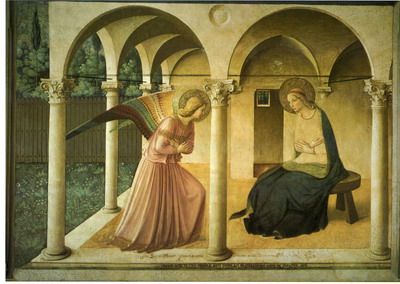
The Annunciation (c. 1438), fresco, 216×321 cm, San Marco Museum, Florence. Fra Angelico’s name literally means “Brother Angel”; he was a master who profoundly interpreted the spirit of Christ. Particularly in this new era of the Renaissance, he actively explored an entirely new concept of space in his works, imbuing them with a fresh elegance and poetic quality that evoke a sense of virgin purity. No matter how one views his paintings, they are filled with a beautiful, benevolent atmosphere; their lyrical softness conveys a refreshing spiritual presence.
“The Annunciation” is one of the most common stories from early Renaissance art, derived from the Bible. Here, within delicate naturalistic realism, generous forms and lines, soft tones, bright light, and illusionistic three-dimensional space open a new era for painting. It is the most elegant and captivating among Angelico’s many (at least eight) Annunciation works. Within the tranquil Dominican order, the corridor presents a distinctive perspective through a series of carved columns; outside the walls lies a lush forest, while inside stretches a carpet-like lawn. Mary, dressed in white with a contrasting black robe (the attire of Dominican friars), sits peacefully on a corridor bench to meet an angel descending from heaven with colorful wings and wearing a pink dress. They converse intimately, hands crossed in greeting, eyes meeting, engaging in an elegant dialogue full of sensibility and serenity, bathed in pure light. The angel seems to tell Mary: “She carries a Savior who will redeem fallen humanity.” This sacred resonance conveys humanistic spirit, forming an excellent and divine image that expresses the author’s humble faith and emotion.