Art Nouveau - A Product of the Middle Class
A scene featuring a woman painting by Bonnard, a member of The Nabis, paired with Art Nouveau furniture. Collection of the Musée d'Orsay.
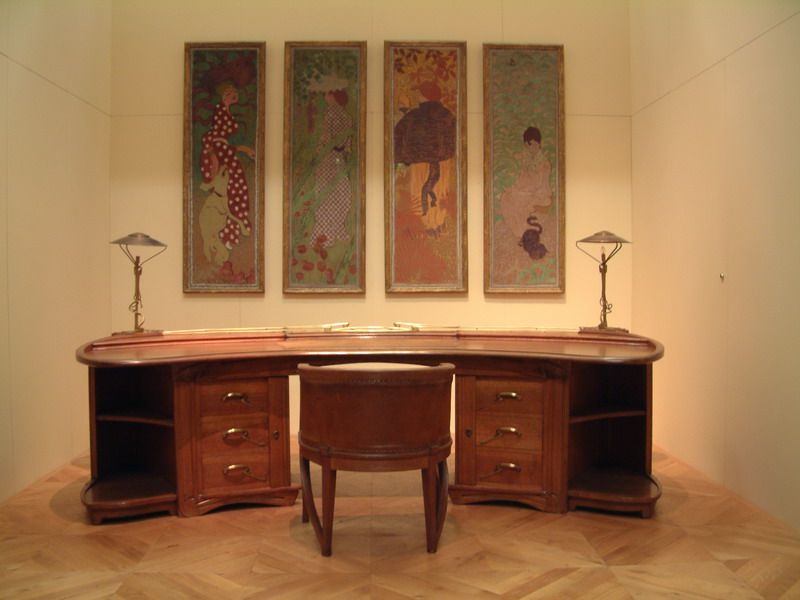
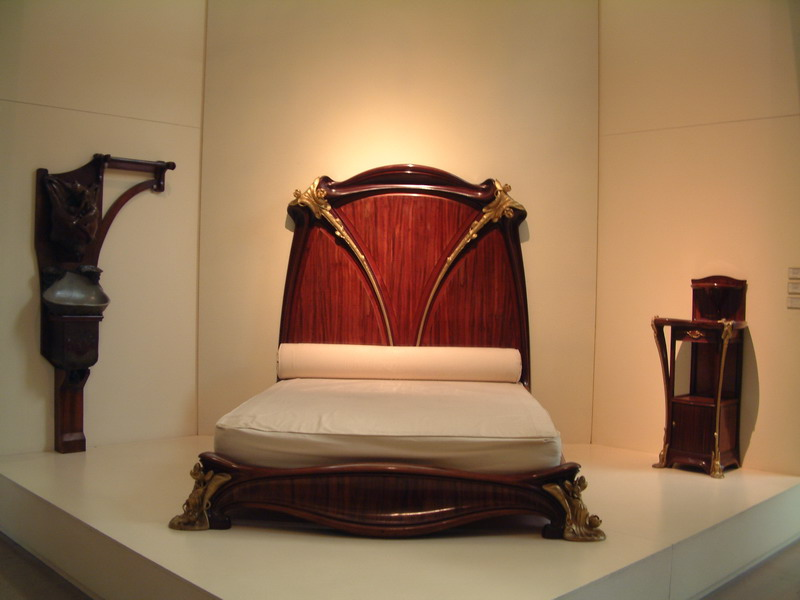
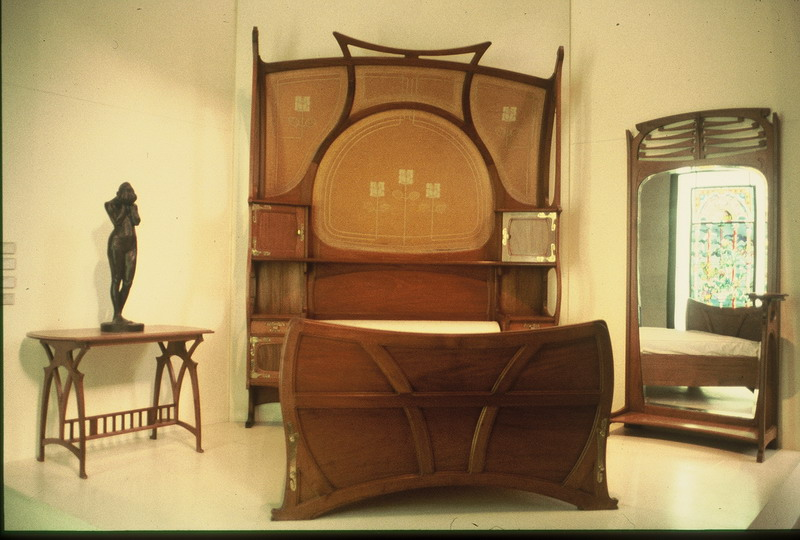
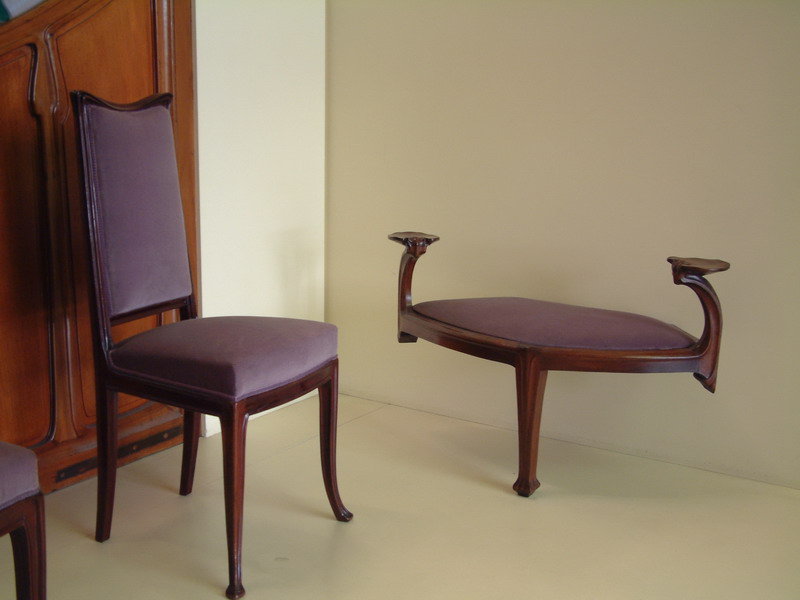
Modern-style Art Nouveau furniture. Collection of the Musée d'Orsay. In Western modern painting, from Van Gogh's late works in Post-Impressionism, Gauguin's decorative Synthetism, Lautrec's posters (the formal style of Art Nouveau), the graphic paintings of The Nabis, and works by Munch, Klimt, Kokoschka, Mucha, and others, this decorative Art Nouveau style and paradigm are clearly manifested.
Art Nouveau emerged in Belgium in 1887 and quickly spread to France, Britain, and all of Europe (under various different names), reaching its peak around 1900. In France it was called Modern Style; in Germany Jugendstil; in Austria Sezessionsstil, referencing the style of Vienna Secession painters like Klimt and architects Josef Hofmann and Joseph Maria Olbrich; and in Italy Liberty. It was a product of the emerging middle-class style in late 19th- and early 20th-century Europe, possessing practical social functions—namely decoration and utility—primarily drawing on the ornamentation of Baroque and Romanticism.
Clearly, the graphic style of Art Nouveau divides into two: in Belgium, France, and Spain, it derives from floral vine patterns; in Germany, Britain, and Scotland, it tends toward geometric forms, developing from architecture to various decorative items such as posters, paintings, everyday furniture, and interior furnishings.