Auvers-sur-Oise, Near Paris
(Top left) The "Church at Auvers" in the village of Auvers-sur-Oise is world-famous thanks to Van Gogh's painting. (Top right) Auvers was the most dramatic end of Van Gogh's life; this brilliant masterpiece, "The Church at Auvers," is held at the Musée d'Orsay and can be compared with the actual chu
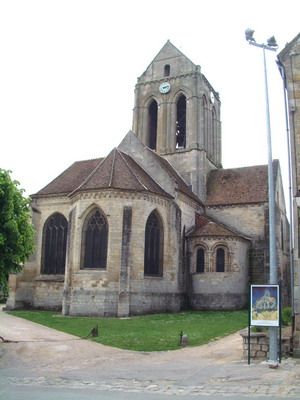

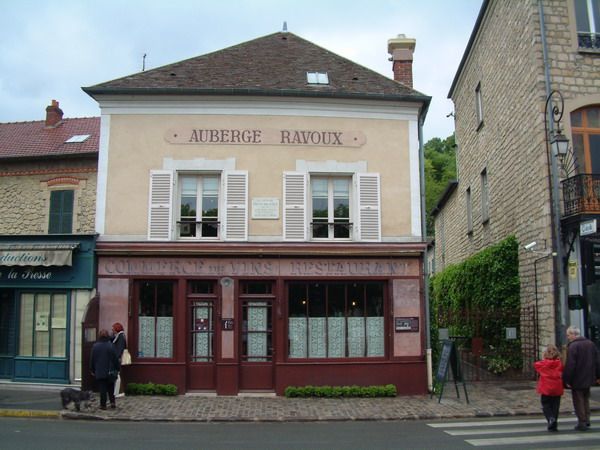
(Top left) The "Church at Auvers" in the village of Auvers-sur-Oise is world-famous thanks to Van Gogh's painting. (Top right) Auvers was the most dramatic end of Van Gogh's life; this brilliant masterpiece, "The Church at Auvers," is held at the Musée d'Orsay and can be compared with the actual church. (Bottom image) The Van Gogh Memorial House in Auvers-sur-Oise, arousing the most curiosity. A visit to Auvers-sur-Oise (Auvers-sur-Oise): Address: 8 Rue de la Sansone Place de la Mairie 95430 Auvers-sur-Oise. Phone: 01303616006. Opening hours: 10:00–18:00. Closed: Tuesdays. Visit duration: approx. 1 hour.
Auvers-sur-Oise is located northeast of Greater Paris (30 km from the city center), a typical small rural village on the outskirts of Paris, with lush green fields and abundant vegetation. Its bright scenery attracted many Impressionist painters (Daubigny, Corot, Pissarro, Cézanne, and Van Gogh, among others) in the 19th century to come here to paint en plein air, and some even settled there. It became a subject for Pre-Impressionist and Impressionist paintings, and today it is a holy site for many famous world paintings—such as Daubigny’s "The Banks of Oise," Pissarro’s "Valhermeil Landscape," Cézanne’s "Houses at Auvers," Van Gogh’s world-renowned "The Church at Auvers," "Wheatfield with Crows," and "View of Auvers"—all of which are treasures in major museums around the world. It is now a pilgrimage site for those who wish to explore Impressionist painting and visit the legendary painter Van Gogh.
In the village of Auvers-sur-Oise, one can visit the scenes depicted in his paintings. Naturally, the focus is the Van Gogh Memorial House, located in a small inn directly in front of the town hall. Due to Van Gogh’s legendary short stay here, it has become a place of great curiosity. Van Gogh lived on the third floor during his lifetime; its lime-white room displays simple and unadorned furniture, while the ground floor serves as an exhibition hall, attracting Van Gogh fans from all over the world every year. Visitors hope to solve the mysteries of art through this pilgrimage. Auvers was the most dramatic end of Van Gogh’s life; do you remember? He had cut off part of his ear after an argument with Gauguin in southern France. Later, Van Gogh was sent to the Saint-Rémy asylum for rest and treatment. With the enthusiastic care of his brother, who hoped he would find peace, they suggested he go to Auvers, hoping he would recover under the help of Dr. Gachet. But this final journey lasted only 70 days. During this period, his passionate artistic creation reached its peak, and he successively completed brilliant masterpieces such as "The Church at Auvers," the sorrowful "Wheatfield with Crows," the emotional "Portrait of Dr. Gachet," and the melancholic "Self-Portrait," among more than 70 touching works. On July 27, Van Gogh committed suicide by shooting himself near the castle. Two days later, in the early morning, he passed away. He and his brother Theo (who died in 1914) rest together in the Auvers cemetery. Their grave is covered with ivy—a symbol of eternal memory of "lasting attachment."
Of course, near the memorial house, Van Gogh completed paintings such as "White House," "Auvers Stairs," and "Linden Trees with Pink Flowers," along with a rather emotional statue of Van Gogh created by the famous sculptor Zadkine. Walking left along Daubigny Street toward the cemetery, you will see Van Gogh’s famous Church at Auvers. Continuing toward the fields to a three-way intersection, going straight leads to the cemetery, where the brothers’ graves are in the corner against the wall. Amidst the bright scenery of the cemetery fields, Van Gogh completed "Rain at Auvers." To the left, beside the railway tracks, he painted "Panorama of Auvers." Continuing further left, across patches of golden wheat fields, lies the inspiration for "Wheatfield with Crows." At the edge of the village, we will see Van Gogh’s work "Thatched Cottages at Gouy," which is held at the Musée d'Orsay.