Christian Boltanski - "Anyone" 2010 Monumental Exhibition
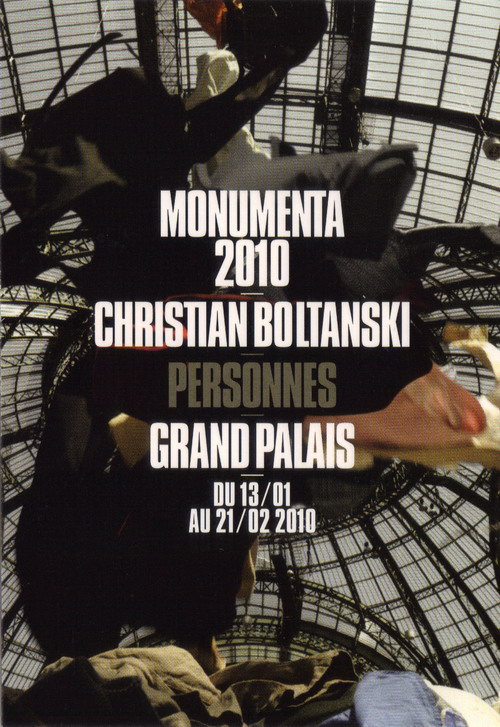
Christian Boltanski - "Anyone" 2010 Monumental Exhibition card
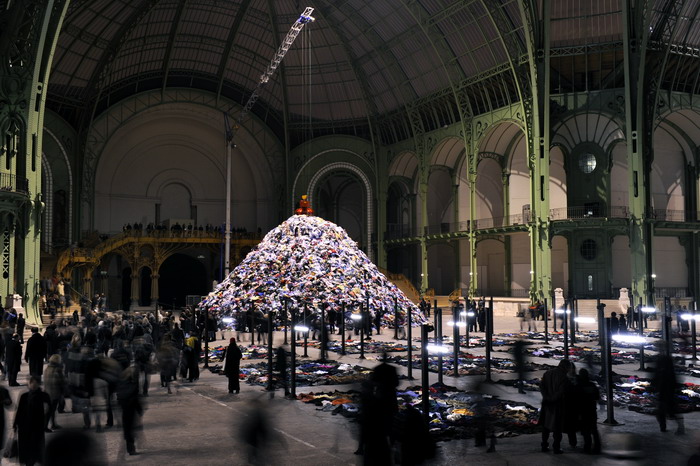
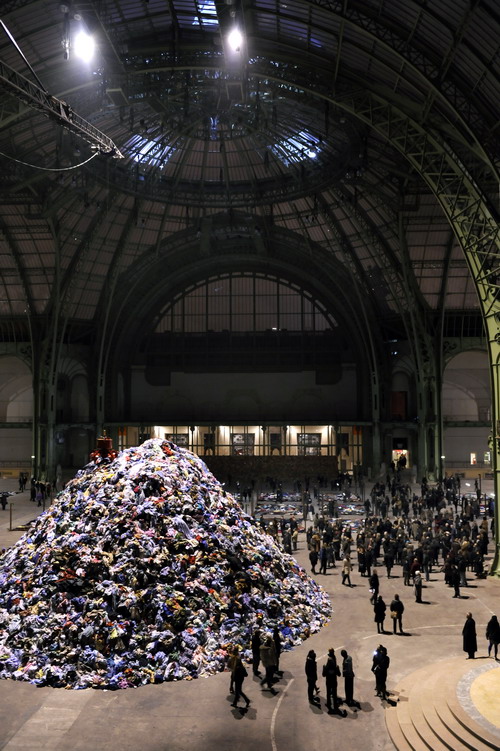
Preface: Following the unprecedented success of German Neo-Expressionist Anselm Kiefer’s monumental exhibition in 2007, which attracted nearly 136,000 visitors in just five weeks, American minimalist sculptor Richard Serra took the stage the following year, successfully meeting the challenge of the Grand Palais’ vast space. This year, French artist Christian Boltanski steps into the spotlight. The annual Monumental Exhibition at the Grand Palais in Paris has established a distinctive European contemporary art institution and a brilliant contemporary art landscape. In his "Anyone" exhibition, Boltanski builds upon personal memory and fabrication, moving from fragile, insignificant individual memories to collective human history, from historical to fictional narratives, from altar-like structures to extraordinary monuments, and from archival construction to testimony of humanity and history. He transforms vanished bodies into spiritual presences, resisting all forgetting and death, whether intentional or unintentional by time and humans.
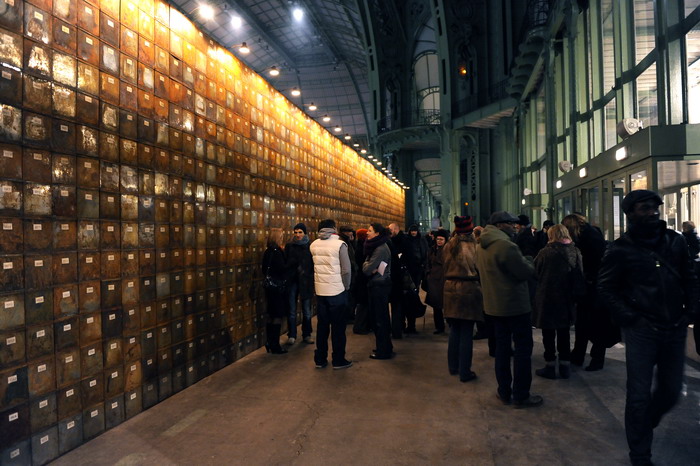
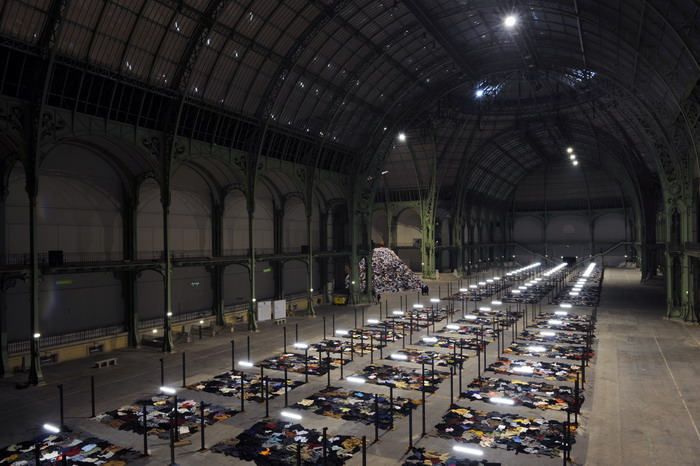
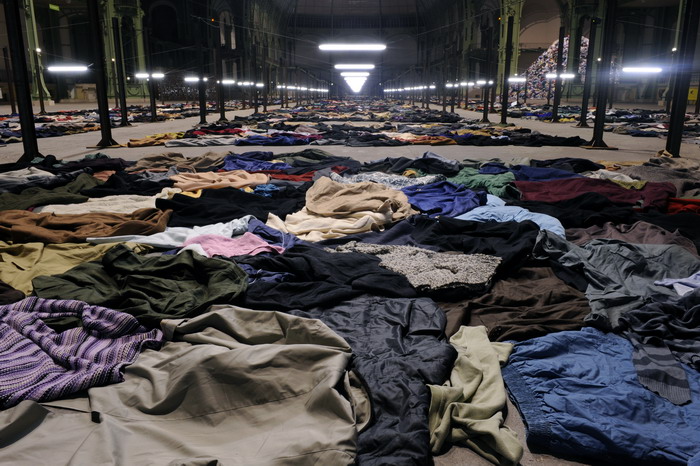
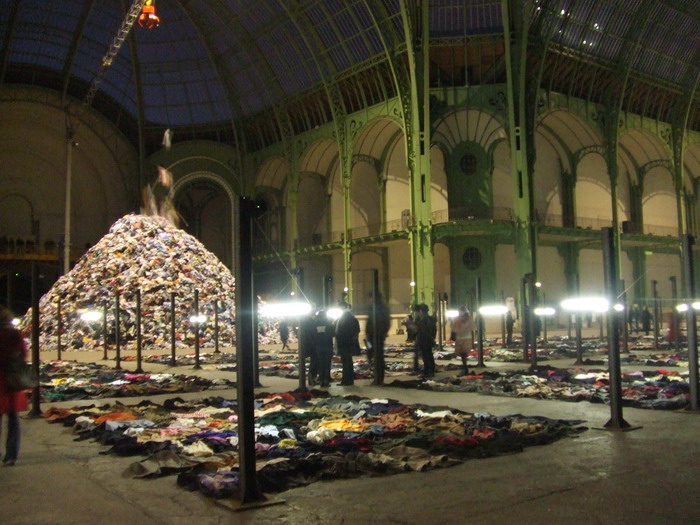
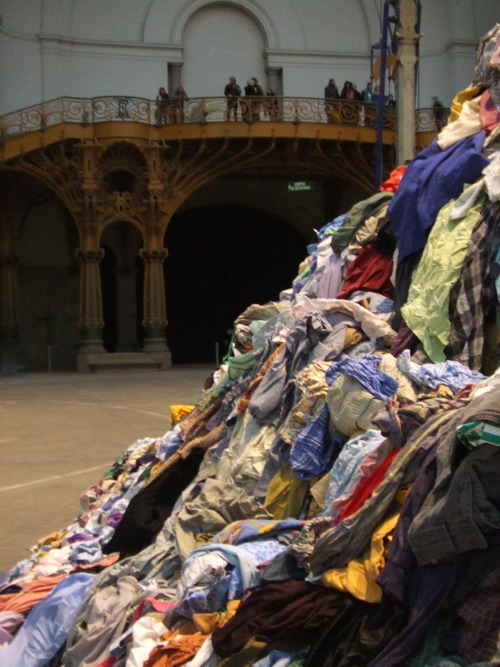
While the previous two exhibitions were held in the pleasant May weather, this one takes place in the freezing winter (January 13 to February 21). Boltanski seems to use the cold and dim light to impose a dramatic, tragic theatrical space on the work. The entire Grand Palais is shrouded in mist and gloom, filled with emotion and solemnity; the shadow of death permeates the space, revealing humanity’s great tragedy through this atmospheric haze. For nearly 40 years, Boltanski has created remarkable object-based works centered on human or historical tragedies, particularly the sorrowful death associated with the Holocaust during World War II. In "Anyone," he transforms the magnificent Grand Palais into a dramatic, sacred mortuary or memorial hall. A heavy shadow of death fills the space; the entrance faces a tall monument wall constructed from rows of old biscuit tins, each labeled with a number and lit by a faint bulb. Passing through the wall, under a grand arch, three rows of colorful old clothes are arranged around iron pillars, with fluorescent lights hanging between them, resembling a concentration camp scene and creating an extraordinary tension. At the center, piles of bright, old clothes form a dramatic, highly metaphorical scene, presenting an unimaginable space that reveals physical and spiritual volume.
Six Subjective Dimensions in Boltanski's "Anyone" Special Exhibition:
Personal and Collective Memory: Human existence is a series of endless memories. Each person is entangled in their own family history, just as every nation is bound by its past. How do we interpret these memories, especially unfortunate recollections—ours or humanity’s collective memory? Boltanski’s entire oeuvre is built on personal and shared memory, questioning or evoking it through his artistic process. Many memories are often reduced by linear and mechanical processes. Amidst this flow of diverse memories across time and space, the artist focuses his core inquiry on the singular perspective of "death," tragically linking it to personal and racial collective consciousness. It begins with each individual’s insignificant memory, affirming the extraordinary significance of individual existence. When faced with human history and collective consciousness, these fragile memories highlight individual vulnerability.
Altars and Monuments: Almost all of Boltanski’s works possess a religious sentiment, aiming to reinterpret the function of religion through art, carrying both sacred and subversive qualities. Especially in today’s materialistic age where religion wanes, how can one build an altar without falling into conventional commemorative rituals? These altars and monuments do not belong to any specific religion; rather, art becomes an irreplaceable religion. Boltanski’s small works resemble altars, while large ones serve as monuments. All his works are enveloped in a dark, gloomy atmosphere, creating an emotional and solemn mood akin to entering a mysterious spiritual world—or more precisely, a sacred mortuary. Here, remembrance, reflection, recall, and sublimation are understandable, manifesting spiritual volume and constructing the consciousness of human existence.
History and Fiction: Boltanski’s works are grounded in personal stories or collective history, particularly tracing family biographies to the Jewish people’s tragic fate. Boltanski is an expert storyteller; since 1968, he has crafted impossible narratives, ambiguously mixing truth and fiction. In today’s virtual world, the fabricated often feels closer to reality. This ingenious fabrication is a major narrative construct for Boltanski, reinforcing reality and traversing history, highlighting events. Fiction also possesses an extraordinary dramatic volume. Within the stories he constructs, we recognize ourselves, because art is a mirror of reality containing its minimal truth.
Archives, Fabrication, Testimony: Boltanski exhibits an obsessive passion for all data, archives, or catalogs. Preserving traces, impressions of objects, or memories left by anything (such as photographs, biscuit tins, clothes, phone books) is a well-known fervor among collectors. Establishing inventories, creating archives, proving collection, and assembling constructions allow him to unleash his imagination and create profound works driven by this impulse. Numerous connections become relevant, moving from singular to plural, individual to collective, single item to whole volumes, obvious to indistinguishable, proportional to disproportionate. His works often contain a metaphysical, extraordinary volume and repeatedly propose the temporal reconstruction of time.
Vanished Bodies and Eternal Presence: Bodies may vanish, but memory remains. Even if only fragments exist, when we think of deceased relatives and friends, they seem present with us. Boltanski’s work transforms disappearance into manifestation, even eternal presence. As the artist says: "I had a strikingly kind grandmother, like all grandmothers. Nothing was left behind, only some fragmented images of memory in my brother’s mind. The only reason for existence is that everything continues as it is." Memory becomes the guiding thread of his work: a bet against impossibility, refusing to be forgotten or fade away. The body is the core of this work; from it, he constructs and reassembles what little remains, followed by broken fragments of memory. Nothing is left; the body disappears completely, yet something remains there—an eternal presence.
Boltanski’s works directly or indirectly question numerous religious issues regarding death rites, rebirth, and resurrection concepts, touching upon the disillusionment and eternity between time-space existence, presenting the conditions, possibilities, and acceptable hopes of our personal physical existence.
Refusing to be Forgotten and Dying: Boltanski defines his art as classical, not in its form, but through the problems he explores: "the contingency of existence, God’s laws, death." This becomes the most essential exploration of his creation; the function of his work seems to be a method of inevitably refusing to be forgotten and dying. Can art be considered a defensive wall? Is Boltanski’s art an art of resistance? This involves surviving through the work. How does one think about this function without transcendence? For the artist, the work bears the mission of questioning, not answering. This extraordinary ability firmly asserts that artworks awaken our curiosity and open the possibility of questions, which is the best remedy against the lack of contingency.