Gianni Motti’s Solo Exhibition "Moneybox"
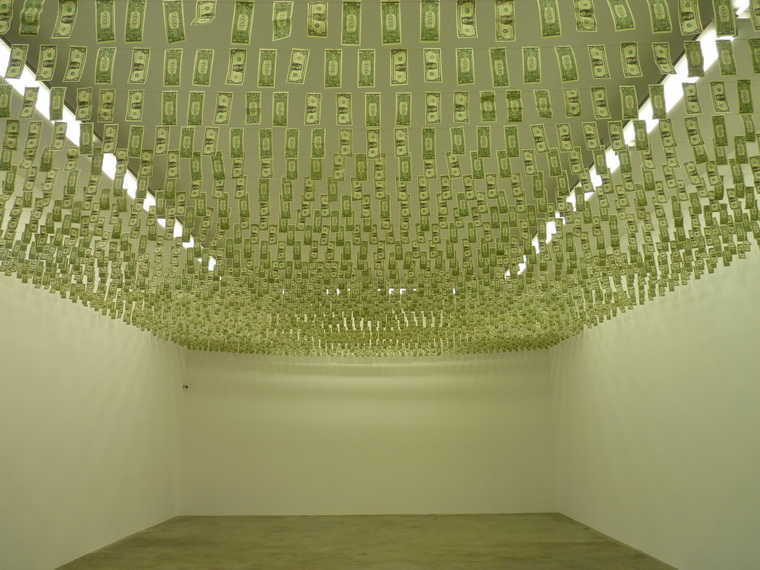
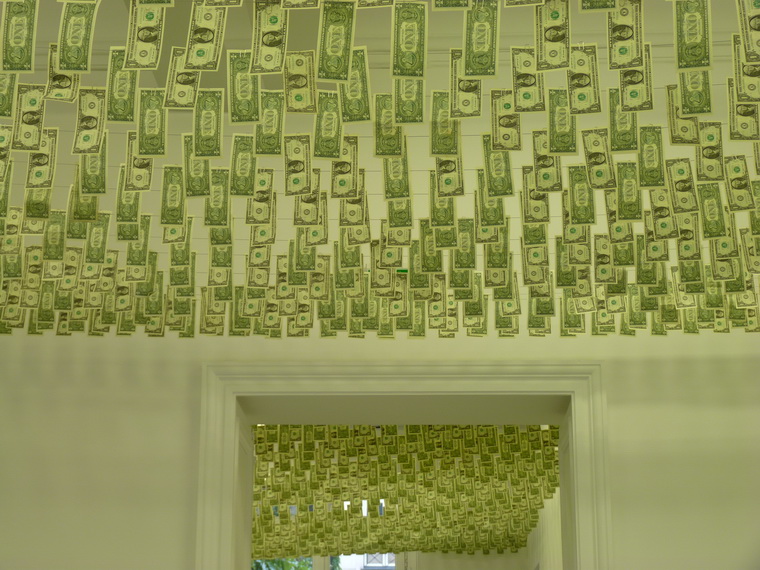
The spatial installation scene of Gianni Motti’s solo exhibition "Moneybox"
Exhibition Venue: Perrotin Gallery | Dates: April 20 to June 15 | Text and Photos by Chen Chi-Hsiang
Gianni Motti (born 1958) is one of Italy’s most critical and unconventional contemporary artists. His work targets the contradictions and anomalies of the current Western neoliberal economic system, or more explicitly, exposes capitalist greed. This behavioral attitude aligns with that of 1970s German artist Hans Haacke. His overall practice revolves around “the relationship between art and political power,” frequently questioning political and economic authority and using humor and satire to reveal social truths. For example, in 1997, he replaced Indonesia’s representative at the 53rd UN Human Rights Commission session. In 2004, during the Roland Garros tennis tournament in Paris, France, he sat in the stands mimicking Iraqi prisoners from Abu Ghraib prison with plastic bags over their heads, drawing widespread attention.
In 2005, challenging capitalism through art, particularly during a retrospective at the Migros Museum in Zurich, he constructed a large maze in the exhibition space. Visitors entered through the front door and were guided directly out the back, seemingly telling the audience there was nothing to see, leaving them bewildered and criticizing the crazy manipulation of the contemporary art market. Later that year, invited to the Basel Contemporary Art Fair in Switzerland, in the Unlimited section, he radically locked himself in a cage labeled with his name. Within this international contemporary art marketplace, he presented a surreal image, criticizing the inflated art market speculation after the financial crisis. This living, breathing performance sculpture recalls Italian artist Piero Manzoni.
In 2009, in front of banks and commercial districts in Geneva, Switzerland, he planted a white flag, satirizing the global economy and the threatened financial system: Is it surrendering to the financial regime, or is it a critique of utter disappointment with current capitalism? Simultaneously, he erected a scarecrow representing a banker, symbolizing fragile puppets and exposing how current finance depends on the wealth sacrificed by these victims.
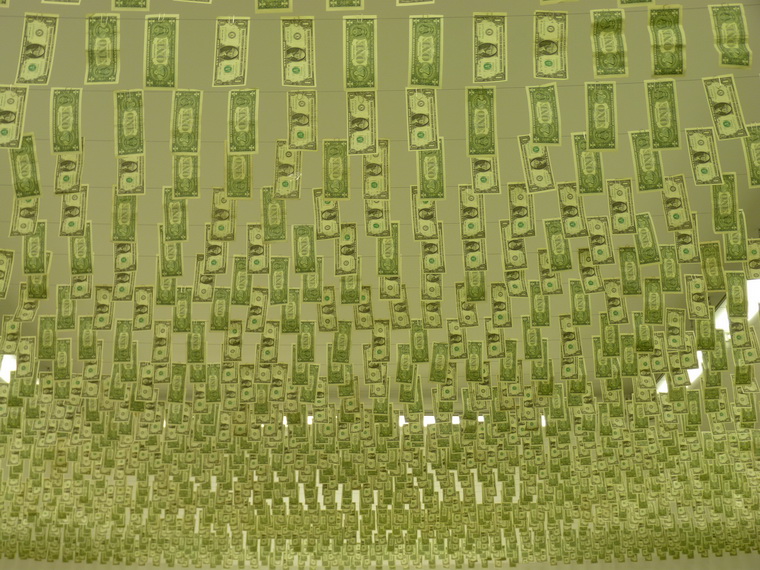
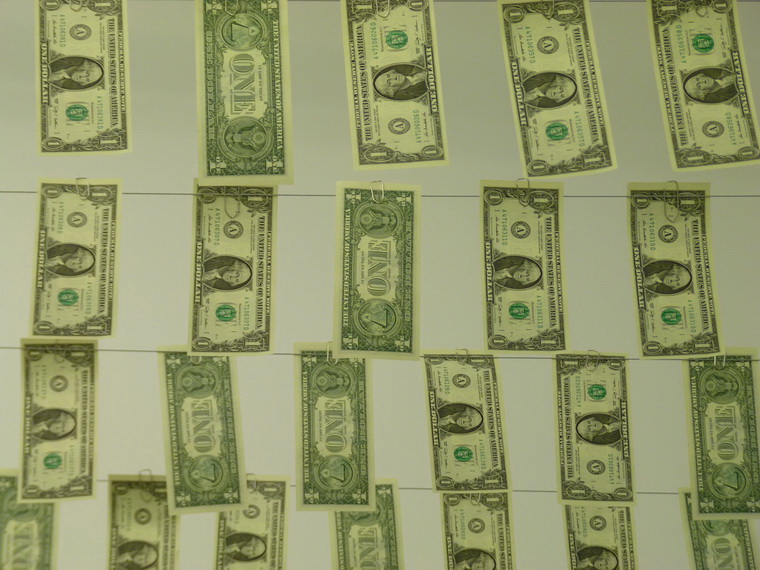
Clearly, the “Moneybox” solo exhibition also unfolds under a festive atmosphere of lanterns and decorations. He hung the total budget for the exhibition as one-dollar bills, resembling green holiday currency, across four exhibition spaces. Under this relaxed atmosphere, he subtly implies that today’s global economy and financial system are hijacked and held hostage by the US dollar. Since the post-World War II “dollar-oil” mechanism, the global economy and finance have danced to the tune of green banknotes (“US dollars”). When the US sneezes, the world catches a cold; the 2008 global financial crisis is a prime example.
Today, the world economy has entered a winter. Western developed nations are burdened with national debt, growth is sluggish, investment is shrinking, and finances continue to deteriorate. Transnational capitalism arrogantly hijacks the international trade system, continuing to plunder resources worldwide. With US national debt becoming too big to fail, massive amounts of green paper money are printed, forcing the world to wait and suffer. The creation of sweatshops exacts a heavy toll on the natural environment; under the hijacking of economy and finance, transnational colonialism is inevitable. Alas, during this economic and financial winter, prices rise continuously. No one offers help in times of need, yet they brazenly and righteously manipulate essential goods and food, taking advantage of the disaster. Humanity’s future hangs on the endless greed of transnational capitalism; where humanity should go next is clear to all.