Gilles Clément: A Symphony of Color and Metamorphosis in the Garden
The bewitching silver garden at André Citroën Park
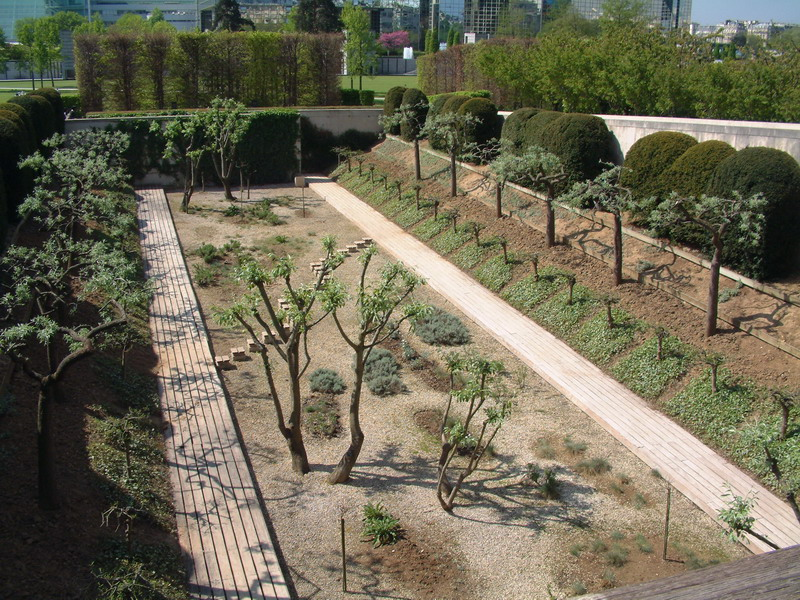
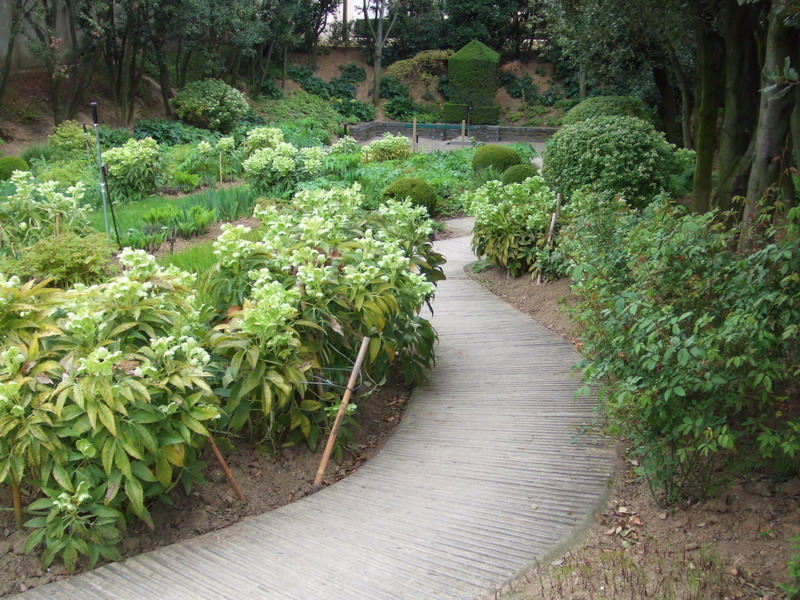
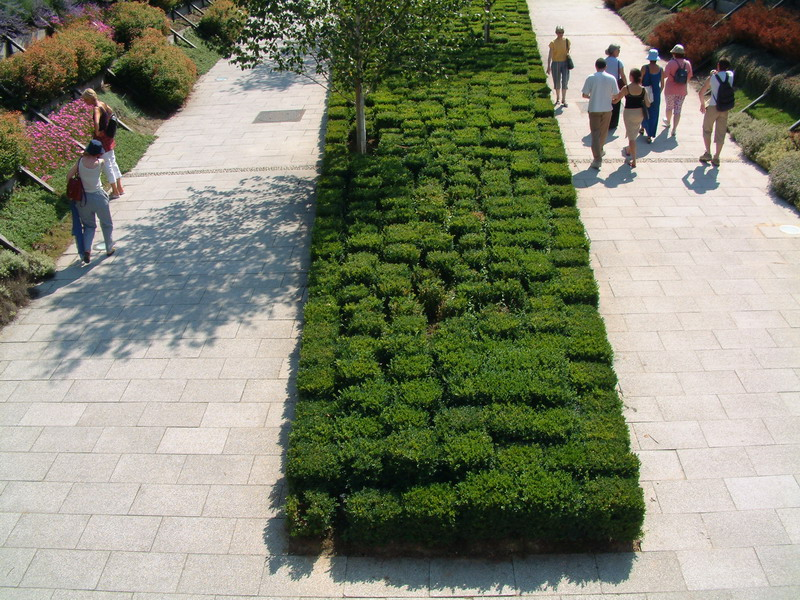
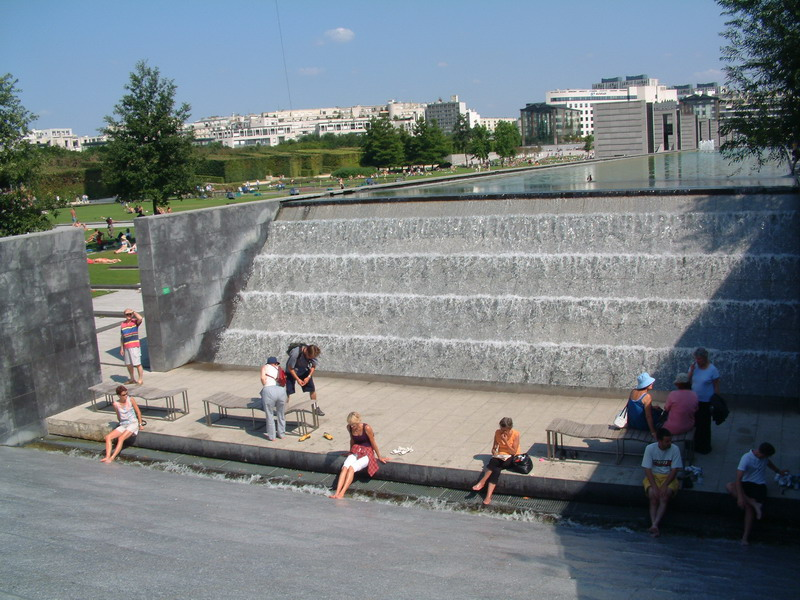
At the top of the canal are two vertical waterfalls facing the angles. Foreword: Gilles Clément is one of France’s most renowned intellectual horticulturists today, as well as the country’s most avant-garde and internationally recognized theorist of horticulture and landscape design. He is famous for his striking color gardens, the Jardin en Mouvement (Garden in Motion), Le Jardin Planétaire (The Planetary Garden), and Le Tiers-Payage (The Third Landscape). He is a comprehensive horticulturist, landscape expert, botanist, entomologist, and writer. In postmodern horticulture, he has achieved remarkable theoretical exploration and innovative accomplishments in new garden and landscape planning, offering revolutionary insights into contemporary urban environmental awareness and geobiology. Guided by the theoretical practice of the Planetary Garden and the Third Landscape, he has become one of the most avant-garde constructors of urban horticulture and global natural landscapes in the 21st century.
Gilles Clément’s most representative works include the Parc André Citroën in Paris (1992) and the park at the Musée du Quai Branly (2005). The Parc André Citroën, particularly lush with flowers and trees and filled with the sound of springs, is neither a traditional classical French garden nor a naturalistic English garden. It is the most original postmodern garden in the capital city, akin to the Parc de la Villette in northern Paris; both are milestones in the journey of 21st-century urban parks in Paris, the City of Flowers. Within a magnificent futuristic structural form, it showcases four outstanding themes: nature, change, architecture, and ingenious creation, perfectly integrated into modern urban architecture. It has become the largest green recreational space in the southwest of the capital and one of the most representative paradigms of postmodern gardens in Europe.
Horticulturist Gilles Clément (born 1943) graduated from the prestigious École Nationale Supérieure du Paysage in Versailles, France, and is now a professor there. He is the creator and executor of the most original concepts of painted gardens, metamorphic gardens, planetary gardens, and the third landscape theory. All these new types of gardens are founded on the observation of nature. His concept of the metamorphic garden breaks away from the fixed landscape concepts of traditional gardens, becoming an active natural construction that changes with the seasons. By liberating the plasticity of nature, people see the plants and flowers in the garden repaint its forms and colors with each seasonal change. Although in the same location, every visit offers different natural states and surprises.
In terms of plants, he favors hybrid varieties, which he calls "mixing and weaving nature along time." Dedicated to this original horticultural and geobiological conservation, what is unusual is introducing unremarkable wildflowers to the edges of city roads and planting rare plants in bewitching gardens. His greatest or perhaps most utopian ideal concept is to incorporate the entirety of earthly nature into the garden system, viewing the world as a vibrant, splendid large garden. That is to say, the place where we live. As Gilles Clément says: “I want to demonstrate the existence of these extremely diverse plants on Earth.”
Metamorphic Garden: The concept of the metamorphic garden comes from the practice in Gilles Clément’s own courtyard. It was implemented in public spaces inside and outside France starting in 1986. After completing the most representative Parc André Citroën in Paris in 1991, he published this remarkable theory. The inspiration for the metamorphic garden comes from abandoned marginal areas where weeds grow freely and wildly. There, plants and flowers grow vigorously, compete, shift, and exchange without encountering special difficulties, natural selection challenges, or specific human cultivation advantages. Under human transformation, the metamorphic garden allows nature greater vitality and energy. The horticulturist says, “Preserve its diversity and richness as much as possible, and with minimal destruction,” liberating the norms of traditional gardens and renewing current garden art.
Like all living spaces of human activity, the metamorphic garden follows seasonal changes to reveal its natural charm. In this transition, the gardener plays a role of interpretation and management, balancing light and shadow, form and color. Depending on the varieties displayed, they maintain diverse biological growth and ensure its future. They ensure the quality of the biological foundation such as soil, water, and air, maintaining their original state through careful management methods that involve uncompromising, limited use of water and reduced machine traffic. In this mental state, the gardener must have a deep understanding of plant species types to possess the perfect ability to develop nature.
Planetary Garden: The Planetary Garden is a humanist natural environmental political project. Its concept was clarified through his 1996 novel Thomas et le Voyageur, attempting to explain the idea of protecting the earth's nature and viewing the planet on which people rely for survival as an extraordinary large garden. Subsequently, between 1999 and 2000, he held the “Planetary Garden” exhibition at the Grande Halle de la Villette in northern Paris, exploring the current state of nature on earth, environmental mechanisms, possibilities for sustainable management, etc., along with several practical projects such as the Global Garden in Shanghai, China, or landscape planning in Limoges, central France. The Planetary Garden is a concept of diverse life on earth, especially regarding the extraordinary role of humans in managing diversity. The concept of the Planetary Garden is forged from three observations: the refinement of natural ecological protection, global mixing, and anthropological assurance. Recently, Gilles Clément further declared: “The Planetary Garden is a nation without borders and without flags; war is unnecessary. The only will possessed by travelers on Earth is to participate in garden plans of general interest within its constraints, just as in its broader aspects. Shelter urban spaces like rural spaces, clarifying politics in its most humble or broad functions. Inspire society as a whole in everyone’s role: developing diversity without destruction. Provide everyone with a prospect based on a non-discriminatory process, benevolent evolution without determinism or judgmental choice. Participate in a politics without excessive accumulation and pollution. Develop flexible and autonomous energies. Develop a new globalization not subordinate to market norms. Create a network of regional plans, clearly guided by tolerance and broad perspectives, directly dominating local economies under the organization of human and natural results. Teach the development of geobiology, promoting the circulation of complex industrial environmental energy. Practice the development or enhancement of the substantial biological quality of air, water, and land. Grant creativity to life under all environmental conditions and express its diversity. Consider developing gardens as a possible source of renewal, and daily surprising people.”
Third Landscape: The concept of the Third Landscape does not refer to the so-called Third World, but rather a third state. It echoes the question posed by the monk-writer Abbé Sieyès: “What is the Third Estate? Everything. What has it been until now? Nothing. What does it aspire to be? Something.” The development of the Third Landscape concept comes from the overall analysis and exploration of the Limoges landscape. Gilles Clément published this complete set of new natural landscape research concepts in 2004-2005. The concept of the Third Landscape establishes the Planetary Garden as an undecided part, including the entire undeveloped wilderness, transforming or abandoned urban or rural spaces. Nature develops vigorously there, becoming inaccessible areas. Landscapes evolve with nature, and these places become reserves for diverse flora and fauna or sacred regions of diverse biology, very similar to publicly managed natural resource protection areas—national parks. These stand in clear contrast to nature controlled by human development: urban, agricultural, and forest development, industrial zones, and tourist areas, all within naturally selected ecosystems. Thus, the Third Landscape constitutes a unique domain of diverse biology. From this perspective, it is considered like a global gene reserve or future space. The understanding gained from the Third Landscape is like the necessity of conditional biology. The prospects of human existence change the reading of territory and the consideration of inhabited places, which cannot be ignored. Returning to politics, detailed planning for land organization will impact these undecided spaces, which also becomes detailed planning for future cities.
Design Features and Bold Color Symphony: Gilles Clément’s most distinctive garden design feature is rigorous and perfect natural architecture, or seamless architectural nature. He excels at using concrete geometric points, lines, and planes, strengthening facade architectural structures within magnificent geometric creations. Most original is using natural colors as the master of the garden. Pleasing color-themed gardens become Gilles Clément’s most poetic abstract paintings and bold natural symphonies, remarkably colored earth: such as the charming “Black” and “White” gardens in the Parc André Citroën. The black garden contains dark-colored flowers and plants, while the white garden blooms with bright, dazzling white flowers throughout the year. And six brilliant, colorful theme gardens: “Gold,” “Silver,” “Red,” “Orange,” “Green,” and “Blue,” resembling alchemy, where plants dominate various metallic colors. Amidst the greenery and flower clusters, one can see the extraordinary colors of metals like gold, silver, and copper after oxidation. Mercury (quicksilver) combines with the blue garden, orange with iron, oxidizing into reddish-brown (like rust), etc. Various magical transformations of color fill the imagination space. Each garden stands alone and symbolizes six human senses: the silver garden symbolizes vision, the red garden taste, the orange garden touch, the green garden hearing, the blue garden smell, and the gold garden humanity’s sixth sense, like a feast of senses and spirit.
The “Portrait Garden” in the Beauregard Royal Castle in central France is no exception. Gilles Clément uses famous portraits from the royal castle as the master. The “Portrait Garden” is inspired by the “Gallery of Historical Portraits” within the castle. Through a dialogue of mind and history, within rigorous and perfect geometric garden structures, it is divided into 12 strict square geometric gardens. Each garden takes one color as its main theme, creating several extraordinary imaginative color symphonies: White, Black, Green, Double Red, Double Yellow, Pink, Orange, Double Blue, and Purple. Between symbolism and metaphor, over 400 types of seasonal flowers and plants use colors to symbolize historical figures and engage in passionate dialogue with nature. For example, the white garden is entirely white flowers, the red garden is a bewitching expanse of red, the yellow garden is a poetic field of yellow flowers, and the black garden is even more magical, featuring deep green and deep purple plants almost reaching black.
Gardens created by Gilles Clément all have patches of gardens more natural than nature itself, namely gardens that transform with the seasons. This garden that is not quite a garden often mixes under shrubs or at the edges of gardens. Although in the same location, people always find different surprises when visiting for recreation. Because the garden plants and flowers change colors with the seasons, and every season updates the flowers and plants, repainting the earth’s forms and colors, activating diverse biological and environmental ecology, all reach a climax of pleasure under pleasing sights.
Gilles Clément’s most representative works include: the Parc André Citroën in Paris, a masterpiece collaborated with horticulturist Patrick Berger (greenhouses) and architect Alain Provost; the New Arc de Triomphe Garden in La Défense; the Matisse Park in Euralille, collaborated with Eric Berlin and Sylvain Flipo; the Valloires Garden in Argoules; the Blois Royal Castle Garden; the Beauregard Royal Castle Garden; and recently, the park at the Musée du Quai Branly, collaborated with famous architect Jean Nouvel.
Gilles Clément website www.gillesclement.com.