Guillermo Kuitca: "The Ring" Solo Exhibition
(Top) One of The Ring Quartet, 196x196 cm. (Bottom) One of The Ring Quartet, 296x196 cm. Guillermo Kuitca's "The Ring" solo exhibition is on display at Daniel Templon Gallery from April 14 to May 26. Guillermo Kuitca (born 1961 in Argentina) is currently one of South America's most important painter
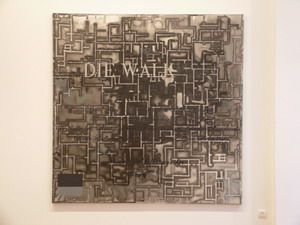

(Top) One of The Ring Quartet, 196x196 cm. (Bottom) One of The Ring Quartet, 296x196 cm. Guillermo Kuitca's "The Ring" solo exhibition is on display at Daniel Templon Gallery from April 14 to May 26. Guillermo Kuitca (born 1961 in Argentina) is currently one of South America's most important painters. His broad interests in architecture, theater, music (especially symphonies), and mapmaking have led him to develop a unique, comprehensive body of work that mixes installation, painting, and drawing (in geometric abstraction and concrete architectural drawings). He frequently expresses different worlds such as geography, architecture, and opera with concise power, attempting to explore the manifestation of these complex social or spatiotemporal historical backgrounds. In his first Paris solo exhibition, titled "The Ring," he presents a series of eight works (2002), combining painting and theatrical plan drawings that resemble contemporary CD cover designs, introducing a new field of painting that bridges visual arts and musicality within a globalized artistic style. Clearly, "The Ring" draws inspiration from the grand, tragic theme operas of the German Romantic composer and playwright Wagner. In artist interviews, he stated, "Wagner's The Ring is divided into four parts, just as I divide my works into four parts: often in singing clubs, it is a record label production performed by an orchestra as a whole quartet; there too, I have four different interpretations, thus through four orchestras performing each part, I aim to present the transformation of the world since the appearance of the first German records, that is, since the two world wars of the 20th century. The way the work involves its form, similarly, if people follow time, opens up numerous interpretations." Like the design patterns of CD covers, upon careful consideration, they become like the development of century politics, under the stakes of overall cultural and economic development in the record industry.