Ilya and Emilia Kabakov – "The Bizarre City" 2014 Monumental Exhibition
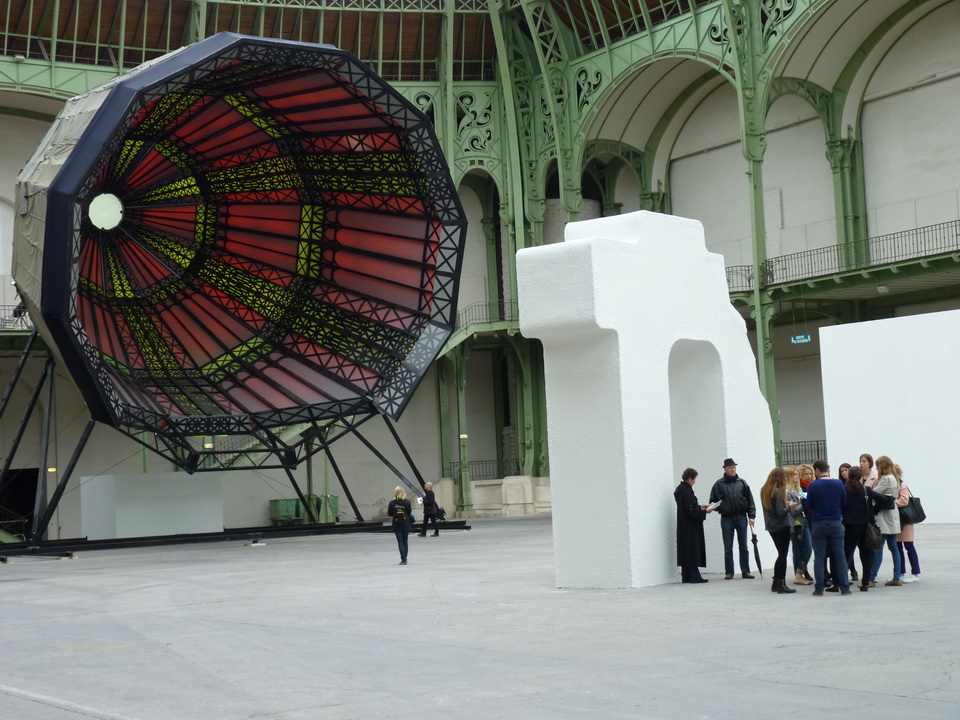
Dome and the ruin-like building in front, 2014
Text and images by Chen Chi-Hsiang. May 10 to June 22 – Grand Palais, Paris.
Preface: The Kabakovs are among the most representative artists of contemporary Soviet avant-garde art, skilled at manipulating objects to engage in conceptual exploration through flexible and diverse methods. Since the 1960s, their work has depicted daily life under Soviet communism. Their creations are highly varied, ranging from flat illustrations, sketches, oil paintings, and sculptures to installations using everyday objects. They emphasize literary and narrative qualities (events or storylines) to interpret various perspectives, offering profound analysis of that closed socialist society, while strongly critiquing political absurdity and satirizing the myths of socialist daily life. These ordinary daily rituals are presented in a diary-like format. For example, in his 1989 solo exhibition at a French gallery, he displayed a cluttered study filled with stacked chairs and books piled on a desk; cardboard lay on the floor beneath a wardrobe, with a tipped-over can of white paint creating a large white circle. A note read: “One day I was cleaning my room, stacking books on the desk and piling up chairs, when I accidentally knocked over a can of white paint, creating this shape.” This is one of his most authentic works drawn from daily life, almost mythic yet more like an ordinary personal diary recording individual actions and attitudes. Art becomes life, and life shapes art.
Ilya Kabakov (born 1933) and Emilia Kabakov (born 1945) are perhaps the most famous husband-and-wife artist duo in the contemporary art world. Emilia possesses dual artistic education in music and Spanish literature, and began collaborating with her husband in 1989. The Bizarre City is full of magic and utopia, prompting reflection on humanity’s endless pursuit of progress and evolution—where exactly is this constant drive leading? The artists state: “The world changes so rapidly that people forget how it feels to live.” The Bizarre City draws upon Renaissance and Romanticism combined with modern science, constructed imaginatively and metaphysically. It invites viewers into dreams and reality, through which Kabakov questions the human condition and the “great progress, science, and noble vision of humanity,” noting that such ideals lead us to the brink of disaster. (Note 1)
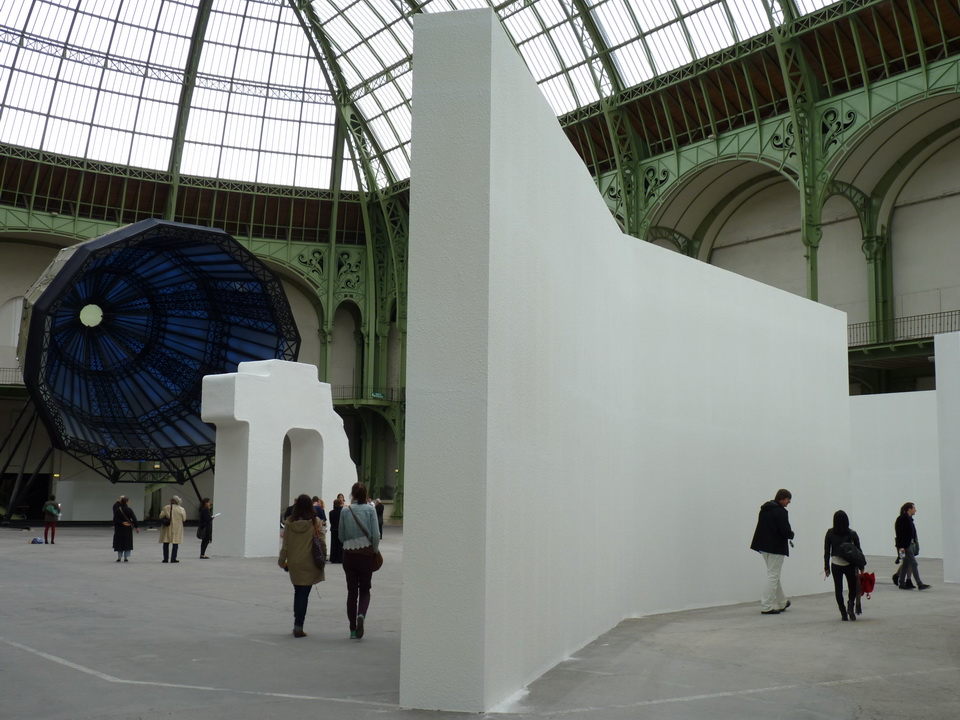
The Bizarre City resembles a maze, composed of a group of white buildings. Within these white walls, exhibition spaces connect to one another, with visitors entering through an archway. Following a programmed route, each space presents unique scenes and whimsical worlds built from sketches, paintings, sculptures, music, architectural models, and objects. Accompanied by subtle light music, the audience immerses themselves in an extraordinary new world and magical atmosphere, contemplating our existence together.
The Bizarre City is divided into nine main sections:
The Dome: Turning right at the entrance along a white wall, one arrives at an extraordinary dome. Soft, warm colors blend with rhythmic structures, forming a monument-like loudspeaker emitting gentle music, creating a light, lyrical atmosphere that inspires visitors as they enter The Bizarre City. The dome references the musical theories of Russian composer Alexandre Scriabin. In the early twentieth century, he created a glowing organ from auditory systems, exploring the relationship between sound and color. The dome also connects to Richard Wagner’s concept of Gesamtkunstwerk (total work of art), representing a type of utopian project combining music, color, and dance. (Note 2)
Entering the City: In front of the dome stands a ruin-like structure featuring a clean, white N-shaped archway. Between the building and sculptures, visitors are welcomed into the city—a new world. People enter the bizarre city through two tall, pure white walls, encountering seven city-states resembling the White House (exhibition halls). Each independent city-state holds its own mysteries and whimsical realms, allowing visitors to slow down and explore. The central five city-states are enclosed within white walls, forming a maze-like complex. With a spirit of adventure and curiosity, visitors enter the depths of art.
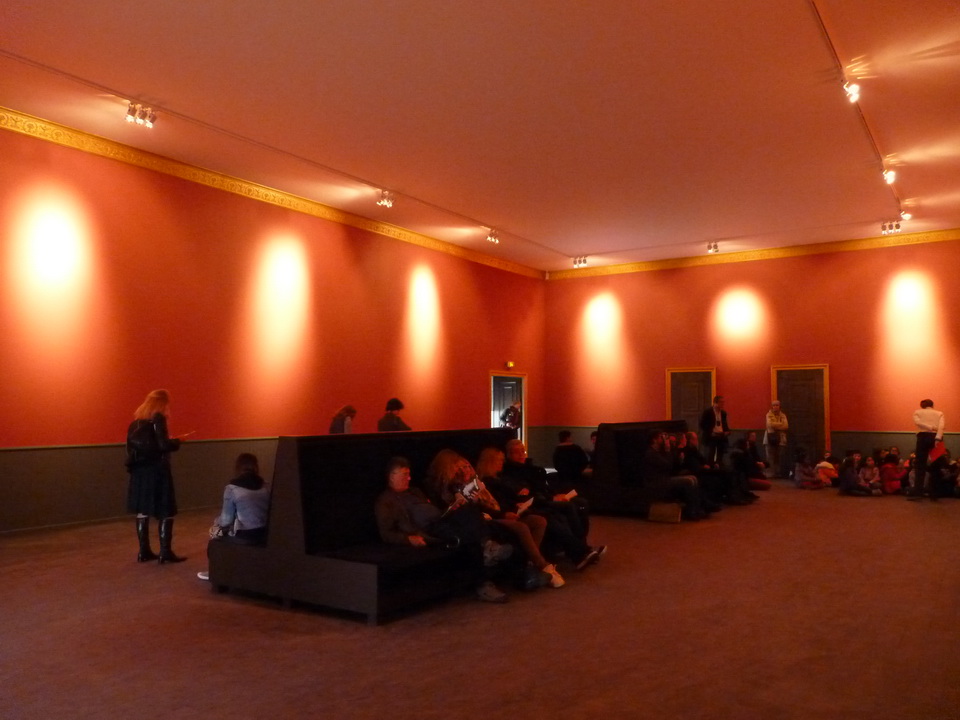
The Empty Museum: First, one enters a rectangular exhibition room. Without reference materials, one might not understand why, because the “museum” is empty. Actually, there are two long sofas in the center, gray carpeting on the floor, and red walls without any hanging pictures (perhaps just after a show ended or all works were lent out). Projectors cast light onto the walls, implying there is nothing to see—leave quickly. Of course, many visitors sit on the comfortable sofas to rest or meditate. The hall echoes with Bach’s joyful “Passacaille,” and visitors meditate to its lively rhythm. Unexpectedly, occurring between the music and the illuminated walls, between matter and spirit, music and space, poetry and imagination, concepts and physical phenomena, and sight and perception, the consciousness of urbanites is awakened.
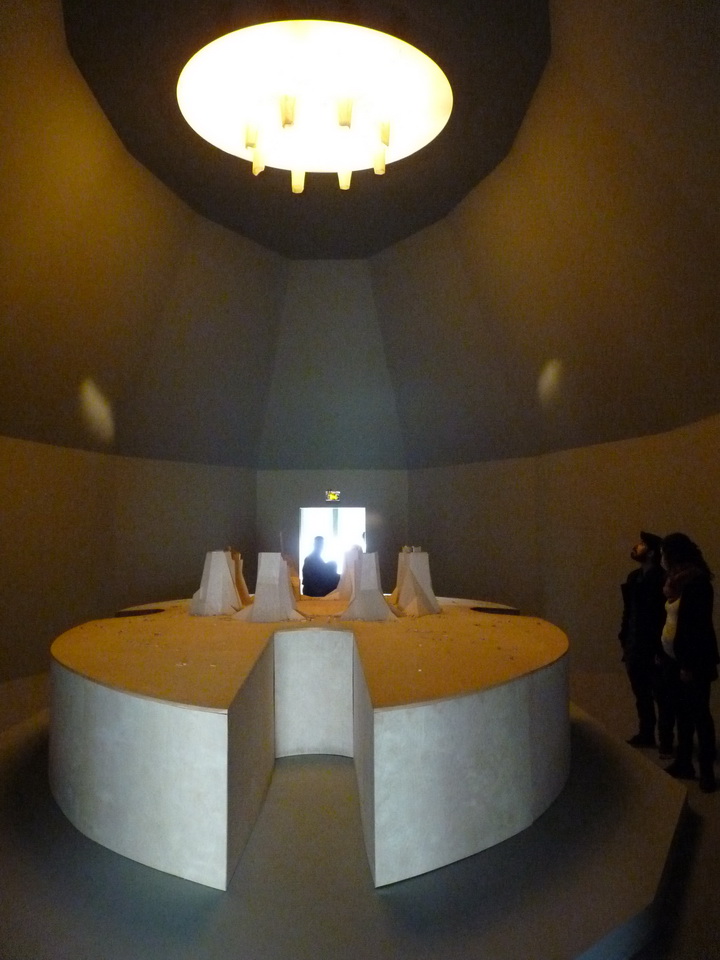
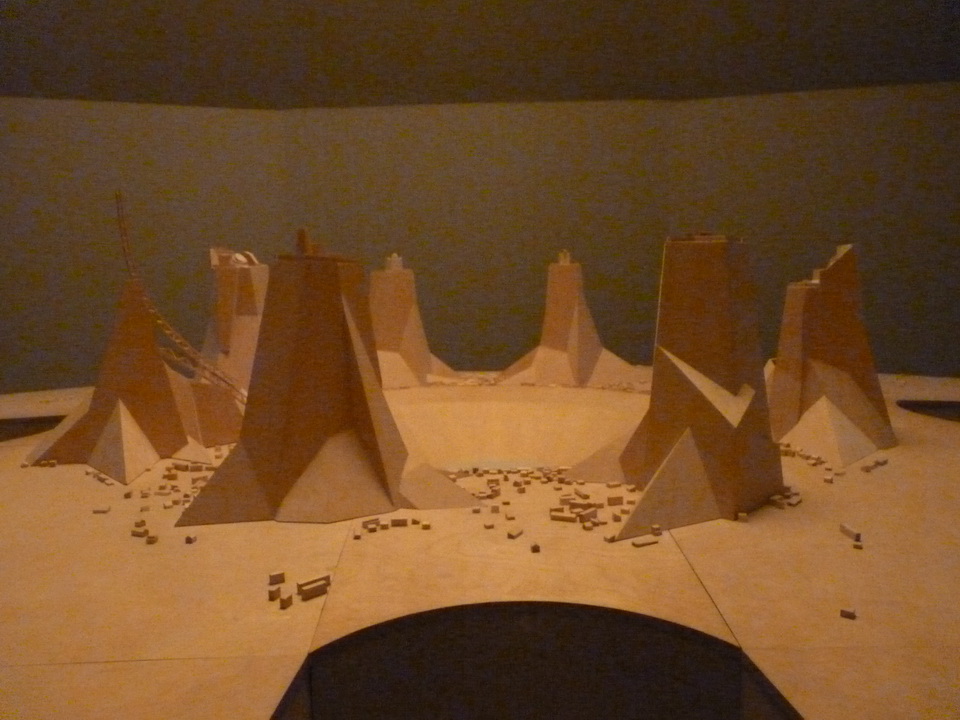
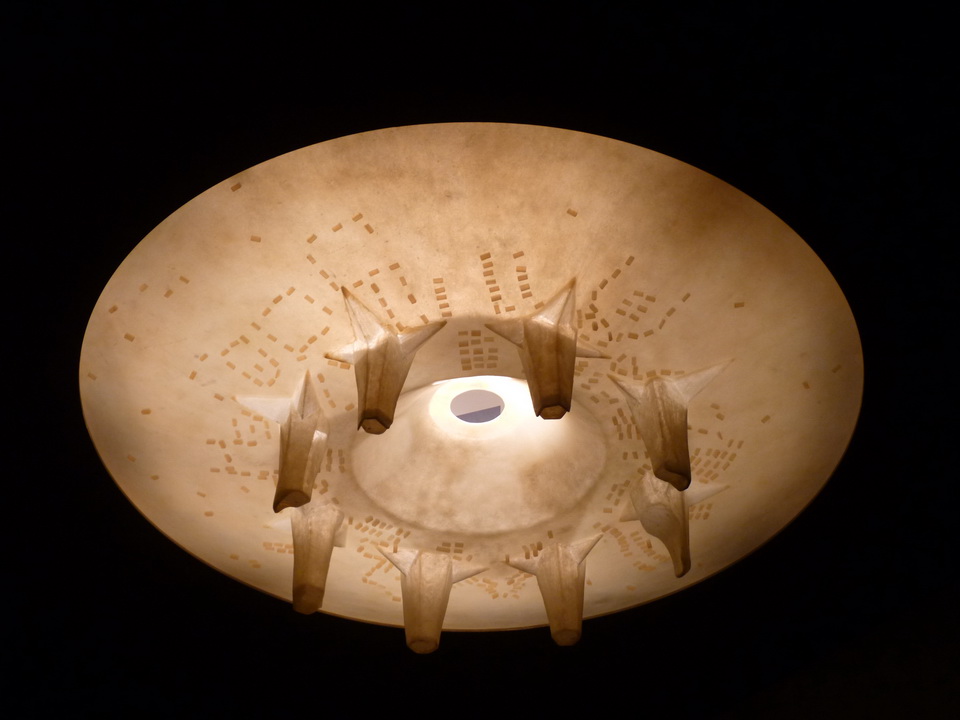
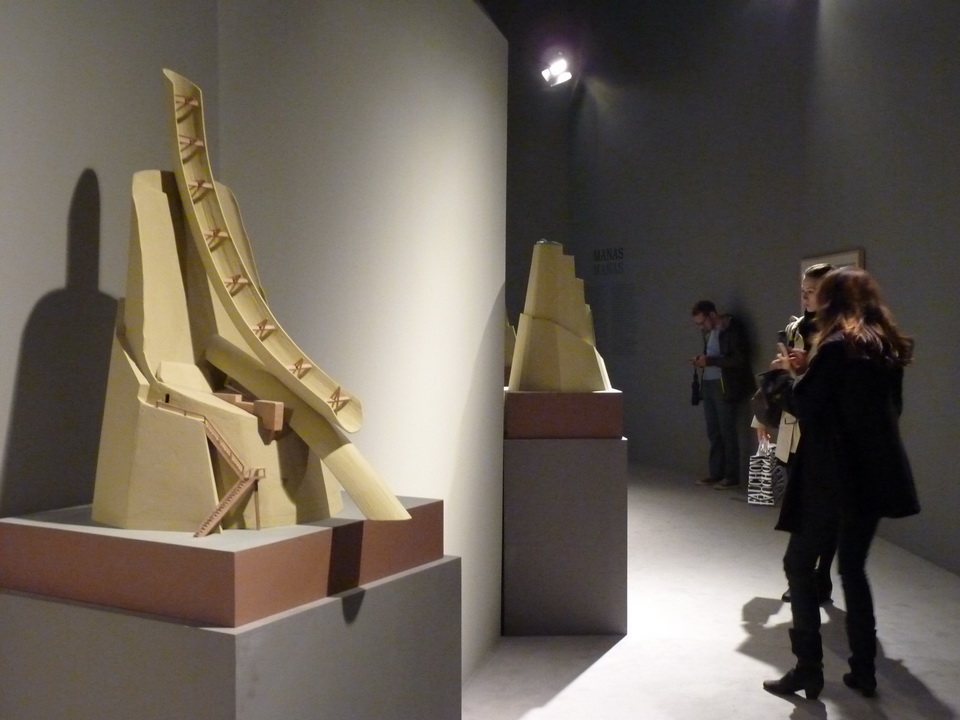
The Magical Manas: In the center of an oval exhibition space sits a model of the Manas city, once believed to exist in the high mountains of Tibet. This magical city is divided into the earthly realm where people live and the spiritual world—the heavens—on the ceiling. The upper and lower cities are each surrounded by eight majestic mountains, their magnetic fields corresponding, allowing people to connect with another world in a super-conscious meditative state. The surrounding exhibition area features eight mountains, each with specific symbolic signs: the House of Dreams, Two Antennae Transmitters, Cosmic Energy Center, Tunnel in the Mountain, Black Room, etc. Two perspectives: upward and downward, receiving energy from the spiritual sphere. The form evokes the ancient Tower of Babel. The Magical Manas seeks an ideal utopian realm, intending to display a paradise garden long desired by humanity.
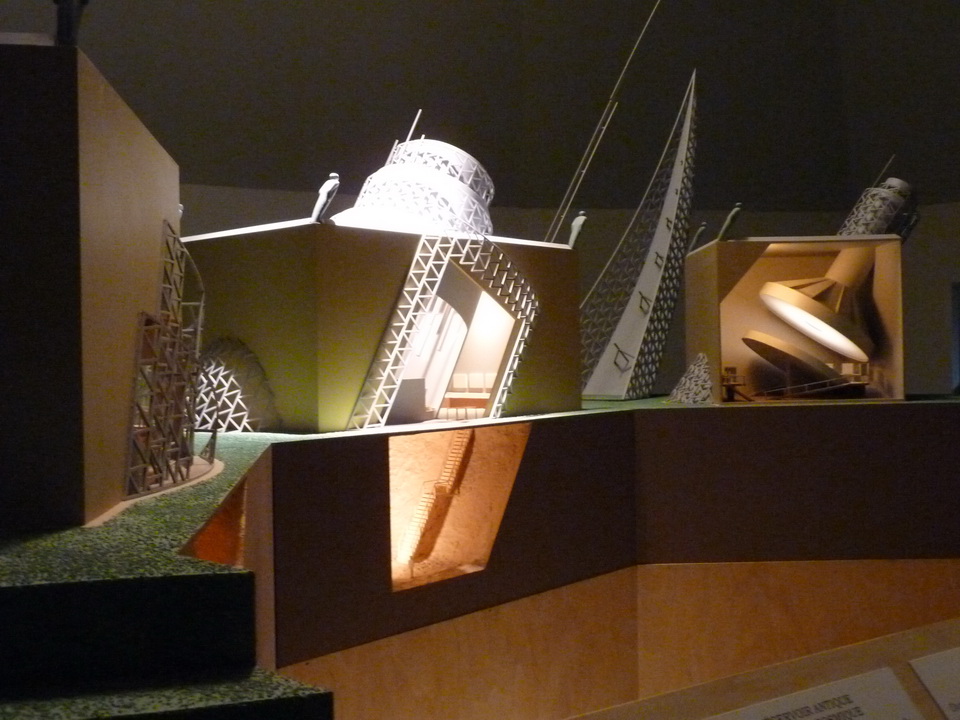
Cosmic Energy Center: Since ancient times, humans have sought cosmic energy, whether through scientific experiments, Qigong, or mind-body-spirit cultivation. Ultimately, energy exists in the universe. In this creation of heaven, earth, and humanity, energy and consciousness, matter and spirit are two sides of the same coin. Science has long confirmed that an interactive energy exists between the land and the universe surrounding us. Indeed, on our inhabited Earth, some places have particularly strong magnetic fields, while others allow cosmic energy to flow freely; people seem able to perceive this. The Cosmic Energy Center was established to awaken awareness of this energy, benefiting both scientists and visitors physically.
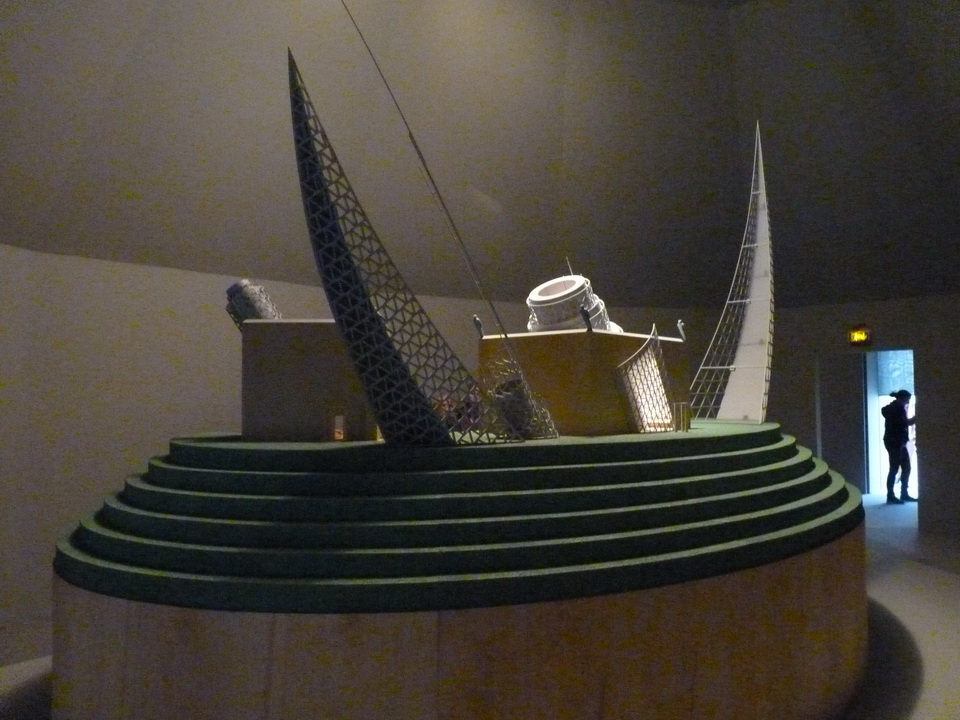
Here, the artist created a model of a Cosmic Energy Center monument based on ancient and modern information and imagination. It includes three architectural groups: an Ancient Cosmic Energy Reservoir, the Cosmic Energy Center itself, and a Spiritual Sphere and Transmission Laboratory. All three structures are tilted at 60 degrees according to ancient methods, half-built underground. This principle derives from ideal major constructions of ancient civilizations, such as the Tower of Babel or the pyramids of Giza, and extends to modern examples like the famous Third World Monument by Soviet avant-garde artists. On either side of these three major groups are pairs of ancient transmitter antennas, used to receive cosmic information. Surrounding exhibition series feature sketches and paintings imagining the Cosmic Energy Center, intended to explain the relationship between the distant past and the present.
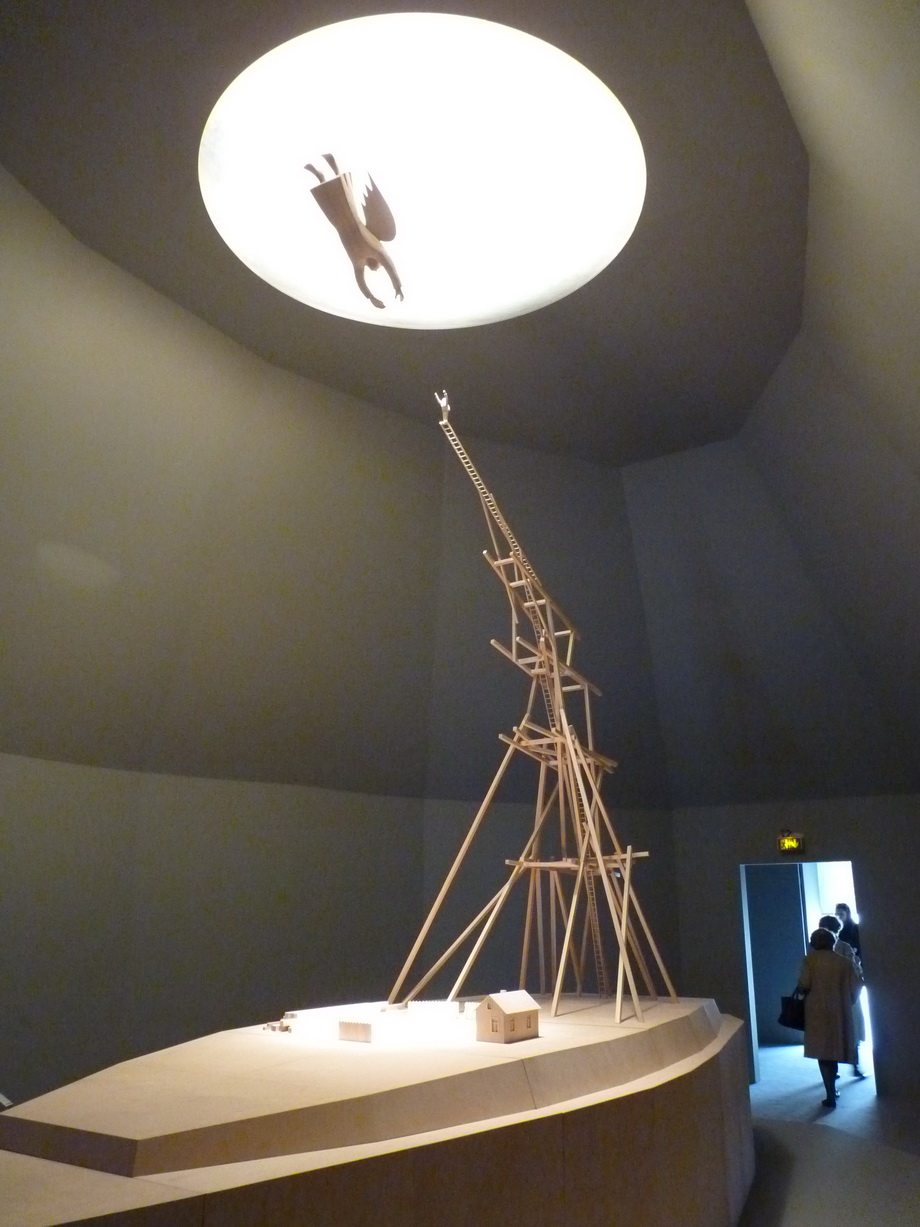
How to Meet an Angel: Have you ever met an angel? In real life, meeting an angel seems impossible. Are angels imaginary or do they exist somewhere? People often see their images in churches. Angels are products of Western culture, especially Catholicism or Christianity. It is said that everyone has an guardian angel (ange gardien) watching over them. Under certain conditions and situations, if one has a strong will, one seems to only feel rather than describe it. Angels signify spiritual and religious elevation, indicating human charity and moral improvement. In today’s materialistic consumer society, people seem to have strayed from this. In this degraded spiritual consciousness, how can one meet an angel, making it even more elusive?
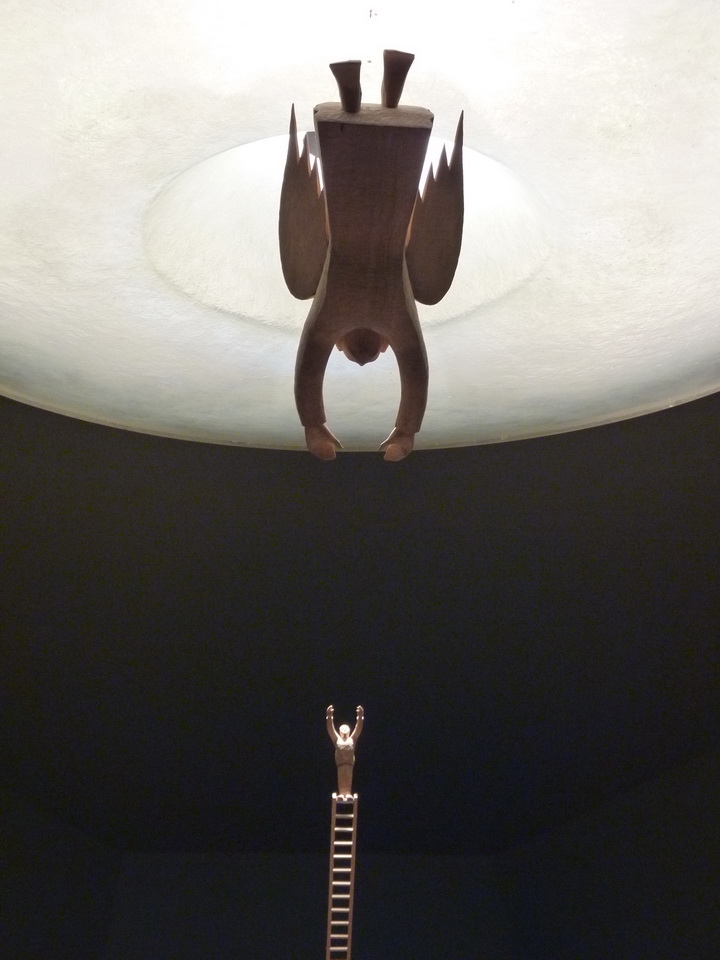
Angels are ubiquitous in Kabakov’s works. Here, they manifest human desire. A wooden frame model shows a very tall ladder reaching into the clouds, with a figure attempting to reach out and touch an angel in the sky—an ultimately unreachable situation. Surrounding exhibition areas depict a series of sketches showing crowds in the city watching the “Angel with Broken Wings,” presenting the current human condition of being trapped in materialism and distanced from spirituality and religion. Humanity seems lost regarding existential direction. The artist states: “The world changes so rapidly that people forget how it feels to live.” Clearly, although angels are religious figures, they represent happiness and wisdom. So, how does one meet your angel?
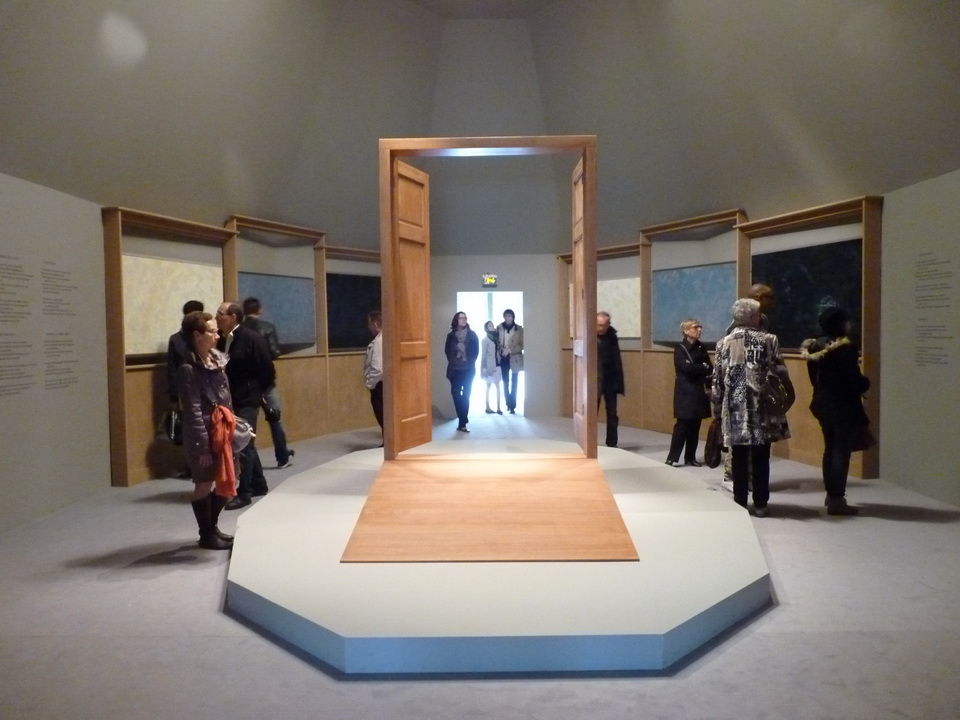
The Gate: Traveling through this bizarre city-state, everywhere is full of metaphors, allegories, and imagination. Immersed in a magical space and warm atmosphere, one arrives at a gate in the form of a monument. It is not a city gate or a passable door, but a suggestive artwork pointing to interpretation. A door represents entry and exit, inside and outside, opening and closing, private and public pathways and boundaries. In many societies, crossing a door often requires various rituals. The door demonstrates a type of life ending, and simultaneously serves as memory. One passes through it into mysterious depths and never returns.
A door is an entrance and exit; it can be opened to gaze at the distant horizon, or closed to become a space for self-reflection. It is the key to decoding things. A door is a liminal space between inside and outside; one can step out or enter. It is the gate of life and death leading to existential consciousness. Living in this world, are we inside or outside the door? Existence should be either inside-out or outside-in. If there were no such threshold as a door, where would inside and outside be? The door here is full of various metaphors and references, forming a life-and-death reference together with a series of triptychs next to it. From warm and bright, to dim, to pitch black, it resembles human birth, aging, illness, and death. The door is hard to see in bright light; it is only clearly visible on starless, dark nights. Death is like a night of darkness; in the pitch black, the door disappears again. Night pulls down the curtain of life, like a closed door, entering a mysterious space, waiting for rebirth.
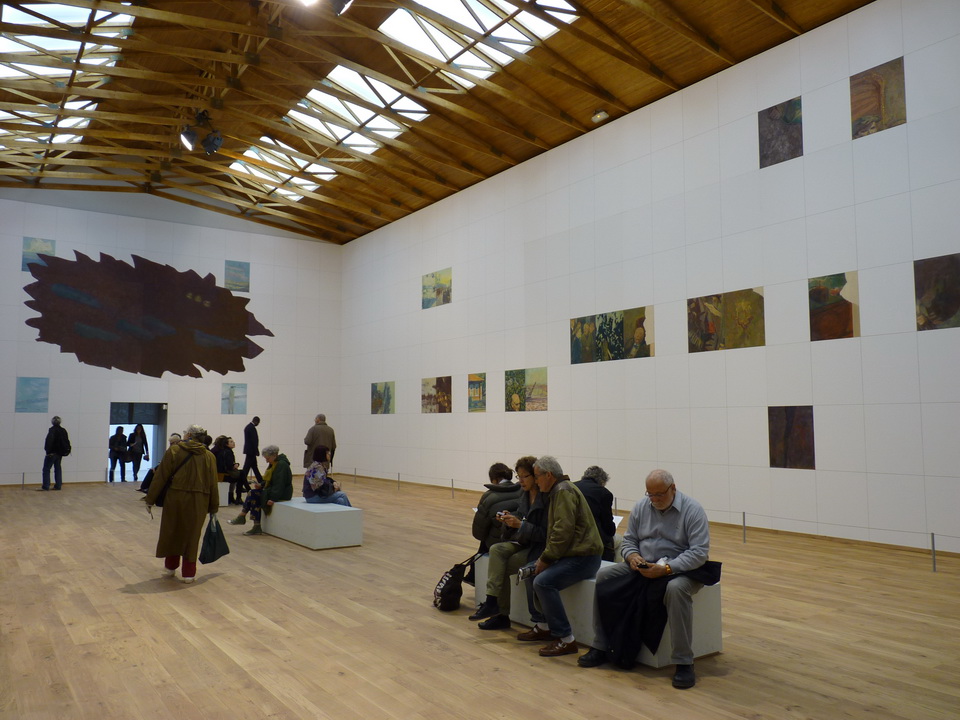
White Church: Is this an exhibition space or a church? There are no statues or religious objects for decoration, nor tables and chairs for prayer. Instead, three square bench seats in the center of the exhibition space provide resting and meditation spots for visitors. There is absolutely no religious atmosphere. Pure white walls are decorated with various images of contemporary Russian daily life, making it hard to imagine as a church. On the wall near the entrance is a large black mark—could this be the most modern abstract expressionist mural? Who can imagine the mystery within? There must be a hidden mechanism.
If it were a church, like many ancient churches, the walls should be decorated with various biblical stories and anecdotes. Of course, since Nietzsche declared the death of God, churches have declined, but at least traces of religion remain. After Russia endured communist totalitarian rule, distorting human nature, religion had long ceased to exist in atheism. What about churches? They seemed to suffer the same fate, or became centers for communist political propaganda and indoctrination. White is very useful; it is a medium that conceals and swallows. It not only simplifies complexity but also deletes all memories, entering a completely new historical state, beautifying the architecture. Currently, many monasteries and churches have become halls of art, seemingly possessing the function and significance of a White Church for a few people.
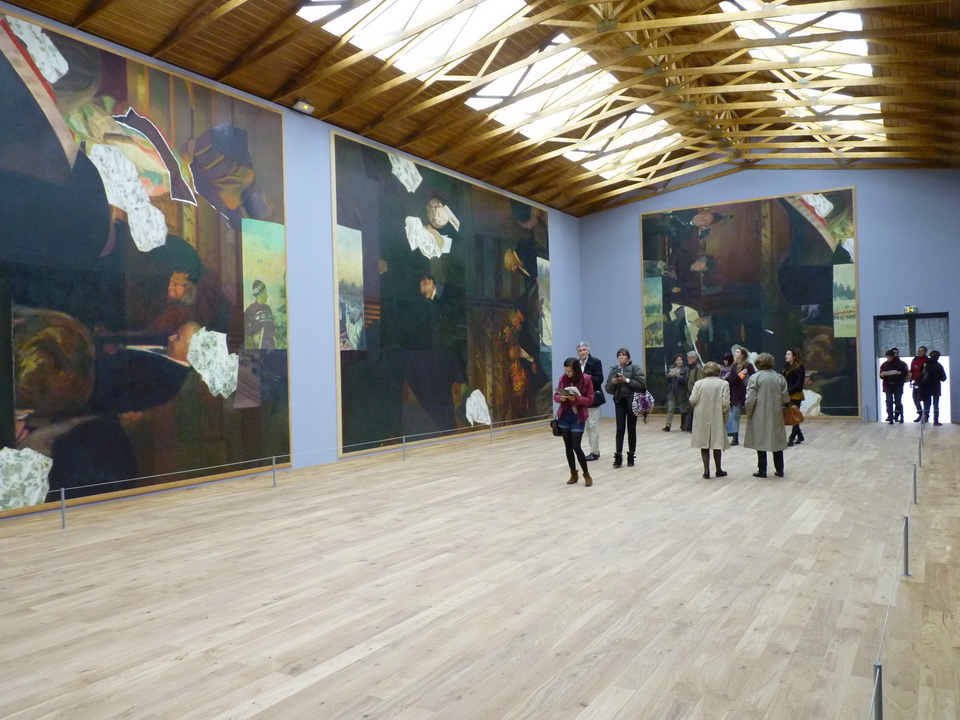
Dark Church: These two rooms, White and Dark, are quite special. They are exhibition spaces with skylights. Exhibition room or church? I am sure it is an exhibition room. The works exhibited are masterpieces painted by Kabakov specifically for this monumental exhibition. Here, six large-scale monumental oil paintings are displayed. This series revolves around personal biography, depicting in reverse order his memory photos of receiving the Emperor’s Award in Tokyo. In the central composition of the figures is a black hole. On a dim tone, several pieces of eraser-white cloth are constructed. Skylights on the left and right sides depict figures and landscapes. In this rigorous color-plane composition, the painting appears more lively, dazzling, and powerful. This series, grounded in solid realism, retains the old-fashioned style of Soviet traditional painting and is quite Baroque.
Note 1: Refer to the introduction for Ilya and Emilia Kabakov – The Bizarre City 2014 Monumental Exhibition. Note 2: Same as above.