The Most Marginal Artist of the Postwar Era - Dubuffet
Happy Countryside 130.5×89cm 1947 Collection Centre Pompidou, Paris Image from www.Centre Pompidou.com
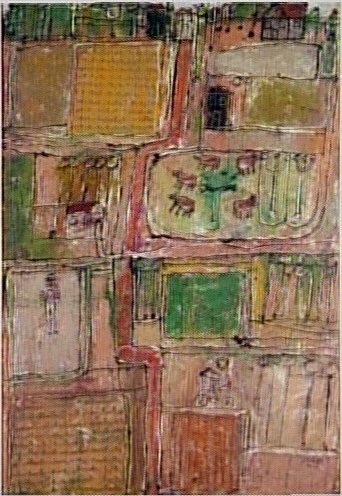
Jean Dubuffet (1901–1985), a French artist and sculptor, was arguably the least educated and most marginal figure in 20th-century art. His works reference primitive, uncivilized art, and children’s drawings, which he combined with specific humble materials—sand, tar, mud, pulp, leaves—to create unique textures and form a raw, primal painting language. In his later years, he developed similar series of poems featuring bizarre, magical characters filled with humor and joy. These witty works resemble children’s drawings; as Dubuffet wrote, “Painting is an instinctive language, more direct than words, closer to shouting and dancing. It is an expression of our inner language, more effective than words.” Indeed, children can draw long before they can write.