Visiting Joigny and Strolling Through the Market
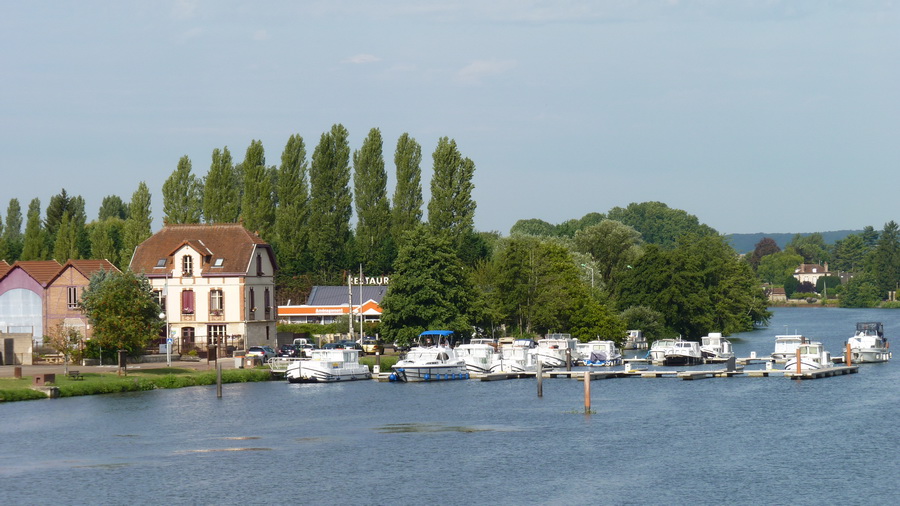
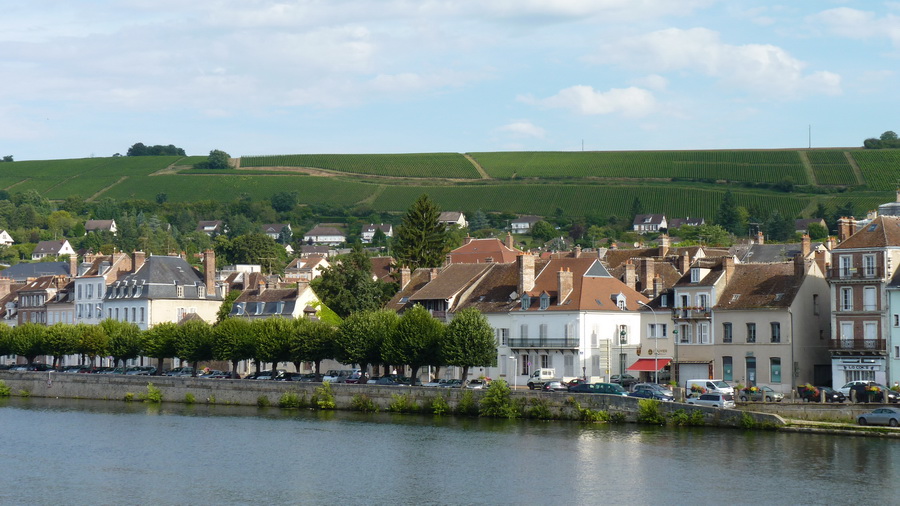
The scenery along the Yonne River in Joigny, with its clear mountains and beautiful waters.
Text and Photos / Chen Chi-Hsiang
Having passed through Joigny several times, I had only ever stayed near the train station—either to catch a train, pick up friends, or accompany them to shop in the industrial and commercial areas around Joigny. I had never truly entered this ancient small city. Its signage reads "City of History and Art," which looks charming; especially the word "art" made me want to explore it thoroughly. Finally, on the day of the Assumption, I drove there with a friend. It is only a ten-minute drive from where we live, allowing us to visit this small, beautiful city full of historical memories.
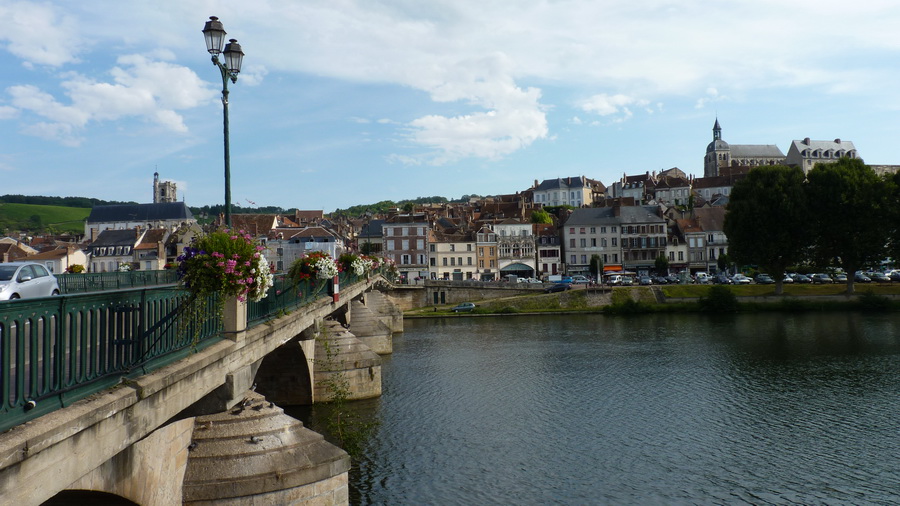
Joigny is a tiny town at the junction of Burgundy and the Greater Paris region, smaller than Sens. It sits by the picturesque Yonne River, perched on hills as an elegant, quiet middle-class town. The historic old district lies across the Saint-Nicolas Bridge. Standing on this side of the bridge, one can see the panoramic view of Joigny, with vineyards on the hills in the background, a church tower prominent on the left, and a large cathedral and castle overlooking the town from the high ground on the right.
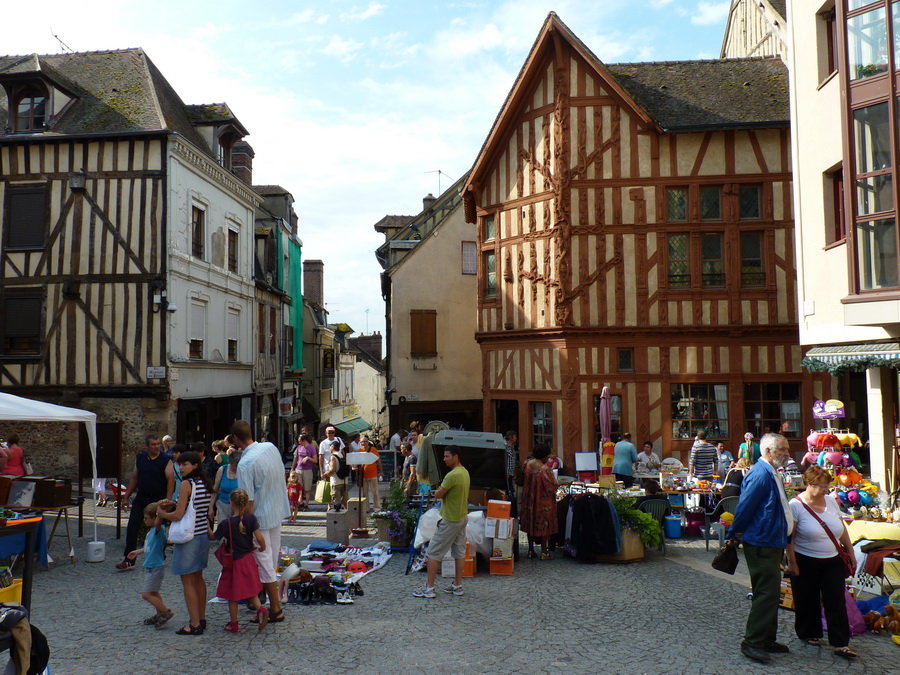
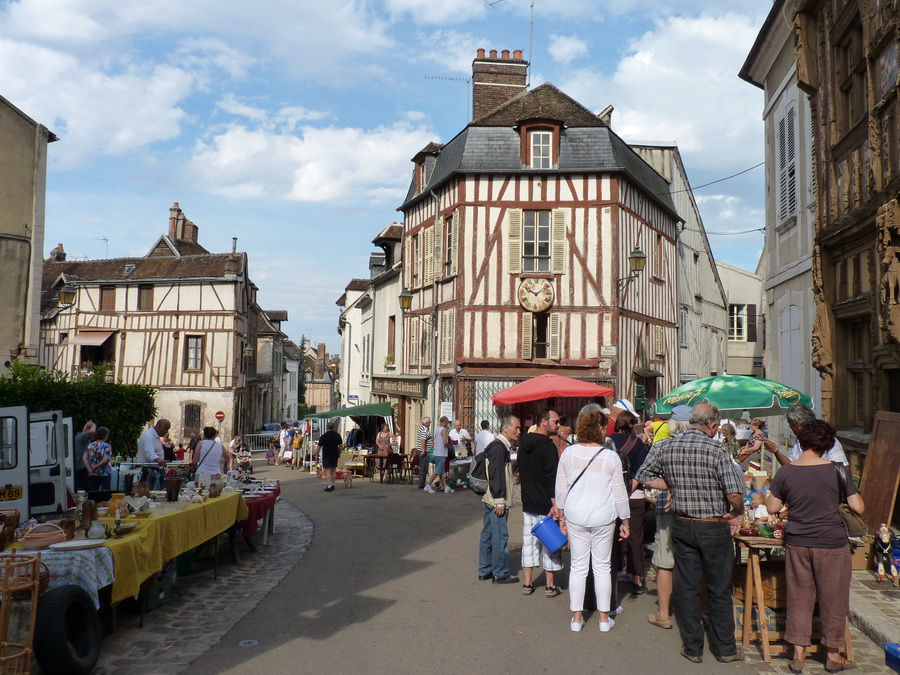
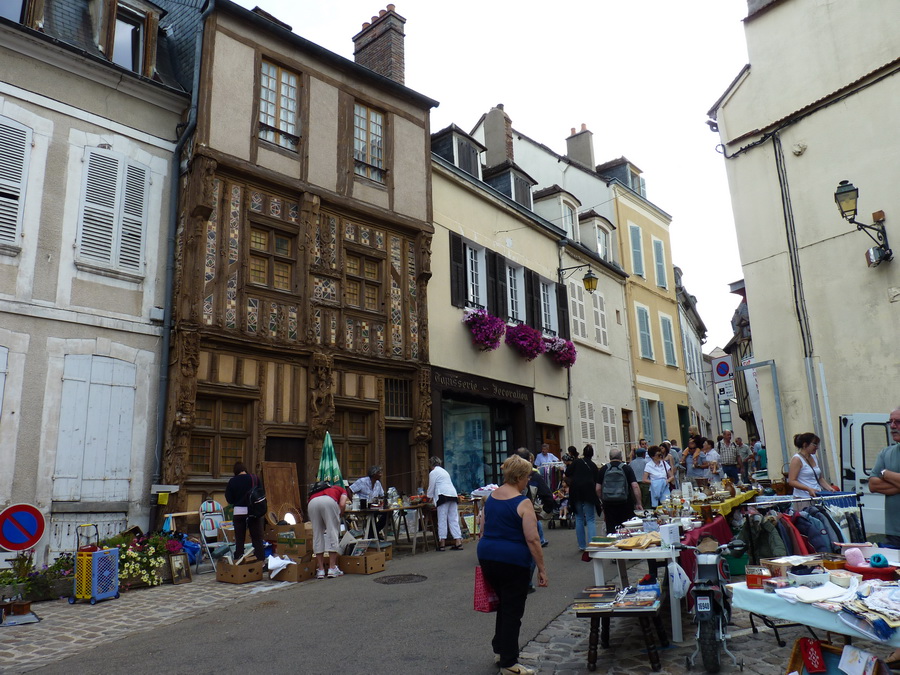
Entering the narrow, sloping alleys, we unexpectedly encountered a weekend flea market. Stalls filled every street and alley, making the narrow paths even more crowded. There was an array of everyday used items and clothes, reflecting how cluttered things have become in consumer society, filling people's living spaces. Wandering leisurely among the crowds felt unfamiliar. Heading up toward the intersections, we were drawn to two medieval black-and-white timber-framed houses (Norman architecture). These are Joigny’s oldest buildings: the house with seven heads on the right and the Jesus Tree house on the left, both featuring special decorations and carvings. Legend has it that a great fire nearly destroyed the town during the Middle Ages, and later, during World War II, it was bombed again because it was a stronghold of the Resistance, leaving it almost flattened. Thus, Joigny is neither new nor old, but some memory-building structures remain, witnessing local history.
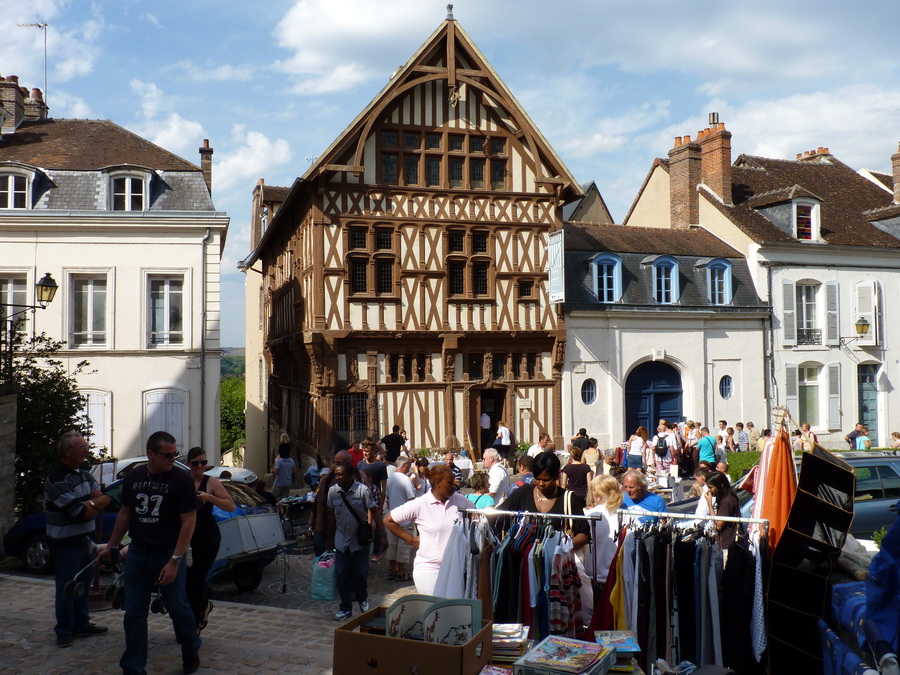
Continuing our walk down the sloping streets toward the church on the right, we found stalls selling second-hand goods on both sides. We browsed like treasure hunters, looking around curiously without any specific goal, which felt quite free. Naturally, I paid special attention to paintings or prints, seeking out hidden gems. At an intersection stood Joigny’s most intricately carved building: the Pilori House, with wooden columns depicting knights and dignitaries adorned with painted graphics. It faces the church, located in a triangular space, next to another magnificent black-and-white timber-framed building.
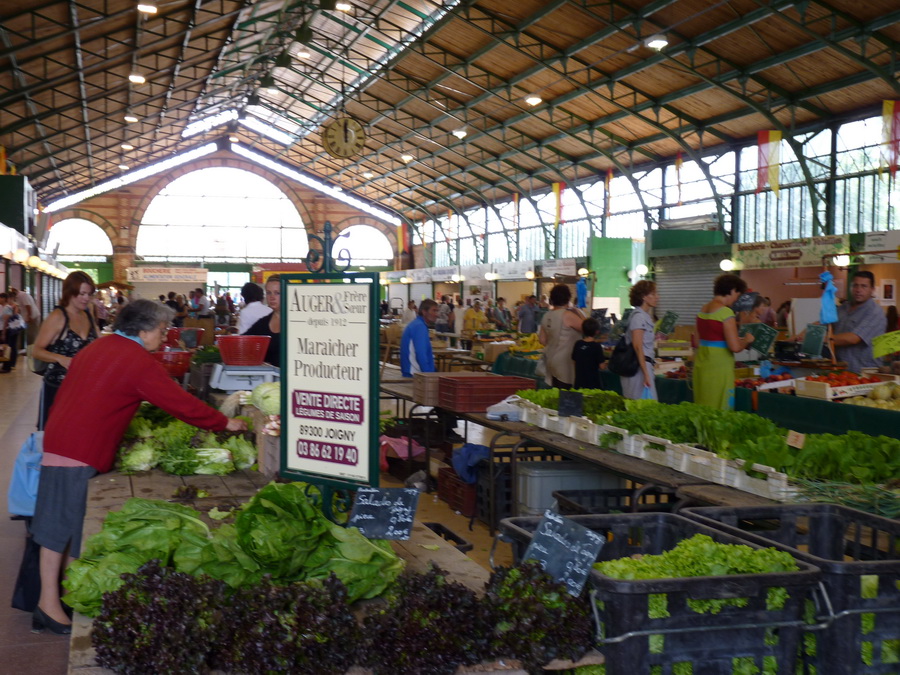
Turning back, we walked uphill along the old town’s market streets. The bustling streets resembled a festival day. Arriving at the old city wall, we saw a square featuring another intriguing traditional timber-frame structure (the Bailli House), which serves as a display space for Joigny’s timber architecture models. In front of it, the abandoned old city wall stands as a reminder of local history. Entering through the wall leads to the cathedral, surrounded by market gathering points. Mass was being held inside, so we did not enter but continued browsing the market. We saw two decent-quality prints that were not expensive; following my suggestion, my friend bought them—the most valuable trophies of the day. On the way home, we stopped at the local market to buy groceries. Located by the river, it is a large, modern steel-structured market. We purchased many locally produced fruits, vegetables, and breads, spending a wonderful morning wandering about.