Patrick Blanc: Plant Walls or Vertical Garden Rhapsody
Paris Musée du Quai Branly lush green plant wall
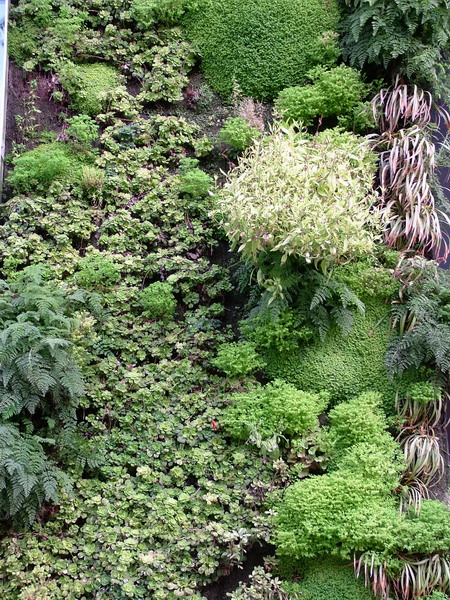
Paris Musée du Quai Branly lush green plant wall
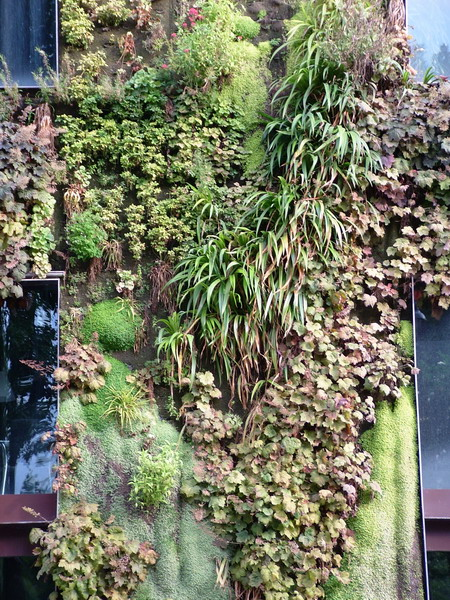
Paris Musée du Quai Branly lush green plant wall
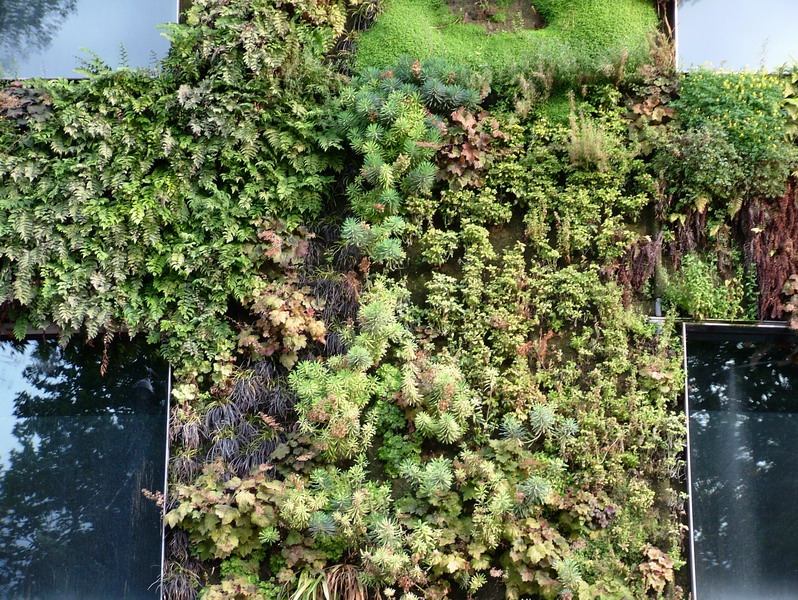
Paris Musée du Quai Branly lush green plant wall
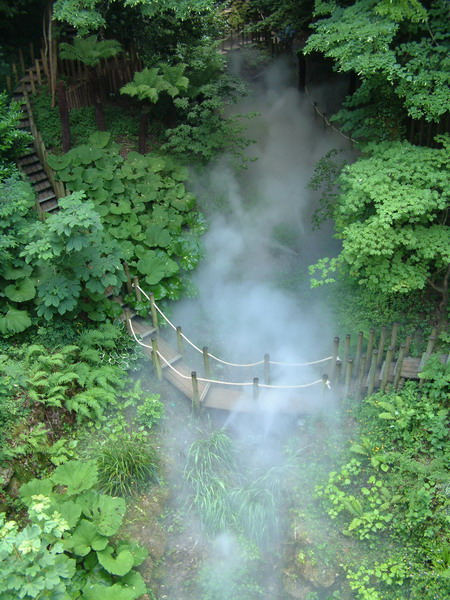
Chaumont-sur-Loire’s innovative Mist Valley. In this 21st-century era of urban life, finding a utopian green space seems increasingly difficult. Globalization has intensified urbanization trends; skyscrapers and concrete walls stand densely like forests, creating an extraordinary sense of oppression in city living and alienation from nature. Thus, humanistic green spaces within cities have become the primary task for new urban construction and a key index of contemporary urban quality of life. Past urban gardens were built on vast spaces; today, with land being precious, green spaces have become urban utopias. Modernist sky gardens are prevalent and represent a trend; look at Paris rooftops, and you see patches of lush green sky gardens everywhere. Though small, they soothe residents’ minds, purify vision, and inspire imagination of the natural world. Now, in this dream-fulfilling 21st century, amidst innovations in building and natural architecture, emerging gardens—vertical gardens—are born from humanity’s thirst for nature. This beautiful ingenuity in vertical living spaces has become the new trend and prospect for current urban greening.
Looking at France’s current horticultural trends, they rest on the creative styles of two famous horticulturists: Gilles Clément is known for his striking color themes and dynamic gardens, while Patrick Blanc is renowned for his plant walls or vertical gardens and botanical rhapsodies. The latter is the most dramatic and revolutionary. His plant walls or vertical gardens update current urban spaces dominated by concrete walls and construct new cityscapes. This horticulture works indoors or outdoors, regardless of building height or area, under any climate, provided suitable plants are chosen and local climatic conditions are met. Outdoors offers abundant sunlight and air; indoors requires artificial light to promote growth. Plants on walls prefer sunlight, while those below favor moisture. Everything is constructed under fully automated modern irrigation and fertilization systems, requiring only annual maintenance. Lush green plant walls or vertical gardens are not only visually pleasing but also provide sound insulation and thermal effects, enhancing fresh air. They are eco-friendly, beautify the urban environment, attract insects and birds, and ingeniously reintroduce nature into cities without wasting space, completely transforming the urban landscape. This new urban garden construction revolutionizes garden art since the 20th century like never before.
The most innovative creator of plant walls (Murs végétaux) or vertical gardens (Jardins verticaux) today is Patrick Blanc (born 1953 in Paris), a professor of botany at Paris Jussieu University and a researcher at the French National Centre for Scientific Research (CNRS). He is a world-renowned expert in subtropical forest plants. From childhood, he had a strong interest in plants, loved cultivating indoor flora and aquatic plants, and raising goldfish and small birds. In 1972, while still a natural science student at Jussieu University, he traveled to Southeast Asia for the first time, entering the primitive forests of Thailand and Malaysia to study hidden or climbing plants on tree trunks and rocks. He immediately fell passionately in love with these subtropical plants and their diversity. From then on (at age 19), he began traveling through primitive forests worldwide (Southeast Asia, Africa, South America), observing and comparing millions of plant species over many years. He understood the developmental mechanisms of understory plants, analyzed growth strategies, studied plant habits and morphological characteristics, and comprehended the relationship between leaf changes and light intensity. Years of effort made him an innovative expert in subtropical forest plants. In 1982, he joined the CNRS, and in 1989, he earned a French National Doctorate with his thesis “State of Life of Subtropical Forest Plants and Their Diversity.” He won the CNRS Botany Prize in 1993, the Research Department Innovation Award in 1999, the Creation Award in 2002, and the Virgile Prize in 2003 for his book “Plants Under the Subtropical Forest.” He received the Silver Medal from the Academy of Architecture in 2005. In 2006, he held the experimental solo exhibition “Botanical Rhapsodies (Folies Végétales)” at the Électricité de France exhibition space in Paris. In 2007, he was invited to participate in the Centre Pompidou’s 30th-anniversary special exhibition “Air of Paris.” These achievements highlight his excellence.
Patrick Blanc’s first plant wall was realized in 1988 in the greenhouse of the Cité des Sciences et de l’Industrie in Paris. Next, in 1994 at the Festival de Jardins Chaumont-sur-Loire in France, I was honored to witness these two lush green floral rhapsodies. Planted with various subtropical forest plants, the dense gardens bloomed with colorful flowers, giving birth to a unique vertical garden. He said: “The concept of the plant wall comes from my indoor planting pastimes, and also from another childhood passion for aquariums and their functions, guiding me to construct aquatic plant walls inside aquariums.” Of course, the inspiration came more explicitly from the concept of cliff-dwelling plants in Southeast Asian primitive forests. Combining his innovative natural scientific research with artistic creation, the lush green plant walls or vertical gardens appear exceptionally outstanding.
Typically, traditional gardens require three to five years of plant growth to see their form, but Patrick Blanc believes “that is too impatient; as for my gardens, one season is enough to see results.” This type of plant wall or vertical garden differs vastly from past garden constructions. These planted flowers and grasses quickly become lush and take shape, offering an easily manipulated and realized green realm that quickly becomes a possibility for creating urban environments. In 1994, a lush green plant wall was built at the Parc Floral de Paris; in 1998, a plant wall was constructed at the entrance of the Fondation Cartier in Paris; in 1999, the Felix Jacquier vibrant garden in Lyon; in 2000, an indoor vertical garden at the Aquarium in Genoa, Italy; and the dramatic Mist Valley garden at the Festival de Jardins Chaumont-sur-Loire in France. In 2001, an unusual dense wall forest in the atrium of the Pershing restaurant/hotel in Paris; in 2002, the Uebain vertical garden in Coulomiers; in 2003, the plant wall at the Chamber of Commerce in Lille and the vertical garden on the pillars of the French Embassy in New Delhi, India; in 2004, the magnificent vertical garden at the Musée du Quai Branly in Paris, the EPAD chimney vertical garden in Boulogne-Billancourt, the indoor verdant plant wall in the reception room of the French Ministry of Culture, and the plant wall at the Hauts-de-Seine departmental council in Greater Paris. In 2005, innovative plant walls at the Avignon city hall and parking lot, and the small Vinet garden in Bordeaux; that same year, he was invited to Bangkok, Thailand, to realize a grand indoor vertical garden at Siam Paragon department store. In 2006, he beautified the Belgian Parliament in Brussels and created a plant wall for the Weleda showroom in Paris. In 2007, plant walls at the BHV department store in Paris, the Omotesando Gyre reception hall in Tokyo, Japan, and the lush vertical garden at Plaza España in Santa Cruz de Tenerife, Spain. Finally, there is the mesmerizing plant wall in the lobby of our Taipei National Concert Hall. Today, Patrick Blanc’s outstanding works exist in major global cities such as Paris, New York, Los Angeles, Madrid, Brussels, Genoa, São Paulo, Bangkok, Seoul, Tokyo, and Taipei.
The so-called plant wall: On any wall support in the city, waterproofing is first handled, using metal frames covered with 10-inch PVC plastic sheeting. Two layers of 3-inch polyamide felt are nailed onto it with a staple gun; these two layers of felt act as epiphytes. Holes are dug to place plants within them. On this wall cliff, the felt serves as a bracket for the roots and rhizomes of the planted flowers and grasses. Then, an automatic timed watering and fertilizing system saturates the felt capillaries, providing water and nutrients to ensure the natural growth of plants. A gutter is constructed below the wall to receive flowing water, which is then recycled back into the automatic sprinkler system. The selection of these flowers and plants depends on their growth conditions and light requirements. If indoors, special lighting equipment must be added to ensure plant development. These dramatic plant walls or vertical gardens mostly use understory plants from subtropical forests. Patrick Blanc often constructs them with hundreds or even thousands of different plants. Under different tree species and leaf morphologies, along with impressive plant textures, colorful flowers dot the lush greenery, resembling modern environmental installation art, constructing a rhapsody of plants. Visually pleasing, they present a bright second nature for the city. Horticulturist Patrick Blanc’s website is www.murvegetalpatrickblanc.com.