Paris Graffiti Squeezed Out
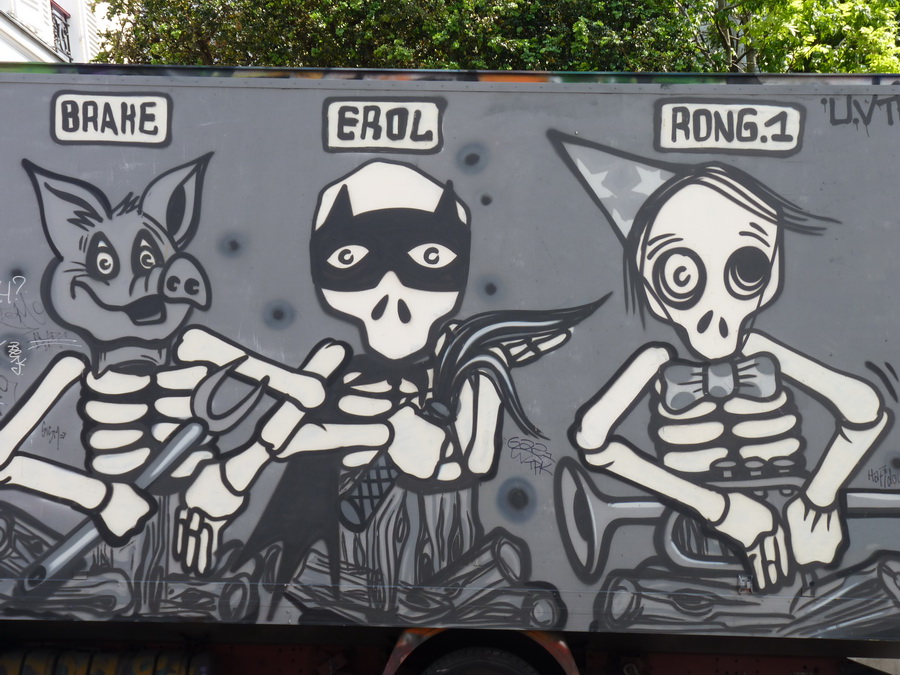
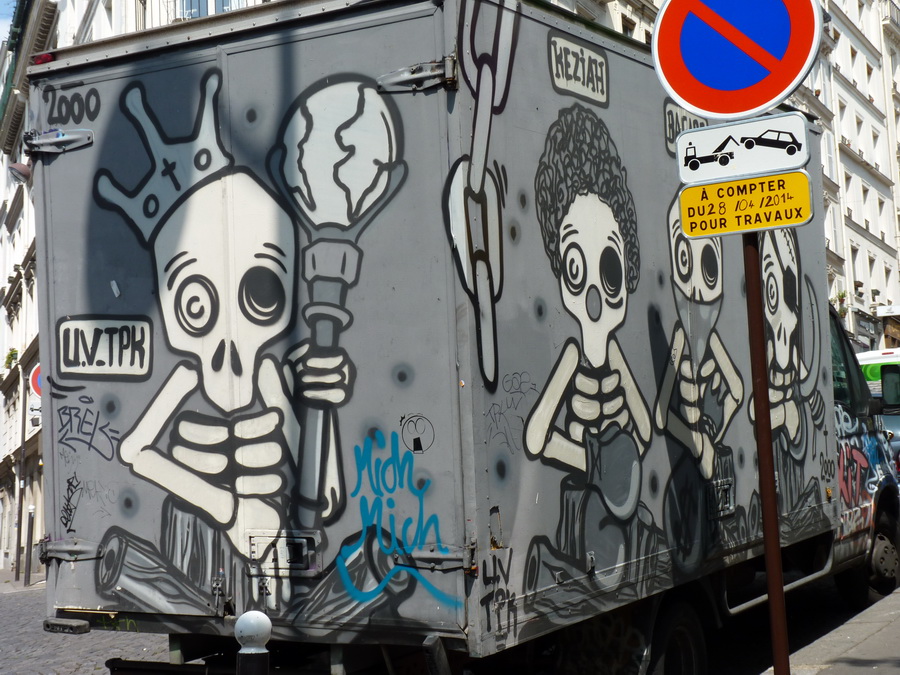
Graffiti on moving freight cars in the streets.
By Chen Chi-Hsiang
In recent years, metropolitan development has reached saturation. Urban renewal drives increasingly linear growth, with skyscrapers rising everywhere from Taipei to London and Paris. Bustling commercial districts and office buildings form forests of concrete walls, signaling economic prosperity and social evolution; higher seems synonymous with greater vibrancy. As the Paris metropolis expands outward, high-rises emerge like mushrooms after rain in peripheral zones. Globalization equates to urbanization. With this expansion, edges become new metropolitan grounds, absorbing frontiers into the city core. Consequently, graffiti on Parisian walls loses its exhibition space and context. The disappearance of vitality at the margins leads to the decline of graffiti.
I used to seek unexpected vitality in the outskirts of Paris, but these areas have now become new metropolitan communities. This is especially true near our residence in the 13th arrondissement, around the Library district, where development over the past twenty years has been unimaginable. Underground railways and the relocation of factories and warehouses have completely renewed the city's appearance. What was once a canvas for wall graffiti is now transformed into neat, clean white walls. Imagination pauses against such whiteness, losing the sense and emotion of turning a corner or bypassing the frontier. Unexpected surprises are no longer there.
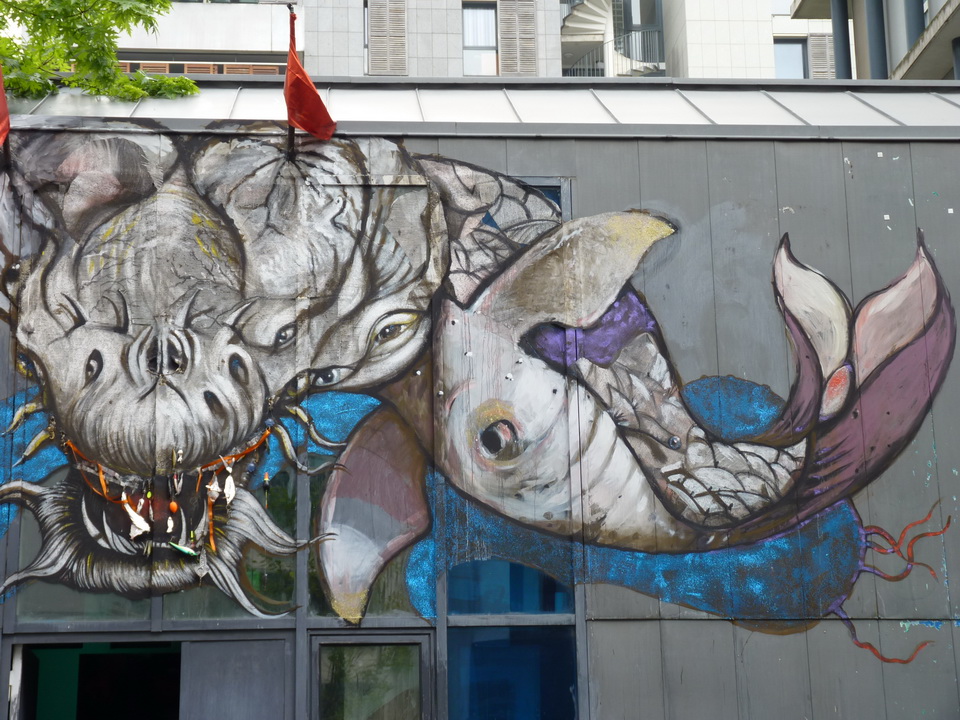
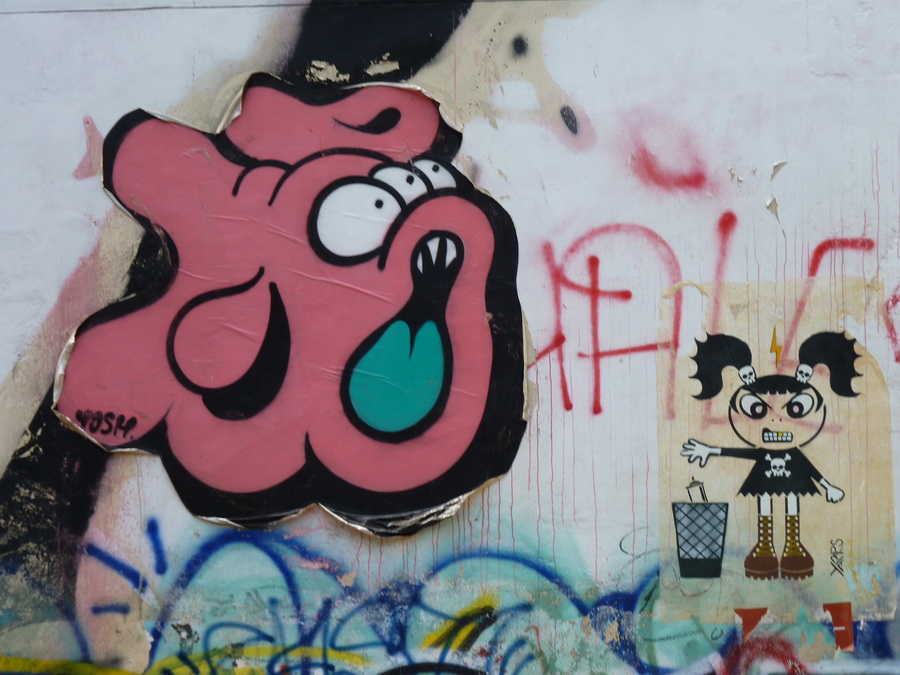
Today, encountering graffiti is rare. Occasionally, in the square south of the Centre Pompidou, beside the colorful Stravinsky fountain, one might catch a scent of graffiti under large murals. Artists frequently attack the walls here. Each time I visit exhibitions at the Centre Pompidou or pass through galleries, I pay special attention to the activity on this wall. Sometimes, I encounter graffiti unexpectedly in other corners of the city, feeling an inexplicable excitement, as if breathing fresh air again.