"2007 French Presidential Election" Part 8: Head-to-Head
(Top) Ségolène Royal from PS www.parti-socialiste.fr. (Second) Nicolas Sarkozy from sarkozy2007.forumactif.com. (Third) Jean-Marie Le Pen from FN www.frotnational…
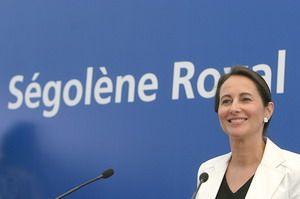


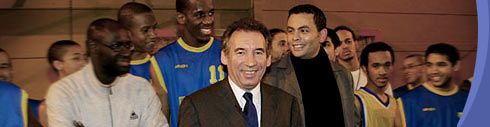
(Top) Ségolène Royal from PS www.parti-socialiste.fr. (Second) Nicolas Sarkozy from sarkozy2007.forumactif.com. (Third) Jean-Marie Le Pen from FN www.frotnational.com. (Fourth) Francois Bayrou from www.Bayrou.fr. Following the riots at Paris's Gare du Nord, all presidential candidates pointed to the five-year failure of the former Minister of the Interior's governance. Public security issues immediately became a major election topic again. UNP leader Nicolas Sarkozy argued that it was caused by the previous left-wing government's excessive tolerance and bias towards thugs, siding with society's thieves and cheaters. In an irrational outburst, he strongly attacked and insulted Socialist candidate Ségolène Royal with phrases like "Bastard! Shameless! Helper of thugs and cheaters!" This angered the female candidate, who fired back calling the former Minister of the Interior a "liar." A verbal battle instantly boiled over, filling the campaign with tension on the verge of exploding.
Centrist Francois Bayrou remained calm, continuing his political commentary as if nothing had happened. He considered the incident somewhat subtle, linking the public security debates of the 1995 presidential election to current discourse. He proposed an online debate among the four main first-round candidates (Nicolas Sarkozy, Ségolène Royal, Jean-Marie Le Pen, and himself), but this fell through due to Nicolas Sarkozy's strong opposition. Meanwhile, Jean-Marie Le Pen of the far-right National Front remained silent, deeply contemplating his campaign strategy to unexpectedly capture voters anxious about public security and suburban issues. Who is riding the wave? According to mass media, the tough-talking Minister of the Interior, Nicolas Sarkozy, has won public favor, seen as the only one capable of drastically improving France's public security. But does the media also favor the right-wing leader? Polls show Jean-Marie Le Pen of the National Front has become the figure of the moment. However, in a Wednesday joint poll by Metro and L'Express asking "Who is most likely to be elected next president," Socialist candidate Ségolène Royal led with 31%, far ahead of the two right-wing and centrist candidates, Nicolas Sarkozy and Francois Bayrou, each at 29%. The campaign remains tense, and everything awaits verification in the first round.
Fortunately, on Wednesday (April 3), the focus of all French mass media shifted to the test run of France's new generation (150 model) TGV bullet train on the eastern line, allowing the noisy campaign to take a break. Major French and international media covered the event live. At 1:14 PM, the train broke the world record with a speed of 574.8 km/h, surpassing the 515.3 km/h achieved on the Atlantic line in 1990. Many journalists described the train carriages as if they were flying. Crowds lined the eastern railway tracks, cheering and waving flags to welcome this historic moment, writing a new page in train history and becoming a source of pride for all French people. Amidst the smoky atmosphere of the campaign, the French people cast extraordinary confidence, revitalizing the discouraged public mood.
With just over two weeks until the first round, the presidential race grew more complex. Candidates tirelessly delivered speeches and visited the countryside, creating news events almost daily. The theater of the election continued to be spectacular. The ruling party announced unemployment figures for the past six months. Interestingly, just before the election, officials lowered the unemployment rate to 8%, the lowest in recent years. However, this was quickly corrected by European Union official data to 8.8%. Not only that, French unions also questioned these figures. Centrist Francois Bayrou declared that if elected, he would abolish the École nationale d'administration (ENA). In an interview with a philosophy magazine, Nicolas Sarkozy claimed that perversions, underage sex, and thuggery were caused by genes. The desecration of a Jewish cemetery in Lille showed that anti-Semitism in today's society is not accidental.
Current Education Minister (centrist) Robien declared his support for Nicolas Sarkozy's campaign. Currently, the Commissioner for Social Equality within the governing government (the only French person of Arab origin) expressed dissatisfaction with the government and resigned. He will publish a book next Monday titled "Moutons égorgés dans les baignoires" (Sheep slaughtered in bathtubs), expressing his dissatisfaction with the French right or more specifically Nicolas Sarkozy. Dramatic scenes will continue, promising to surprise right-wing candidates in the campaign. During a grand evening speech by Nicolas Sarkozy in Lyon, President Chirac's wife accompanied him on stage, urging voters to support their chosen candidate. At noon that day, Minister of the Interior Nicolas Sarkozy planned to visit the working-class district of Croix-Rousse in Lyon to solicit votes, but was met by a group of young people protesting against his tough policies. The situation turned tense; a riot police force appeared. For safety and campaign image, the former Minister of the Interior had to turn back, damaging his image of public authority. It is hard to imagine he is the least popular figure in the suburbs of major French cities.
French tennis star and singer Yannick Noah said in a radio interview, "Help those on the periphery, vote for the Socialist candidate Ségolène Royal." On Friday (April 6), Jean-Marie Le Pen of the far-right National Front heroically visited the suburban working-class district of Argenteuil. People there claim it is a place without public authority. Last year, former Minister of the Interior Nicolas Sarkozy had declared his intention to use tough measures to clear this lawless area and eradicate all thugs, causing uproar and debate across French society. Since then, the Minister of the Interior has become the least popular figure among young people in the northern suburbs of Paris. During his presidential campaign visits, he repeatedly emphasized returning to this lawless Argenteuil, yet delayed again and again, seeming afraid to enter the space he wanted to clear. Almost all presidential candidates personally visited and signed agreements for harmonious coexistence with local associations. Only this dark horse of French politics dared not enter. So, around 10:30 AM that Friday, Jean-Marie Le Pen of the National Front stood on the platform previously claimed by the former Minister of the Interior, challenging the right-wing candidate. In a highly successful mass media battle, he won back the votes of voters dissatisfied or losing confidence in public security.