JR - Louvre Pyramid Installation Exhibition
JR - Louvre Pyramid Installation Exhibition, photographed on May 22.
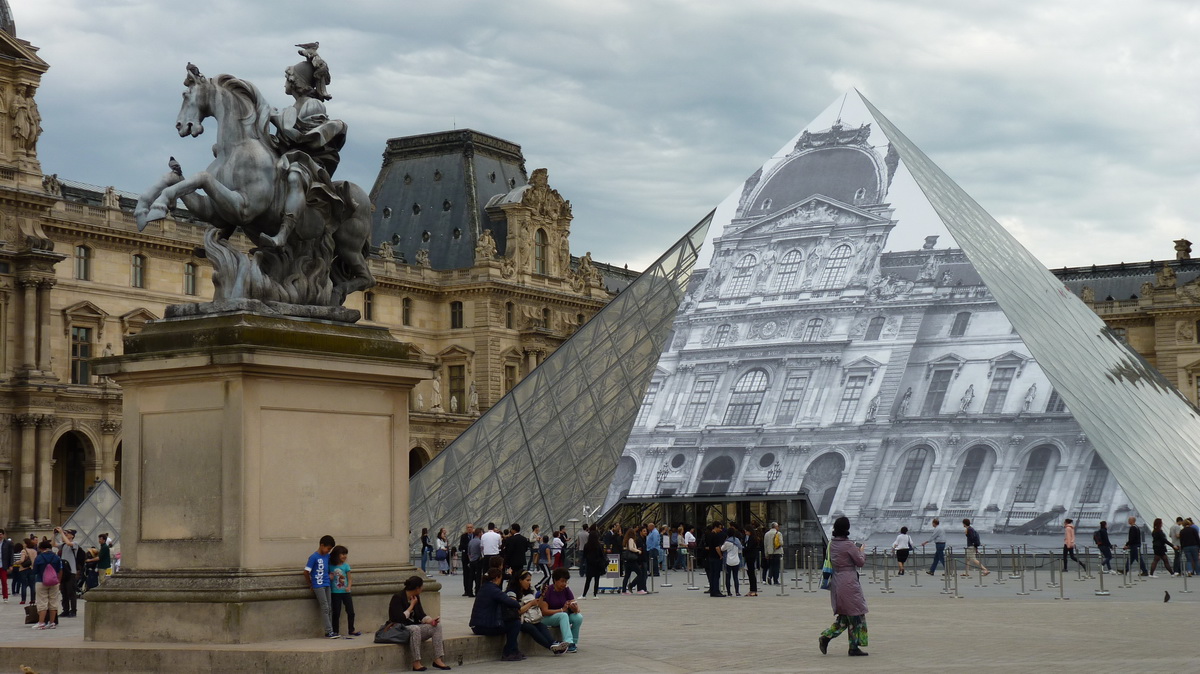
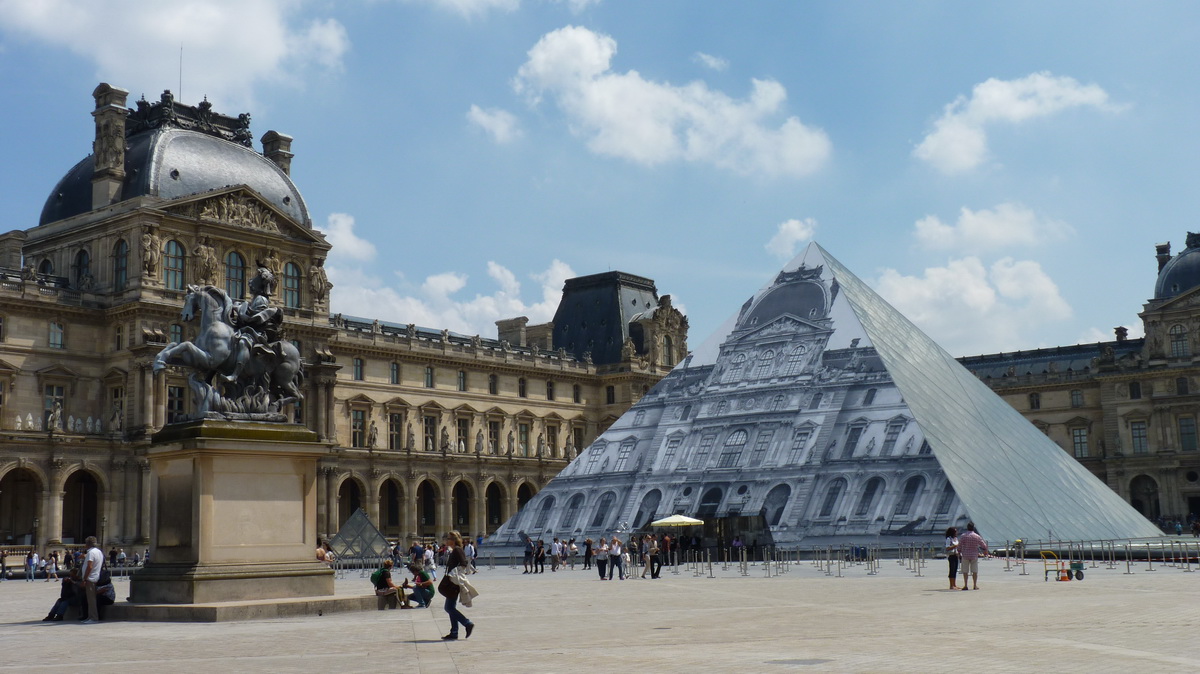
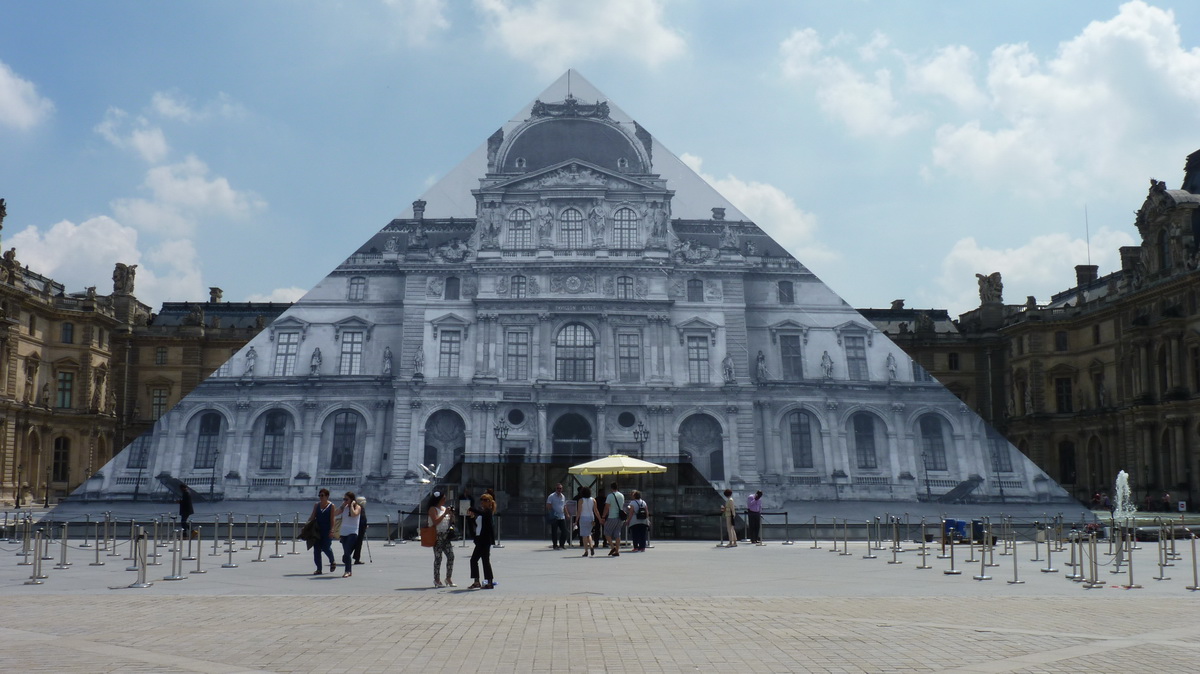
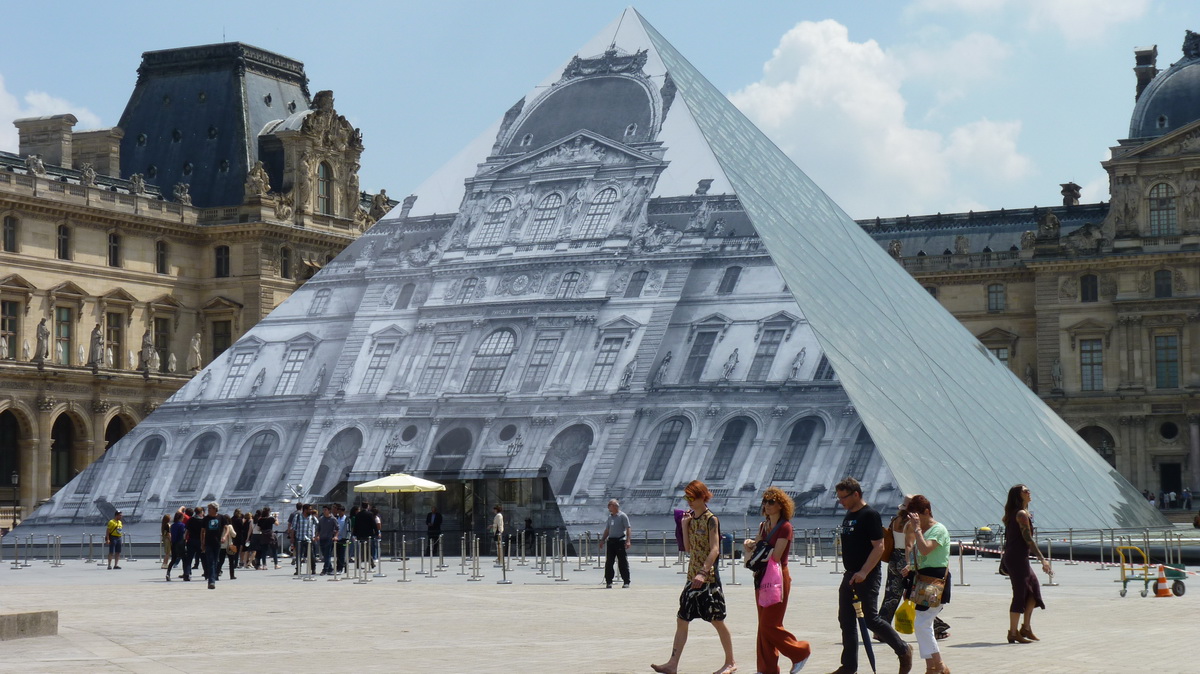
Text and photos by Chen Chi-Hsiang. On display until June 27. JR is one of the world's most famous street artists, renowned for his large-scale photographic collages of human heads. His works can be seen on walls in major cities across Europe and America—New York, Paris, London, Shanghai in China—as well as in Rio de Janeiro in South America, across Africa, and in the Middle East. He focuses on the living conditions and circumstances of ordinary people today, making him one of the most influential artists of our time. Two years ago, during the renovation of the Panthéon in Paris, he presented a grand outdoor and indoor installation themed around the people of Paris, illustrating the inevitability and prospects of human coexistence in today's global village.
Although a French citizen, JR is an authentically global artist, nomadic in his creation across cities and corners of the world. He enters living spaces to exercise his artistic imagination, refusing to remain self-indulgent within the utopian art system. Through his unique artistic expression of human coexistence, he realizes the power and influence that art should have, sharing real aesthetic experiences and concern for society.
In this invited exhibition at the Louvre, JR uses the magic of his art installations to make the "Louvre Pyramid" disappear. Using the glass pyramid at the main entrance of the Louvre as a support structure, he covers it with large photographs output from the Louvre. Following a temporal sequence—that is, slowly constructing it partially throughout the exhibition period—until the entire Louvre image is revealed, the pyramid seemingly disappears. In fact, this is merely a visual trick; from certain angles, the pyramid remains a pyramid, and its disappearance is an illusion. If one were to drag in political disputes regarding the construction of pyramids, it would be superfluous, because the pyramid has become a symbol of Paris, and entering the Louvre requires passing through the pyramid, leaving little room for controversy. It seems overly anxious for the artist to hope that this work will prompt everyone to reconsider this matter. Here, the approach is more intellectual than his other head-portrait works, perhaps even more conceptual. The Louvre in front of the Louvre (of course, an image) proves that statements by famous artists or celebrities are not necessarily persuasive. Regardless, artworks have their own brilliance and meaning.