Paris's "Hair Studies Culture"
(Fig. 1) African children's hair. (Fig. 2) Hairstyles are not just culture, but also aesthetics. Paris is an international metropolis...
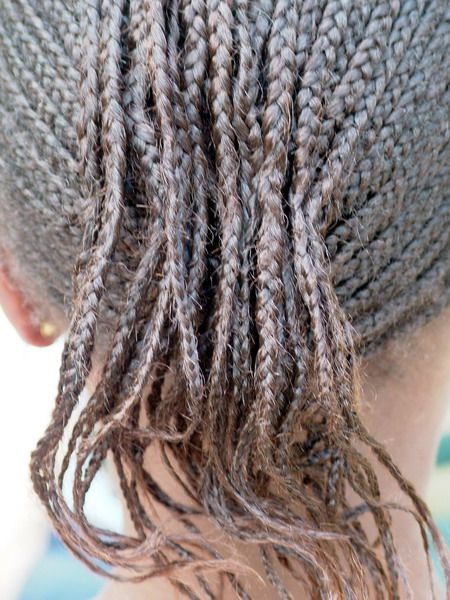
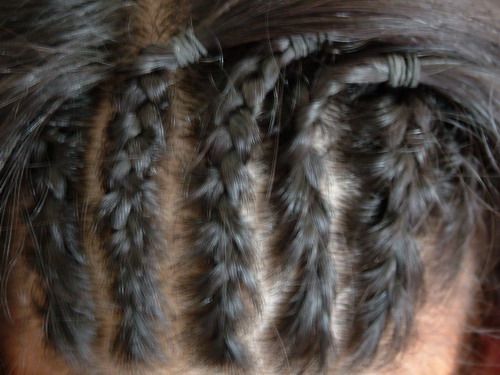
(Fig. 1) African children's hair. (Fig. 2) Hairstyles are not just culture, but also aesthetics. Paris is an international metropolis; like the United Nations, it is the most globalized city where diverse cultures from around the world converge and flourish. People of various colors gather here to live in harmony. It is common for elementary or middle school classes to contain students from 5 to 15 different countries globally, allowing one to imagine how their multicultural integration naturally constructs a unique worldview—a phenomenon absent in smaller cities. Each student carries their own family cultural traditions, growing up in such an environment naturally enriches their lives and broadens their cultural perspectives. These viewpoints are clearly visible in race, ethnicity, skin color, language, clothing, diet, and even hair.
A few days ago, I visited a barbershop. While getting a haircut, I chatted with the stylist, who explained that her clients are quite diverse; she has cut over a hundred different hair types. I joked with her, "You should give me a discount since cutting my hair is quick (I'm bald with very little left)." She smiled charmingly and replied, "Love of beauty is priceless," praising her scissors as top-tier in Paris. She continued to explain the characteristics of different racial hair textures, helping me realize this fascinating subject matter and inspiring me to write this article on Paris's "Hair Studies Culture" to share with everyone. Under her skilled, soft-touch hands, I felt refreshed. Each haircut taught me something new, broadening my horizons while making me feel close to her. Generous with tips to thank her care, I kissed her cute cheek, and she smiled sweetly, saying, "See you next time."
White people's blonde hair is square under a microscope, Black people's hair is flat, and Asian yellow-skinned people's hair is round. This relates to scalp pores: white and Asian people have larger fine pores, while Black people have finer ones. Naturally, hair and skin color involve not just race or ethnicity, but environmental and climatic conditions. In hot climates, finer pores sweat less, meaning body heat dissipation differs from other regions. Observing Black people's finer, rougher, wire-like curly hair, it is easy to wash but prone to tangling, making ponytails or long hair difficult to manage. Long hair often becomes messy and tangled. Men usually keep short hair, while women's long hair must be neatly combed into braids, looking enchantingly beautiful like snake-witches (this is merely descriptive, not derogatory). White blonde and Asian black hair are smoother and easier to grow long (with rare curls), allowing for sleek, long hair like The Beatles'. Hairstyles are easily shaped with more variations; beauties often perm or curl their hair to enhance their unique, attractive appearance.
Regardless of race or hair type, aging brings white hair to all. At old age, everyone seems equally prone to hair loss and whitening. Interestingly, medical research indicates that white people have the highest rate of baldness among ethnic groups, followed by Asians, with Black people having the lowest rate. No wonder Hollywood films often feature handsome, distinctive golden-bald stars, while such figures are rare in Asian film and music industries. These aesthetic standards differ vastly, yet local standards are clearly visible.
Paris's hair industry is particularly developed, and stylists are famous. Driven by the rise of fashion shows, stylists showcase new hairstyles, presenting not just eccentric clothes but bizarre hairstyles. Thus, hair studies within Paris's multicultural context is a profound subject. Hair itself is the best attribute of globalization and localization, serving as a basic cultural symbol. Paris's barber and salon industries have developed distinct technical styles based on hair attributes. This pursuit of unity amidst diversity is human nature. In today's globalized world, ignoring localization loses the meaning of multiculturalism. With blonde hair becoming the fashionable aesthetic of Western dominant civilization, seeing so many Asians (unimaginable even in Paris) adopting blonde trends raises questions about this virtual beauty (lost in globalization or showing off virtual fashion). What does this signify? Local globalization, global localization, or sub-colonization?
More remarkably, among African Blacks or Middle Eastern Arabs, this lost aesthetic trend is not seen. From a hair attribute perspective, Africans cannot conform or even imitate, instead strengthening their resistance consciousness. Traditional clothing and hairstyles emerge (an increasing number of young people return to religion, proving what?). Clearly, certain African Black groups are not intentionally targeting Western dominant culture; this is their fundamental, rooted local life culture. Conversely, some Middle Eastern groups intentionally strengthen this aspect (not all; some are more Western than Westerners). They understand that local cultural roots allow for local globalization, resisting forced globalization or fashion corruption. Especially in today's survival-of-the-fittest historical struggles, preserving ethnic and cultural roots is precious. Yet, in Western international metropolises, they are marginalized and unable to integrate into urban communities. Can they resist the iron wall of Western capitalism or dominant culture for survival?
Paris's Asian ethnic group seems like chameleons, integrating into the community (though it is hard to say they fully integrate into Western social circles) while living peacefully within their weak culture. This reflects the Confucian doctrine of the mean, seeking only to live better. However, deep generational gaps and unspeakable issues often arise between this generation and the next. This generation drifts on incomplete parental cultural roots, constructing themselves as locals through local education, culture, and social values. Integrating into local life is easier than for their parents. Beyond that lies another life story.