France Approves the EU's "Lisbon Treaty"
Posters by Attac, opposing simplified ratification, calling for a referendum.

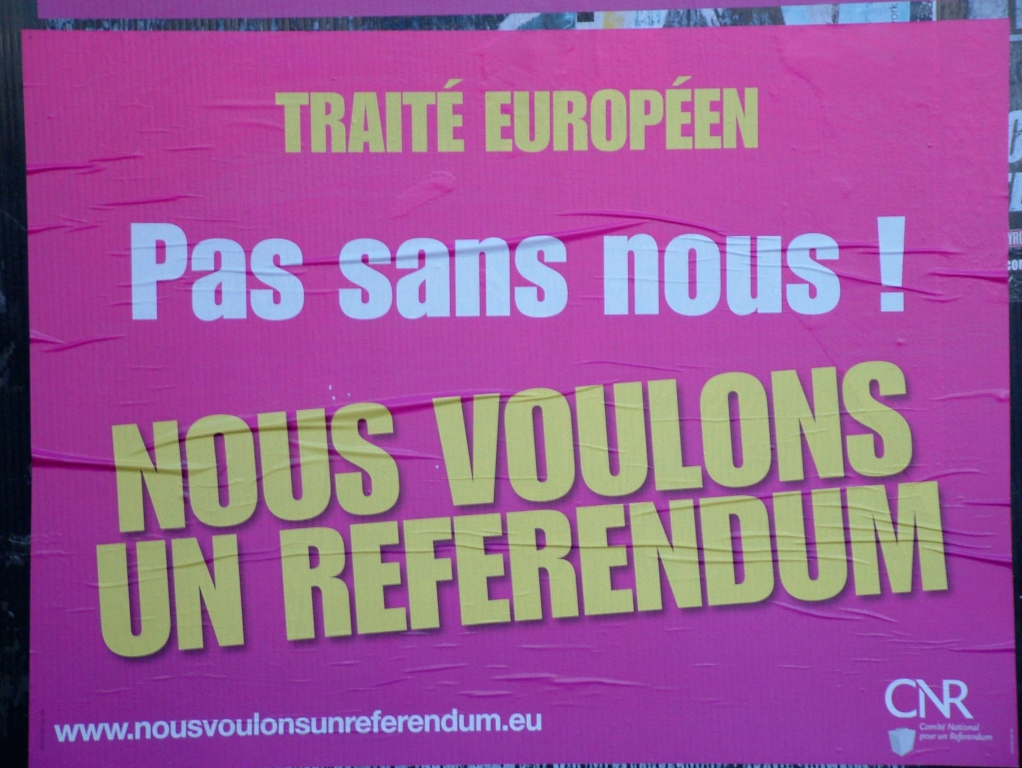
The recent major political event in France was the simplified ratification of the EU’s "Lisbon Treaty." On February 5, all 577 members of the National Assembly and 330 senators gathered at the Palace of Versailles (where major events have been held since 1962) for a plenary session. Without prior public debate, they ratified the treaty that had failed in a 2005 referendum, fulfilling President Nicolas Sarkozy’s wish to bring France back into the core of the EU and prevent political stagnation, thereby strengthening European unity.
This ratification via the Versailles assembly did not reflect the will of all French people; polls showed 59% opposed this simplified approach, preferring a referendum. The left-wing and sovereignty advocates argued that such a crucial decision regarding France’s future must be decided by referendum. The largest opposition party, the Socialist Party, split over the issue (with most supporting the EU but opposing this method, while others firmly opposed the EU), leading many deputies to boycott the vote.
Outside the Palace of Versailles, opponents gathered with signs to protest the ratification. Participants included prominent Socialists (Laurent Fabius, Arnaud Montebourg, Jean-Luc Mélenchon), Communists (Nicole Borvo), anti-capitalists (Olivier Besancenot), anti-globalization activists (José Bové), right-wingers (Nicolas Dupont-Aignan), and civil society groups like ATTAC, all questioning the legitimacy of a small-scale ratification lacking public discourse or a referendum.
During the Versailles assembly, only 152 members were absent. Under the protection of the President’s majority party, UMP, the National Assembly passed the measure with 560 votes in favor (181 against). The following day, the bill moved to the Senate, where it was overwhelmingly approved on Thursday with 265 votes to 42. With these hurdles cleared, the French President is now authorized to ratify the EU Lisbon Treaty. Having completed the ratification without public debate, France re-enters the fold of EU operations, writing a new chapter in its European history despite strong opposition.