Leisurely Days of Bridge-Building in Paris in May
Grand Palais, Paris - This year's monument: Richard Serra major exhibition
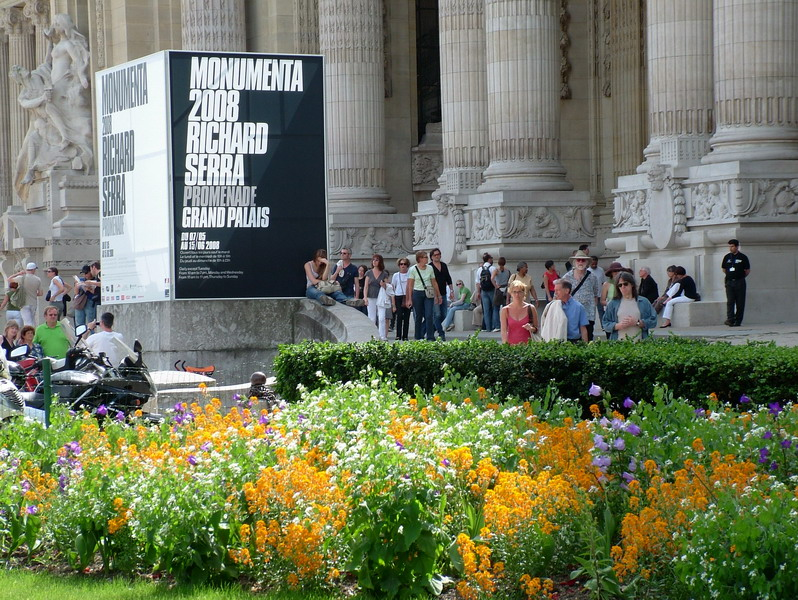
The parks and gardens of the capital are the backyard of Parisians. May is the most joyful month for the French, as spring arrives with gentle breezes and sunny skies, bringing numerous festivals. Beyond the two-day weekend, the French take holidays for various folk, religious, and national days. If a holiday falls on a Thursday, they automatically "bridge" it to Friday, creating a long weekend—a leisurely scenario unique to France. The French excel at this bridge-building; perhaps they have the most holidays in Europe or even globally, seemingly having days off all year round (with no exceptions for schools). Even when not on holiday, they plan or discuss vacations, venturing out of the city on weekends to mountains, the sea, or the countryside to breathe fresh air or change scenery. Ah, beautiful holidays, moments of joyous celebration or fulfillment.
This year, May's holidays all fell on Thursdays. May 1st, Labor Day, saw both workers and civil servants off. Schools in Greater Paris and Bordeaux were also on Easter spring break, making the Paris area exceptionally quiet. Additionally, May 8th (Thursday) was the Victory in Europe Day commemorating the end of World War II. Flags hung everywhere, even on buses, a rare sight of waving flags. It was also the commemoration of the abolition of slavery; the president announced that the history of slave emancipation would become a primary school subject starting next academic year. It is hard to imagine that over three hundred years later, we only now realize this is part of French history.
Paris schools had just ended their spring break after three days of classes, followed by another consecutive holiday. This bridge-building was particularly special because Monday the 11th coincided with French Qingming Festival (Tomb-Sweeping Day), which does not necessarily fall on a specific date. This created a five-day holiday, which was wonderful for a nation fond of leisure. While not everyone participated in festival rituals, everyone took time off; French society is dominated by hedonism. Especially after the snows of April, the sunny May weather felt like a mini-vacation. During these continuous sunny days, many Parisians left the city on weekends or holidays. Another phenomenon was an increasing number of global tourists starting from Easter.
During this beautiful five-day long weekend, Parisians who did not leave the city gathered in their "backyard," lazily sunbathing or engaging in outdoor activities and play. With warm and hot sunshine, everyone became excited and full of vitality. Green spaces, parks, and gardens were filled with crowds. Notably, major exhibitions at the Grand Palais, art museums, and museums had long lines. Leisurely days are good times to relax and enrich oneself. Cultural consumption has long become a fashion trend in French social life, driving artistic development. Under this leisurely atmosphere, families and friends gather. Holidays are meant to make work more effective, provide space for other aspects of life, bring people closer, and help them reconnect with nature.