Cézanne (P. Cézanne) - Mont Sainte-Victoire
Mont Sainte-Victoire, 63.5×79.5 cm, 1886-90, National Gallery, London. A masterpiece of his "constructive" period, it shows nature's essence through geometric form, yet nature differs from art. Light and form gather in arcs; light brushstrokes shape color planes.
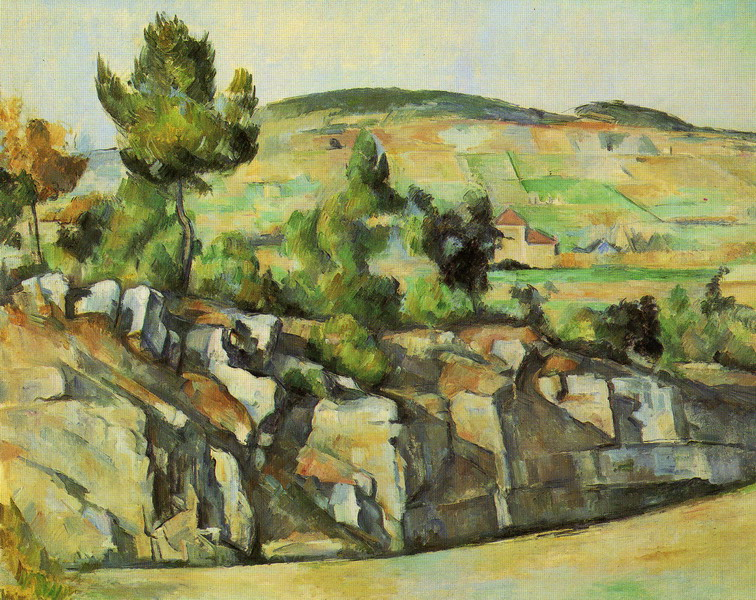
Mont Sainte-Victoire, 63.5×79.5 cm, 1886-90, National Gallery, London. This masterful painting is a work from the artist’s so-called “constructive” period. Within its most concise geometric structure, the artist reveals nature’s supreme essence, though nature remains entirely distinct from art. In the interplay of light and form, gathered within two upper and lower arcs, light rhythmic brushstrokes construct color planes. The solid rock forms in the foreground contrast with the gentle vegetation, while distant slopes feature geometric color-volume accents. Under rigorous organic geometry, warm tones, and structural construction, this solidity, clarity, and timelessness become Cézanne’s eternal artistic value and style. Italian critic Venturi affirmed that “the artist achieves a harmonic balance of space between densities of volume, such as rocks on the slope, and the way trees are connected. Cézanne’s characteristic style, through varied tones perfectly united, creates areas of ‘color-volume’ via brushstrokes—solid, yes. As always, immediately recognizable.”