Matisse’s Exterior Window at Collioure
Matisse's Exterior Window at Collioure, 116×88 cm, 1914. Collection of the Musée National d'Art Moderne, Paris.
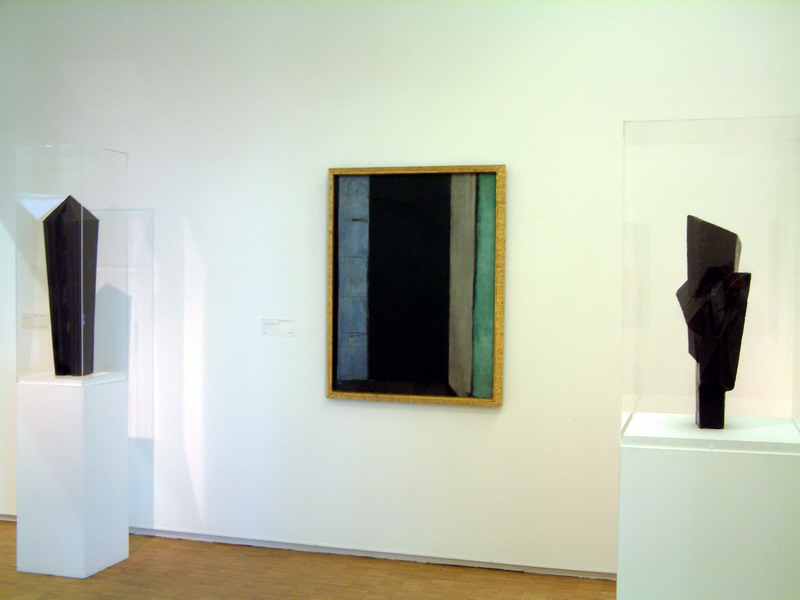
During World War I, Matisse’s palette darkened; bright colors vanished, replaced by somber tones. This Exterior Window at Collioure is a masterpiece from his stay in Tahiti, composed of three large vertical color planes. Does this rectangular canvas not resemble a window? Indeed, windows were a lifelong favorite subject for Matisse. The black edge on the left blue-gray plane marks the exterior window; the brown-gray and blue-green planes are separated by a black line, indicating the right angle between the interior and the window. The cut-off corner below suggests the window frame, creating perspectival space, with a wide black line beneath representing the frame itself. Here, the cleverly shaped rectangular canvas becomes the structure of the window. Though quite figurative, within these autonomous geometric forms and colors, it is undeniably a perfect abstract work.