July Paris Notes
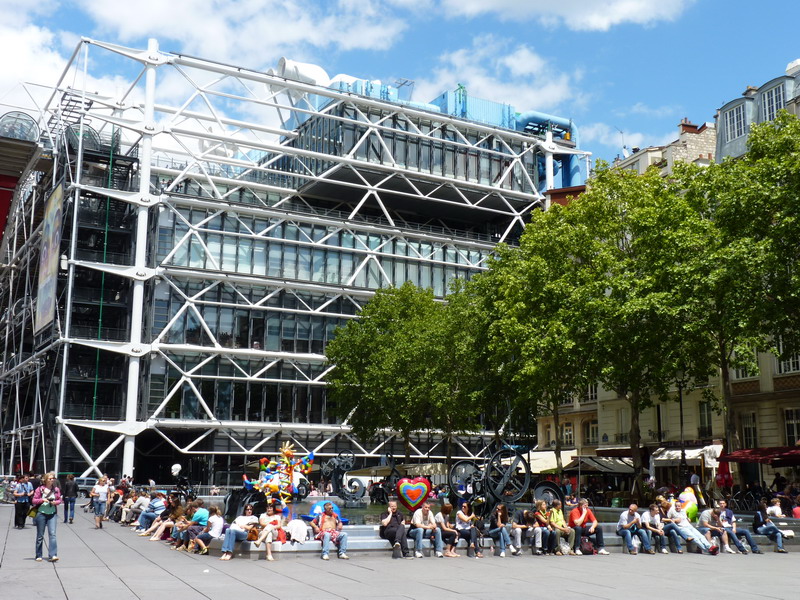
Paris is so comfortable under the sunny and breezy weather - by the Pompidou Fountain
Life turns with the seasons, and folk festivals are no exception. In the sunny days of July, schools begin their summer vacation, and the time for high school graduation exams and results brings both joy and sorrow. On July 4th, American Independence Day, this year it passed almost unnoticed. The media seemed only concerned with the "rape case" scandal involving Dominique Strauss-Kahn, the Socialist Party's presidential candidate (highest in polls) and former World Bank president, unfolding in New York City. The French treated it like a thrilling TV series, tracking and curious about its development. Whether it truly happened or was a political trap, who knows? Of course, it's all due to personal identity and poll numbers? Under globalization, world mass media controls social discourse and direction, intentionally or unintentionally creating an invisible collective consciousness.
Every year, the start of summer vacation sees France's most watched sport: the annual Tour de France. It has become a ritual and national activity because it covers most of France's territory. Places the race passes through attract crowds, cheering and encouraging everyone at each stage, driving national sports enthusiasm. This year, a French rider led far ahead, but the race isn't over; we'll see who wins when it reaches the Champs-Élysées in Paris.
July is the most sacred vacation time for the French. The first wave of travelers naturally occurs on the first weekend of July. Everyone eagerly goes out for vacation, so Paris train stations and airports are packed, as are highways. Traffic jams are predictable, happening every year because nothing is holier than vacation. You can clearly feel that Paris seems suddenly emptied. The French take personal leisure more seriously than work. In recent years, people complain about the bad economy and rising unemployment, facing an uneasy shadow in their hearts. But when vacation time comes, they still go everywhere. Reports show many shorten vacations and spend less; those unable to vacation increase. Due to the Jasmine Revolution in the Arab world, overseas tourists shifted to domestic pure lands this year.
July 14th is France's family-celebrated National Day. The ceremonial military parade on the Champs-Élysées always draws huge crowds (tourists from around the globe). The grand fireworks display before the Eiffel Tower marks the night. This year's National Day coincided with the attack on French special forces soldiers in Afghanistan two days prior, resulting in six deaths. So the parade was held in a heavy atmosphere. Seeing the powerful army, navy, and air force lineup made one slightly confused: what is the meaning of National Day? Is it just showing off military power? In mid-May next year will be the French presidential election. Green Party candidate Joly criticized such militaristic parades, suggesting civilian parades as the main event, criticized by conservatives as worthless and labeled unpatriotic. Ideologically, no one can debate. Personally, I'd rather watch the annual Paris Gay Pride parade before summer vacation. Like a carnival, it's livelier and more creative, flowing with true vitality. As for the military parade, it seems too formal and rigid, almost identical every year. For a National Day, isn't it too boring?
Greece has become the dead pig of the Eurozone, but one dead pig drags down the whole zone, worsening the Euro's situation. Recently, 12 billion euros couldn't save it; now more aid loans must be injected, otherwise Europe will collapse too. If Greece isn't saved, other EU countries like Portugal, Ireland, and Spain are also falling behind. In these aid discussions, a gap forms between Northern and Southern Europe. Yesterday, another EU finance meeting passed aid loans for Greece, stabilizing the storm the Euro faced these weeks. How long can it last? Who knows if other situations will arise? We must observe.
Global climate continues to warm, weather becomes quite strange. Seasons and worldly affairs defy common sense. The financial crisis doesn't seem to have gone far; unemployment keeps rising, purchasing power is weak, anxiety about the future grows, yet we face bad weather. Seasons seem to lose their rhythm. Winter was particularly cold, spring had no rain. Now, from southern to central-north to northern France, everywhere is drought-stricken, severely lacking water, seriously affecting normal agricultural operations. It is said to be the driest spring in nearly thirty years. Reservoir levels are extremely low; many areas ban washing cars or watering flowers. The earth is thirsty to death, yet not a drop of rain falls. The rainy season is gone; water resources are even more precious. On the other end of the Earth, there are continuous floods (like in the southeastern US); in the west—New York—is hit by heatwaves; or in Ethiopia and Somalia in Africa, large areas suffer famine due to drought. July should be sunny and breezy, feeling the heat, yet partly cloudy with occasional showers. The sun plays hide-and-seek. Strange weather, continuous rain, high humidity, low temperatures, especially morning and evening. Days of sunshine are gone. In rainy weather, indoor activities in art museums and galleries are more active. In July this year, the number of visitors to art museums and galleries increased several times over, thanks to the weather. Holidays change with the weather; outdoor activities are also significantly affected, etc.
In July, I visited my daughter in London and took a deep tour of London. I felt fulfilled and satisfied, experiencing the human landscapes and aesthetics of different European cultural systems. Currently, I spend most of my time on painting creation, listening to opera while painting, which is very enjoyable. At night, if I have time, I delve into Seth's books. Life is pleasant; I am grateful for existence.