One of the Parc de Sceaux
(Up) A magnificent panoramic view of the Château de Sceaux, a representative style of Louis XIII architecture, from the colorful park's small circular fountain. (Middle 1) Looking down the castle stairs at the grand perspective green lawn extending to the distant countryside. (Middle 2) An awe-inspi
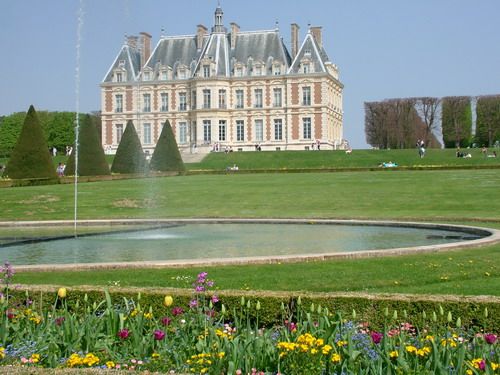
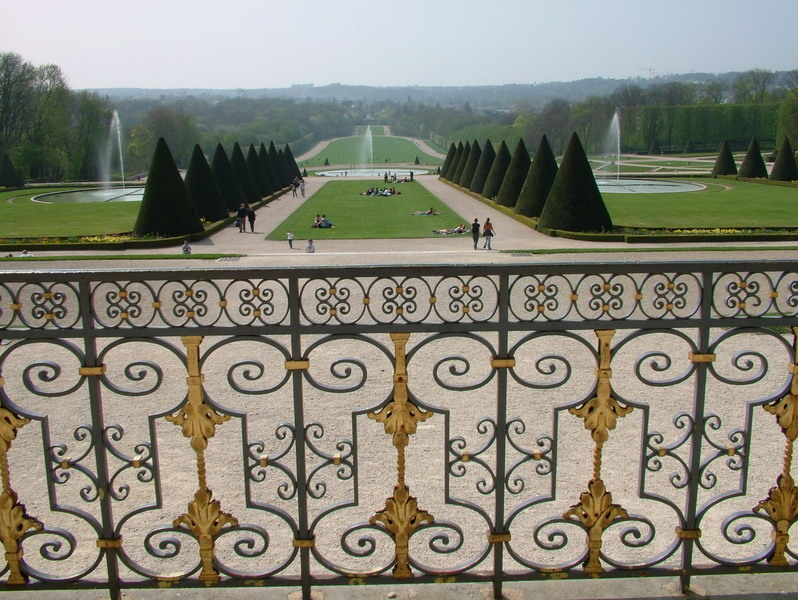
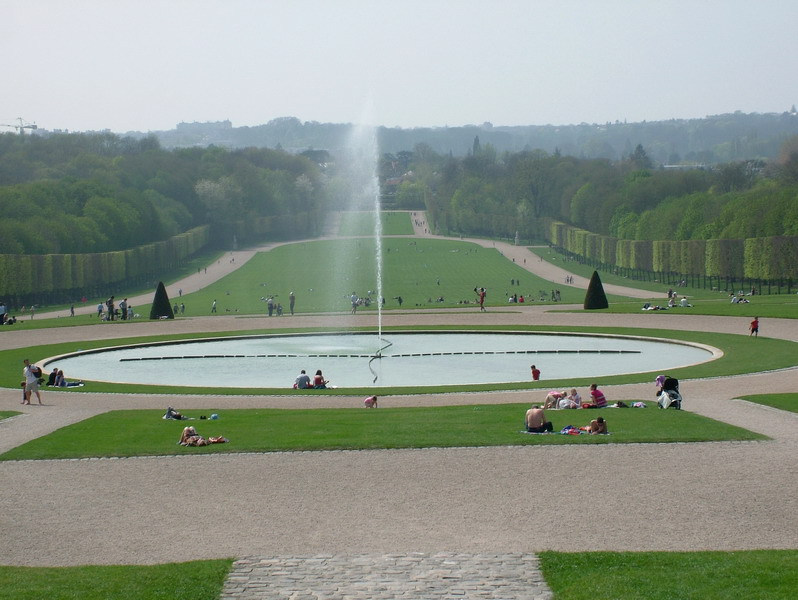
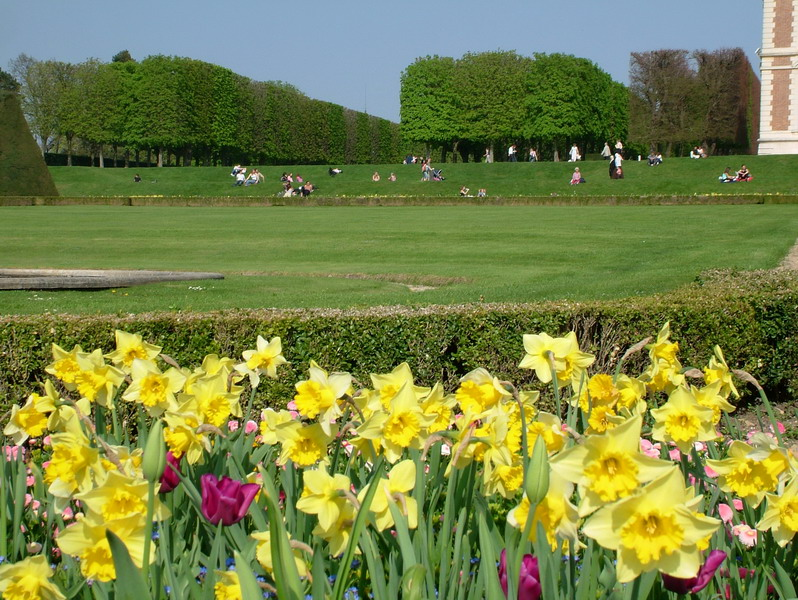
(Up) A magnificent panoramic view of the Château de Sceaux, a representative style of Louis XIII architecture, from the colorful park's small circular fountain. (Middle 1) Looking down the castle stairs at the grand perspective green lawn extending to the distant countryside. (Middle 2) An awe-inspiring panoramic view of endless green hills and vast skies from the castle balcony. (Bottom) The large perspective green lawns are the largest outdoor leisure space for people in the Paris metropolitan suburbs. On weekends and holidays, groups of relaxed leisure crowds gather on the green lawns.
Known as having the beauty of the Gardens of Versailles, the Parc de Sceaux is one of the most perfect and enchanting royal gardens in the suburbs of the capital city. Typical French gardens center around a modest small castle, situated amidst the magnificent hills and valleys of Sceaux, offering boundless panoramic views everywhere. The refined garden reaches perfection within its strict geometric symmetry.
The historical story of Sceaux: The domain was built in 1670 by Colbert, the intendant of Louis XIV, who invited the famous architect Claude Perrault. It was decorated and furnished by artists such as the famous painter Le Brun and sculptor Girardon. The splendid gardens were undoubtedly the masterpiece of the King's chief gardener, Le Nôtre. When completed in 1677, Louis XIV personally attended the luxurious celebration. In 1683, Colbert's son, Seignelay, inherited his father's work, undertaking major construction to add an orangery and a large canal. Two years later, Louis XIV visited again for the completion ceremony. To highlight this grand evening event, the famous tragedian Racine improvised a pastoral play performed at Sceaux, winning everyone's applause.
At the end of the 17th century, the noble Sceaux was sold to the Duke of Maine, the legitimate son of Louis XIV and Madame de Montespan. From then on, the Sceaux gardens became a paradise for lavish royal banquets and grand displays. Especially the talented Duchess participated in opera and ballet performances in this bright garden, with singing and dancing scenes creating great excitement. "Nights at Sceaux" thus shook all of Paris and Versailles. Louis XIV also frequently came here to visit his beloved son. In this garden overflowing with artistic and humanistic atmosphere, the Duchess received many famous writers and thinkers of the time, such as Voltaire and Fontenelle.
During the French Revolution, Sceaux was confiscated and later sold to wealthy merchants. The luxurious castle was demolished, and the exquisite and elegant gardens turned into farmland. By the mid-19th century, it became the property of the Duke of Trevise, who restored the gardens according to the original design and built a modest Louis XIII-style small castle. Afterwards, Sceaux was forgotten by people until 1923, when the Seine department acquired it and planned it as a public park, restoring its past royal glory and becoming a leisure and flower-viewing sanctuary with flourishing flora in the suburbs of the capital city.