The Garden of the Paris Mosque or the North African Garden
The solemn and sacred mosque in Paris, the core of French Islam.
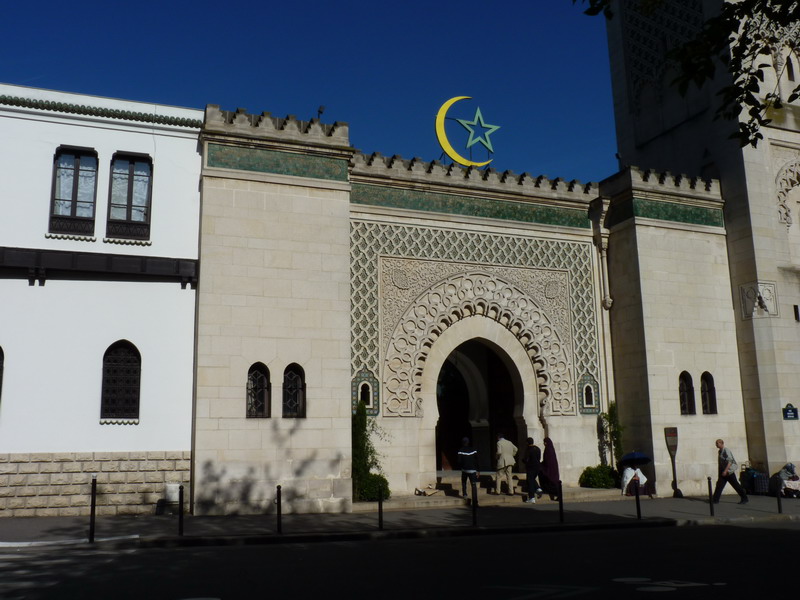
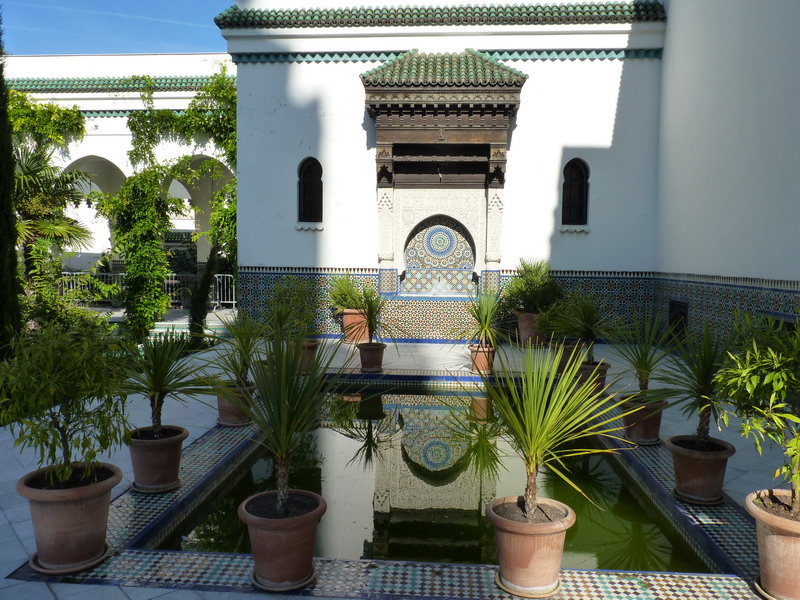
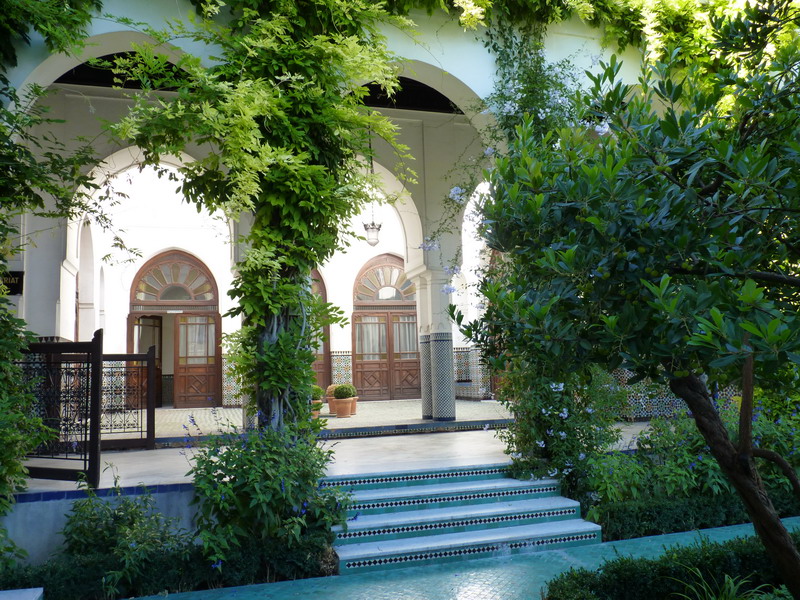
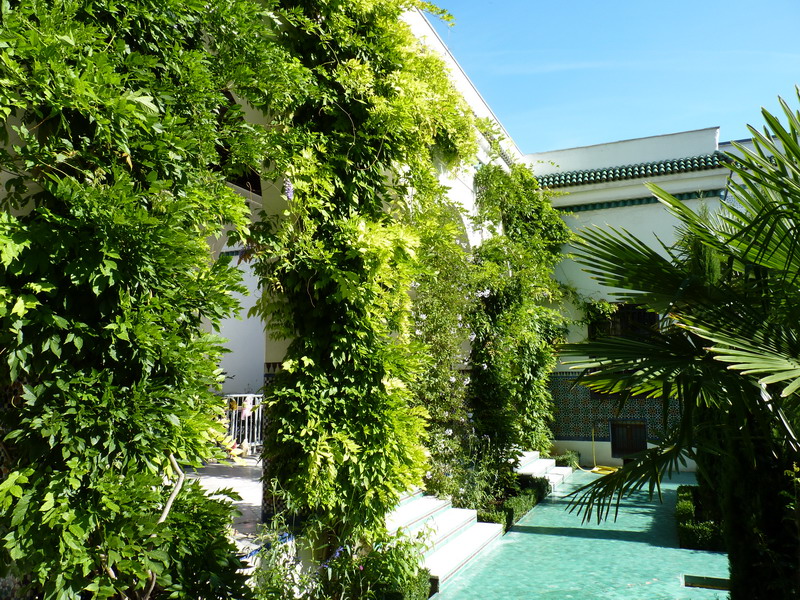
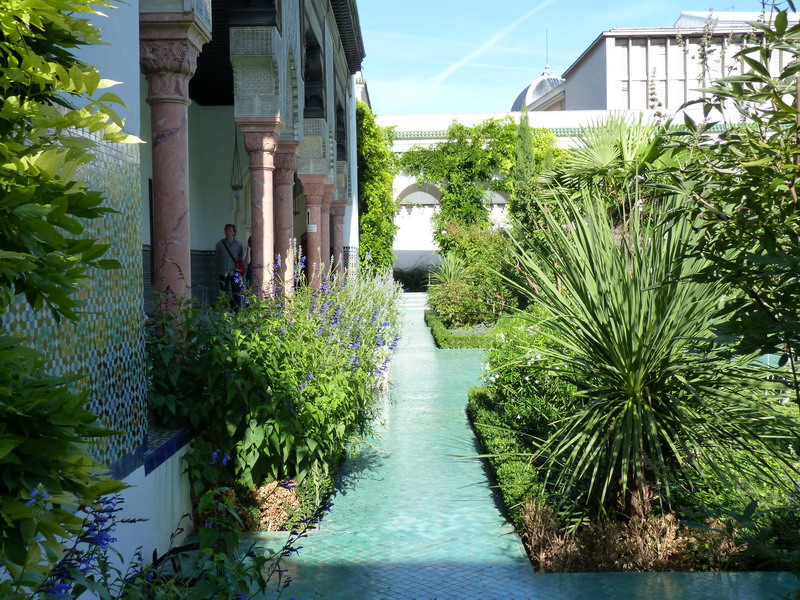
Text and images by Chen Chi-Hsiang. The Paris Mosque was built in the 1920s (opened July 15, 1926). Its purely North African temple architecture, close to the Hispano-Moorish style, serves as the core of Islam in Paris. Today, Islam is France’s second-largest religion, with many immigrants from North Africa, a situation linked to France’s early colonial presence there. The Paris mosque is the religious and educational center for all of France’s Muslims.
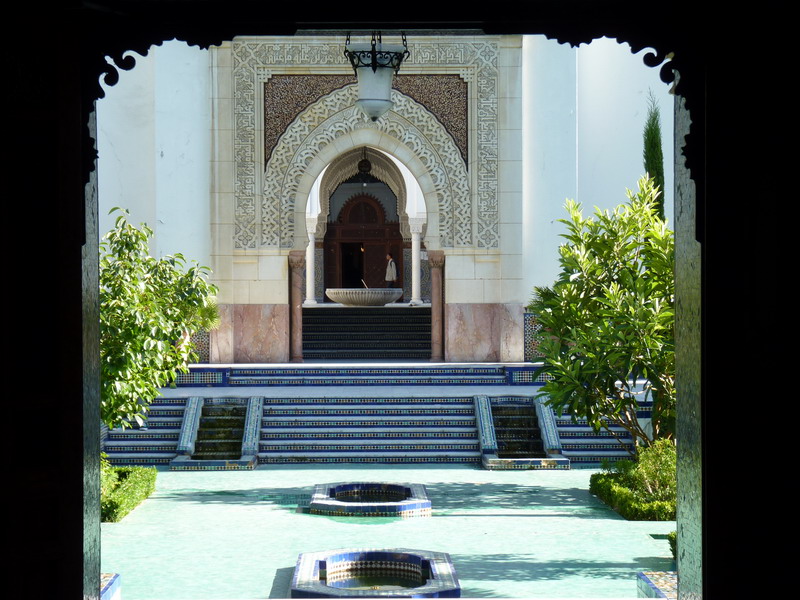
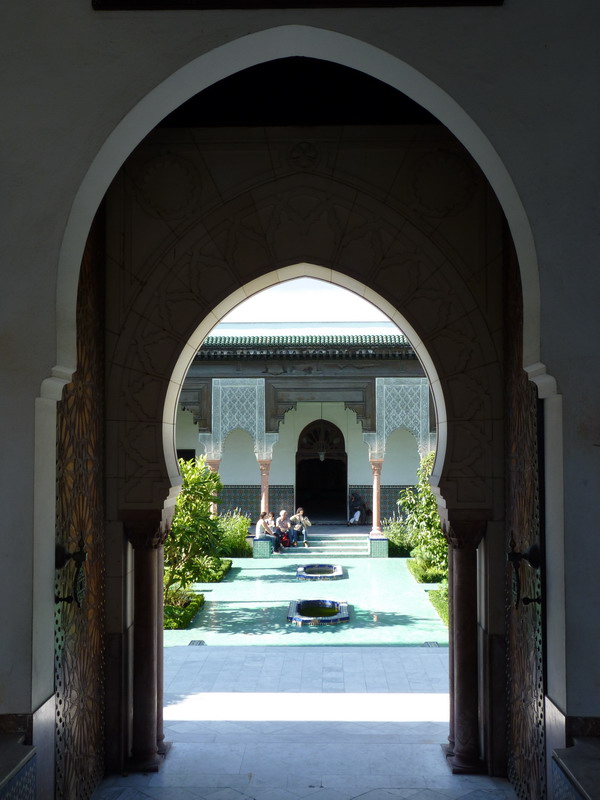
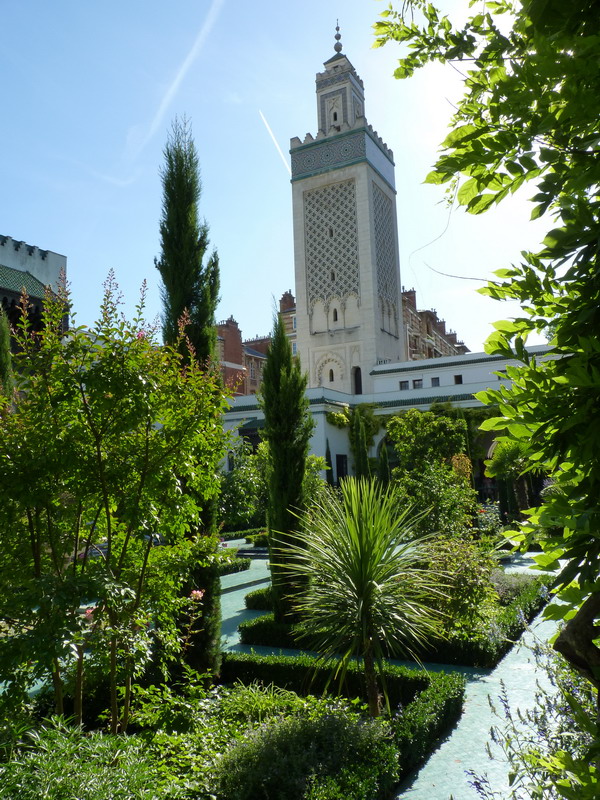
Modeled on the symmetrical geometric forms of Spain’s Alhambra Palace, its buildings feature domes, minarets (33 meters high), distinctive arches, decorative window panes, and entire walls adorned with vibrant, complex mathematical mosaic patterns. It is one of Paris’s most unique structures.
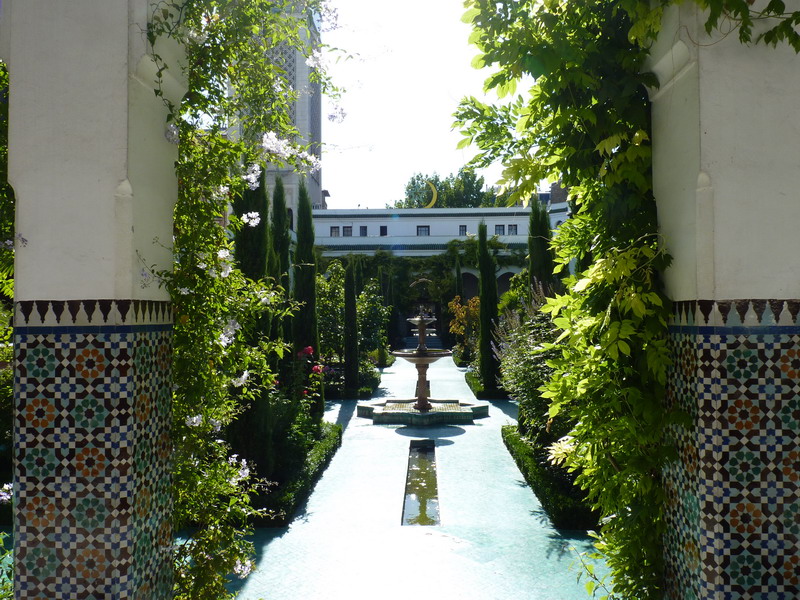
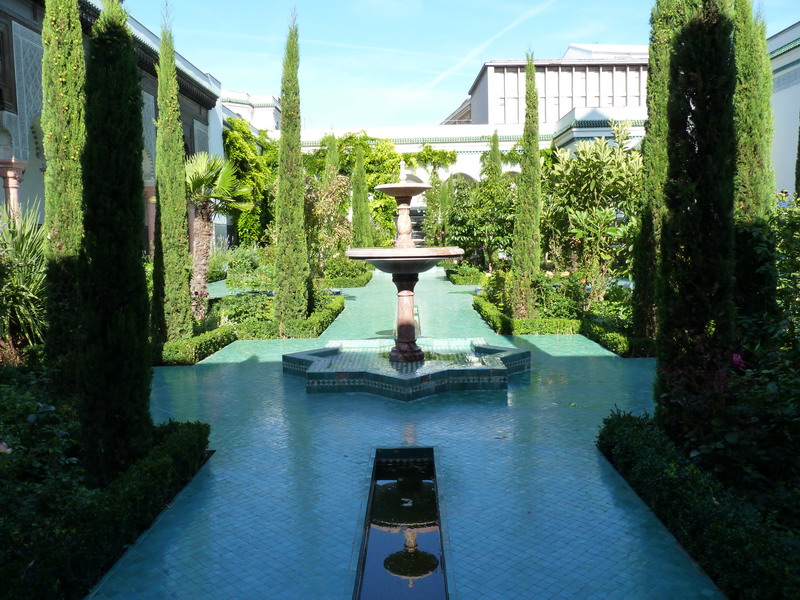
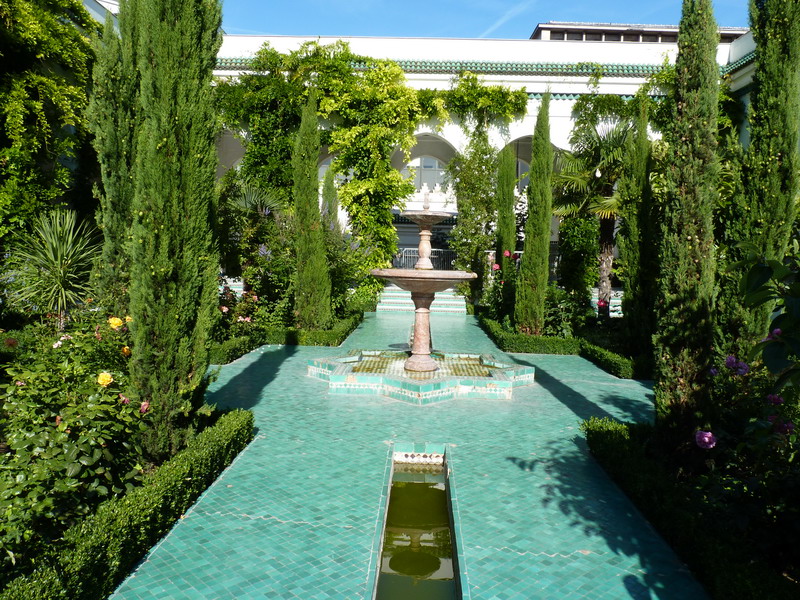
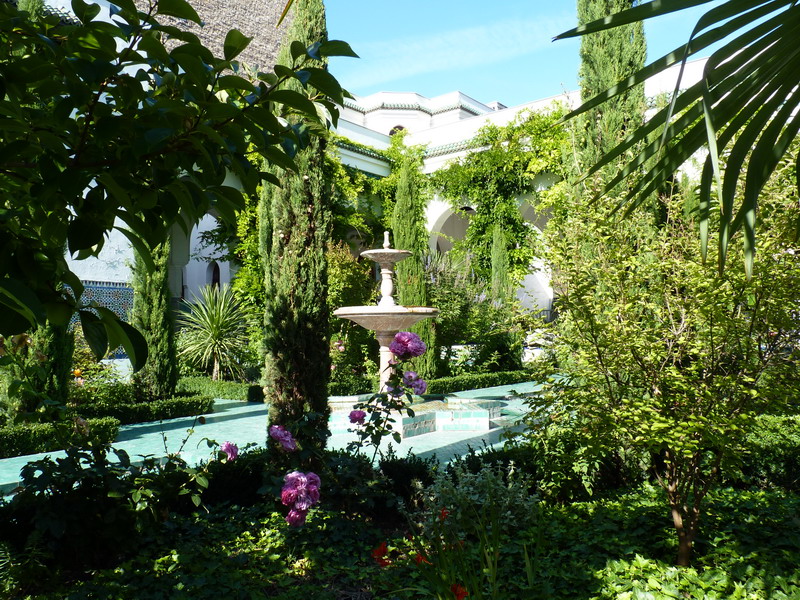
At the center of the mosque lies a North African-style garden, nestled within four archways and towers like a jewel box. Two parallel octagonal water mirrors and two narrow canals divide it into a cross-shaped symmetrical geometric layout, each centered on a star-shaped double-disk fountain. Geometric flower beds are planted with plants of varying heights: lush cypress, broad-leafed palms, lemon trees, fragrant roses, lilacs, broom, and gorse, along with colorful seasonal flowers. Wisteria climbs the four archways, creating a vibrant and pleasing display that perfectly captures the spirit of a North African garden.