Château de Guercy Park I
(Top) Two rows of tall, upright plane trees in front of the castle form a perspective green tunnel. (Middle 1) The deceptive grandeur of the front garden's wide plane tree-lined avenue frames the Grand Canal with its shimmering water reflections on both sides. (Middle 2) A clear river on the left si
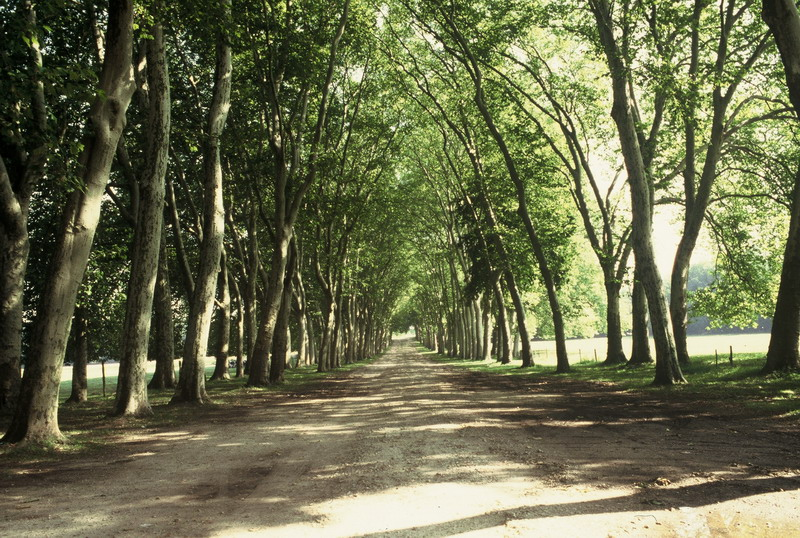
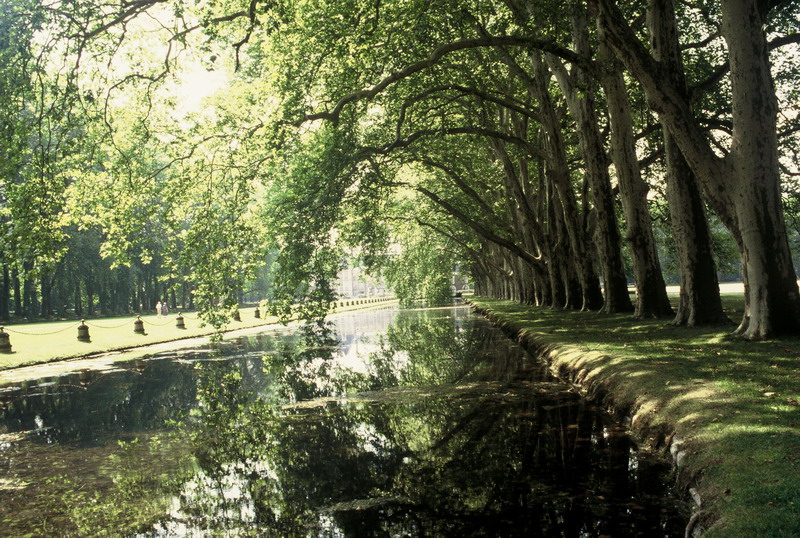
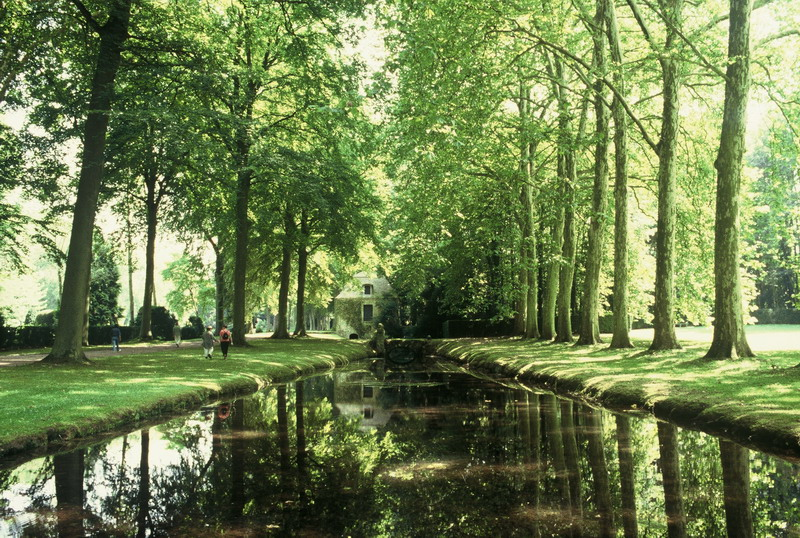
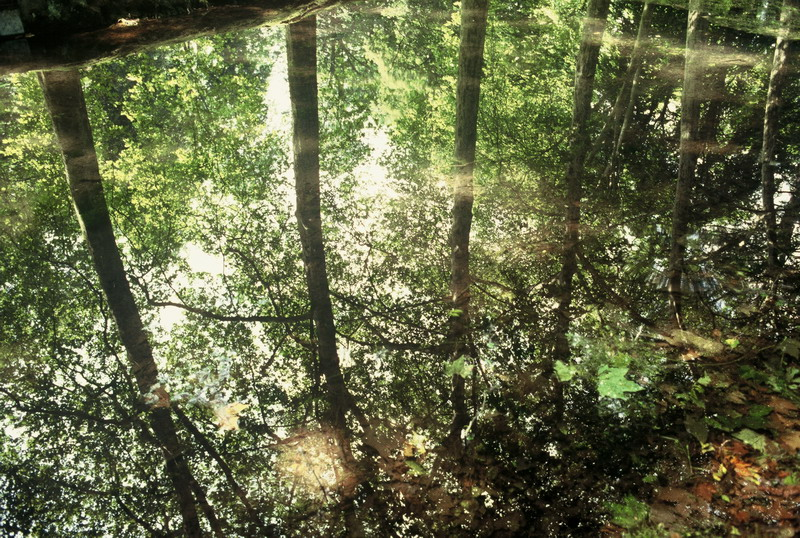
(Top) Two rows of tall, upright plane trees in front of the castle form a perspective green tunnel. (Middle 1) The deceptive grandeur of the front garden's wide plane tree-lined avenue frames the Grand Canal with its shimmering water reflections on both sides. (Middle 2) A clear river on the left side of the castle (with a water wheel at the end) is framed between two rows of tall, upright plane trees. (Bottom) A spotless water bed acts as a mirror, crystal clear to the bottom, reflecting layers of garden shadows, pleasing to the eye and forming a magnificent landscape painting.
Guercy is a tranquil and serene garden, arguably the most exquisite, elegant, and poetic among the French gardens in the Paris suburbs. The spectacular Louis XIII-style castle is located between the Château de Vaux-le-Vicomte and the Palace of Fontainebleau, next to the Milly forest. Guercy’s garden possesses unique advantages within French gardening; it has abundant underground springs, allowing plants to grow lush and verdant. Under Le Nôtre’s ingenious design, these inherent features are fully revealed. Poetic and picturesque elements such as water mirrors, water beds, fountains, waterfalls, and canals become the garden's most distinctive landscapes. If all French gardens adhere to strict geometric forms, Guercy is not bound by them. The entire verdant garden is constructed around orderly, tall tree-lined avenues, water mirrors, canals, water beds, waterfalls, and large meadows. Within the castle's embrace lie two perfectly patterned flower beds, while beside the water wheel sits an exotic Japanese garden.
Historical Heritage of Guercy Castle:
The poetically beautiful Guercy Castle is privately owned and lacks the glorious history of royal or noble lineage. Among the many prominent castles in Greater Paris, it is one of the least known, yet for those who love French gardens, Guercy’s poetic charm is well-known. Such a masterpiece would not be lonely. The name Guercy comes from its earliest lord, Thibaut de Guercy, who ruled the area as early as the reign of King Louis VII in the 13th century. By the late 14th century, after several lords succeeded him, the last lord Lapitte died, and Cosme, financial secretary to Henry II, inherited it. In 1552, Cosme hired Le Breton, an architect from Fontainebleau, to design and build the castle. It was later inherited by his son until 1622, when it was sold to Gallard, a clerk for Louis XIII. After Gallard acquired ownership, he undertook major renovations, updating the castle in the graceful Louis XIII architectural style, giving it its current appearance. The splendid gardens were then redesigned by the king’s gardener, Le Nôtre, commissioned by Gallard’s son. Under the great gardener’s masterful creation, Guercy became one of the most expressive gardens in France.
After five generations of management by the Gallard family, during the French Revolution, Guercy became the property of Marquis Nicolay. However, this good fortune did not last; Nicolay was sent to the guillotine in 1794, and his widow and son were exiled. They only returned to Guercy during the French Empire period. In 1830, due to family matters, Gallard’s grandson left Guercy decisively and never returned. Thus, the exquisite and perfect castle and garden were abandoned. The former brilliance had been neglected for 40 years, and Guercy gradually faded from people's memories. At the end of the 19th century, Baron Haber acquired Guercy, undertaking comprehensive restoration works to recover its past glory, and added a spiral staircase modeled after the Palace of Fontainebleau to enhance the castle's architectural charm.