Sarkis Solo Exhibition "Passerby"
Passerby Object Installation 2009
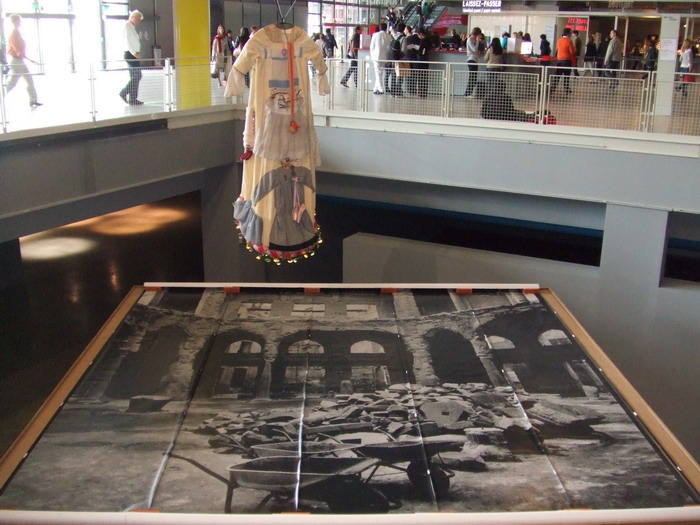
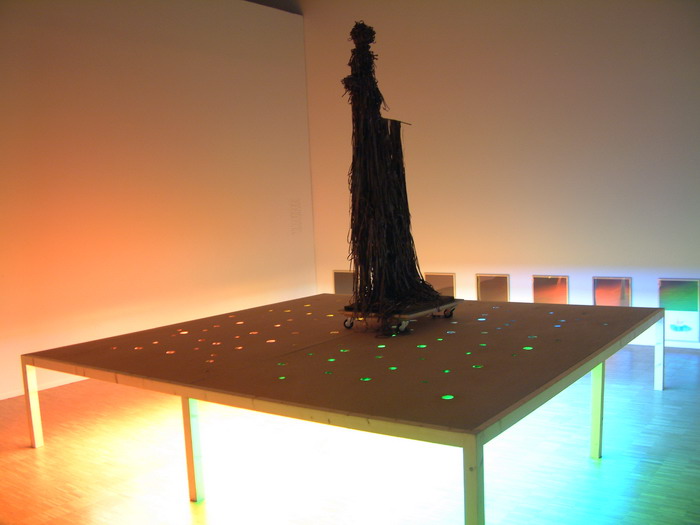
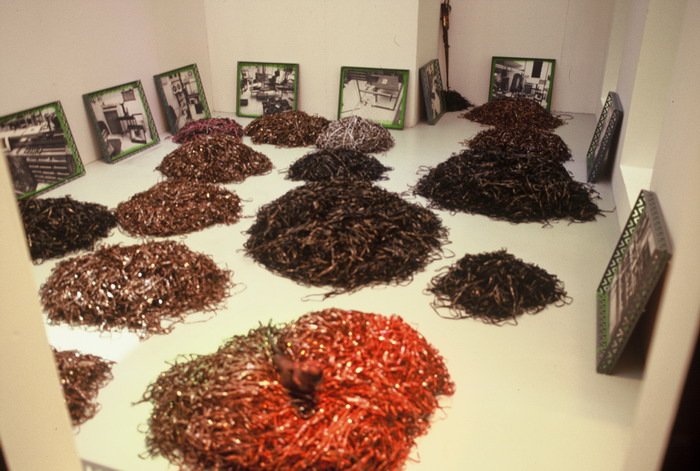
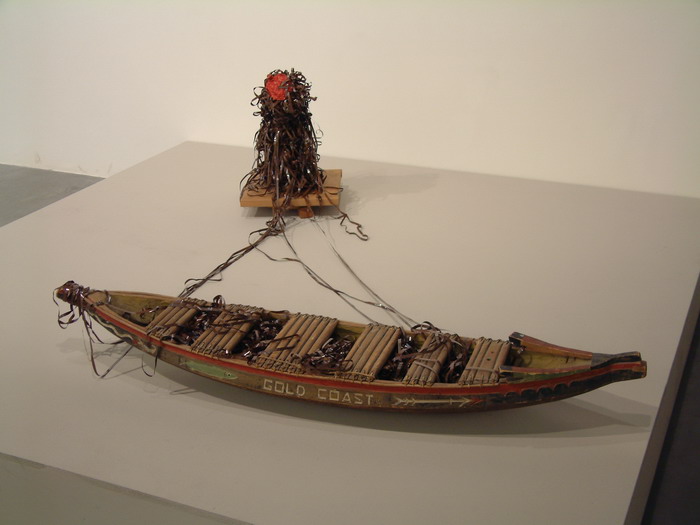
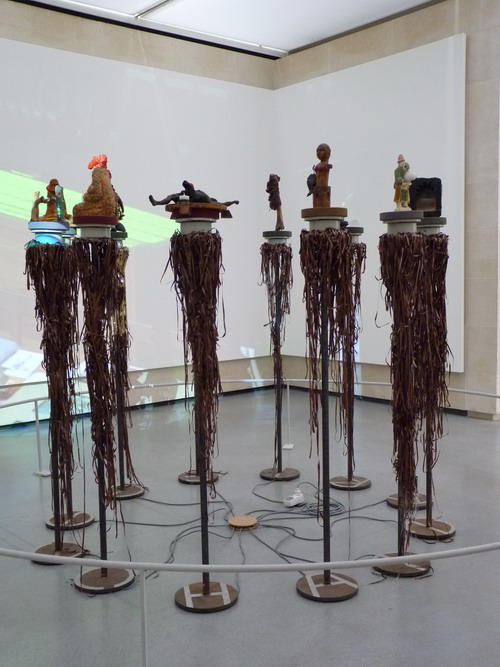
Sarkis Solo Exhibition "Passerby": February 10 to June 21 at the Centre Pompidou. Sarkis (born 1928), an Armenian from Turkey, is a lone figure in the French contemporary art scene. His work lies between conceptual and object art, starting from personal life memories and adopting a critical stance and existential awareness toward current political and social disasters. Through historical reflection and constructive analysis, he emphasizes the shared memory of human history. The artist says: "My work is often connected to memory. All of this I have lived through personally. In this process, history is like a treasure. It belongs to everyone. Everything that has passed through history belongs to us. All that has traversed humanity becomes part of us, just as our grief does in love. This is our richest treasure." For 35 years, Sarkis has continuously imagined and created, drawing on fragments of history, from the memory of places to personal life experiences. He constantly explores diverse mediums: watercolor, objects, sculpture, video, etc., using multi-material media such as neon lights, video or audio tapes, photographs, clothing, and more. He arranges and installs his works in galleries and museums.
Since the 1960s, Sarkis actively abandoned traditional painting and sculpture, instead constructing assemblies of various signifying objects. This exploration of material form and historical reflection aligns with Italian Arte Povera or Joseph Beuys's artistic thinking. In 1964, Sarkis arrived in Paris; for him, this trip marked the beginning of self-exile or political exile. Consequently, all his works carry strong implications of human life memory and historical reflection, stemming from the deep racial trauma of the Armenian Genocide by the Turkish army during World War II—a wound in Armenian history that remains unhealed. Sarkis's early creation seems to begin with this painful memory of historical catastrophe. Through euphemistic, symbolic, and metaphorical poetic imagery, it was not until the 1980s that he gradually reconstructed human memory. In his most significant and metaphorical display of tape materials, the artist considers them "treasures of war."
In 1969, at the Salon des Jeunes in Paris, Sarkis exhibited nothing but casually placed several sheets of white paper with black text reading: "Do you know Beuys's work?" People questioned if this was a work. Like many artists in the 1970s who focused on conveying information, this indeed reflected an attitude within artistic behavior. That same year, at the exhibition "When Attitude Becomes Form" curated by Harald Szeemann at the Kunsthalle Bern in Switzerland, Sarkis exhibited a roll of paper nearly twenty feet long coated in thick black tar, half immersed in a galvanized steel trough, with a neon light placed underneath. The dramatic scene was obscure, dim, full of sensibility and tragedy, with anxiety permeating the space. The gloomy atmosphere revealed human tragedy; the exploration of material form, energy, and metaphor approached Arte Povera, seemingly influenced by Beuys's concept of materiality.
In 1970, in a group exhibition at the ARC (Art et Recherche Contemporaine) of the Musée d'Art Moderne de la Ville de Paris, Sarkis installed five large rolls of paper coated in black tar inside a large wooden crate, covered with aluminum foil and surrounded by cables, resembling a dysfunctional heavy machine. Hidden in the corner of the crate was a tape recorder playing the mournful sounds of dogs whimpering, unbearable to endure. This complete manifestation of the intersection of matter and spirit metaphorically suggests the great catastrophe suffered by Armenians (or Jews) or humanity at large. Under the ruthless historical oppression of heavy systems, he compassionately reveals the energy of material forms and historical consciousness through these industrial-like materials. In another work, Camouflage (1972), Sarkis constructed observation posts resembling those in concentration camps, projecting their shadows onto the opposite wall with strong light, creating an atmosphere of surveillance. While other aspects could be perfectly imagined, the artist emphasized the power of inherent imaginative spatial domains.
In 1974, when Turkey invaded Cyprus and declared it a restricted zone, Sarkis visually represented this restriction in his representative installation series Black-Out from the 1970s, symbolizing "war" through concrete plastic arts. He arranged asphalt-coated blankets and tarred papers according to the overall spatial planning, generating intensity and sculptural tension through black-and-white contrast. He also displayed two old, rusty guns in a glass cabinet, evoking concepts of time, space, suffocation, and chaos associated with war. In 1975, Sarkis inadvertently discovered a German submarine base from World War II in Bordeaux, France. These traces of historical sites provided new directions for his creation, incorporating historical images (photographs) into his aesthetic symbols. In 1977, at a group exhibition at the Museum of Fine Arts in Brussels, Belgium, he exhibited two framed historical image photographs (one photo, one negative), each accompanied by identical black and white graffiti on the wall below. This striking graffiti image originated from the walls of the German submarine base. Sarkis appropriated this anonymous form and transformed it into an aesthetic symbol of Black-Out.
In 1978, the works Warrior and Treasure of War continued to explore war aesthetics, applying various objects. Through historical memory, they were symbolically transformed into substantial sculptural symbols. In 1982, at the height of Neo-Expressionism in Germany, Sarkis was invited to participate in Documenta 7. He exhibited a series of meaningful sculptural objects: an antique mask from the island of Sonde dating to 1848—the year the Communist Manifesto was published—and a Leica model donated to the Nazi Party in 1933. These objects became aesthetic codes of shared historical memory. From the 1980s to the present, Sarkis continues to emphasize historical memory and symbolic roles in his work. His most significant medium remains tape recorders and tapes as documentary signs of time and space, combined with other symbolic objects: African sculptures, Western statues, wood, angle steel, etc. Through installation, sometimes combining light (neon lights), he creates an overall atmosphere and constructs imaginative spaces, referencing human historical memory.
The Sarkis "Passerby" exhibition presents the concept of simultaneously passing through the studio and the museum. The theme of "passerby" comes from Walter Benjamin's book The Arcades Project. Here, the artist grandly exhibits five major object installation works in dialogue format: Dialogue Between Jorai and My Studio (2001-02), answering Malevich in architectural form; Naive Window Display (2005-07), a dialogue between object installations and surrealist objects; Treasure - Musical Scores as Memory (2003-04), constructing an anthology of memory from Plato to Derrida; Starting from 19380 (2001), exploring the possibility of virtual autobiographical memory; A Night's Stay at Oud-Amelisweerd's Skirt (2000), conveying the ritualistic rebirth and disillusionment of human history; and 12 Warriors and Stravinsky's Rite of Spring Dance (1979-2001), metaphorically representing the creation and vitality of human civilization.