The "Pompidou Tintin Special Exhibition"
Recently, Paris has hosted two popular major exhibitions, the "Disney Special Exhibition" and the "Tintin Special Exhibition." These ringing names and their characters have accompanied or witnessed the growth of people today. These household figures have become icons of popular culture, more famous
Recently, Paris has hosted two popular major exhibitions, the "Disney Special Exhibition" and the "Tintin Special Exhibition." These ringing names and their characters have accompanied or witnessed the growth of people today. These household figures have become icons of popular culture, more famous than any great artist in art history. Did Picasso or Matisse achieve the popularity of Mickey Mouse, Donald Duck, or Snow White? This winter, the Grand Palais National Gallery held the well-known "Disney Special Exhibition," systematically introducing the pioneering stories of Disney cartoons and how the characters formed and evolved. It explored the relationship and comparison between cartoon characters and European fairy tales and myths. The exhibition focused on systematic animated films (such as the well-known Mickey Mouse, Donald Duck, Snow White, and the Seven Dwarfs), complemented by cartoon sketches, production materials, processes, and three-dimensional model sculptures. It attracted an unprecedented number of viewers of all ages (from 5 to 80 years old). Uniquely, among all exhibitions at the Grand Palais, never before had so many young children visited.
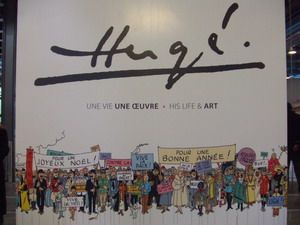
The Centre Pompidou followed suit, holding a special "Tintin Special Exhibition" from December 20 to February 19, 2007. The well-known Tintin comic books have accompanied people's growth and have now become part of European or global popular culture. The well-known Tintin seems more famous than its creator, Hergé. This year (2007) marks the centenary of the birth of the famous Belgian cartoonist Hergé (born in 1907, died in 1983). Many countries named this year the "Year of Hergé." Naturally, from Brussels via London and Quebec to Paris, homage was paid to this world-famous genius cartoonist. This was the first comic book special exhibition at the Centre Pompidou since its opening, becoming one of the two best-selling exhibitions this winter (the other being the Disney Special Exhibition). The exhibition, suitable for all ages, enlivened Paris's cultural activities in winter.
Hergé (real name Georges Remi) was born on May 22, 1907, in Brussels, the capital of Belgium. In 1924, he began signing his works with "Hergé" in the Le Boy-Scout magazine comics. In 1928, he joined Le Petit Vingtième newspaper, where he was responsible for a publication specifically targeting young readers. In January 1929, a humorous young character named Tintin was born in this innovative newspaper. This energetic and adventurous Tintin became a young reporter, and his adventures traveling the globe and encountering dramatic scenes became the theme for all future Tintin comics. Starting in the 1930s, Tintin became the most intimate reading material for young people, generating widespread resonance. Tintin traveled from various parts of Europe to the Congo and Egypt in Africa, and even reported on dramatic plots and anecdotes in Shanghai and Tibet (combining historical events of the time). He successfully gained the appreciation and affirmation of young readers. Starting in 1946, Tintin separated from the Le Petit Vingtième newspaper comics to become independent albums. In 1950, Hergé established his own studio to develop Tintin comic books, achieving continuous success that still captivates people today.
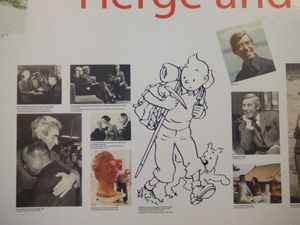
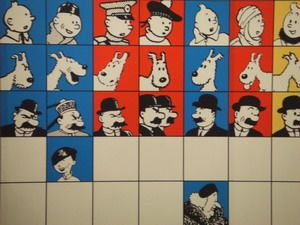
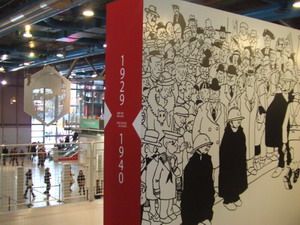
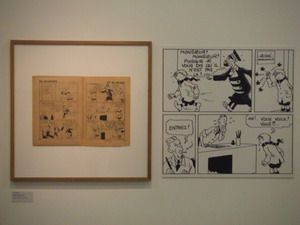
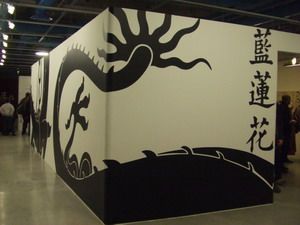
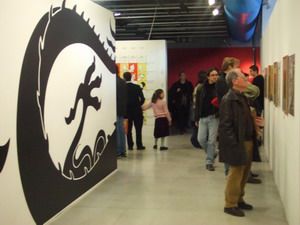
The "Tintin Special Exhibition" occupied 1,500 square meters across the first floor and the central underground exhibition hall of the Centre Pompidou. It was grand and systematic, featuring rich original materials including sketches, Le Petit Vingtième newspaper comics, Tintin comic themes such as "On the Moon" or "The Blue Lotus" scene installations, biographical images of Hergé and introductions to his studio, and all main characters and narrative plots from the Tintin stories. It allowed people to rediscover their personal memories and emotions regarding Tintin.