Van Gogh "Self-Portrait"
Van Gogh self-portrait, 65×54 cm, 1889, collection of the Musée d'Orsay, Paris. Remember! It was in Arles, Provence, in southern France, after Van Gogh argued with Gauguin, that he cut off one of his own ears and was sent to the Saint-Rémy mental asylum. There, Van Gogh painted his final self-portra
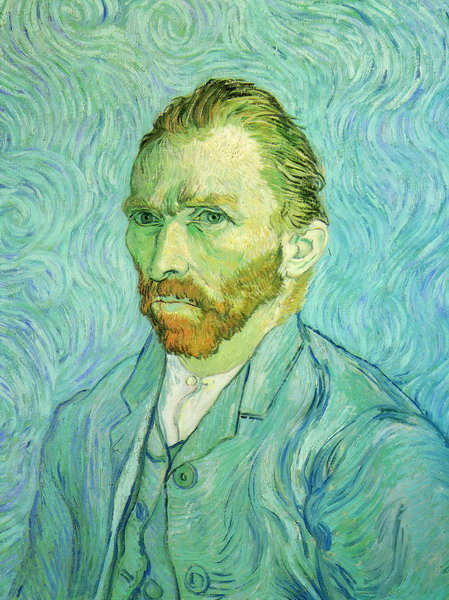
Van Gogh self-portrait, 65×54 cm, 1889, collection of the Musée d'Orsay, Paris. Remember! It was in Arles, Provence, in southern France, after Van Gogh argued with Gauguin, that he cut off one of his own ears and was sent to the Saint-Rémy mental asylum. There, Van Gogh painted his final self-portrait. No one could have predicted that just ten months later, he would take his own life.
In Van Gogh's tragic and brief life, he painted over twenty self-portraits, seemingly as if he were recklessly exposing his own identity. This work is a sudden manifestation painted while Van Gogh was emotionally disturbed, nearly insane, and in a dazed state of mind; the green-toned face gives a sickly impression, while the focused, questioning gaze shines with intellectual brilliance.
Regarding this painting, Van Gogh wrote to his brother Theo: "Although my eyes have a more vacant stare than before, my facial expression is calmer." Yet, in a kind of motivating self-challenge, for Van Gogh, the self-portrait was at least "original and enduring," because the self-portrait is the manifestation of the most intimate realm within Van Gogh's exceptional painting.