Baroque Art (1600–1700)
(Left) Rembrandt, Anatomy, 1632, 169.5x216.5 cm, The Hague Museum collection. (Right) De La Tour, Adoration of the Infant Jesus, c. 1644, 137x107 cm, Louvre Museum, Paris collection.


(Left) Rembrandt, Anatomy, 1632, 169.5x216.5 cm, The Hague Museum collection. (Right) De La Tour, Adoration of the Infant Jesus, c. 1644, 137x107 cm, Louvre Museum, Paris collection.


(Left) Vermeer, The Artist’s Studio, 1665, 120x100 cm, Kunsthistorisches Museum Vienna collection. (Right) Velázquez, Portrait of Prince Carlos, 1635, 209x173 cm, Museo del Prado, Madrid collection.
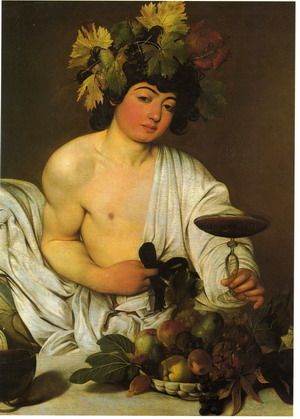

(Left) Caravaggio, Bacchus, 1596–1597, 95x85 cm, Uffizi Gallery, Florence collection. (Right) Rubens, Bathsheba at the Fountain, c. 1635, 175x126 cm, Gemäldegalerie Alte Meister, Dresden collection. Renaissance art moved a small circle of humanists through intellectual methods: geometry, perspective, anatomy, and knowledge of antiquity. Baroque art was popular art, moving a broad audience through emotion. From the early sixteenth century, the Florentine school began to decline; from the seventeenth century, the Venetian school also fell into decline, bringing the Renaissance to its end. Finally, the Bolognese school (in an era of imitationism and eclecticism) and the Neapolitan school in southern Italy took charge of the remnants of the Renaissance, especially Caravaggio (1569–1609) of Naples. The seventeenth century was the time when positivist philosophy developed and Descartes and Western rationalism were born. Since the late sixteenth century, Europe had undergone the shock of Protestantism; Western painting, within this political and social context, implicitly reflected the values of the period, developing a personal and intellectual expressive world: Baroque art. This brilliant art was born in Rome; as the Thirty Years’ War opposed reform, Baroque art quickly spread throughout Europe. Within heavy, gorgeous decoration, a very free form (especially in some Christian countries) symbolized the spirit opposing reform, rejecting idealized classicism. Its painting characteristics lie in showing effects formed by light, movement, and emotion. Baroque art formed a magnificent style under religious authority, affirming the sanctity of religious faith. Yet under monarchical systems it also formed a dramatic, gorgeous style that flaunted political power, most clearly reflected in French monarchy: court art at Versailles. At this time, Europe’s political and economic center shifted from Italy to France; Louis XIV’s Versailles became the cultural center of the European continent. However, Bernini in Rome was the most representative sculptor of Baroque art; his works were idealistic and skillful, though they seemed to lack Michelangelo’s awe-inspiring seriousness and focus. But in his century, he was more popular and influential; he not only gave Baroque Rome its character but also became the main source for Baroque artistic style across Europe. Another was the painter Caravaggio, who with plain, humble realism on simple subjects of daily life, went against Baroque forms, avoiding the luxury of Roman churches and French court interiors. The seventeenth century was the golden age of the Spanish school; Zurbaran and Velázquez were representative painters. Dutch art rooted itself in Protestantism; artists broke away from Baroque magnificence. Among the gorgeous styles was the famous painter Rubens, while those focusing on plain daily life, interiors, and landscapes stood out uniquely with painters like Rembrandt and Vermeer.