The Rococo Period (1700–1800)
Watteau "Gilles" 184x149 cm 1717 Collection of the Louvre, Paris.
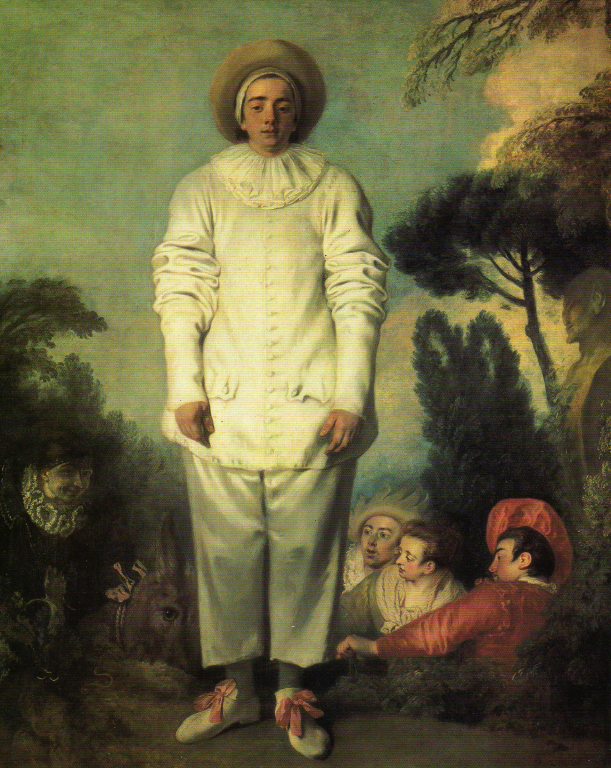
Watteau "Gilles" 184x149 cm 1717 Collection of the Louvre, Paris.
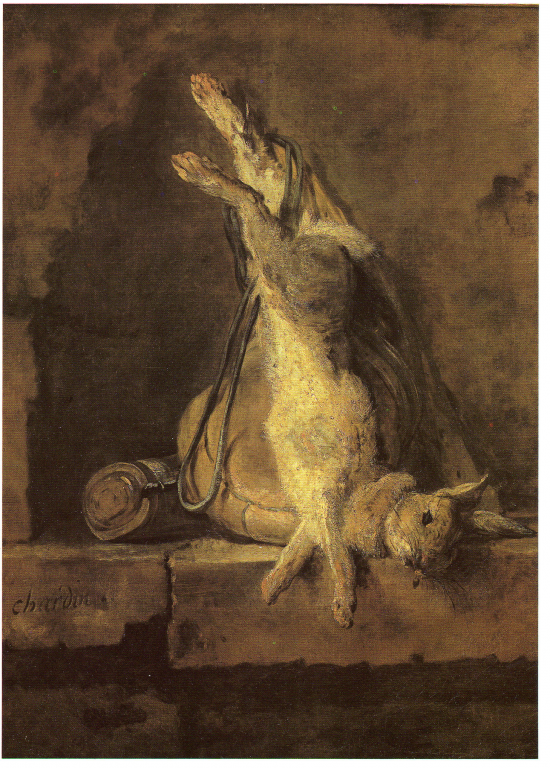

(Left) Chardin "The Hare" 81x65 cm c. 1730 Collection of the Louvre, Paris. (Right) Fragonard "La gimblette" 89x70 cm c. 1768–69 Collection of the Louvre, Paris.

Boucher "Young Girl Lying on a Sofa" 60x73 cm 1751 Collection of the Museum of Cologne, Germany.
When Louis XIV died, a new artistic style—Rococo—was born. It flourished during the regency of Louis XV of France, hence it is also known as the artistic style of Louis XV. From the grand and magnificent Baroque to the refined and elegant Rococo. Especially under the Enlightenment of the 18th century, all culture and art became more refined and perfect. This artistic movement quickly spread throughout Europe.
Rococo was a major decorative art style of the 18th century, using extremely rich rock-like ornamental elements (which is the origin of the style's name): leaf motifs, shell motifs, employing these sinuous lines to form an elegant and beautiful decorative style. However, in painting, it increasingly incorporated frivolous, sensual, and theatrical themes, particularly love stories, festive occasions, and the celebration of sensual women.
Particularly notable in the 18th century was the English school, whose refined and elegant portraits, landscapes, and the lyrical paintings favored by Dutch school painters already heralded the arrival of Romanticism. Yet the art of the 18th century concluded with the Neoclassical movement.