Neoclassicism (1760–1850)
Ingres, The Grand Bather, 146x97 cm, 1808, held in the Louvre Museum.
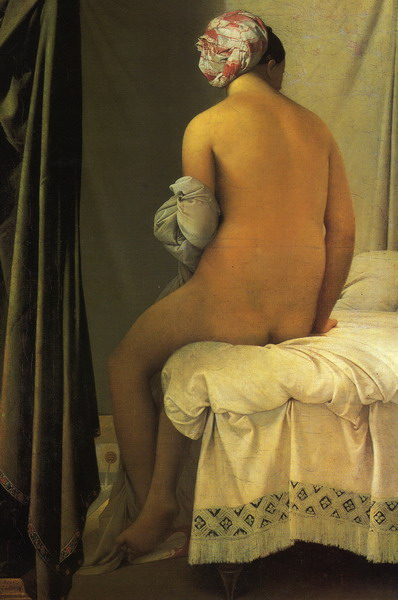
Ingres, The Grand Bather, 146x97 cm, 1808, held in the Louvre Museum.
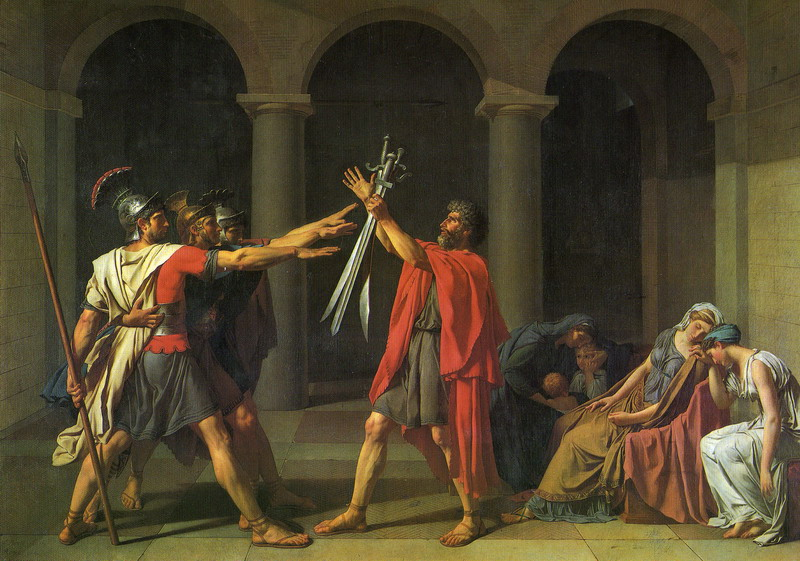
David, The Oath of the Horatii, 330x425 cm, 1784, held in the Louvre Museum. The Enlightenment in 18th-century Europe led to the French Revolution, the collapse of monarchy, the establishment of a republic, the restoration of the monarchy, and the emergence of an imperial to democratic society. From economic revolution to industrial revolution, commerce and industry advanced rapidly. Western political, economic, and social structures underwent comprehensive drastic changes, affecting various intellectual trends and value systems in humanistic society. At this time, artists assumed a folk role, exploring personal feelings within new values of free expression and patriotism. However, 18th-century art culminated in Neoclassicism, a major development returning to historical and archaeological research. It was fascinated by ancient Greek and Roman art, advocating a return to pure classical idealism. The Neoclassical movement aimed to resist aristocratic art (Baroque and Rococo). Especially after the French Revolution, the new Republic and the French Empire were enamored with the ancient Roman republican system, so this art form was particularly valued.