Thomas Schutte "Three Acts" Retrospective
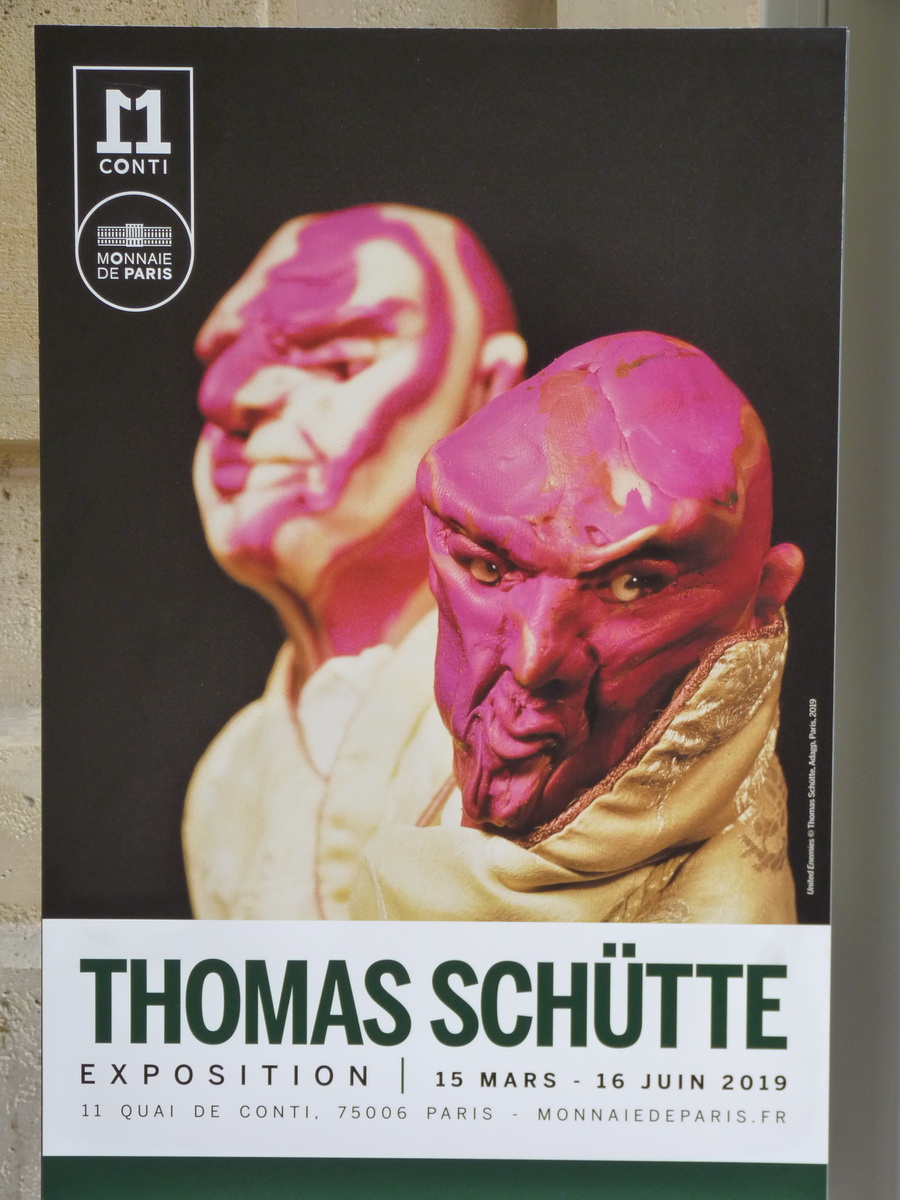
Thomas Schutte "Three Acts" Retrospective: Poster exhibited at Monnaie de Paris
Text/Chen Chi-Hsiang Time – March 15 to June 16 Location – Exhibited at Monnaie de Paris. Thomas Schutte (born 1954) is recognized as one of the main sculptors reshaping the new generation of German artists in the 1980s.
His unique works develop within postmodern signs, starting from classical concepts such as nature, politics, society, and (postmodern) spatiotemporal cultural backgrounds, incorporating various possibilities of themes and social relations.
His recurring motifs range from representative architecture to public sculpture. Many types of themes ignored by modernism are included: figures, human heads, nudes, and houses; the selection of these themes often carries a satirical and critical meaning.
In 2005, his work received the honor of Best Artist Award at the Venice Biennale.
Thomas Schutte’s diverse explorations can be classified into three major creative directions: a passionate interest in sculpting imaginative human figures, rigorous architectural structural models, and emotionally lyrical watercolor, paper-based, and print works.
He explores refined techniques and diverse composite media: ceramics, bronze, iron, aluminum, glass, etc.
In this retrospective, he presents scenes and fields like a film using "Three Acts" titled "Muses and Heroes," "The Other and the Distant," and "From Model to Monument." This title comes from the theme of a group of works he created in 1982.
Born in the post-WWII era, Thomas Schutte was inspired by Joseph Beuys’ artistic awakening. The artist probes national, historical, and spatiotemporal contexts with personal sensitivity and contemporary awareness.
His creations use symbolism and metaphor to articulate his diverse thoughts and feelings, reflecting his philosophical consciousness of existence, witnessing Germany’s dramatic post-war history and the crazy world.
His myths and heroes swing between tragedy and comedy, satire, despair, melancholy, and unsolvable contradictions; their meditative expressions seem to convey the violent collisions of the world.
Act One "Muses and Heroes": Sculpture: Human statues are one of the central axes of Thomas Schutte’s creation. Starting with small figures used for spatial proportion in his early works, later human statues opened up to become the main value.
His three-dimensional spatial sculptures constantly explore scale through attempts with small models (such as "Three Acts" (1982), "Life of Artist Mohr" series (1988-89)), which years later became monumental large-scale works.
He clearly liberates himself by borrowing different styles—from classical sculpture to minimalism.
He constantly updates and seeks highly personal uniqueness in image, atmosphere, and texture, broadly expressing various human situations from grotesque to meditative, full of vitality and striking presence.
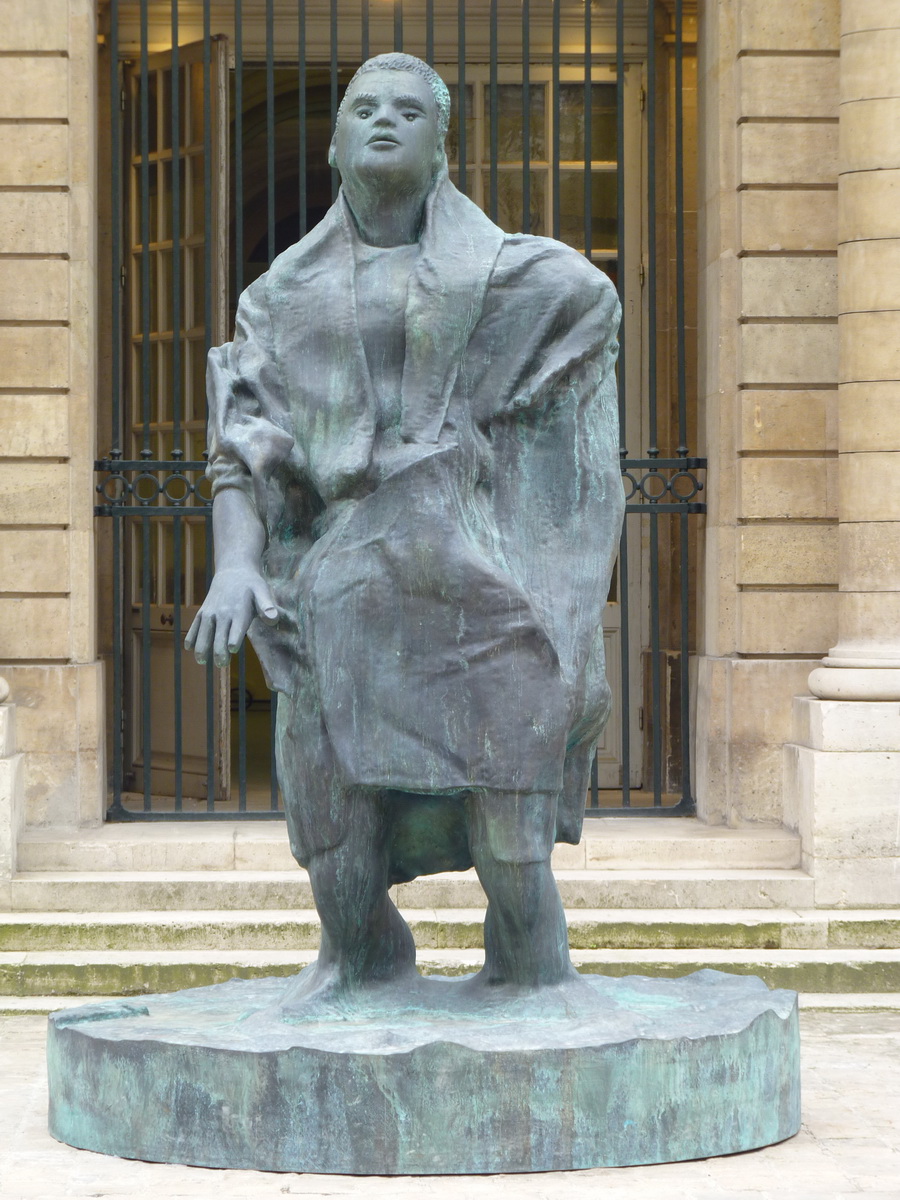
Inheriting traditional sculpture, men are heroes and women are muses. Hero statues are grotesque, expressive figurative characters with sorrowful and painful expressions. Notable is "Fatherland" (2010), named after the German expression designating national monuments.
It depicts a frail, armless old man who appears insignificant, powerless, and without authority, yet his serious expression maintains his dignity.
When asked about the concept of the nation, the artist quoted writer Günter Eich’s passage written in 1968: "What is the most disgusting thing in the world? They are my parents. Wherever I go, they follow me like shadows... (…).
When I find a chair, the door opens, inside, one looks like Fatherland or Motherland" (Note 1). When people asked why the figure had no arms, he humorously replied that he didn’t have time to finish them, haha.
This sufficiently illustrates the desolate portrayal of German artists facing their own country’s history.
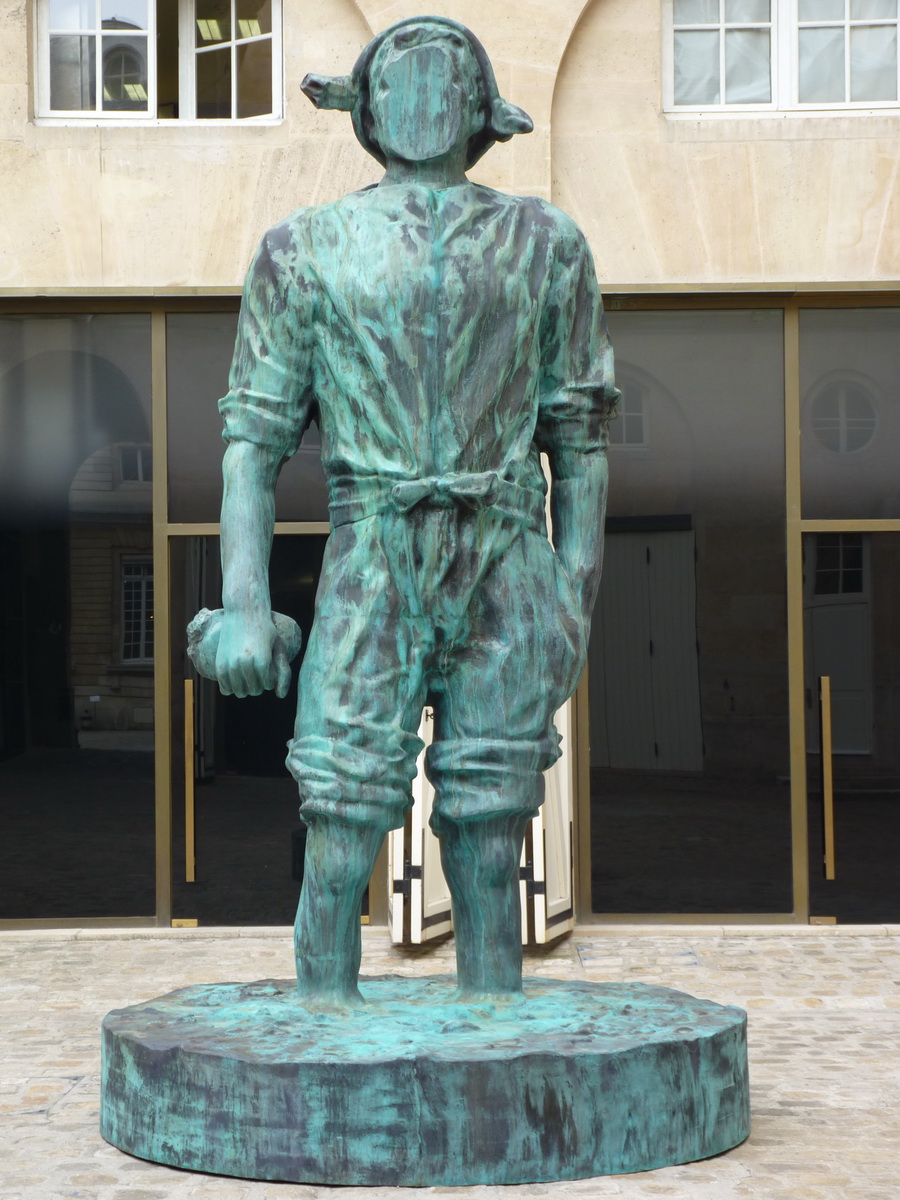
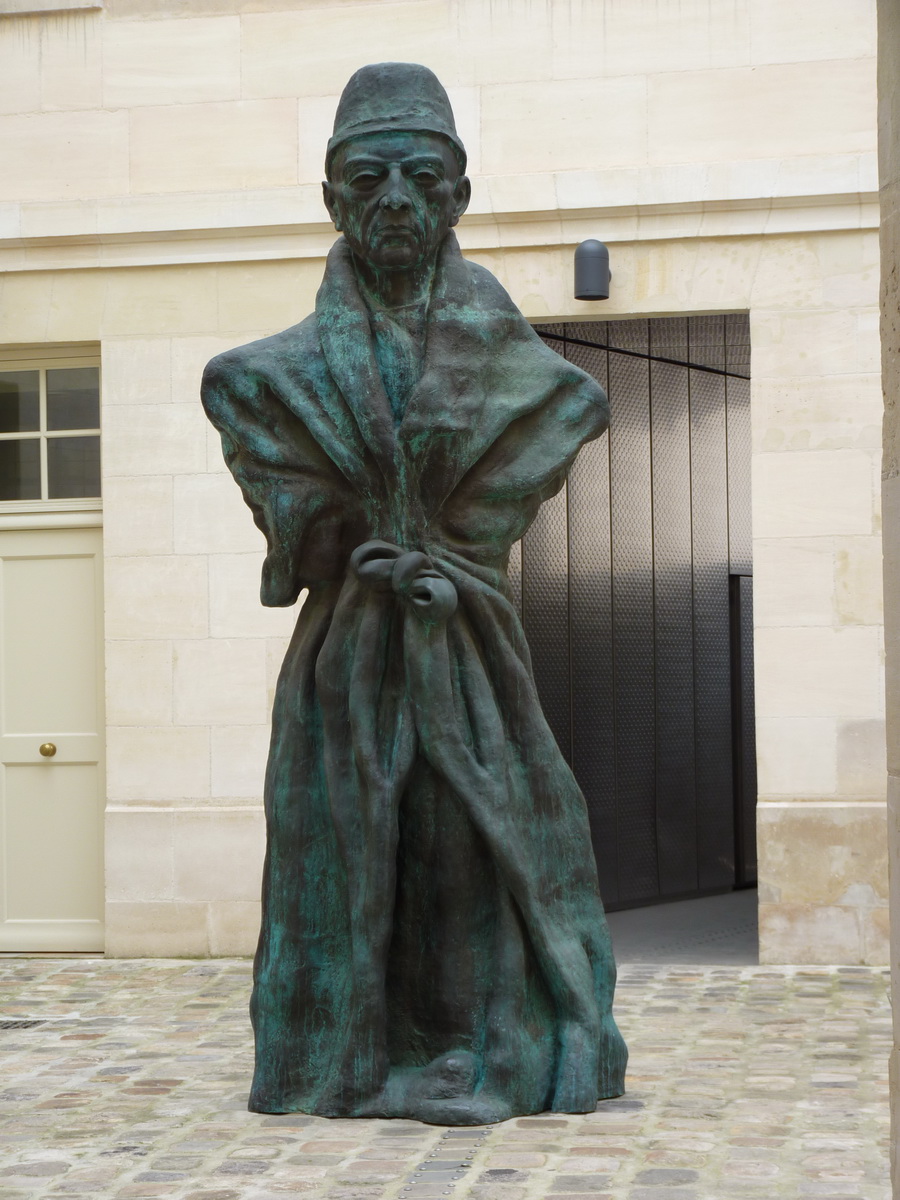
"The Faceless Man or the Flag Bearer" (2018) was created specifically for this exhibition. Two sturdy men (heroes) stand face-to-face in the mud, engaging in dialogue and contrast. The faceless man wearing a cotton hat, holding an object in one hand and the other in his workwear pocket, seems to imply that everything is "nothing." The person in a trench coat holding a flag has piercing eyes and an arrogant posture. Through them, the artist questions the expression of power and possible heroes via metaphor.
"Young Figures in the Wind" (2018) motif originates from small clay figurines molded in 1982. It depicts three young, strong boys struggling forward in the wind while stepping in mud. Upon careful reading, the resilience of the three youths is written on their faces and bodies.
With thoughtful expressions, two figures are wrapped in trench coats; the middle one reveals a thick arm; the right one, resembling an Eastern face, shrinks both hands into the coat for warmth; the left one stands heroically naked, draped in animal skin, one hand tightly clenched in a fist, the other holding an object, gazing at the sky.
The three advance slowly with unyielding determination. Dramatic inspirational sentiments metaphorically depict crossing historical scenarios after a storm. These two series evoke Rodin’s The Burghers of Calais.
The masculine paternal authority becomes a concrete image—heroic, figurative realism, a masterpiece reaching its peak.
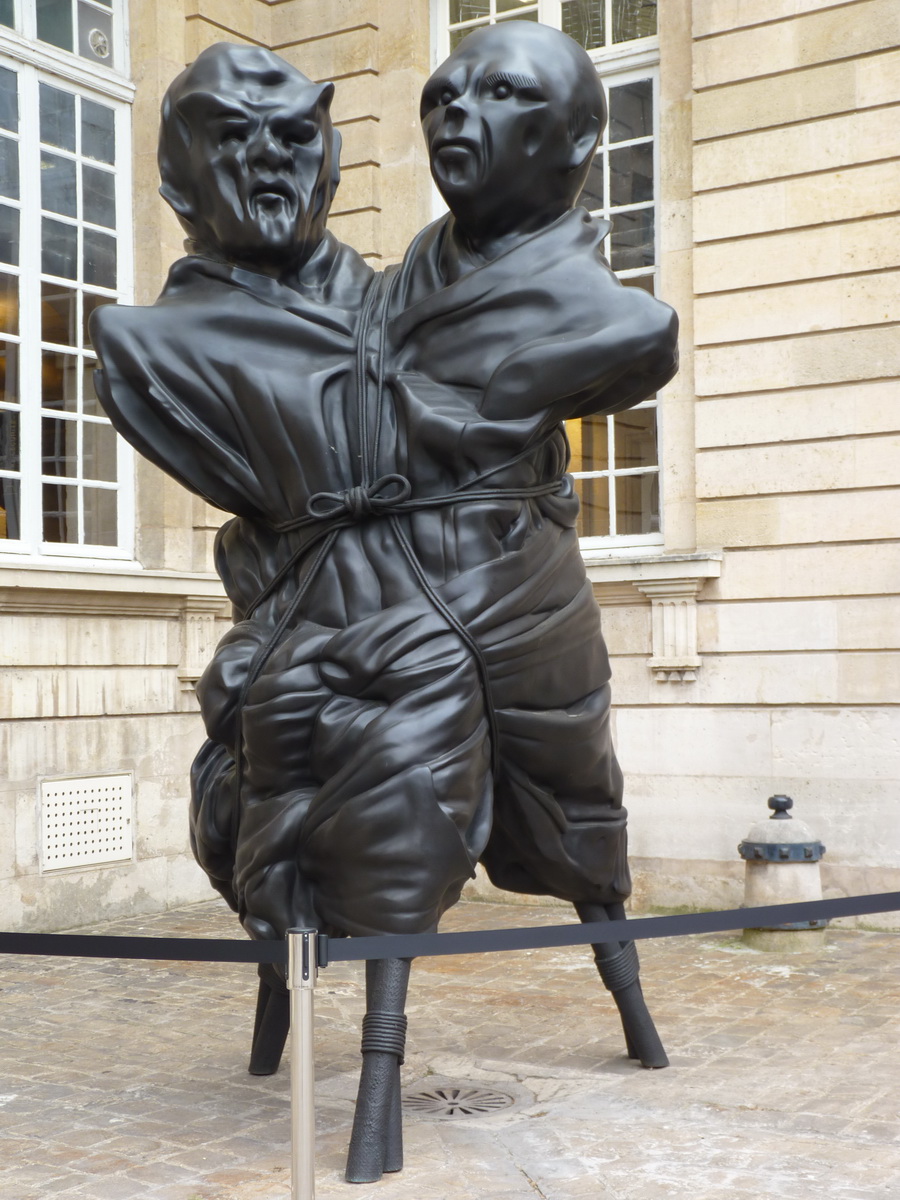
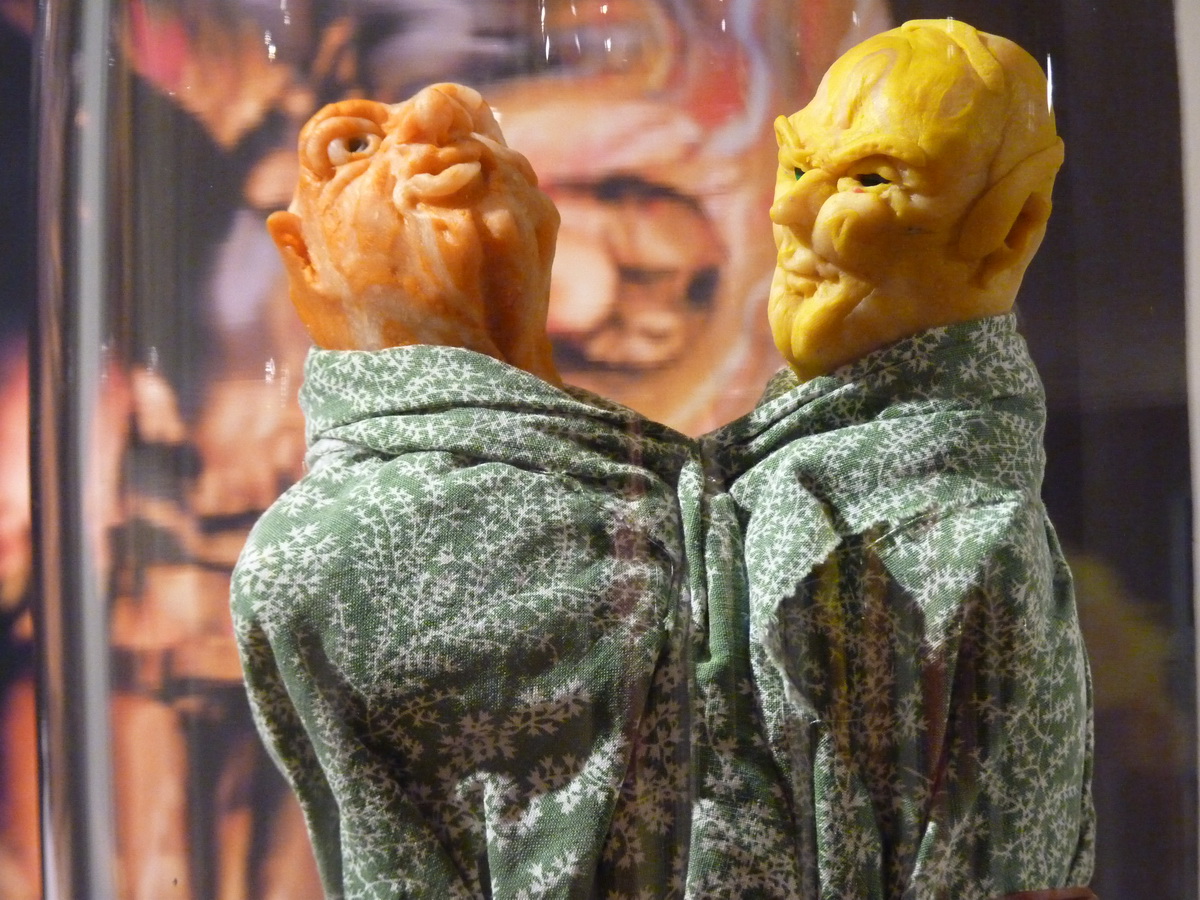
"United Enemies" (2011) is an enlargement of the artist’s 1993-94 clay clothing-wearing series. These distorted, exaggerated, neurotic double-faced figures appear in a state of nervous tension, intertwined like conjoined twins.
This series reflects the historical context of East and West German reunification after the fall of the Berlin Wall, and the artist’s sensitive thoughts and feelings regarding the political and social climate of the time.
Art acts as a clear mirror reflecting history, witnessing an era. These sculptures strongly evoke tense relationships in personal life and may drive one mad.
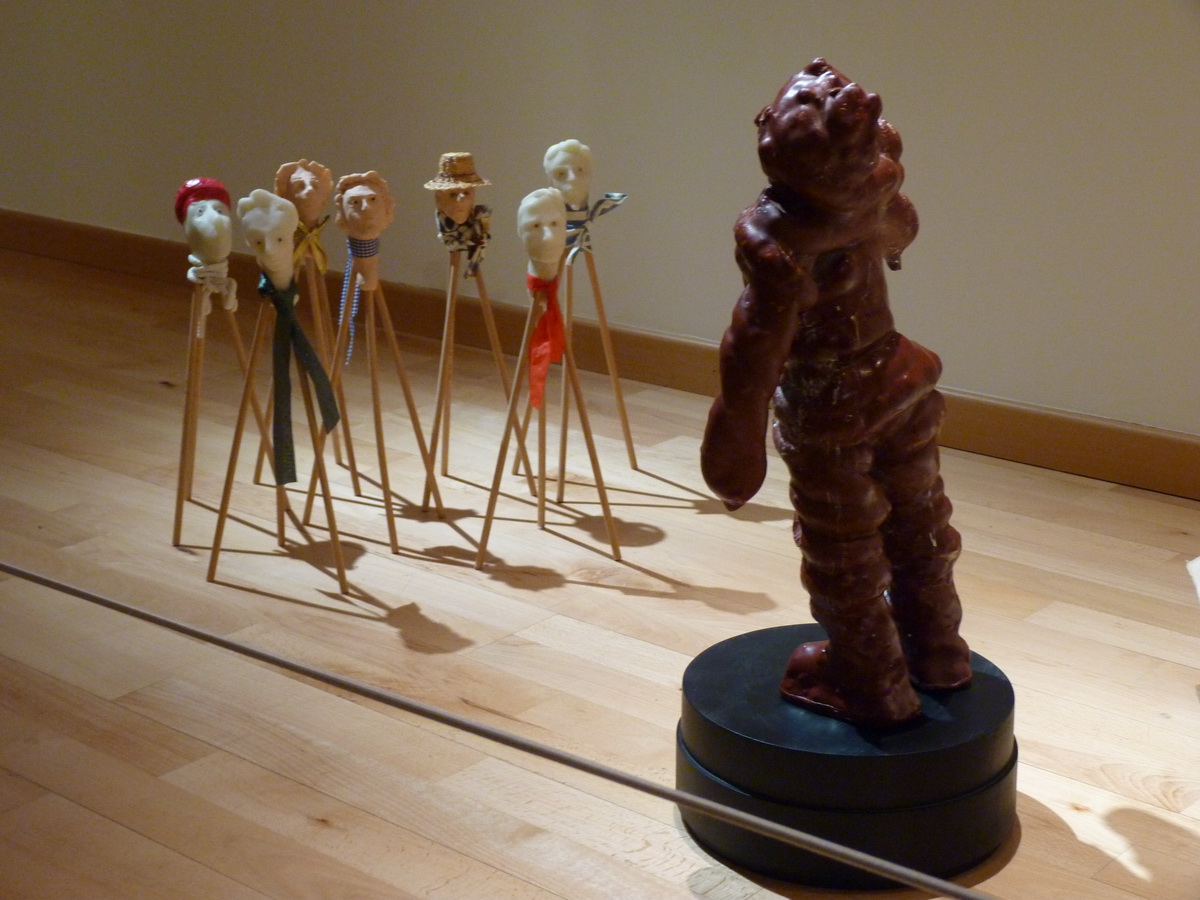
Starting from the 1990s, he began exploring the possibilities of ceramic sculpture, adopting it extensively in recent decades. "Dwarfs" (2006), a series of 12 ceramic head sculptures, features comical expressions almost akin to cartoon characters within traditional exaggerated expressionist grotesque imagery, carrying a sense of mockery and criticism of human nature, reminiscent of Daumier’s sculptures.
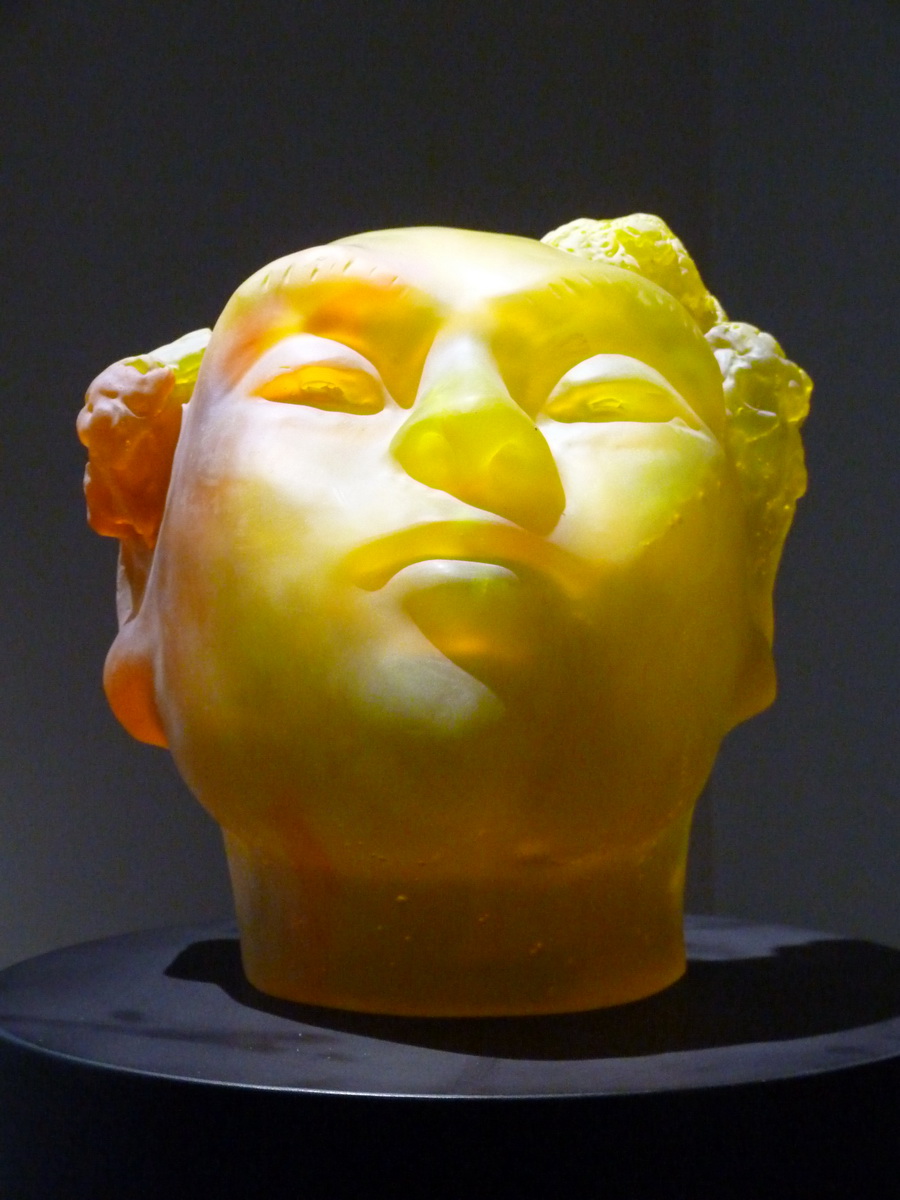
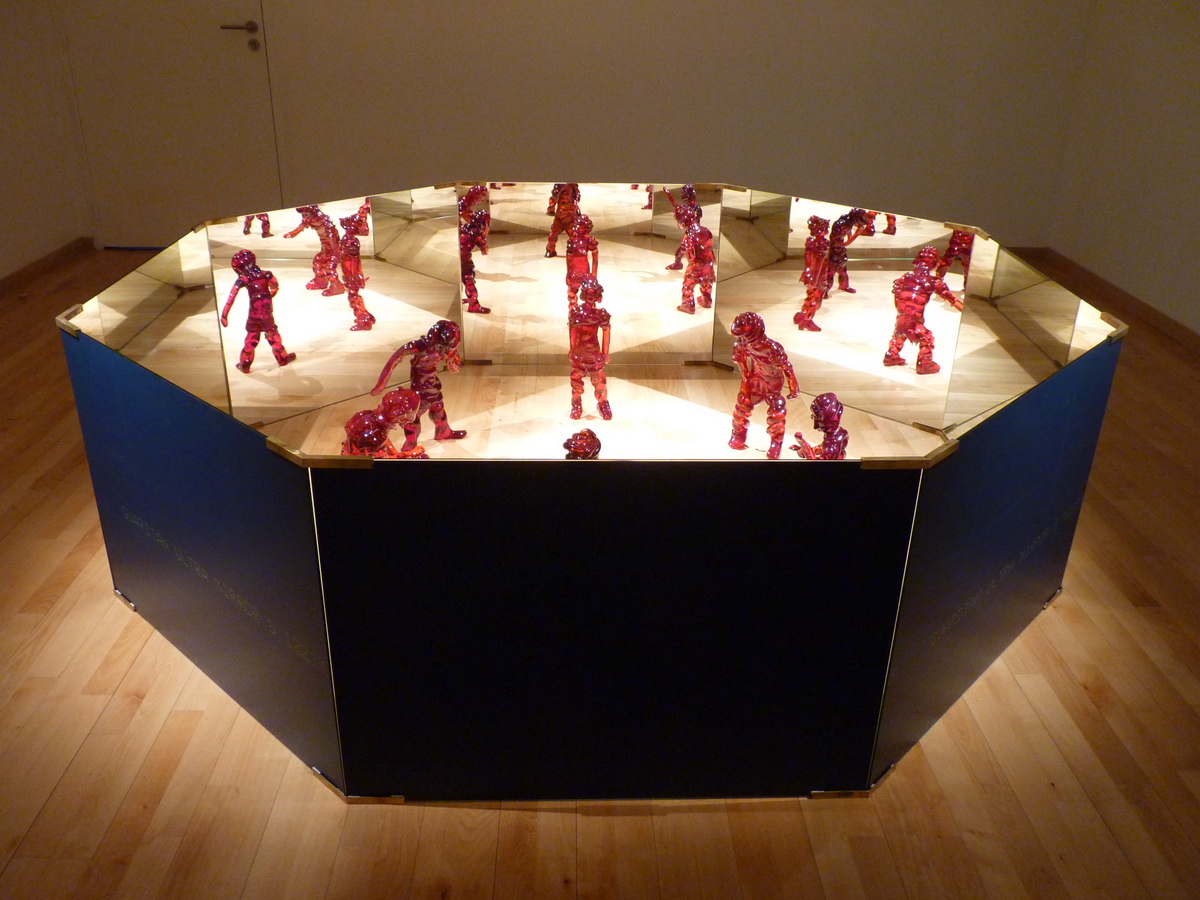
Glass as a material marked a turning point in his creation starting from 2010. The "Glass Heads" series (2013): assuming the presentation of expressive female or androgynous faces, it elucidates the textural beauty of glass. This series was completed by renowned glass masters in Murano, Venice. The artist said: "Repair something, and reveal it in a slightly barbaric way, otherwise what is the use of beautiful things?" (Note 2)
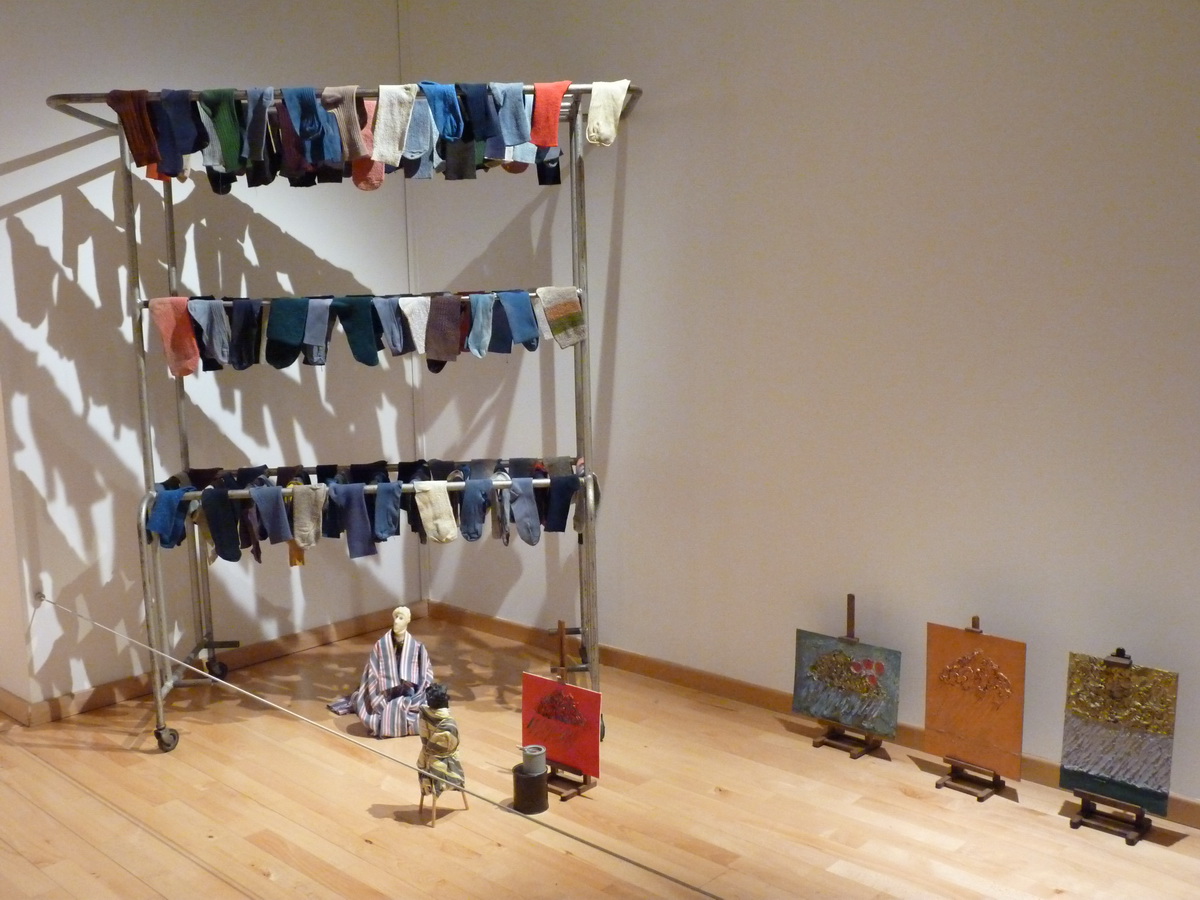
"Life of Artist Mohr" (1988-89) consists of small clay figurines dressed in clothes, forming spatial installations around everyday objects, serving as a projection of the artist’s personal identity.
Depicting Artist Mohr’s life in three acts: Act One shows painter Mohr painting a landscape on an easel, with three landscape paintings lined up behind him on the easel; the painter faces colorful socks drying in the sun, lost in thought.
Act Two shows sculptor Mohr examining his creation in front of his head statues, with a paint bucket on the left, a desk lamp on the right, and a shoe cabinet behind.
Act Three shows an art dealer standing before a wardrobe selling an old jacket to a collector, while the artist examines or appreciates his own creation. A metaphor for the narrative mechanism of the artist, he seems depicted as an abandoned person.
Since 1997, the artist has explored traditional female nudes, subsequently enlarging these small figurines into monumental statues. Starting in 1999, the "Female Nude" (sitting, lying, and bending) statue series comprised 18 pieces in total (bronze, iron, aluminum).
Female muses often appear under deconstructed forms, constructed between figurative and abstract, sometimes serene and lascivious, sometimes fragmented. Each is measured by the thickness of art history.
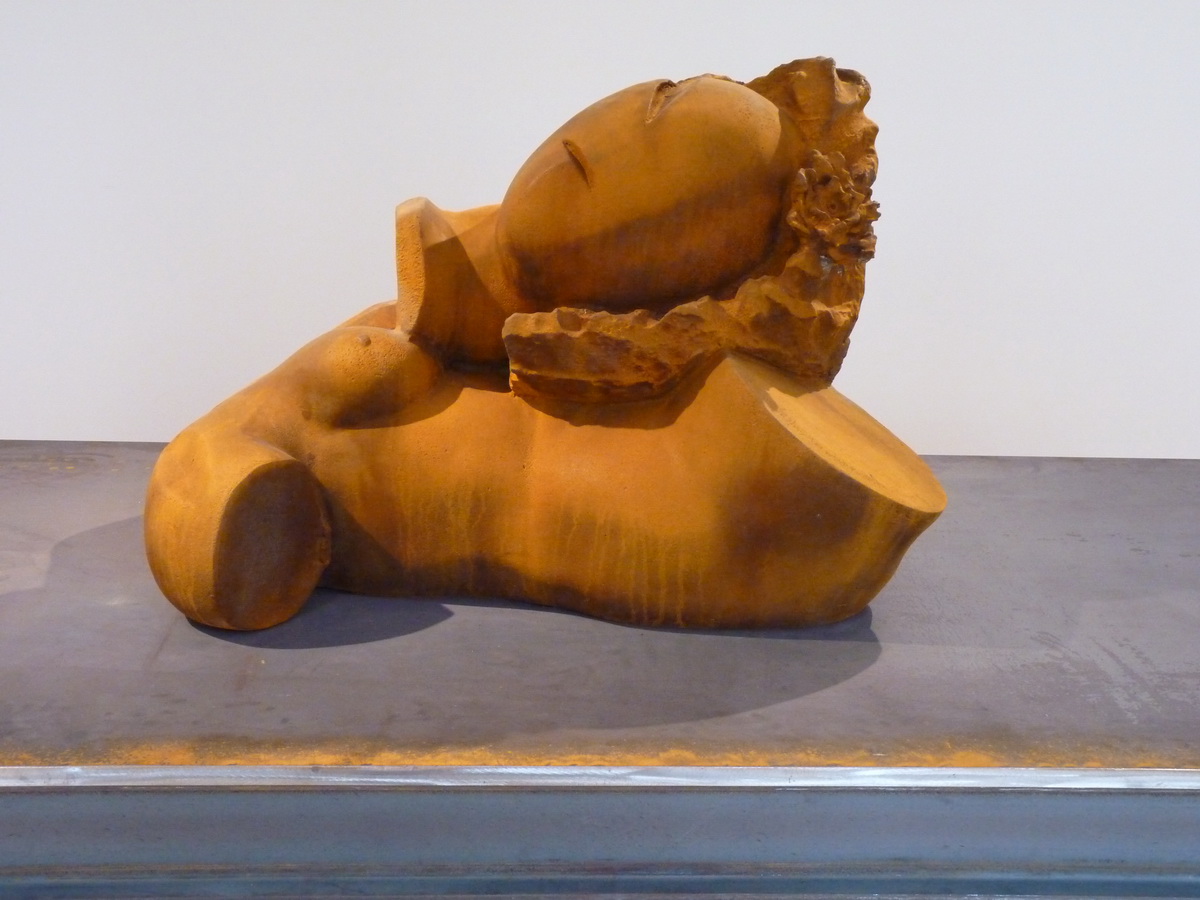
In this exhibition, four monumental large statues are presented lying on iron bed frame platforms: two outdoor "Cast Iron Nudes" (2001), obese and figurative, recalling Maillol’s style; deconstructed nudes with heads and calves removed, curled into curved forms; "Cast Iron Woman-18" (2002), a female nude image simplified into flat planes, creating a contrast between the two sculptures.
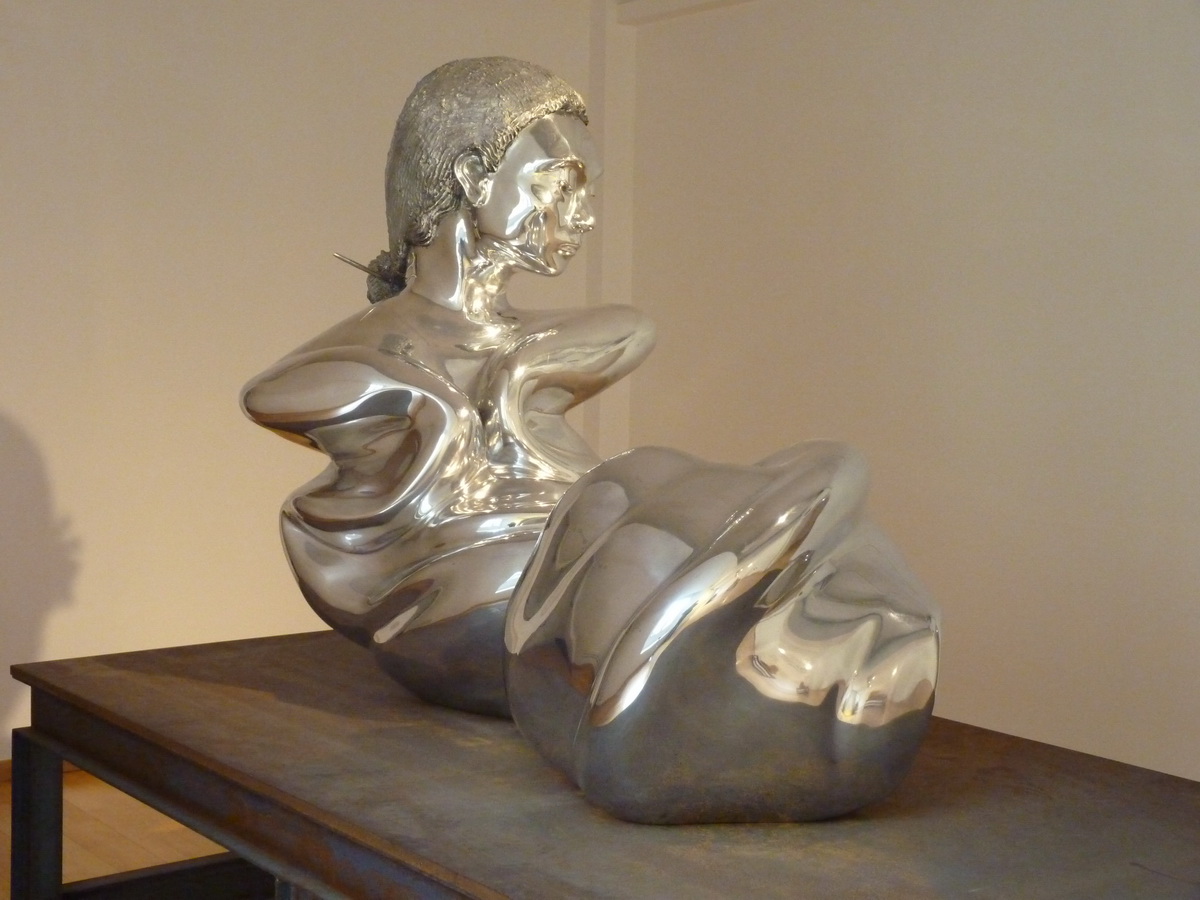
Indoor "Cast Iron Woman" (2006) has limbs deconstructed and reconstructed, with a female nude head on the torso, a surreal red cast iron woman image; "Aluminum Woman" (2009) features a twisted body, a complete female head, smooth mirror surfaces constructing a unique spatiotemporality, tending toward imagery and abstraction with the maternal power of nurturing the earth and gentle forms.
Act Two "The Other and the Distant": At a very young age (27), Thomas Schutte pondered the meaning of existence and perceived death?
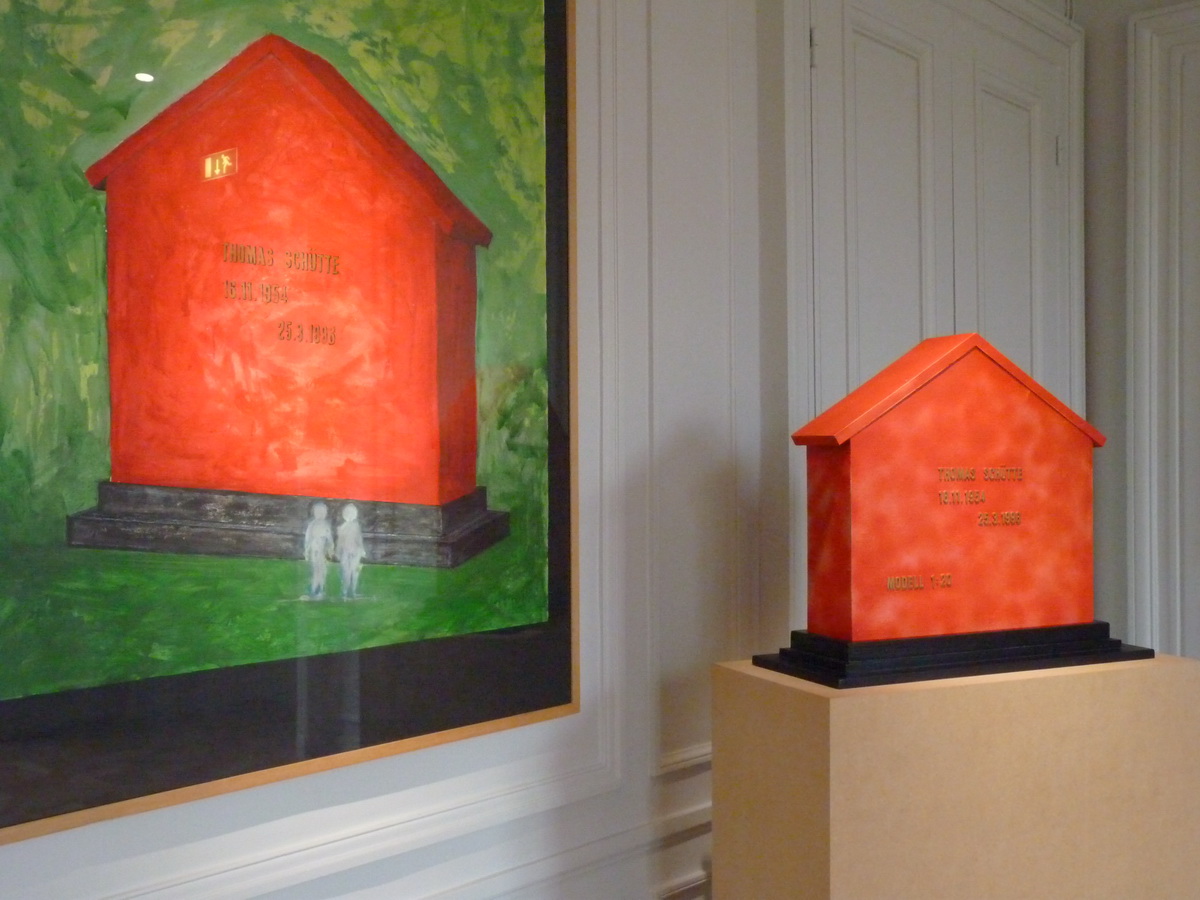
He established a bright red "Artist's Tombstone" (1981) for himself, inscribed with his name, marking birth and death dates 16.11.1954-25.3.1996, predicting a career ending at age 42.
This is a work of black humor or philosophy, opening the artist’s continuous attention to death and the other. "Death is a thought that distances you from all absurdity. It is really funny; when expressed, it produces a fatal feeling.
This shock generates a mortal sensation." (Note 3)
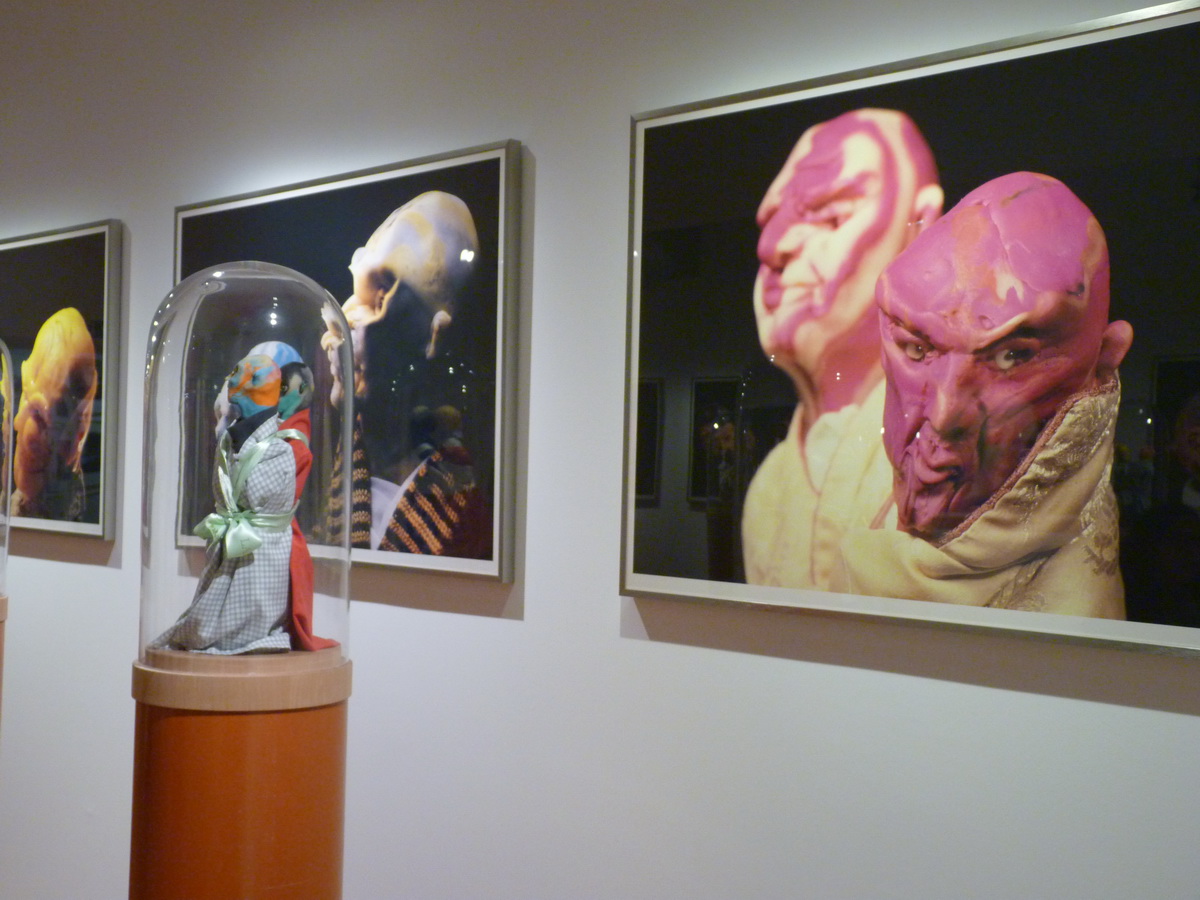
"United Enemies" (1993-94) is the artist’s most famous work. Small figurines molded from clay, contrasting exaggerated faces and twisted bodies, wrapped in clothes, tied together with wooden rods on a tray, presenting an unsettling scene.
The artist said: "When exhibited, no one wanted to look at them because they were too small." Thus, the facial expressions of these statues were photographed and enlarged. This series contrasts clothed small figurines with photographic portraits of heads.
Beyond illustrating the external environment of German reunification, it enters the exploration of human nature, the duality of existence: black and white, yin and yang, good and evil, life and death, enemies and friends, laughter and sorrow, etc.
Embracing your friend is natural, but loving your enemy transcends binary opposition. Expressing inner unsolvable contradictions, their crazy differences and dissonance, embodied in the dual figures of United Enemies, swinging between tragedy and comedy.
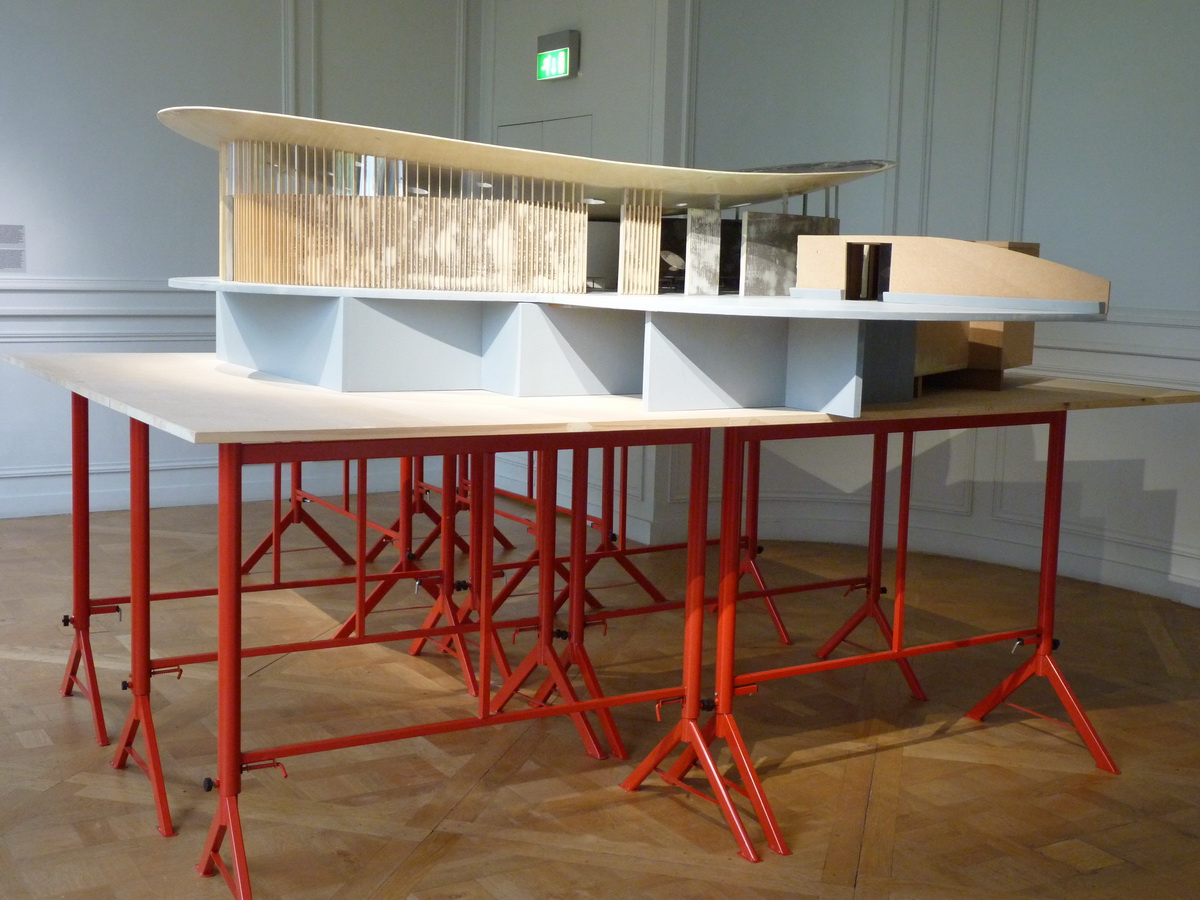
Act Three "From Model to Monument": Models are scaled-down physical representations of buildings, often composed of simple media.
The distance between architectural models and art lies here: architectural models are for constructing physical objects and are part of the architectural process.
Artist Thomas Schutte started playing with architectural models at a young age; starting from 1973, architectural models became his utopian vision.
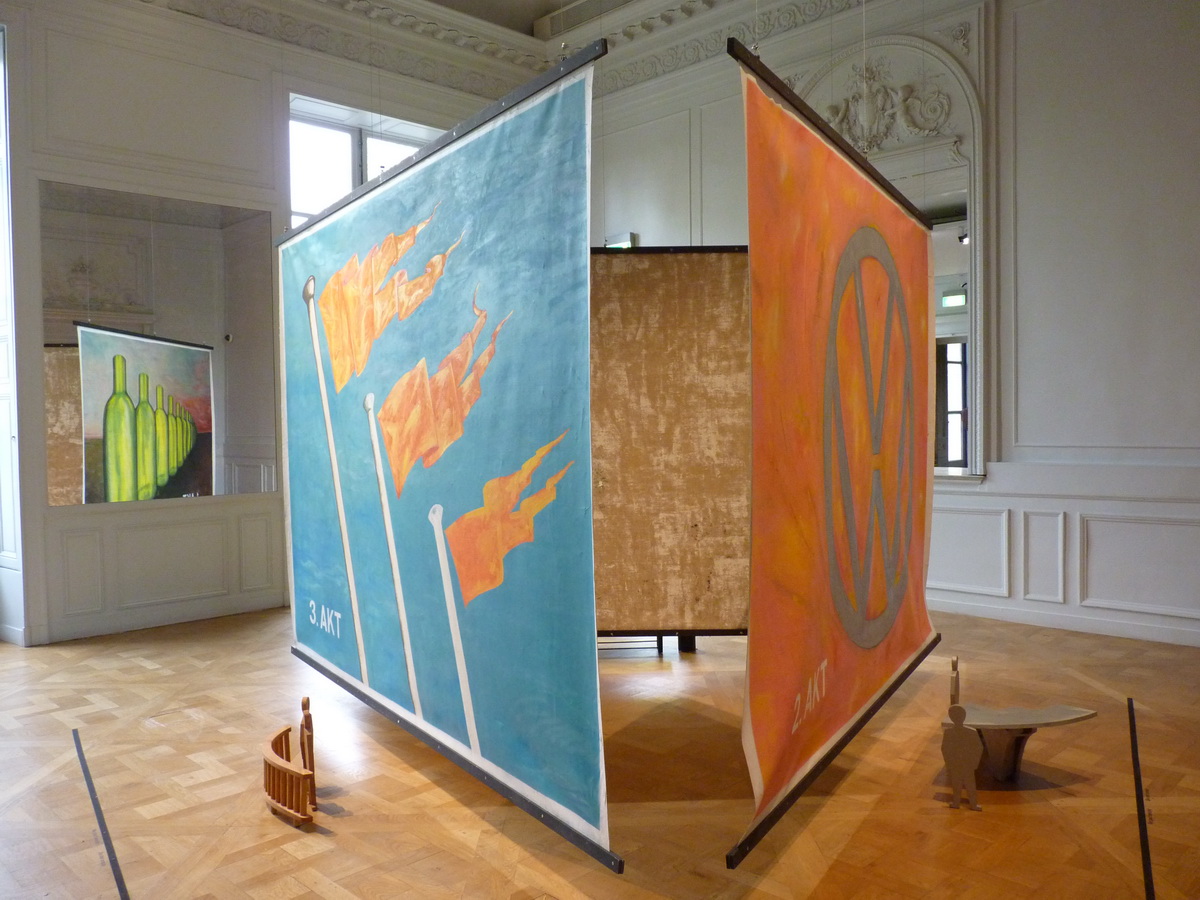
Monumental forms appeared in the theater of "Three Acts" (1982), where all actions occurred and were performed in front of the canvas; we saw signs of strength and progress. Thus, the artist frequently returns to the position of the audience of these fictional or real monuments.
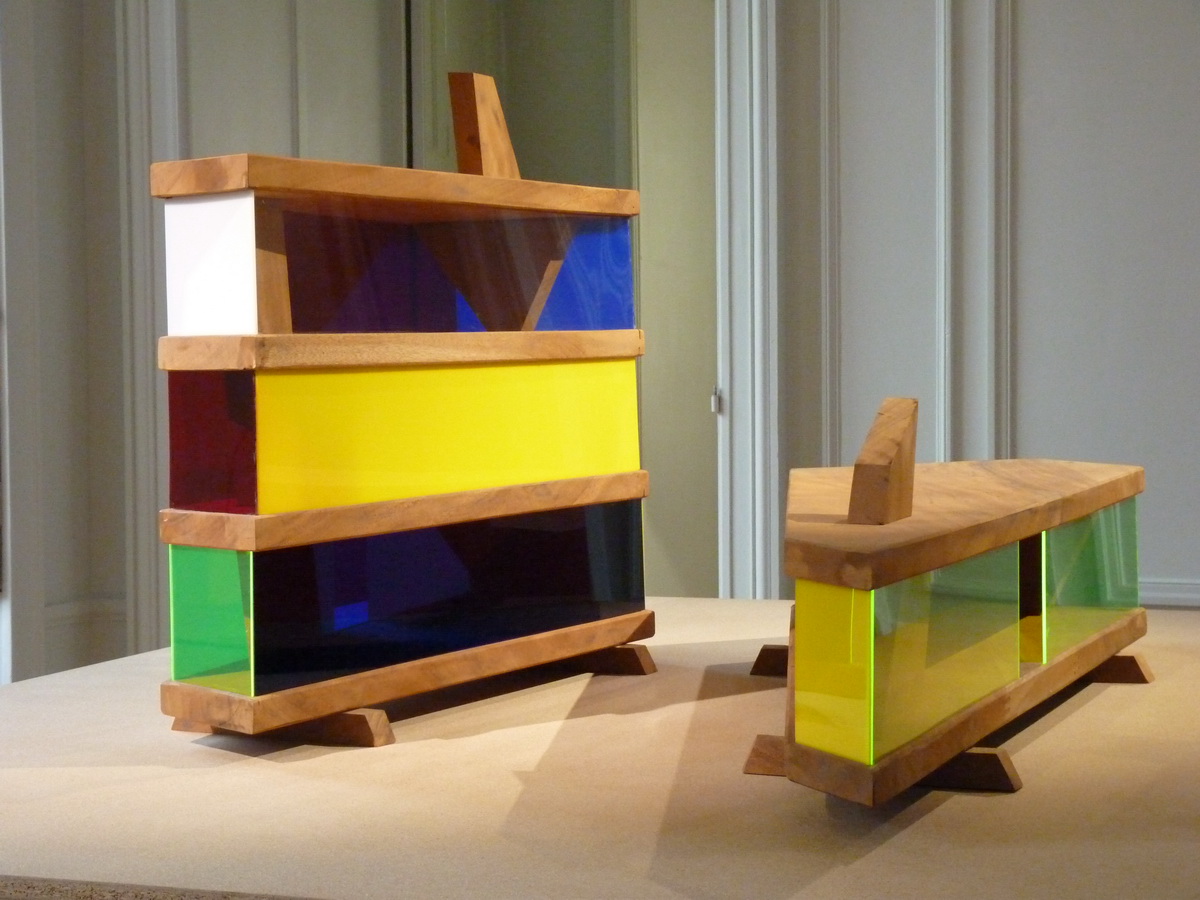
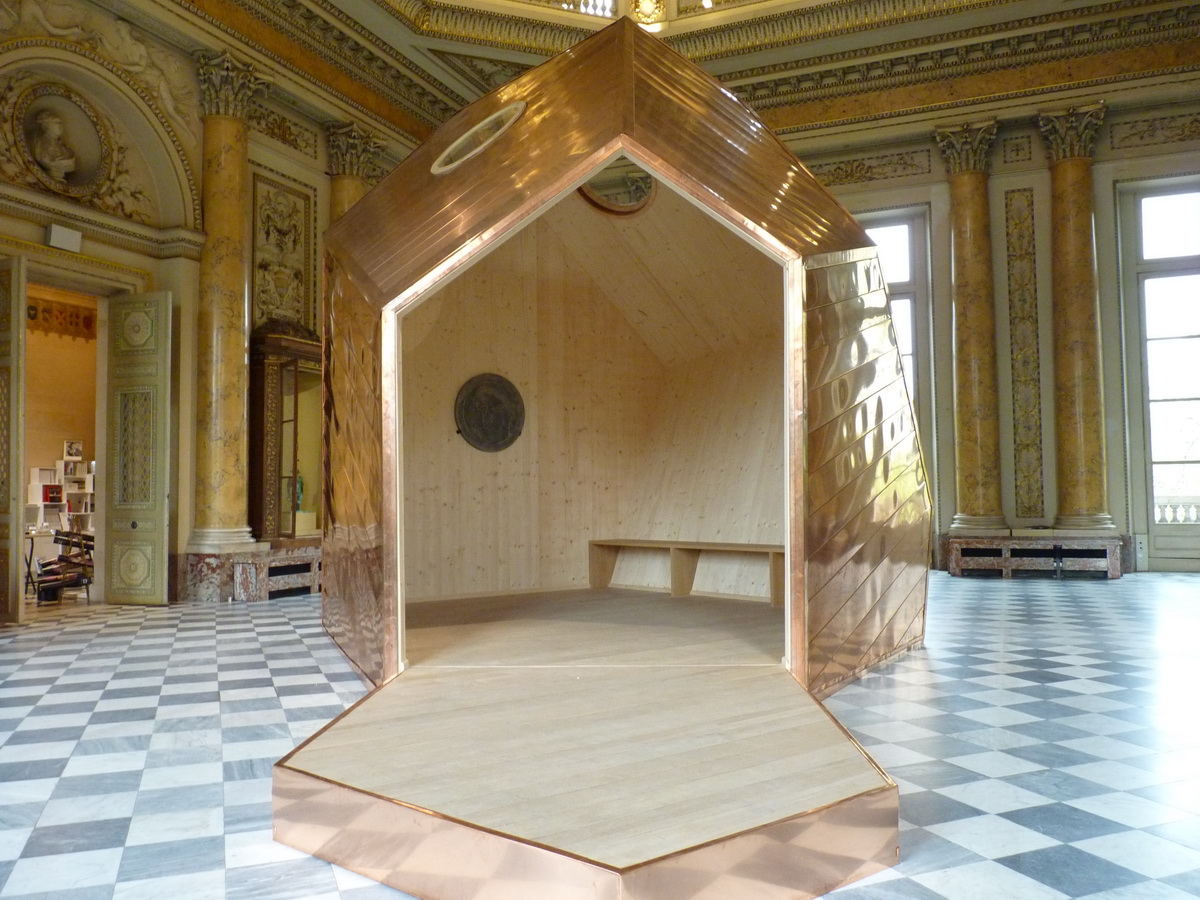
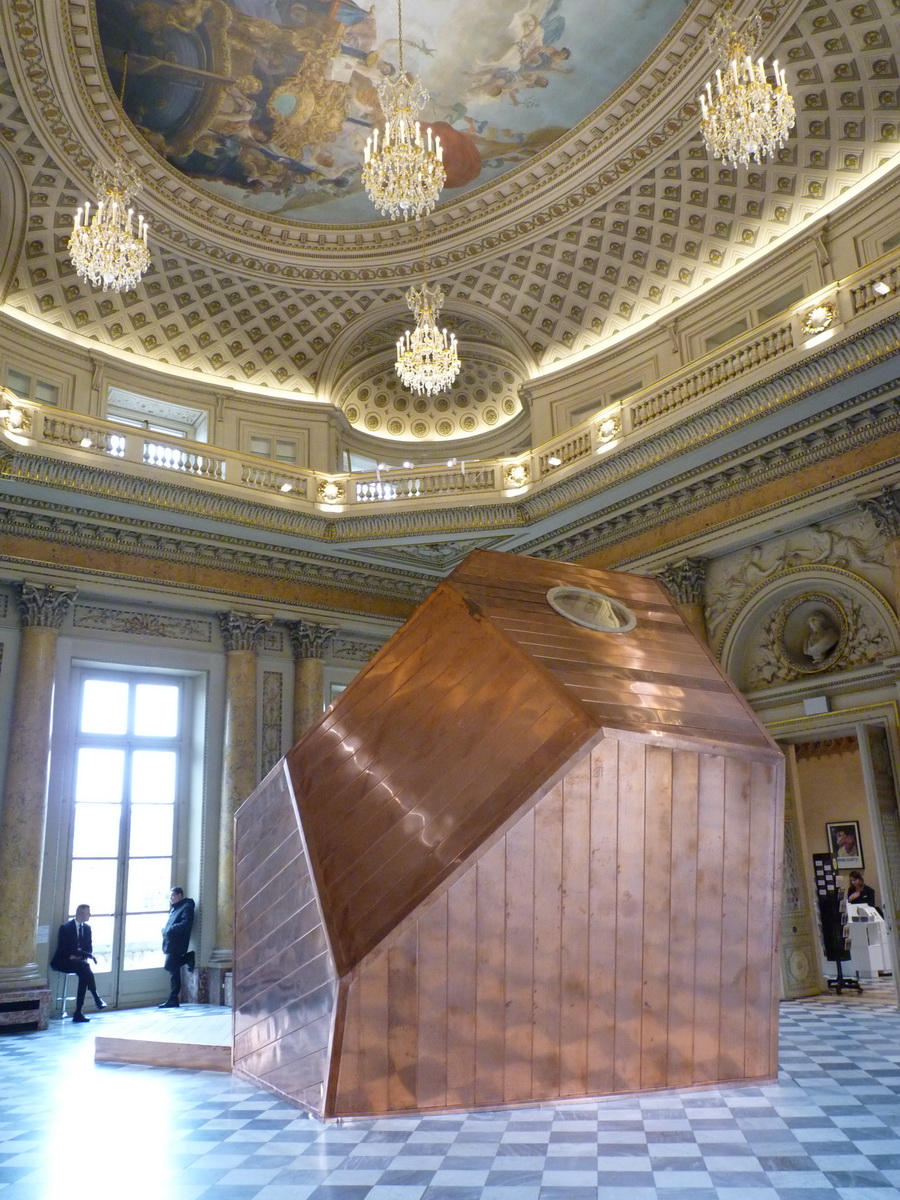
In the new millennium, the artist returned to his utopian world, constructing his artistic visions in the form of architectural models: "Architectural Models" (1973-2016), "Terrorist's Holiday House I-II-III" (2002), "Single House" (2006), "Crystalline House" (2014), "Sculpture Museum" (2012-15), "Expansion of the Sculpture Museum" (2018).
It is hard to say whether the artist is playing with clichés of modern architecture or taking the discipline seriously. Since 2007, he produced architectural models at scale 1 according to collectors' requests.
In 2016, he collaborated with architects to design his own Sculpture Museum. The artist said: "I don’t care much about architecture; it simply appears as a theme. Actually, it serves as a substitute for nature, because working with nature is so difficult.
Otherwise, I could only excellently draw those trees and figures in front of buildings." (Note 4)
Note 1 - Thomas Schutte "Three Acts" Retrospective Press Release Note 2 - Thomas Schutte "Three Acts" Retrospective Press Release Note 3 - Thomas Schutte "Three Acts" Retrospective Press Release Note 4 - Thomas Schutte Solo Exhibition Press Release 2007-06-13