Rodin - The Gates of Hell (Works from 1880–1917)
Rodin interprets the "passion" he may have expressed through scenes of hell from Dante's Divine Comedy. Detail of The Gates of Hell, collection of the Rodin Museum.
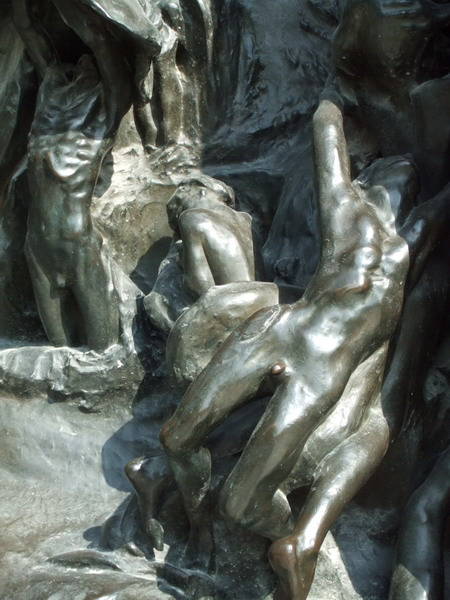
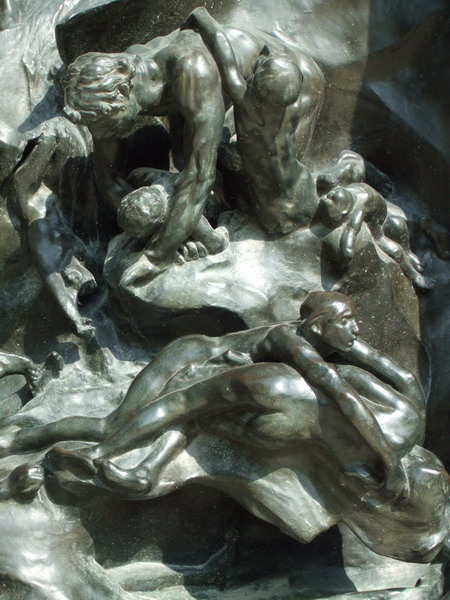
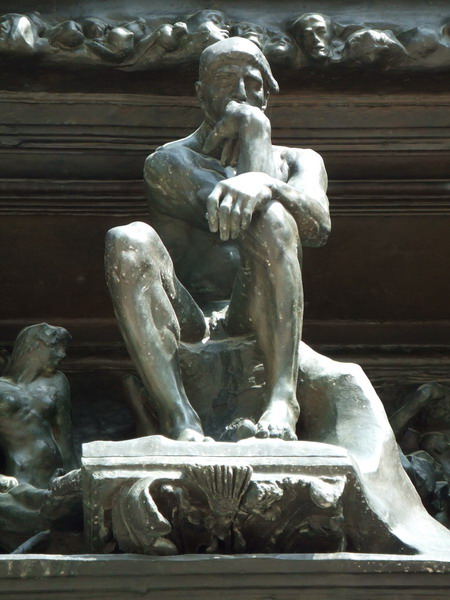
Text and photos by Chen Chi-Hsiang. This sculpture is one of Rodin’s most important masterpieces and a microcosm of his creative career. Within this dramatic ensemble, we already see the forms of his later independent works: The Thinker, The Kiss, The Prodigal Son, Love at First Sight, Sacrifice, Papillon, and various other compelling figures. Of course, this also includes The Three Shadows standing atop The Gates of Hell. All these elements had already taken shape within The Gates of Hell.
This work was commissioned by the French government in 1880 to serve as the future entrance decoration for a museum. Its inspiration came from the closed bronze doors of Florence Cathedral in Italy. Rodin interpreted the “passion,” “violence,” and “despair” he wished to express through scenes of hell from Dante’s Divine Comedy. Explaining life through literature—birth, aging, sickness, death, sexuality, spirituality, love, heaven, and hell—are all eternal themes in art.
From a formal perspective, he emphasized the dynamism of these figures and the two- and three-dimensional sculptural space, revealing the beauty of light and shadow layers and material transformation under illumination. This was a piece Rodin could never truly complete; he never let it go until his death. The complete Gates of Hell was first cast in bronze in 1926. The original plaster model is currently held in the collection of the Musée d'Orsay in Paris.