Lucio Fontana 1899-1968 Retrospective
Musée Municipal d'Art Moderne de Paris: Lucio Fontana 1899-1968 Retrospective
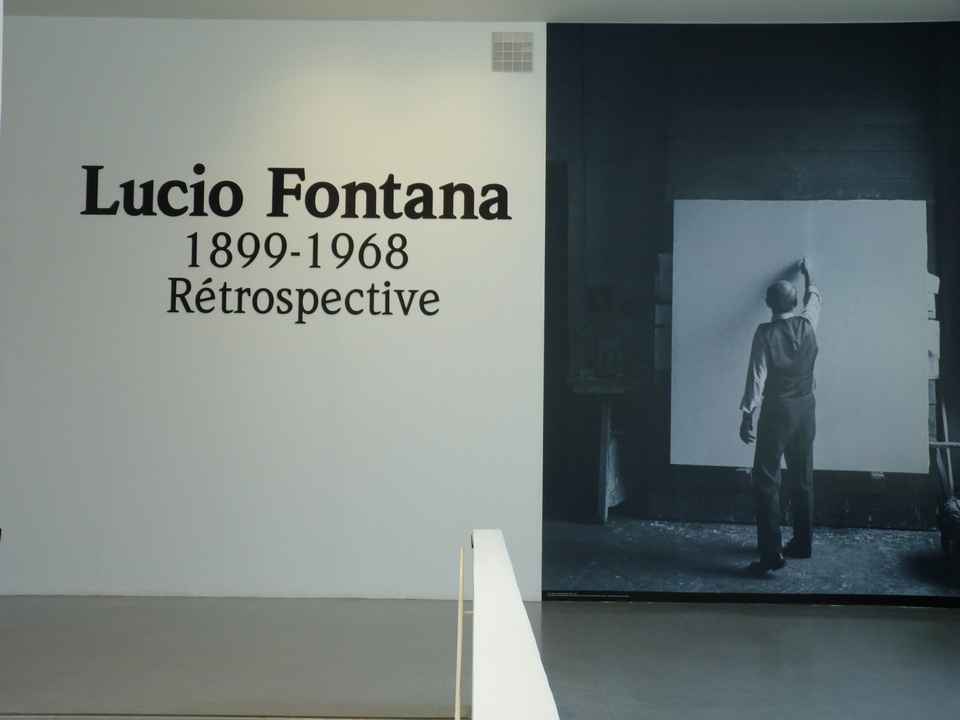
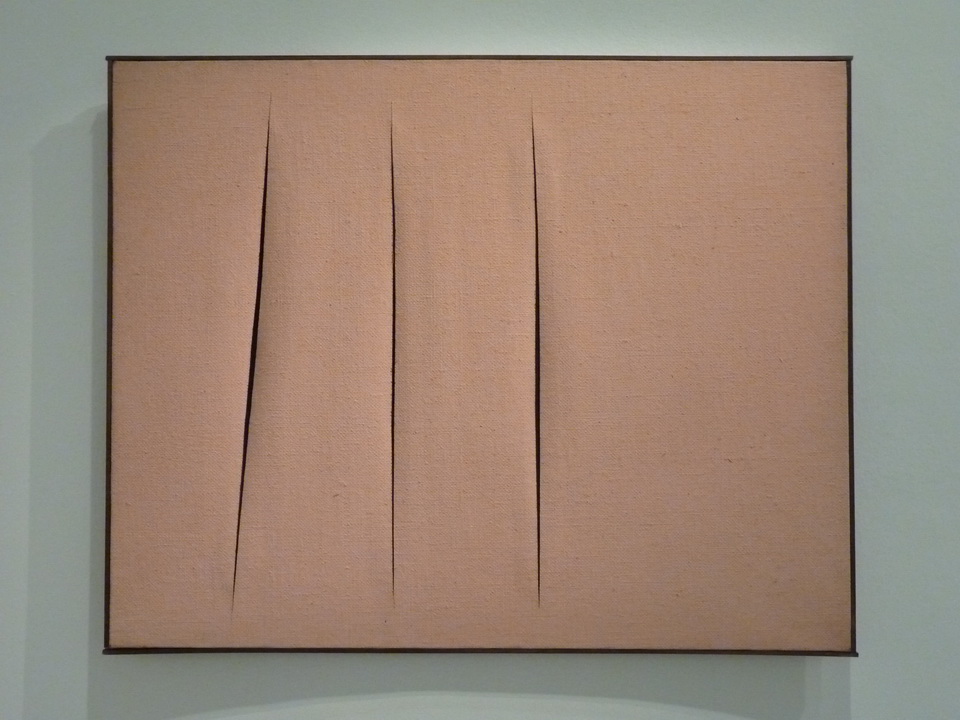
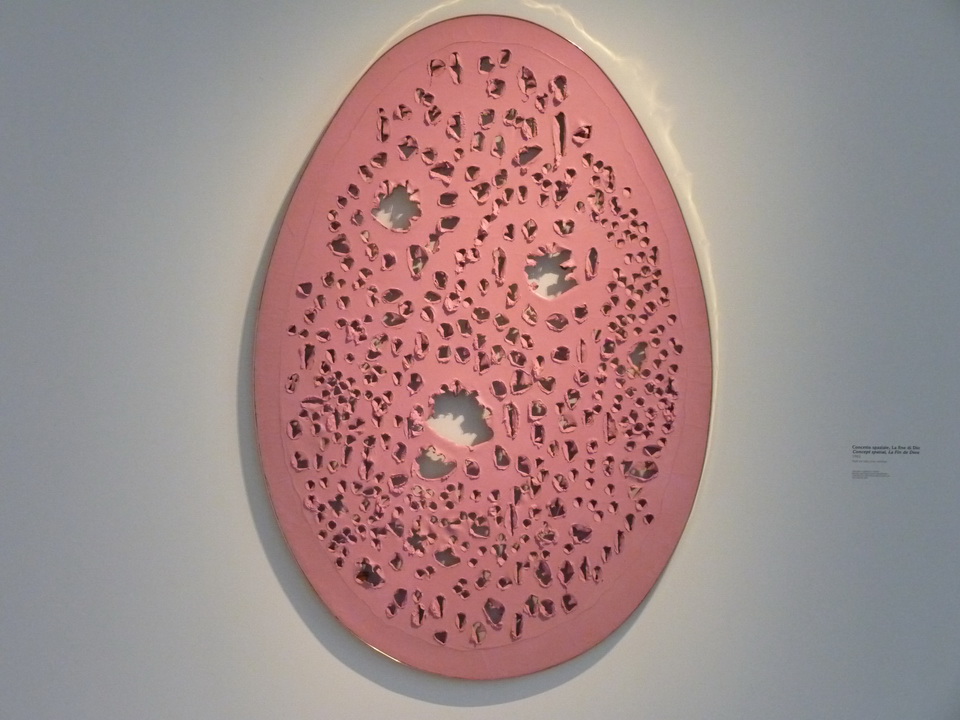
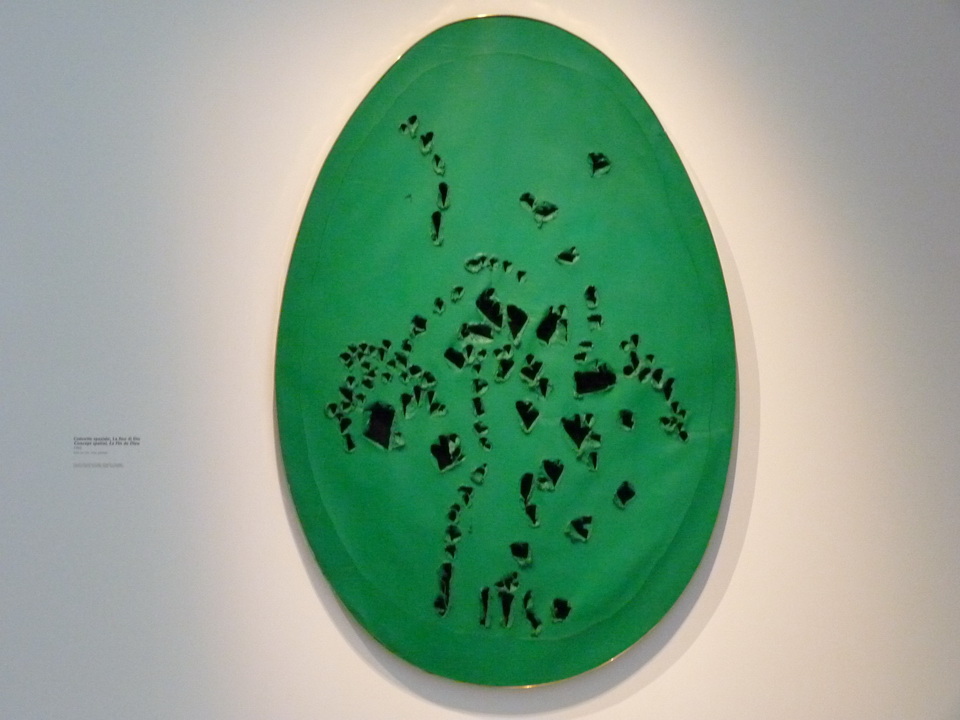
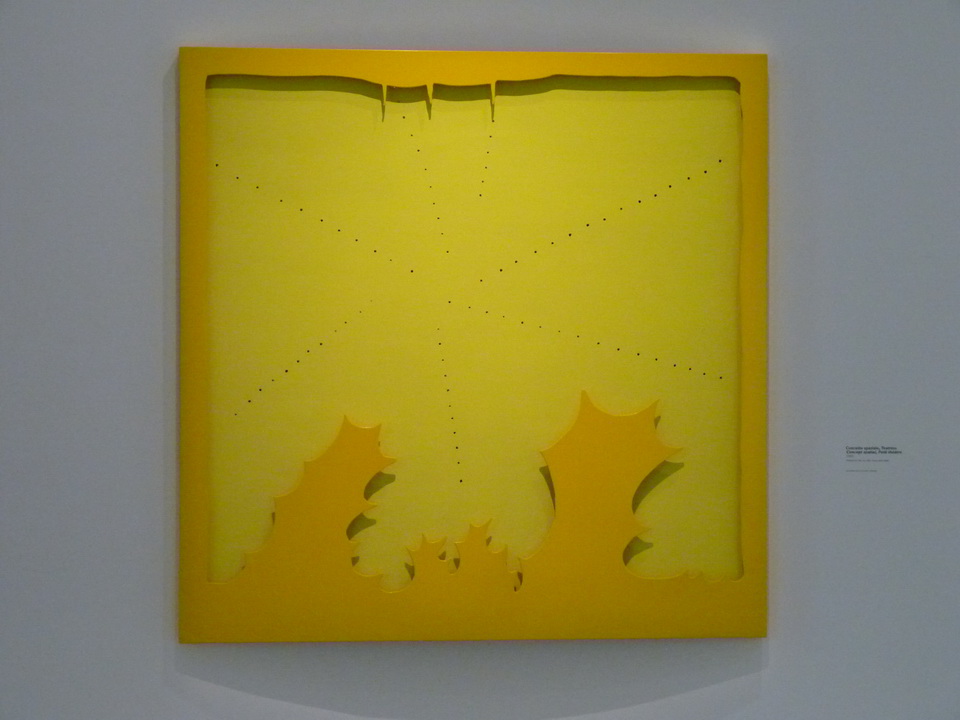
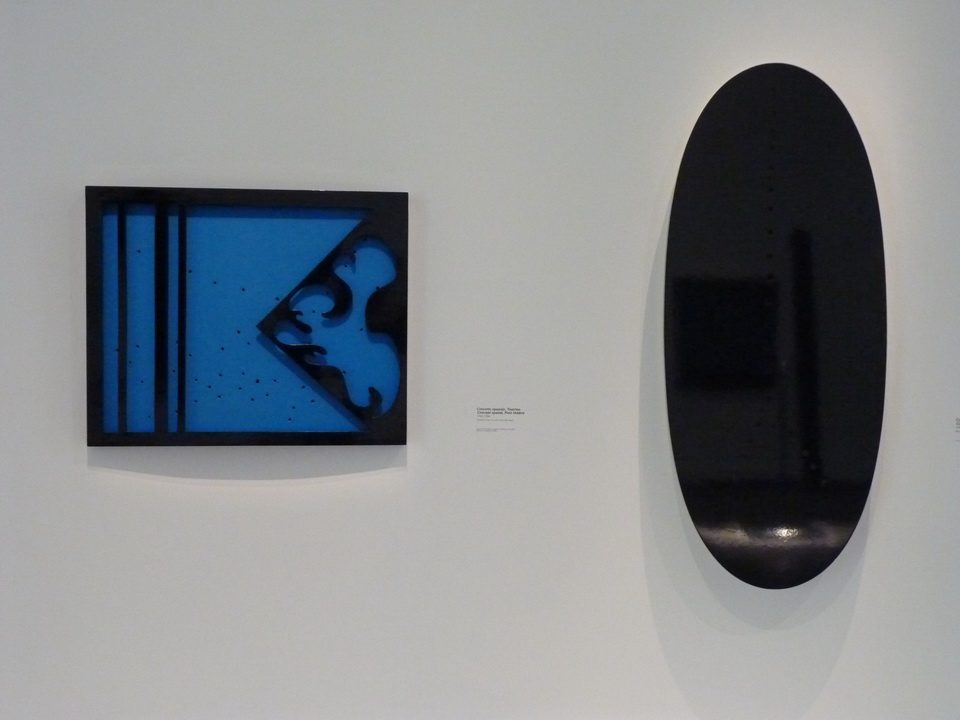
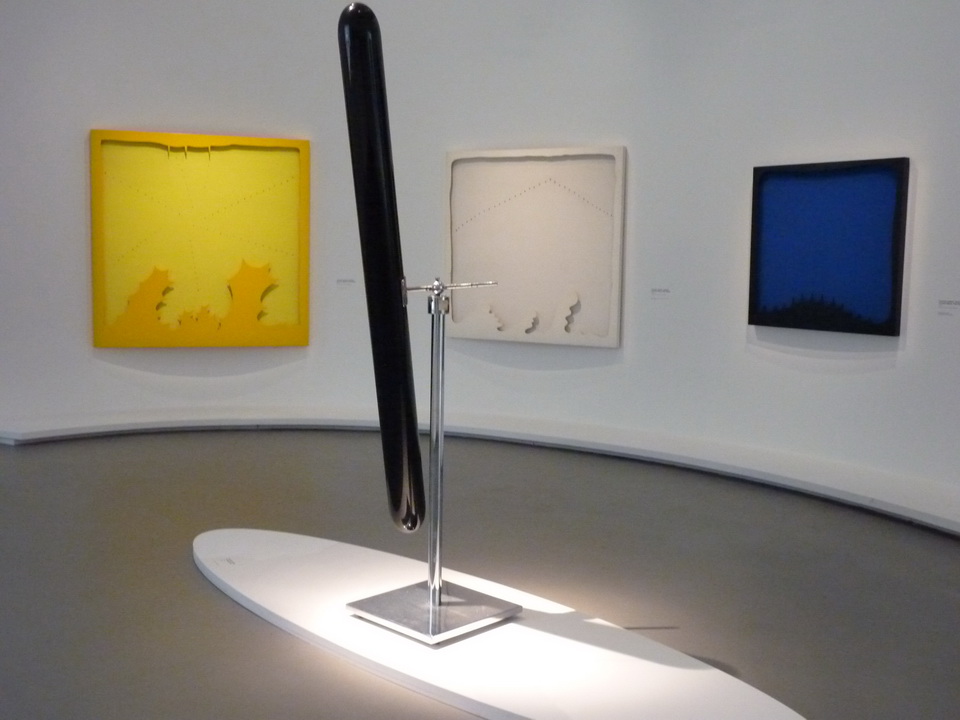
Text and images by Chen Chi-Hsiang. Musée Municipal d'Art Moderne de Paris: Exhibition dates May 24 to June 16. Lucio Fontana (1899-1968) was born in Argentina to an Italian father and an Argentine mother. In 1928, he studied under the symbolist sculptor Adolfo Wildt in Milan. In 1938, he participated in a Futurist exhibition; from an Expressionist perspective, Marinetti claimed his work was "cosmic abstraction." In 1946, he published the "White Manifesto" in Buenos Aires, adopting a polemical attitude and utopian volume. After settling in Milan in 1947, he presented "Spatial Symphonies," using clay and bronze sculptures to open up a spiritual space with utopian characteristics centered on spatial concepts.
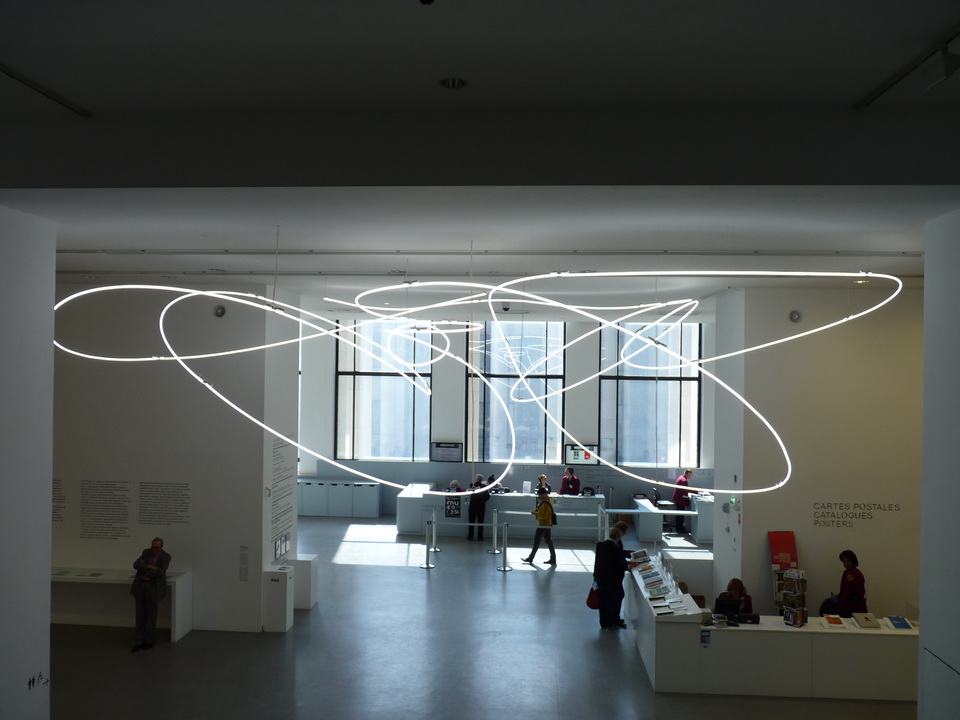
In 1949, he published the "Second Spatial Manifesto," exploring the relationship between works, environments, and locations, and began using neon lights. The artist declared: "We continue the innovation of art," "For us born in the mechanical age, painted canvases and plaster no longer have any meaning," "Art is abandoning established forms, dedicating itself to the development of art that unifies time and space," or "Thinking about metaphysical elements such as color, sound, movement, time, and space, art unfolding in time and space is the most basic form of new era art. New art includes four-dimensional existence, time and space" (Note 1). In 1950, his first punctured work, Spatial Symphony, appeared within idealistic and celestial imagery. The concept of "Spatialism" became the main theme of Fontana's work; its literary understanding is like a famous conquest of space and atomic discovery, evoking a contemporary and cosmic work. Within this "scientistic" component, an alternative volume was formed.
Fontana connected body and subconsciousness within Surrealism. Notably, he participated in the last two exhibitions of the Surrealists in Paris, where he specially exhibited a black-light environment, inviting visitors into an oval for a cosmic journey. In 1951, he published the "Technical Manifesto" regarding interdisciplinary relations, approaching Jan Van der Marck, who called it "transitioning from tradition to utopia." Regarding Fontana's work, Van der Marck wrote: "Creating space, light, and (unspoken) motion, partially incorporated into his spatial creations, he opposes reality through illusion substitution" (Note 2). That same year, he experimented with breaking physical volume limits, inlaying various colored glass and small stones onto canvases.
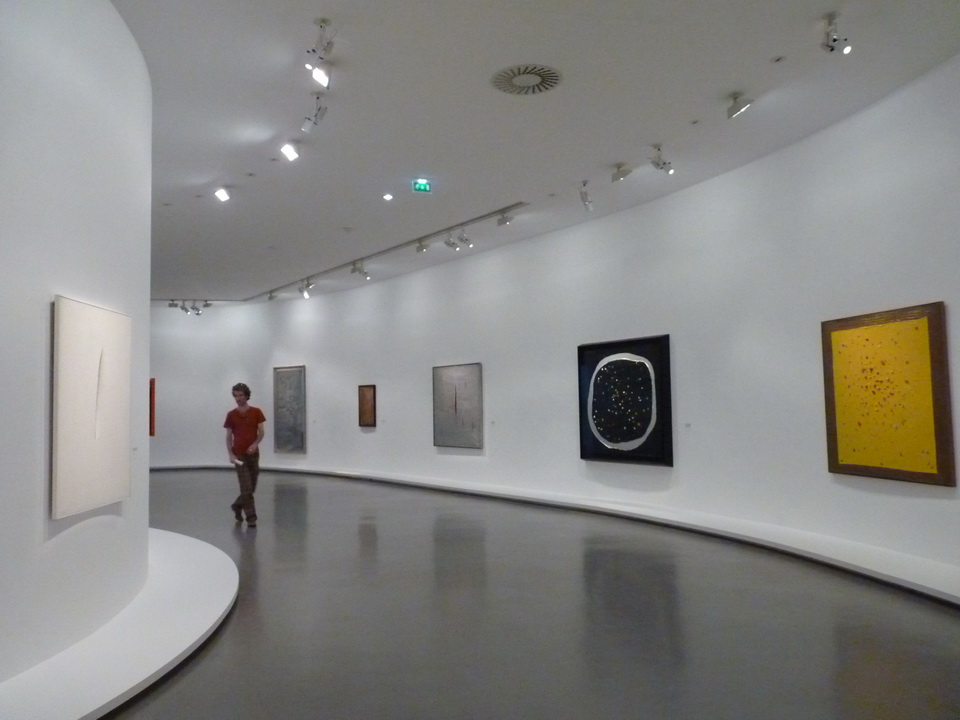
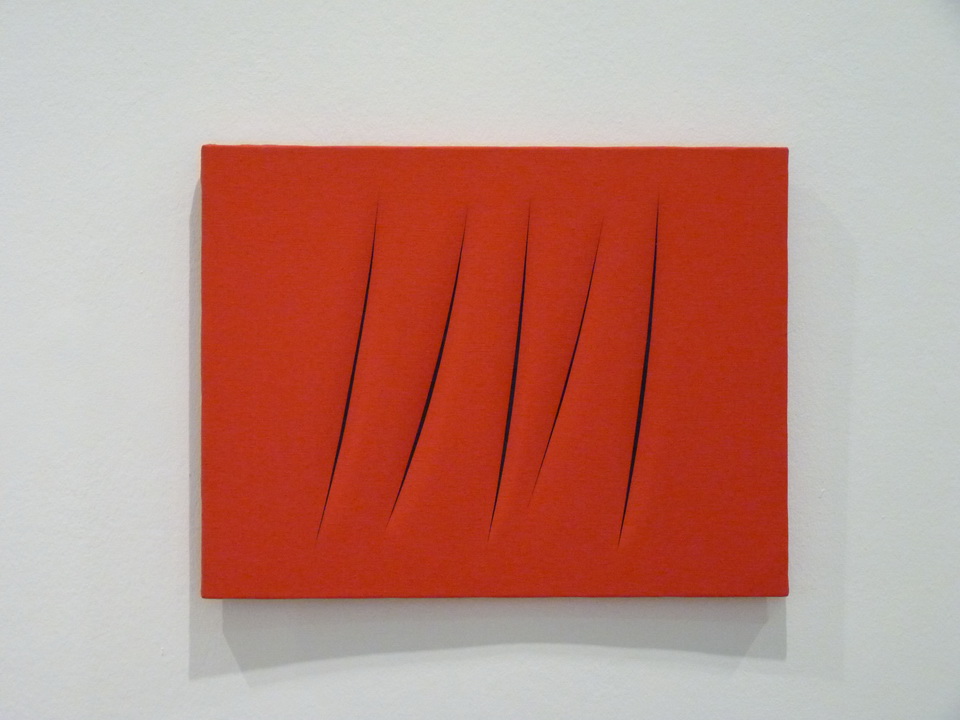
In 1952 and 1956, he presented Spatial Symphony through environmental installation techniques. When viewed from a distance, the work reveals a hallucinatory space, showing a red and blue spaceship floating in the starry sky. Up close, the scene is unique, inlaid with yellow glass; at the location of the spaceship, the canvas features punctures of varying sizes. These punctures and cuts alter the painting's hallucinatory plan, accurately celebrating cosmic bodies like stars or meteors with poetic praise. In the 1956 Spatial Symphony, Fontana cut and punctured the painting's body in the most sensual and violent manner, demonstrating the "act of painting." Instantly, painting became a substantial object, moving from surface to object, dissolving past illusions from two-dimensional space to three-dimensional space and four-dimensional time.
Fontana stated: "As a painter, when I puncture these canvases, I am no longer creating paintings: I intend to open up space, creating a new volume for art, connecting the universe in its continuous expansion beyond the limited canvas. My innovative recurring theme of punctured paintings is not an attempt to decorate the surface, but rather an effort to break their volumetric boundaries. Beyond the punctures, a new freedom of interpretation awaits us, and inevitably, art also ends" (Note 3), thus opening an extreme spatiality. Fontana radically explored formless art, bearing the violence between spontaneous hand completion and objects in his works, consistently pushing toward the extreme result of pure cuts on the canvas, destroying the deceptive painting surface, entering volume, and achieving metaphysical and transcendent spirituality and mystery in art. This invasion of the painting, its tearing like skin, suggests sexual simulation, an elucidation akin to a negative attitude.
From 1959 to 1960, the "Nature" sculpture series consisted of clay spheres with large punctures resembling volcanic eruptions on rough surfaces, manifesting time and space, celestial and geological, imagination and magic under strong material forms. In his later years, Spatial Symphony referred to as "Little Theater," re-employed arguments of his internal processes (punctures, light, and space) to achieve an extreme aesthetic, such as Space of Space in 1965, resembling a magical cosmic world.
Fontana continuously questioned the expansion of possibilities in the realm of plastic arts, involving painting and sculpture while transcending them, making plastic art practice a problem and conceptual expression. Regarding the exploration of matter, time, and space, Fontana believed: "Dissolving the illusion of painting itself, letting space become the substance of painting." The Arte Povera artist Fabro said: "I was not influenced by Fontana, but my generation was born after Fontana... in his ways, he attempted to avoid Expressionism and Informel" (Note 4). Another Arte Povera artist, Carozzaresi, completed Homage to Fontana in 1989, which helps understand the influence of Fontana's concepts of matter, time, and space on Italian Arte Povera artists.
Fontana found the previous Futurist establishment of his holistic plastic art system, seen as merging the visible and invisible, material and immaterial, tending toward the interval entering art's molecules, those things and actions between light and darkness, private and public. Thus, Italian Arte Povera is centered on Futurism and Fontana. Manzoni established his creative stance, finding his sources in the present, in a theme, a presentation like personal mythology, and there similarly contrasting with the mythology of the world (Note 5).
Note 1: Lucio Fontana: The White Manifesto, by Jean-Louis Ferrier, Art of Our Century Publishers, 1988, p. 442. Note 2: Collection Musée national d'Art Moderne, Centre Pompidou, 1987, p. 219. Note 3: L'Art D'Aujourd'hui, by Edward Lucie-Smith, Fernand Nathan Publishers, Paris, 1977, p. 191. Note 4: Arte Povera, by Maiten Bouisset, Regard Publishers, Paris, 1994, p. 37. Note 5: Piero Manzoni Catalogue, published by Musée Municipal d'Art Moderne de Paris, 1991, pp. 15-16.