Rodin - Balzac (1887)
A modernist Balzac statue. Bronze, 1887. Collection of the Rodin Museum.
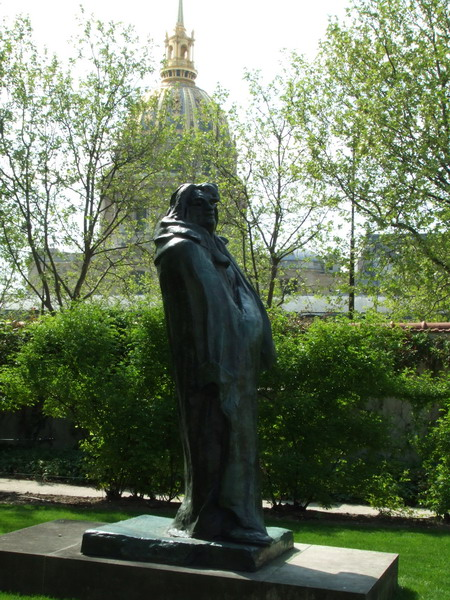
Text and photos by Chen Chi-Hsiang. Standing next to The Thinker is the vibrant Balzac. Commissioned by the Société des Gens de Lettres in 1883, Rodin explored various approaches—visible on the museum’s second floor—before settling on this concise, powerful form. He wrapped the literary giant’s body in a robe, revealing only his expressive head, creating an imposing presence that revitalized Balzac, ensuring his immortal stature beside The Thinker.
When exhibited at the Salon in 1888, however, it sparked controversy, labeled a "fat man, ugly monster, hideous lump of clay, and huge fetus." His painter friend Monet, seeing it at the Salon, wrote: "Let them shout! You have never been so profound." Rodin deeply reflected: "If truth must perish, my Balzac will lay the foundation for future generations; if truth is immortal, I prophesy my statue points to the future path of sculpture. People mock, despise, and try to destroy this work, which represents all my life's effort and my main aesthetic figure. If commissioned again, I would make another one." Indeed, the once-despised statue became Rodin’s greatest work, opening the door to 20th-century modernist sculpture.