"2007 French Presidential Election" Part Eleven: Brief Introduction to the Political Platforms of the Four Major Candidates
(Top) Photo of Socialist Party's Ségolène Royal from www.parti-socialiste.fr. (Middle left) Photo of UMP party's Nicolas Sarkozy from sarkozy2007.com. (Middle right) Photo of centrist Bayrou from www.Bayrou.fr. (Bottom) FN far-right...
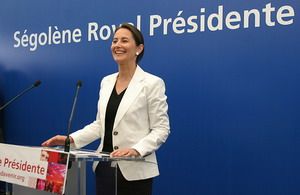

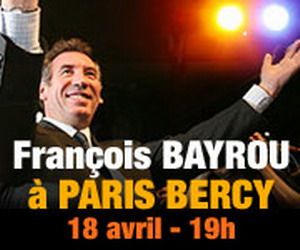
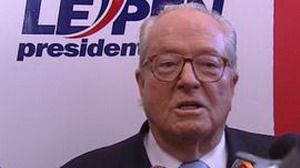
(Top) Photo of Socialist Party's Ségolène Royal from www.parti-socialiste.fr. (Middle left) Photo of UMP party's Nicolas Sarkozy from sarkozy2007.com. (Middle right) Photo of centrist Bayrou from www.Bayrou.fr. (Bottom) Photo of FN far-right National Front's Jean-Marie Le Pen from www.frotnational.com.
The dramatic confrontations and fierce verbal battles of the campaign theater have almost become distinctive episodes of the election. The presidential election is about choosing a true representative or spokesperson for France. He becomes a symbol of the French people, like the national flag and anthem; he becomes the central figure of the entire nation, with an irreplaceable right that no one else can assume. This is the executive power of the French presidential system: the president exercises supreme national security authority as commander-in-chief of the armed forces, holds diplomatic discretion to represent the country at international conferences and sign international agreements, convenes regular ministerial meetings, and provides the guiding direction and vision for policy. Of course, under cohabitation between left and right, domestic policy is another matter entirely: the prime minister becomes the master of executive power over internal affairs and has the right to share the president's diplomatic authority and perspectives.
Let us then look at the political platforms of the 12 presidential candidates in the 2007 French presidential election, because the most important thing in electing a president is to examine the platforms put forward by each candidate. Each candidate's platform represents the ideology, national ideals, political vision, and social views of their respective party. This forms the basis for choosing the next president and the country's future prospects. Of course, like many utopian platforms, they exist merely to win votes, drawing pies to satisfy hunger and catering to voters' confidence, inevitably making many promises that cannot be fulfilled. Voters must keep their eyes open and think carefully so as not to be manipulated.
Traditionally, the left and right have been clearly divided. The left is built on a socialist stance (the traditional left's Socialist Party (center-left) and the Communist Party, plus three distinctive Trotskyist candidates: the Revolutionary Communist League (LCR), the Workers' Party (PT), and the Workers' Struggle (LO)), while the right operates within a liberal vision (the traditional right's UMP party) or the national and nationalist doctrine of France First (the far-right National Front and the Movement for France). Under such ideological frameworks, policy concepts differ vastly. Here are the platforms of the four major candidates.
No. 12 – UMP party's Nicolas Sarkozy: First, the value of work (because France is the European country with the least work). Abolish inheritance tax and gift tax. Unify civil service and help everyone (if unemployed, able to find work). Promote agricultural industrialization policy and support our industry. Increase purchasing power (overtime pay at least 25% or above. Increase meager pensions and reform special social systems). Guarantee new protection policies (create new professional social insurance. You can become the owner of your home. Subsidize the first child, strengthen our health system, integrate disabled persons, protect our elderly and frail parents and ensure a life of dignity and peace in old age. Reestablish major preferential social groups (meaning Europe must defend its products and companies, Europe must have its borders, oppose Turkey joining the EU). A strong and just state (transparent government, streamlined government, strengthen the powers of parliament. Strengthen public sector services in communities and rural areas). Prepare a new generation's prospects (disagree with overcrowded university systems with no way out. Reduce national debt and deficit). France honors its values and identity (respect our fundamental values, gender equality, secularism, freedom of conscience).
No. 8 – Socialist Party's Ségolène Royal: Restore the value of work (guarantee wages and provide all young people with real professions). Reclaim France and its small and medium enterprises (create new job opportunities and innovation). Renew social dialogue through win-win compromise. Guarantee national cohesion (through education and equality of fact). Establish rules of provision (through assistance yet through its rights and obligations). Fight against waste of public resources (one euro spent must be one euro of use value). Government reform (to ensure its fairness and justice, effectiveness and impartial rights). Participatory democracy (let you participate in decisions that concern you). Build a Europe that can defend against relocation (of companies and factories) (efficient staffing and growth).
No. 4 – UDF French Democratic Union's Francois Bayrou: Prioritize education, actively participate in ecological and environmental politics, develop diverse employment, increase purchasing power, rebalance debt and retirement systems, oppose social exclusion policies, defend the French health system, invest in scientific research, guarantee housing assistance programs, guarantee equal social insurance and law for all, reconstruct democracy, guarantee gender equality, make culture the core of society, defend public services, support agriculture, fully support development of overseas territories, promote reconciliation between France and the EU and between the French people and the peoples of the EU, I want a strong France in this world.
No. 10 – FN far-right National Front's Jean-Marie Le Pen: Together we restore France's sovereignty, reclaim our borders, defend our people and economy, reestablish the legal rights of the French and French families, reclaim our freedoms including among them: security, restore the government's power and its role of defending people, let everyone find happiness and the honor of being French.