Portrait of Ségolène Royal, No. 14 of the "2007 French Presidential Election"
A portrait of the elegant Socialist presidential candidate Ségolène Royal; images from PS www.parti-socialiste.fr and segoleneroyal2007.net. Right-wing UMP Nicolas Sarkozy and left-wing Socialist Ségol…
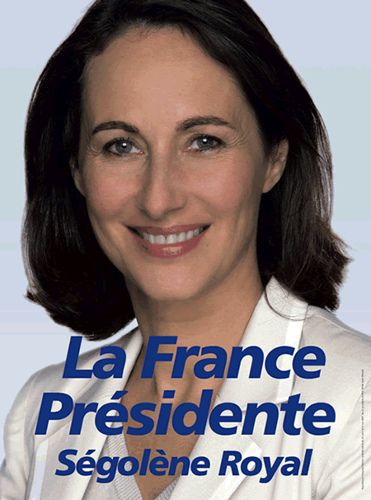
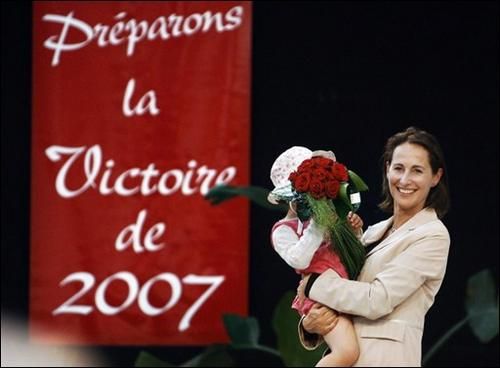
A portrait of the elegant Socialist presidential candidate Ségolène Royal; images from PS www.parti-socialiste.fr and segoleneroyal2007.net. The right-wing UMP’s Nicolas Sarkozy and the left-wing Socialist Ségolène Royal advanced to the second round, leading the field. This year’s presidential election was notable not only for the life-and-death struggle between left and right but also more obviously for a showdown between a handsome man and a beautiful woman—a particularly extraordinary moment where France, in its traditionally male-dominated political system, might elect an exceptional female president. The outcome will be revealed on the evening of May 6.
In the final two weeks of campaigning, both sides fought with all their might. A televised presidential debate is scheduled for Wednesday evening, May 2, which French voters await with bated breath. Beyond the open confrontation in the second round, both candidates launched comprehensive efforts to win over the hearts of other candidates’ supporters, especially the votes of the third figure, François Bayrou of the Union for French Democracy (UDF). Both left and right candidates openly appealed or secretly maneuvered to build this decisive voting bloc; given the proportion of left-right support, the Socialist Ségolène Royal needed this additional strength outside her base.
Will the next French president be the talented Nicolas Sarkozy or the graceful Ségolène Royal? Whoever is elected will be a leader of France’s new generation, unfolding a scene of new political innovation. Both belong to the post-war new generation, in their early fifties, representing France’s middle-class elite. With years in politics and rich experience as national deputies, ministers, and departmental presidents, they now step forward as contenders for the presidency. Let us further understand the portrait of France’s future president.
Ségolène Royal, the elegant Socialist presidential candidate, was born on September 22, 1953, in Dakar, the capital of Senegal, then a French African territory. Her father was a soldier, which fostered her unique independence and resilience. She majored in economics and graduated in 1980 from France’s prestigious École nationale d’administration (ENA). She was classmates with her partner, Socialist Party leader François Hollande (both were active young Socialists during their studies); they have four children. After graduating from ENA in 1980, she was assigned as a judge at the Administrative Court. When François Mitterrand was elected president in 1982, Royal became a secretary at the Élysée Palace, handling medical, environmental, and youth issues. In 1988, she was first elected as a deputy for Deux-Sèvres representing the Socialist Party. From 1992 to 1993, she served as Minister of Environment in Pierre Bérégovoy’s government. She was re-elected as a deputy for Deux-Sèvres and won again in 1997 due to public demand. From 1997 to 2000, she was Minister of Education in Lionel Jospin’s government, and from 2000 to 2002, Minister of Family Affairs. Through these substantive experiences in governance, her actions in environment, education, family, and social affairs stood out. In 2002, she regained public favor and was re-elected as a deputy for Deux-Sèvres. Since 2004, she has served as President of the Regional Council of Poitou-Charente in central France.
In the 2005 Socialist presidential primary, she challenged the long male-dominated French political arena, especially the “elephants” within the party. During internal debates, former Prime Minister Laurent Fabius dramatically remarked that “women should stay home and take care of children.” Royal ultimately defeated the two elephants with an absolute majority of 60.65% in the party vote, while former Economy Minister Dominique Strauss-Kahn received 20.83% and Laurent Fabius only 18.54%. Always dressed in elegant suits, beautiful and generous, Ségolène Royal was nominated as the Socialist Party’s best candidate for the 2007 presidential election, rising from an obscure local politician. In 2006, the slim and glamorous Royal appeared on the French edition of GQ magazine and was voted the sixth most sexy woman in the world, instantly becoming the most watched presidential candidate by mass media. Described by The New York Times as the Audrey Hepburn of politics, she won the first round of the presidential election.