Paris White Night 2015 – "Climate Change"
Chinese artist Zhenchen Liu at the Place de l'Hôtel de Ville in Paris, ICE Monument 2015 installation, 270 ice blocks.
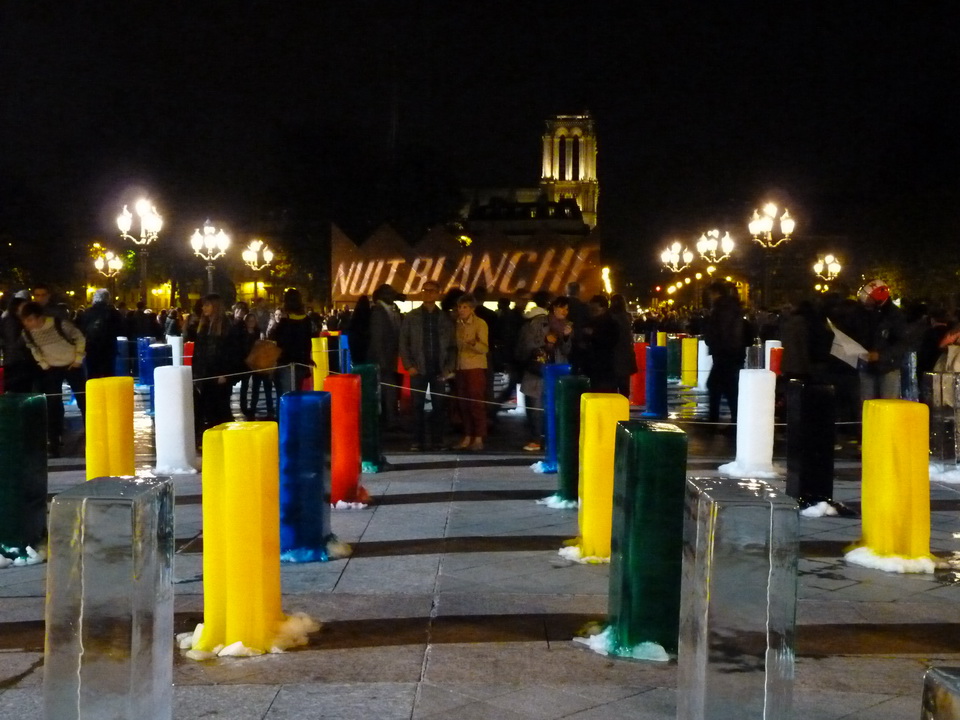
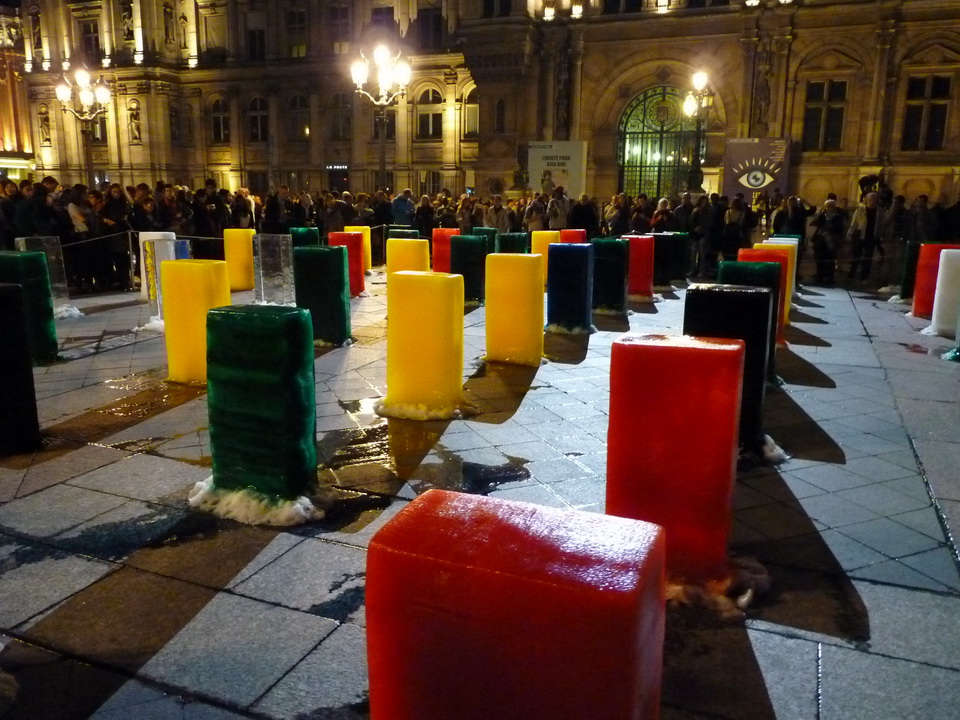
Text and photos by Chen Chi-Hsiang. This year’s theme is “Climate Change,” a response to the Global Climate Conference held in Paris, the City of Flowers, at the end of the year. Thus, this year’s White Night features not only wind, rain, ice, thunder, clouds, fog, animal sounds, plants, and more, expressing artists’ various views and perspectives on climate change. Chinese artist Zhenchen Liu arranged 270 colorful large ice blocks at the Place de l'Hôtel de Ville in Paris, titled “ICE Monument.” Using ice blocks as a metaphor for the beautiful Earth that humans rely on for survival, he highlights how people continue to consume Earth’s resources without restraint for convenience, destroying the natural environment and causing extreme climate changes, resulting in the current “El Niño” phenomenon. Liu uses the ice blocks melting slowly over time as a warning. From 7 p.m. to 7 a.m. the next day, the vibrant ice blocks slowly melt into a huge Chinese splashed-ink landscape painting, symbolizing the beauty and sorrow of the Earth, awakening us to cherish this planet, our home.
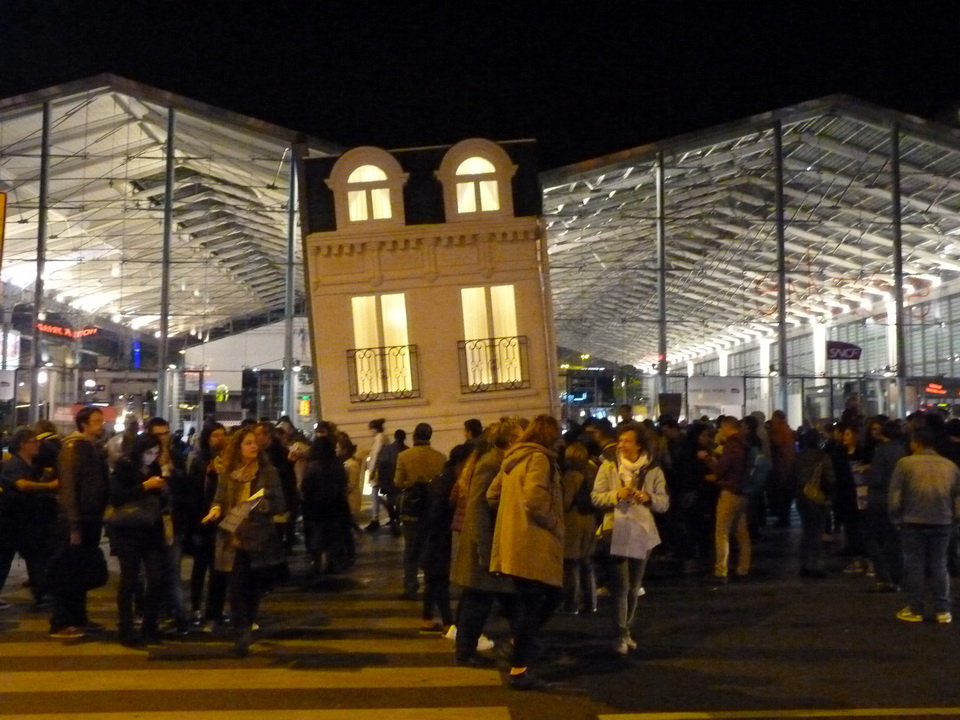
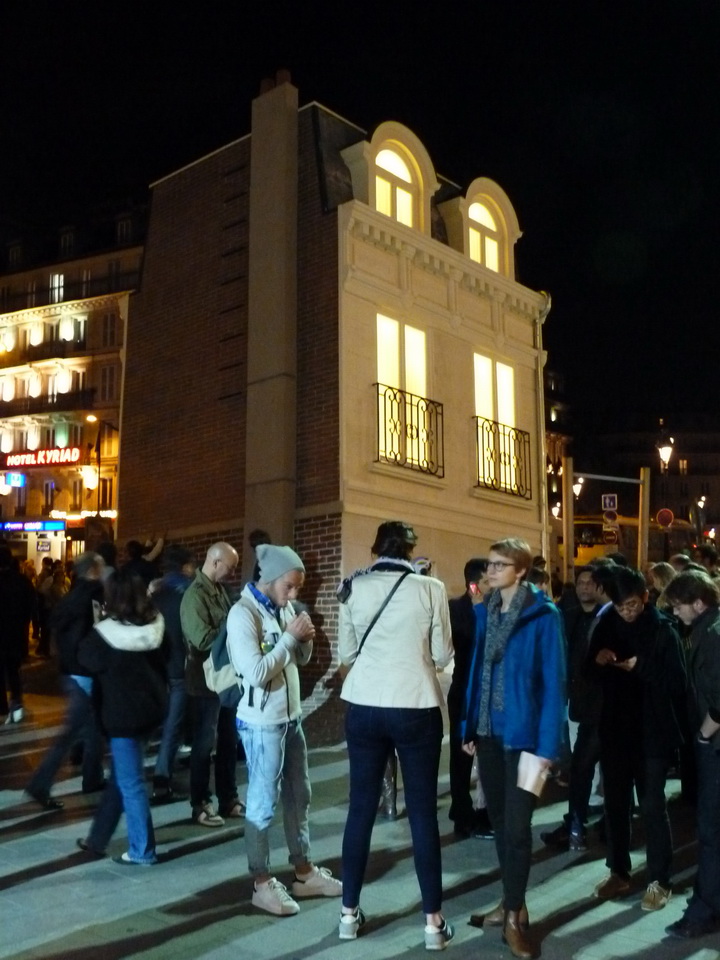
This year’s White Night main events are all in northern Paris, with two routes—northeast and northwest. I chose the northeast route, starting from Gare du Nord and heading to the suburbs. The northeast route presents object-environment-space installations, while the northwest features numerous audio-visual installations. Coming out of the metro at Gare du Nord, you see a house tilted as if about to collapse, surrounded by crowds watching in confusion, wondering what it means. Of course, it is a metaphor: humanity dancing on the edge of a volcano. With climate warming, natural disasters, rising sea levels, and melting ice caps in the Arctic Circle and world peaks, urbanization (cementation) causes agricultural land to shrink like forests. Continuous environmental damage and endless consumption of Earth’s resources in modern life lead inevitably to such outcomes; wouldn’t it be strange if the house didn’t fall? Have you noticed it tilting now? This is the message the artist conveys, intending to awaken humanity that everyone has a responsibility to protect the beautiful Earth, requiring collective care.
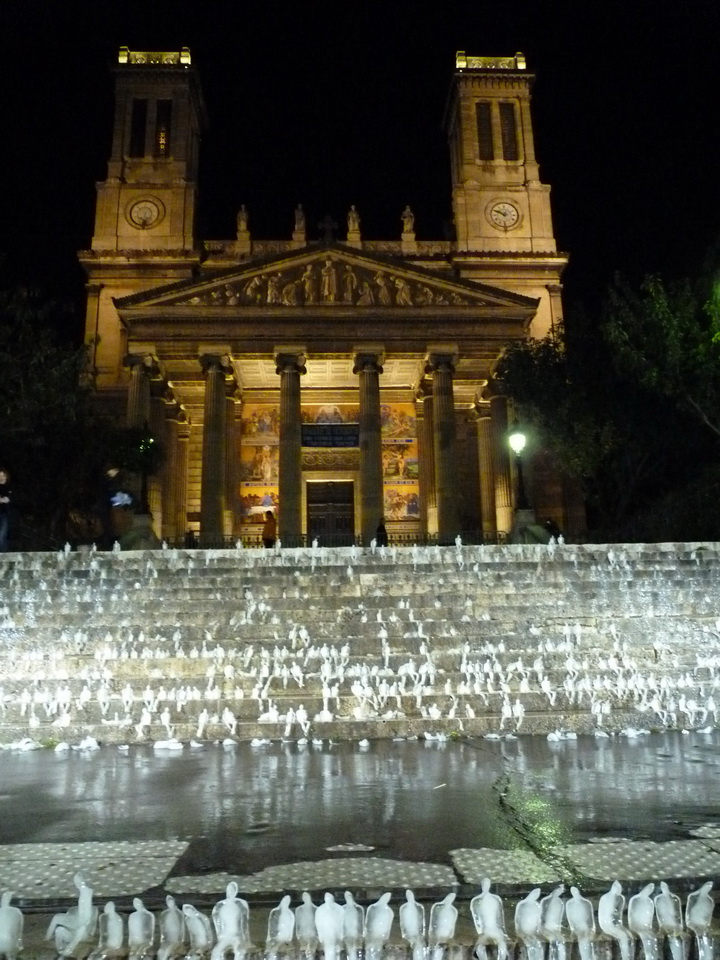
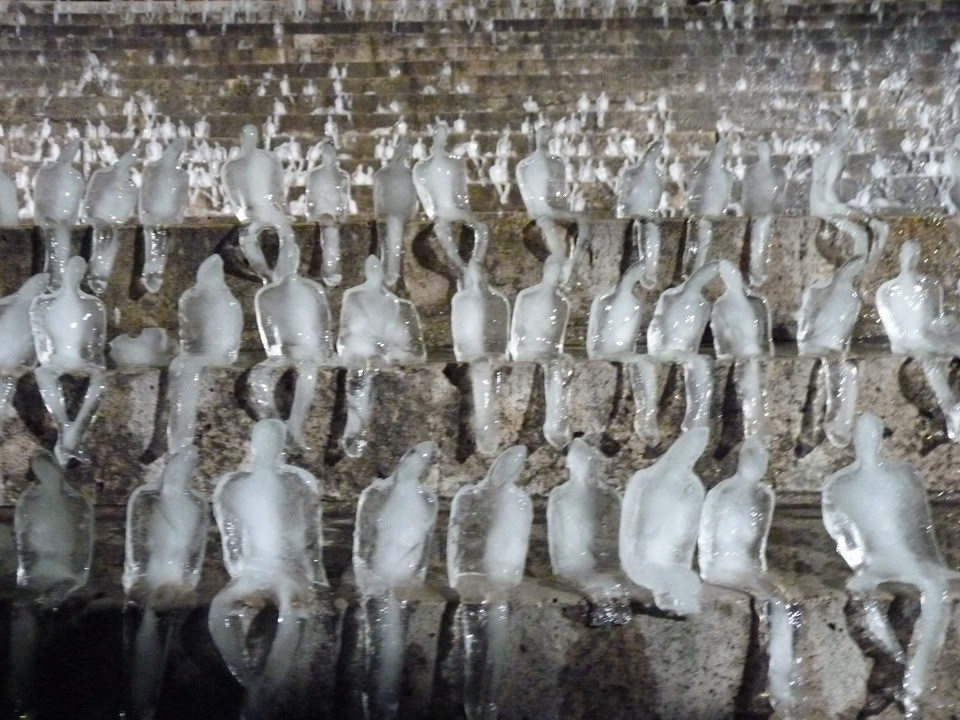
Facing current global warming and El Niño phenomena, artist Nele Azevedo invited viewers to participate interactively in “Melting Humans” on the church square. Each person holds an ice figure placed on the stairs, arranged from top to bottom. Under time’s influence, the ice figures slowly melt into nothingness, indicating the plight of the current natural environment and humanity, reminding people that protecting the beautiful Earth is everyone’s responsibility. This concerns the conditions for humanity’s future survival; otherwise, disappearance will be inevitable.
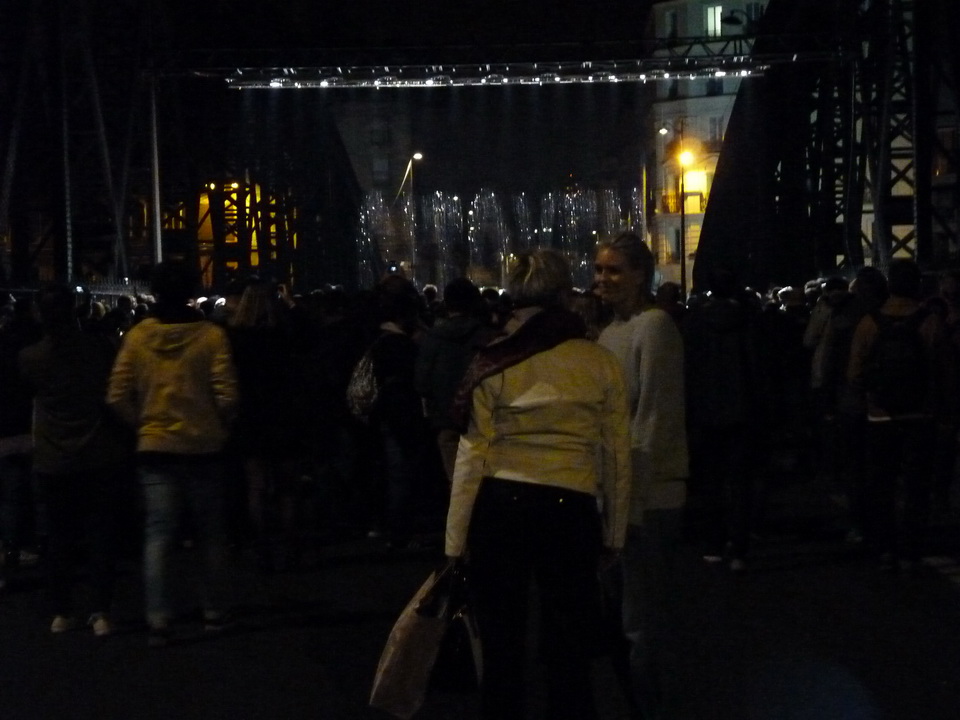
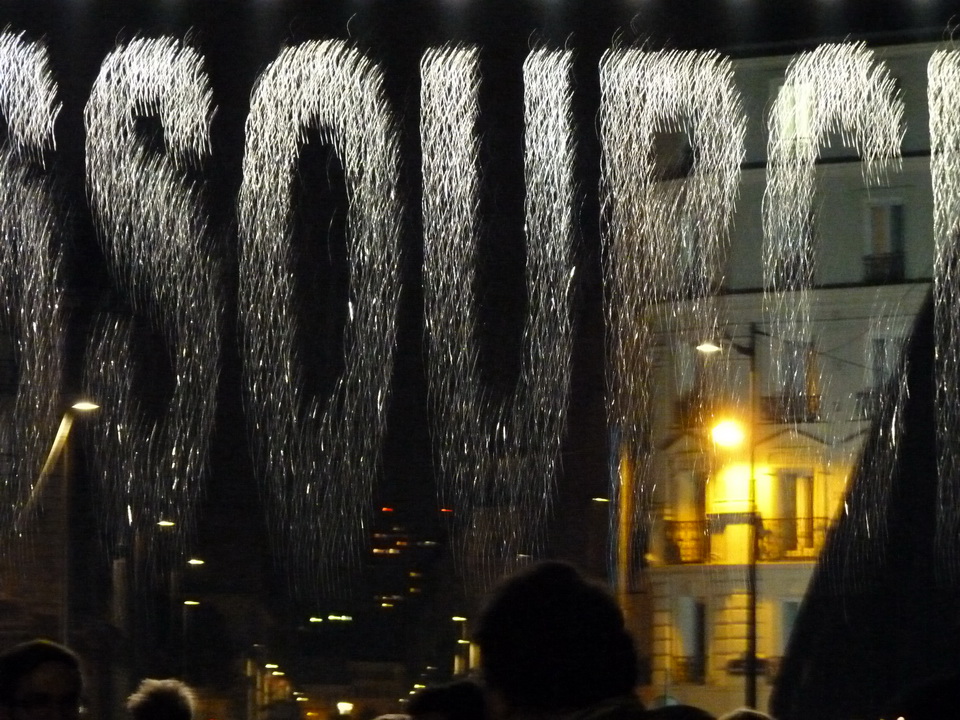
The White Night was still entered under cover of darkness. Following the crowd onto a bridge, we encountered artist Julius Popp’s computer-controlled environmental space installation. A water curtain hangs across the center of the bridge. Watching closely, sentences appear and disappear like raindrops on the water screen, raising questions about current climate change. The speed is fast, one wave after another, making it hard to read the sentences. The problem seems to lie within the problem itself: these instantaneous climate changes have reached a point beyond human control, existing between poetry and fragility, reality and virtuality, visibility and invisibility. Interestingly, passing through requires wearing a raincoat or braving the “rain” of text.
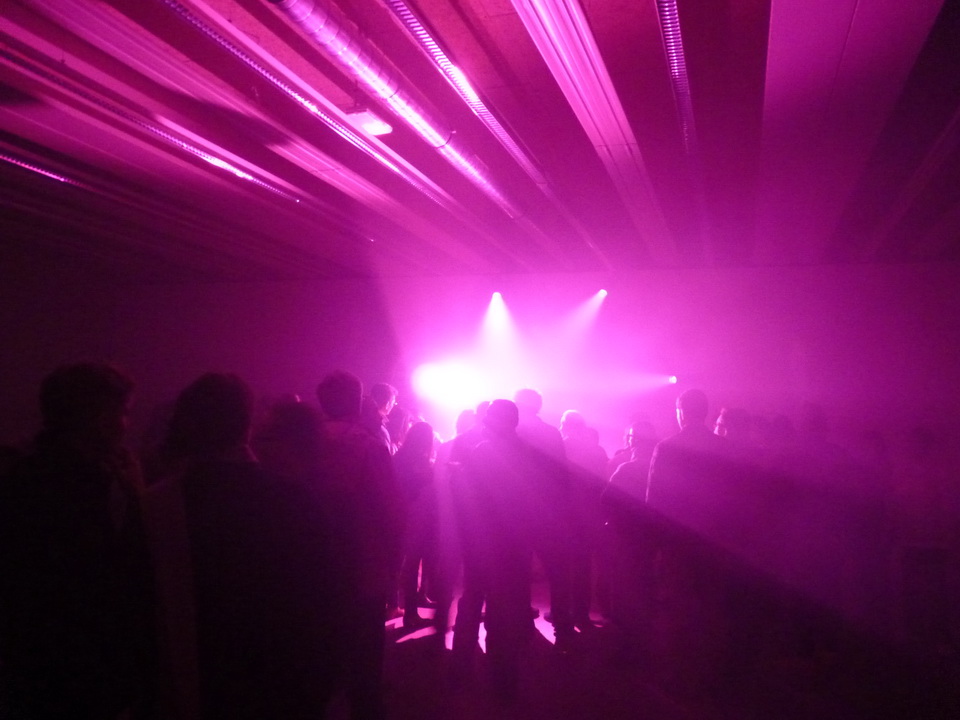
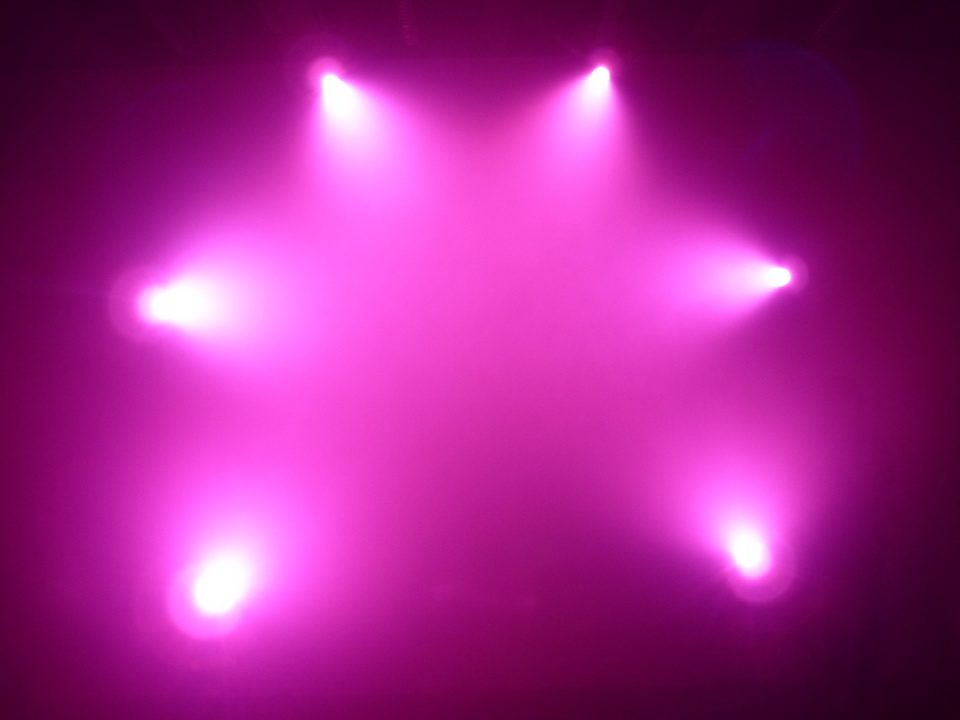
The starry sky during the White Night was incredibly brilliant, guiding audiences forward with light everywhere. Queuing up, we arrived at Belgian light sculptor Ann Veronica Janssens’ “Pink” environmental space installation. She created a pure, abstract, extraordinary atmospheric universe, immersing oneself forgetfully to experience the relationship between body and space, or humanity and the cosmos. Notably, she used six pink neon lights to project radiance, organizing them to form a planet. The beauty of the Earth is a gift of cosmic light.
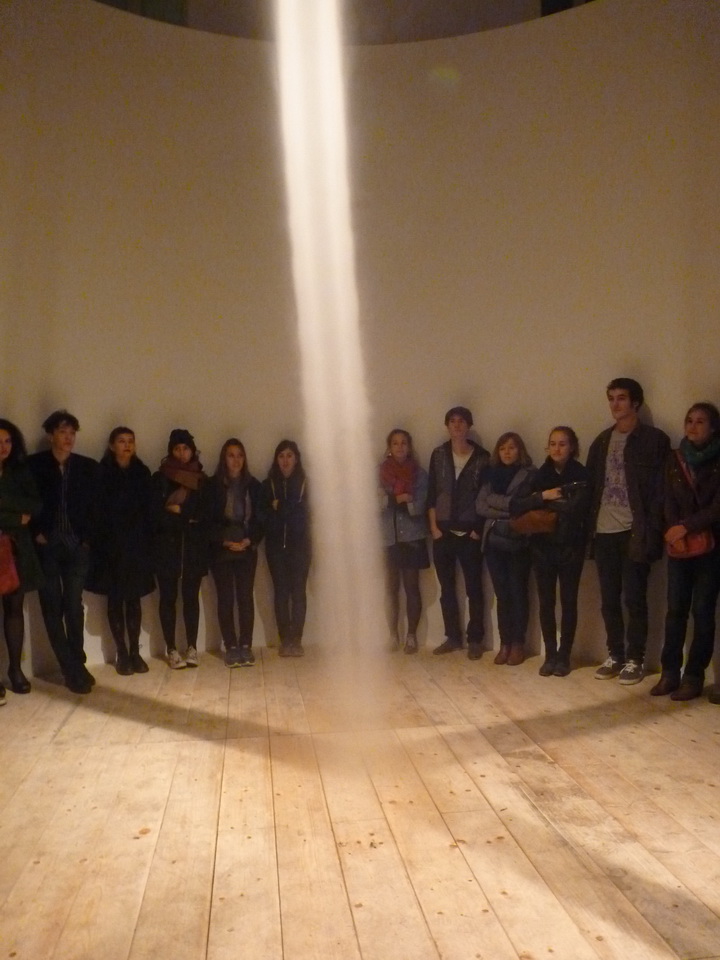
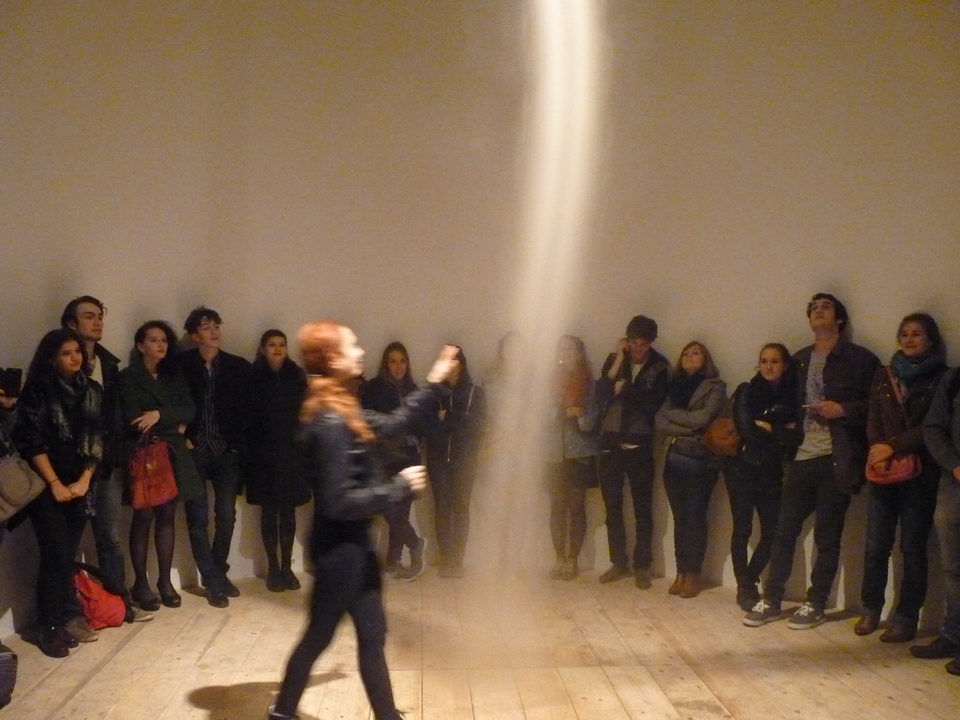
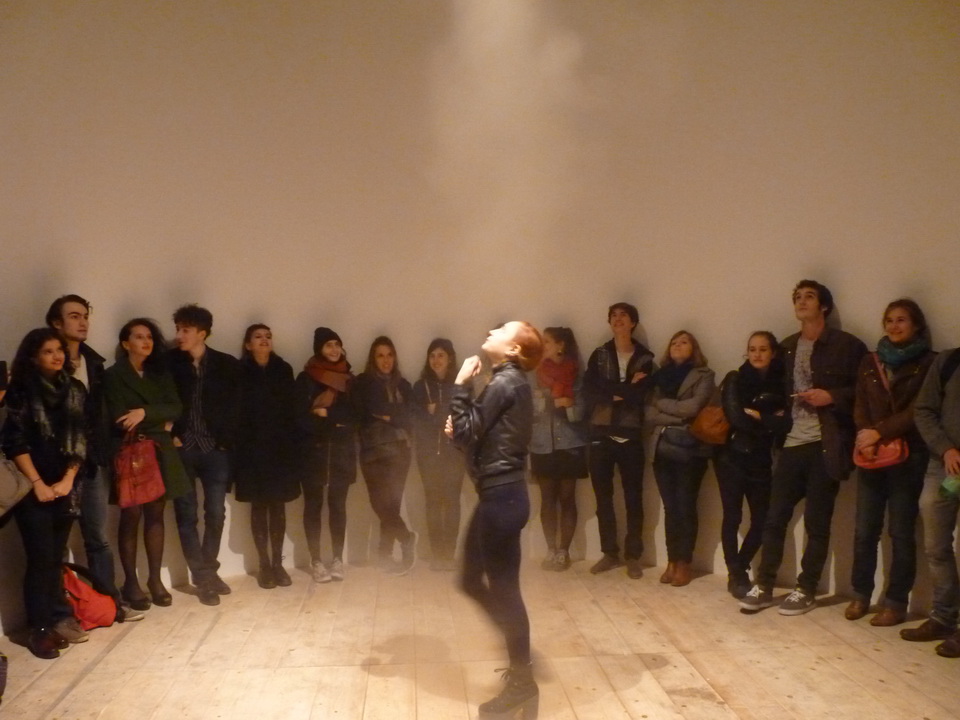
Kapoor excels at handling immaterial objects and is particularly interested in vortices. Unexpectedly, at this year’s White Night contemporary art gathering, in Space 104, we saw his other masterpiece, “Tornado”: installed in a circular space, forming a poetic tornado from the ceiling (air conditioning ducts) to the ground, constantly rotating in the center. It is contemplative, carrying a mysterious atmosphere, full of imaginative space. When viewers enter the tornado, it disperses; when they leave, it condenses back into a tornado, provoking thought between reality and unreality, perception and experience, materiality and spirituality, existence and non-existence. It constructs reliable forms through inner deep consciousness revelation, reawakening people’s awareness and spiritual resonance. The artist explained: “A sculpture like this carries the body, viewing matter in this way, we establish a relationship between subject, form, non-form, primordial form, etc. Its deepest feeling is... physiological.” Through his exploration of matter and space, he completely updates current object-sculpture art, expanding the possibilities of current sculpture.
This year’s White Night, once in Space 104, one did not want to leave. There was so much contemporary art to play with and see. Currently exhibiting is the magnificent “Continuing Madness” collection show celebrating the 25th anniversary of Continua Gallery, which leads contemporary trends in Italy. Almost all major global contemporary artists’ works are available, with a rich collection consisting largely of (large-scale) masterpieces, hard to imagine.
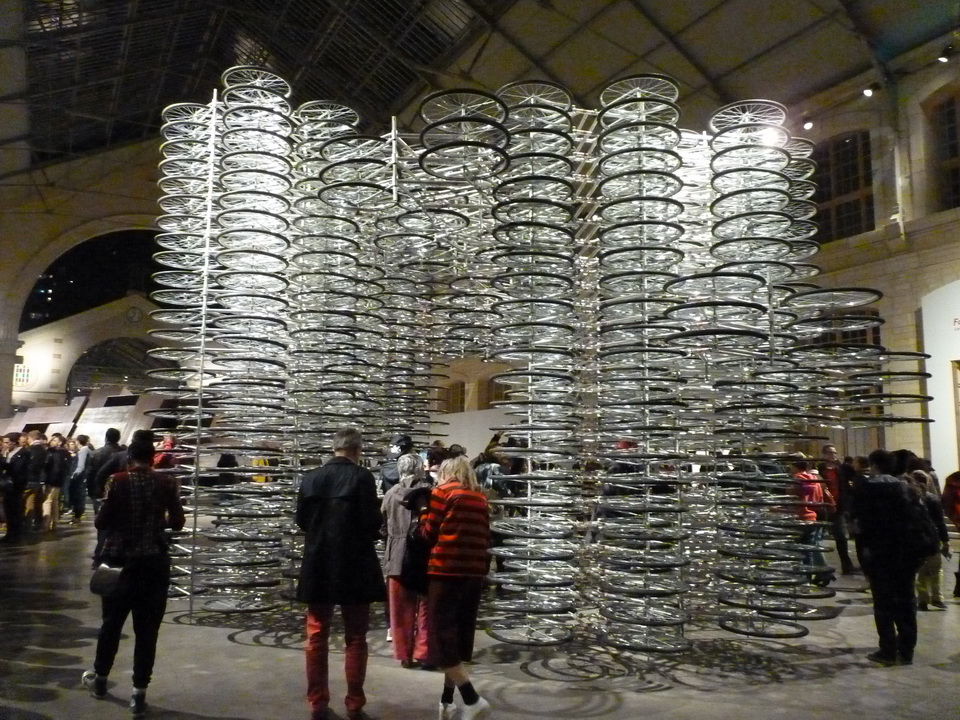
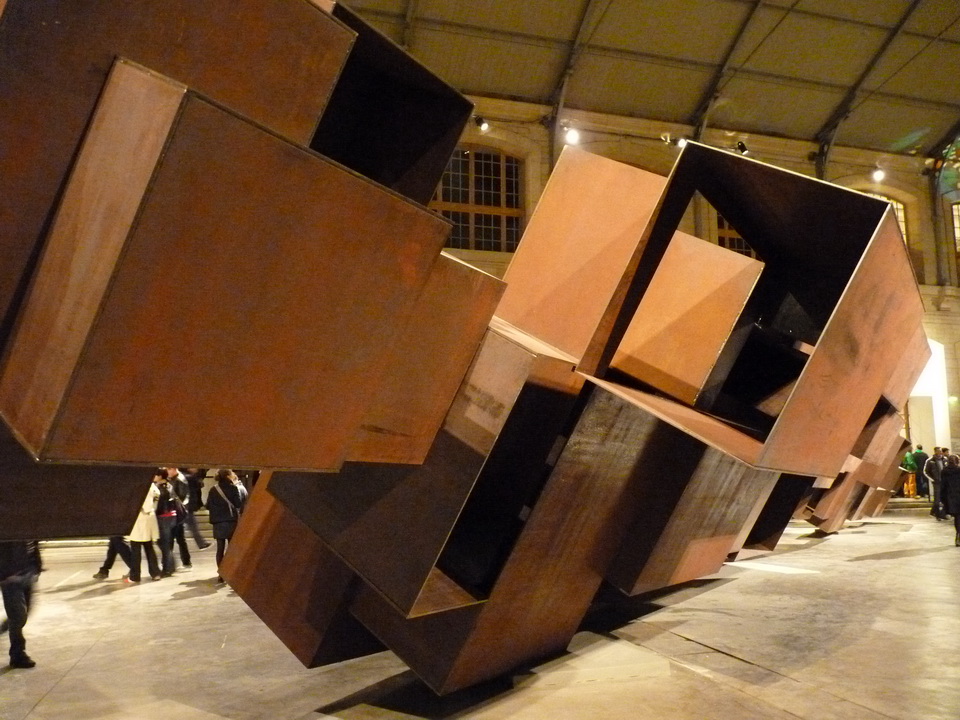
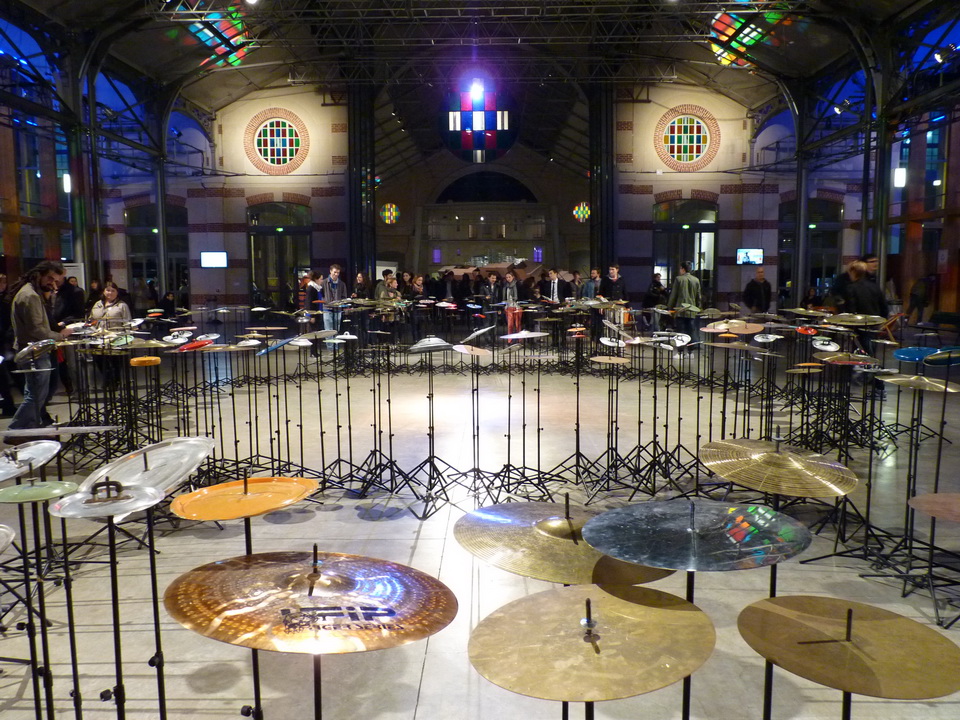
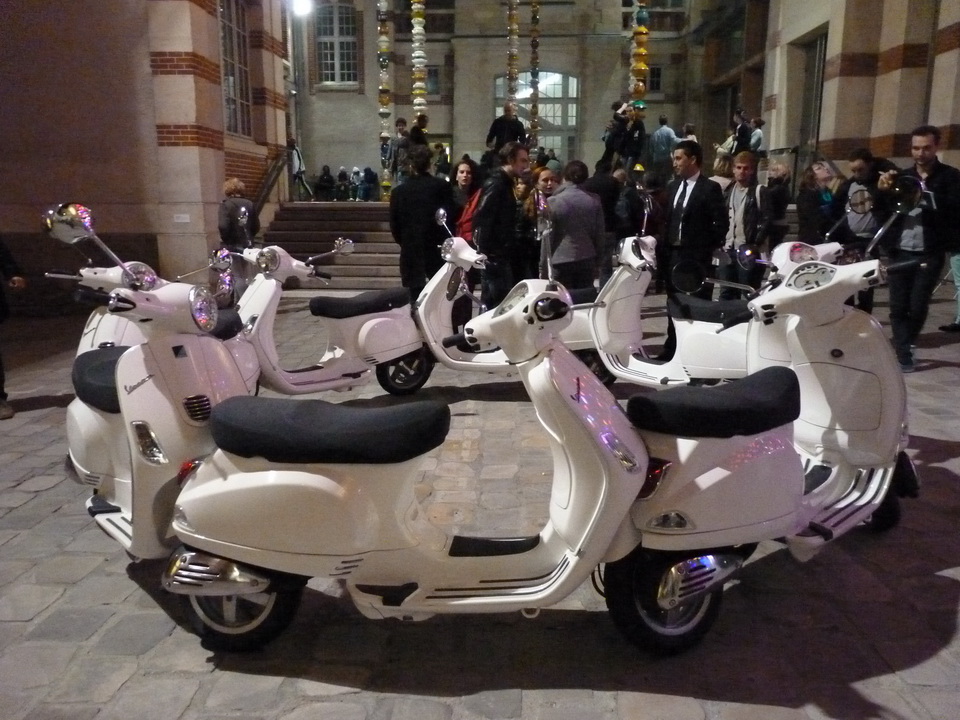
Entering Space 104, one is attracted by Chinese artist Ai Weiwei’s bicycle wheel construction, an interactive participation piece called “Turning Wheels.” Behind it stands a thought-provoking British sculptor Antony Gormley’s spaceship falling from the sky. Conquering space is not difficult; conquering oneself is harder than climbing heaven. Another space features Algerian-French artist Kader Attio’s instruments wrapped around twice, seemingly hearing noisy sounds, metaphorically reflecting social politics. Behind it, the vibrant stained glass is a masterpiece by French artist Daniel Buren. Oh! And there is also the bar counter where Vespa motorcycles tails follow each other in a circle, an Italian artist Moataz Nasr’s “Roman Holiday.” Contemporary art is like a dog biting its own tail, enjoying itself. My White Night ended with Roman Holiday, saying “bonne nuit” late at night—see you in dreams.