Chen Chi-Hsiang Artworks: Non-Mental Image Series (2015-2019)
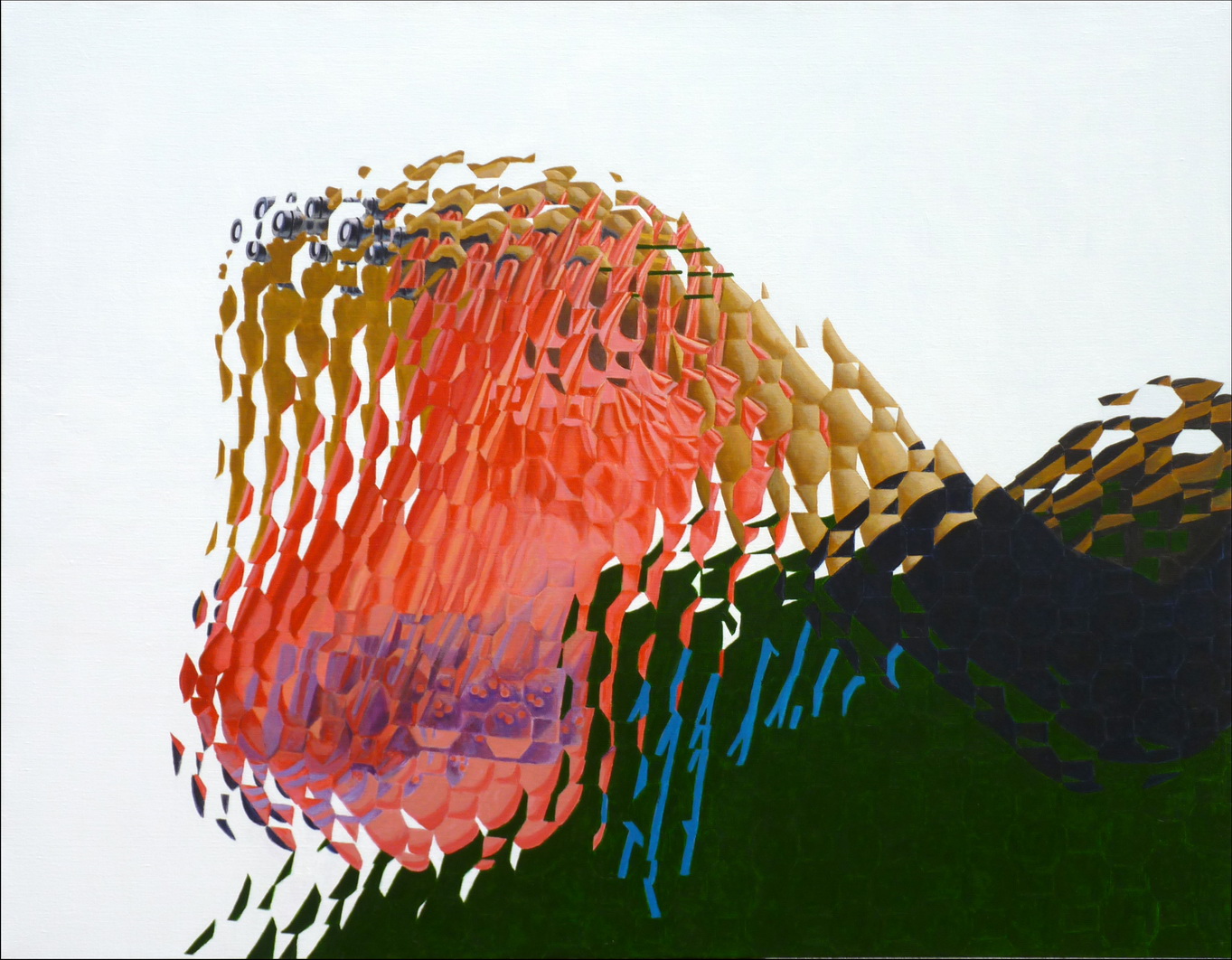
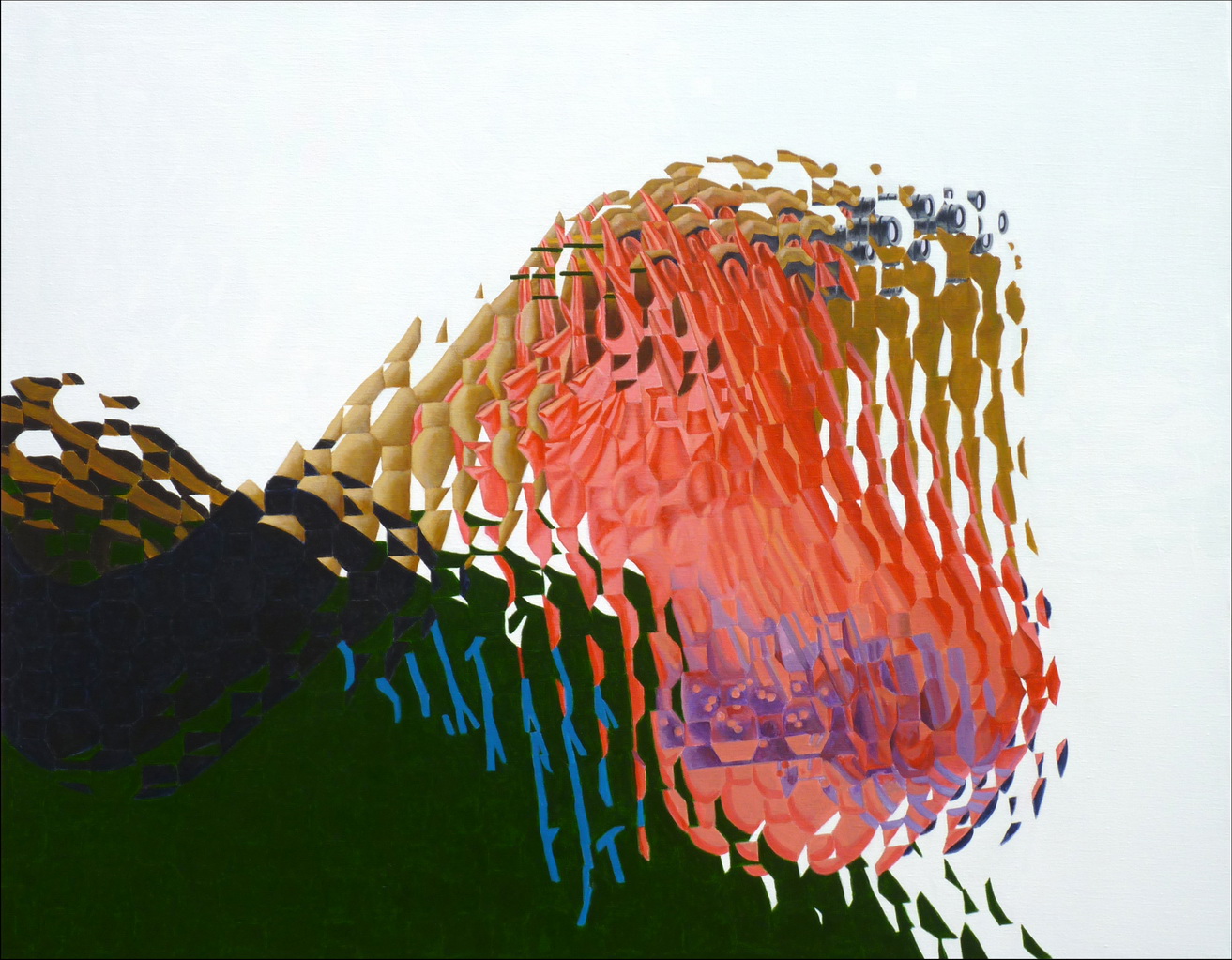
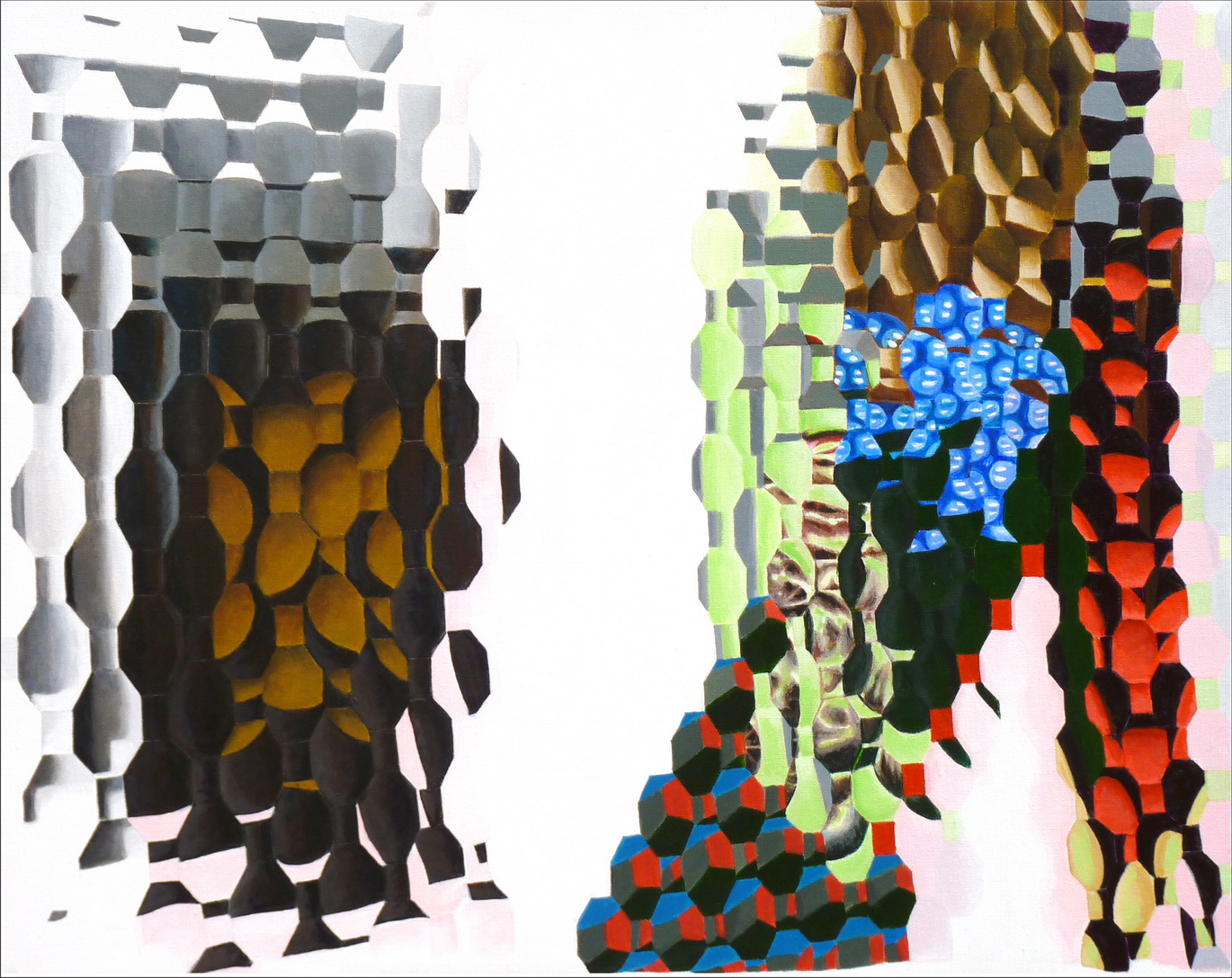
Non-Mental Image Series No. 24 - In Stillness and Motion, 114x146cm -80F Acrylic on Canvas 2019
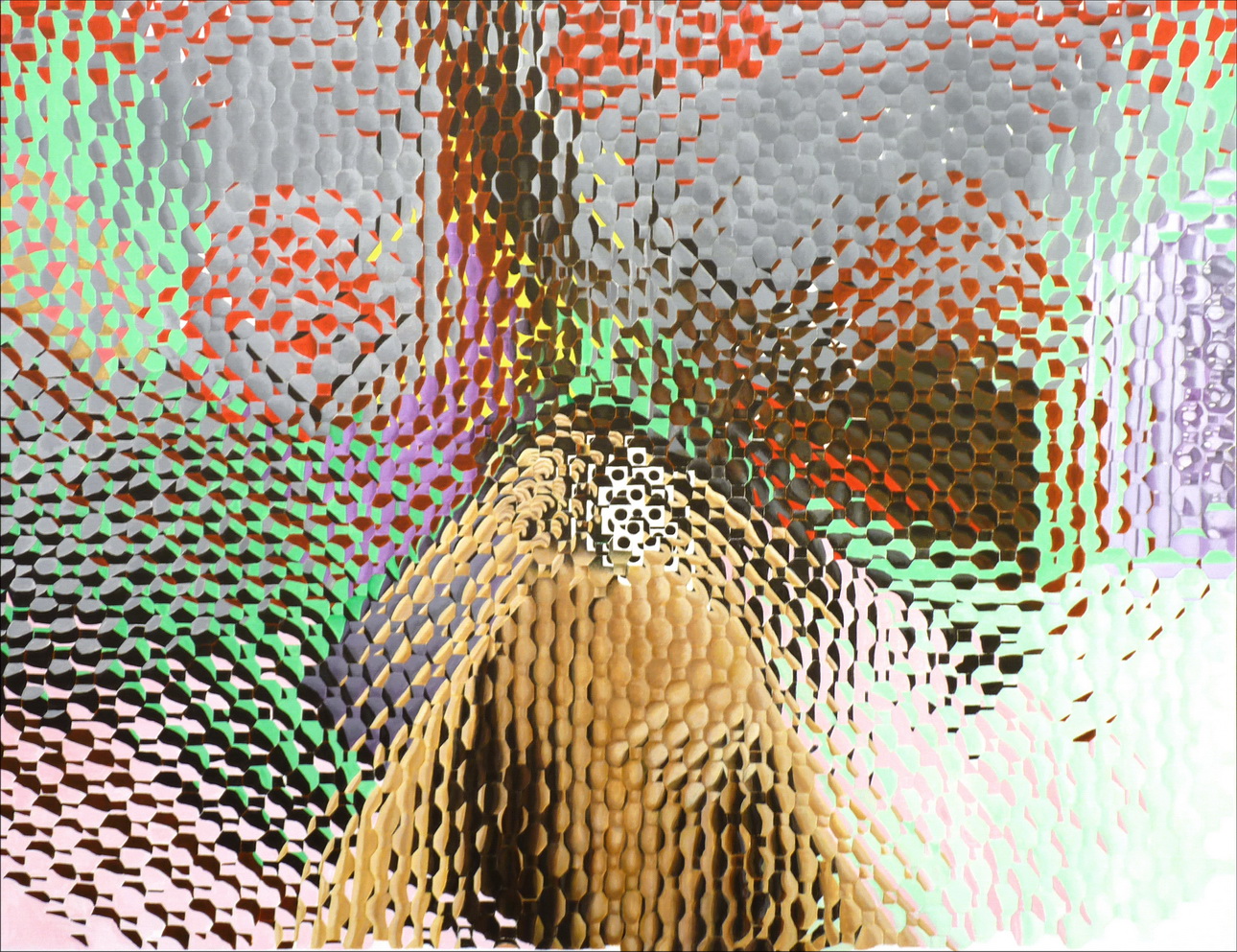
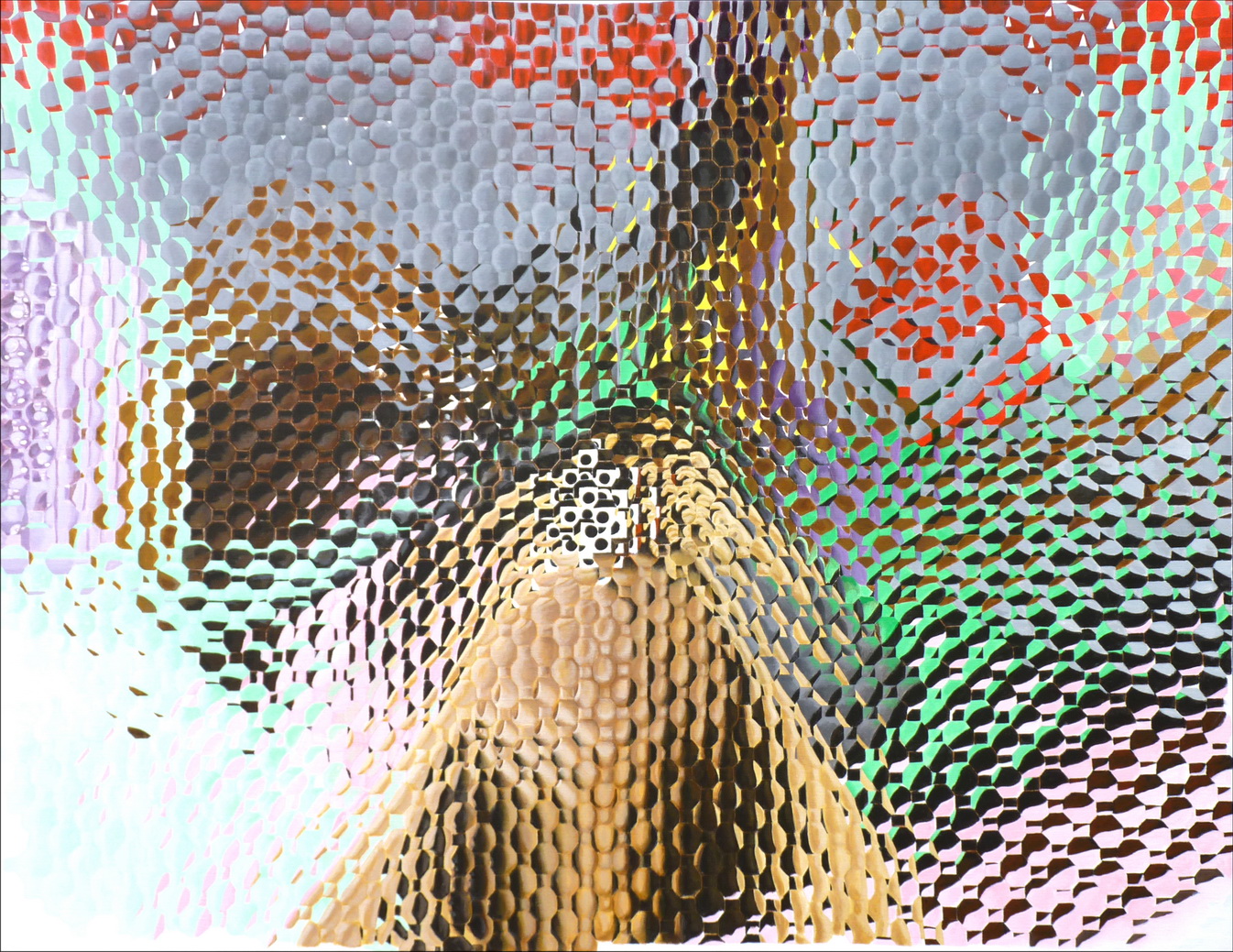
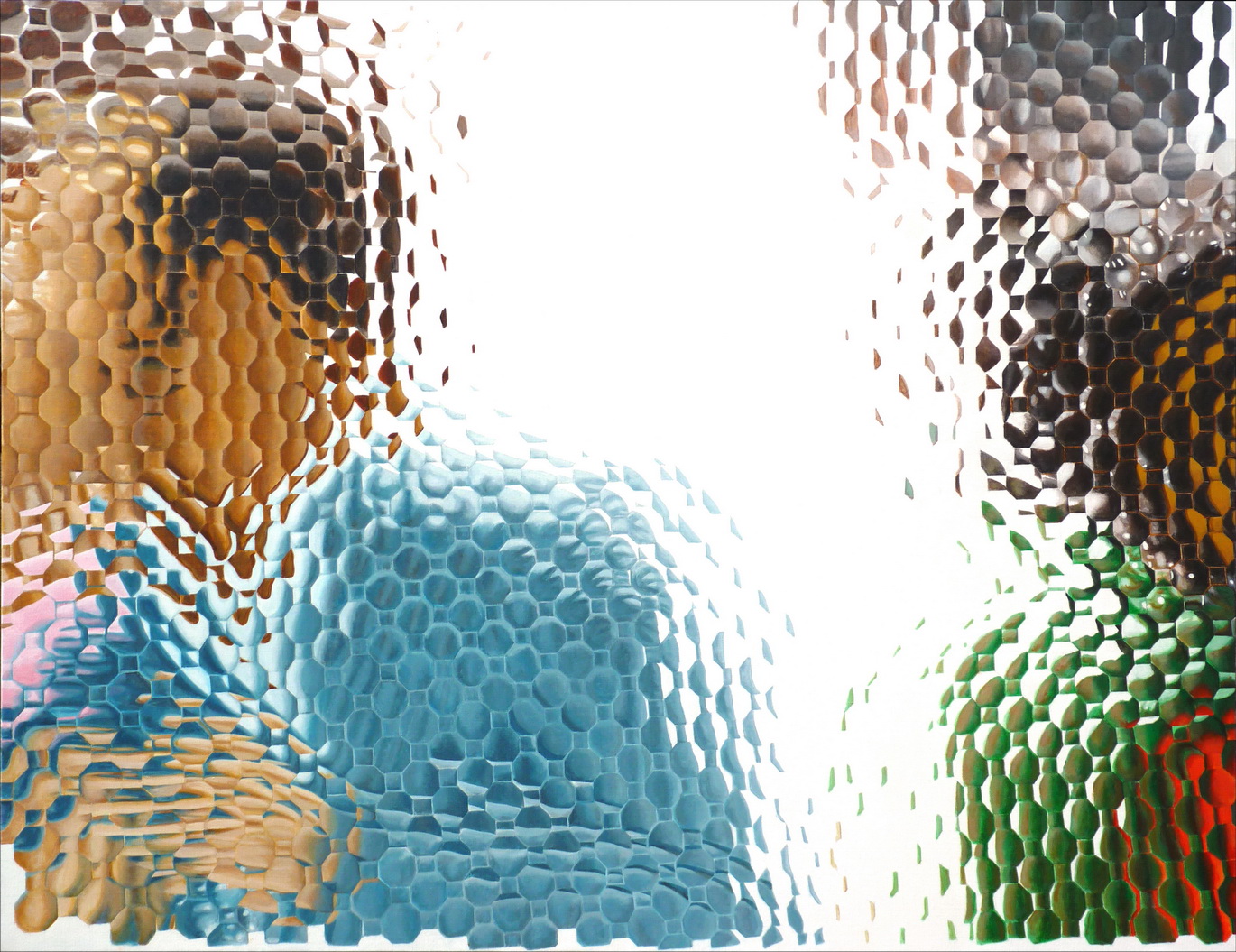
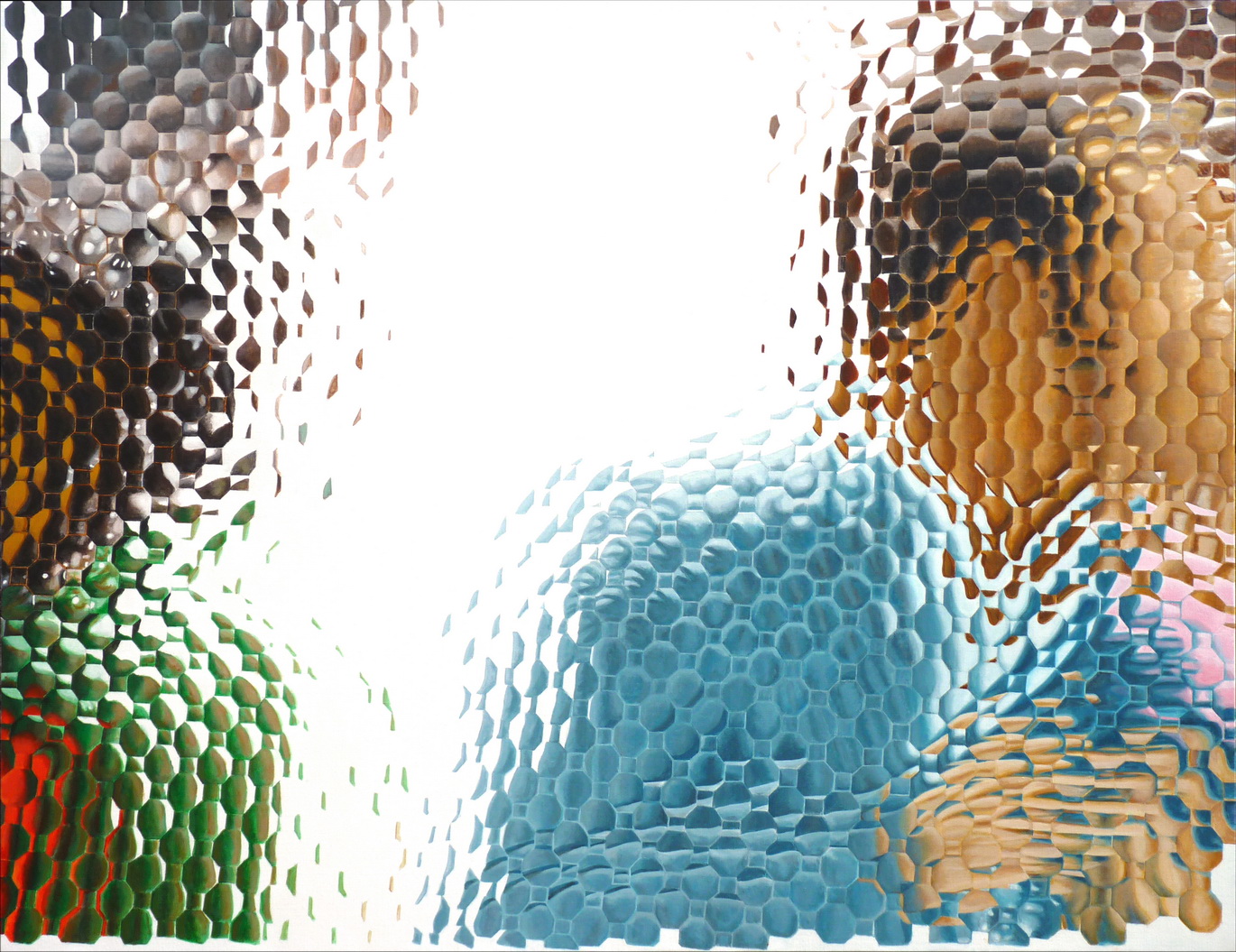
Text/Photos by Chen Chi-Hsiang The "Mirror Image" effect is the core of my twenty-year creation focusing on "realm" and "image," aiming to explore the Buddhist concept of "non-image." As Buddhism states, all things are empty images because "visible objects are actually non-objects." Starting in 2013, the Crystal "Mirror Image" series was titled Chen Chi-Hsiang – Non-Mental Image Series; from 2015, it split into the Non-Mental Image Series. Truth and formlessness occasionally relate to existence; illusions of reality and emptiness are worldly realities. "All appearances are illusory." All forms are inherently empty, lacking self-nature; without self-nature, form is non-form, revealing the Buddhist teaching of seeing one's true nature: "If you see all forms as non-forms, you see the Tathagata."
The "Non-Mental Image" series continues to expand various possibilities of mirror images, immersing in the current world's people, events, and objects within the illusionary mirroring of space and time, attempting to probe the mysteries of existence through mirrors. Under optimistic, progressive forms, rhythms, colors, and light, it argues against the era of rapid social change, expressing awareness of life's impermanence and sensory feelings of color. Deeply realizing the Avatamsaka Sutra: "Truth has no form and no difference, ultimately having no form," this embodies "All conditioned phenomena are like dreams, illusions, bubbles, shadows, like dew or lightning; thus should one view them." It attempts to depict the face-changing digital age, deeply exploring the aesthetics of personal unique analog twin mirror diptychs.
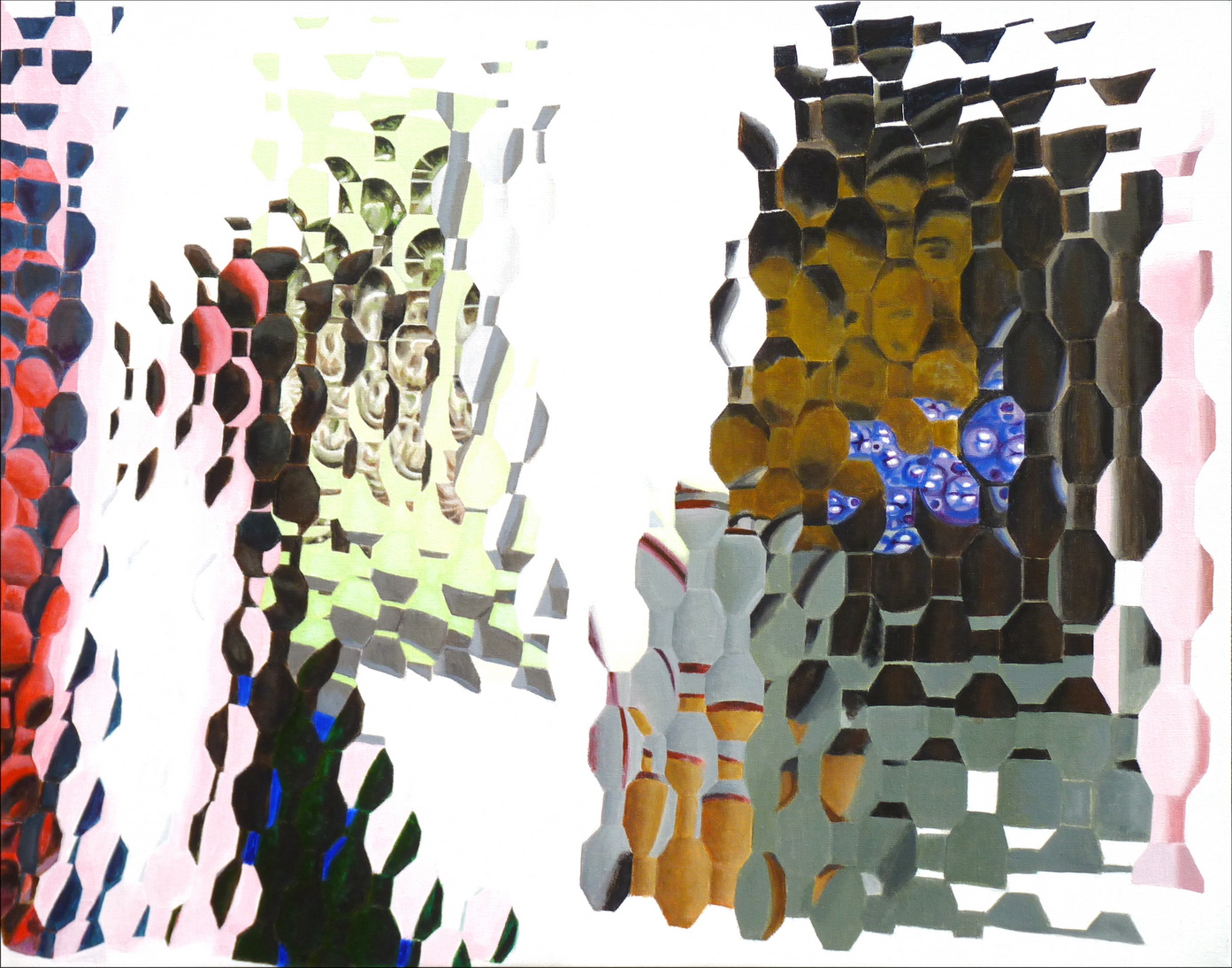
"This Is How" exhibits my new works from the past five years, deepening creative connotations and skills, exploring painting possibilities, continuing to capture imagery and mental images flowing from mirrors, dreamlike dramatic scenes reflecting current illusory situations. "Non-Mental Image Series No. 13-14 - Meeting Without Encountering" (2015) shows characters meeting but not encountering each other in virtual reality. "Non-Mental Image Series No. 15-16 - Century Itch" (2016-17) presents abstract spiritual imagery; delicate, complex forms are an illusion and sensation. Repetitive simple geometries create vibrational energy, forming visual dynamics. Through color integration, between form and non-form, it is full of visual rhythm and imaginative space. "Non-Mental Image Series No. 23-24 - In Stillness and Motion" (2019) features abstraction in imagery, depending on the viewer's perspective. The contrasting red and green color combination presents a diagonal composition structure. Dynamic red parabolas seem to slide down continuously, reflecting humanity's inverted dreams.
Diverse experimental explorations of form and color possibilities open creative horizons, capturing imagery or mental images according to circumstances, transforming situations into artistic realms, exploring the unknown or unknowable world: "Non-Mental Image Series No. 17-18 - In an Instant" (2016). This energetic new attempt deconstructs and reconstructs local fragments of form, color, rhythm, and light, mixing expressive and visual elements to present positive, progressive abstraction, expressing an optimistic feeling. Challenging my creative limits, I gathered courage to paint half-length portraits and group portraits. This honed not only my mind but also my endurance, physical strength, and eye power, intending to create contemporary new portraits.
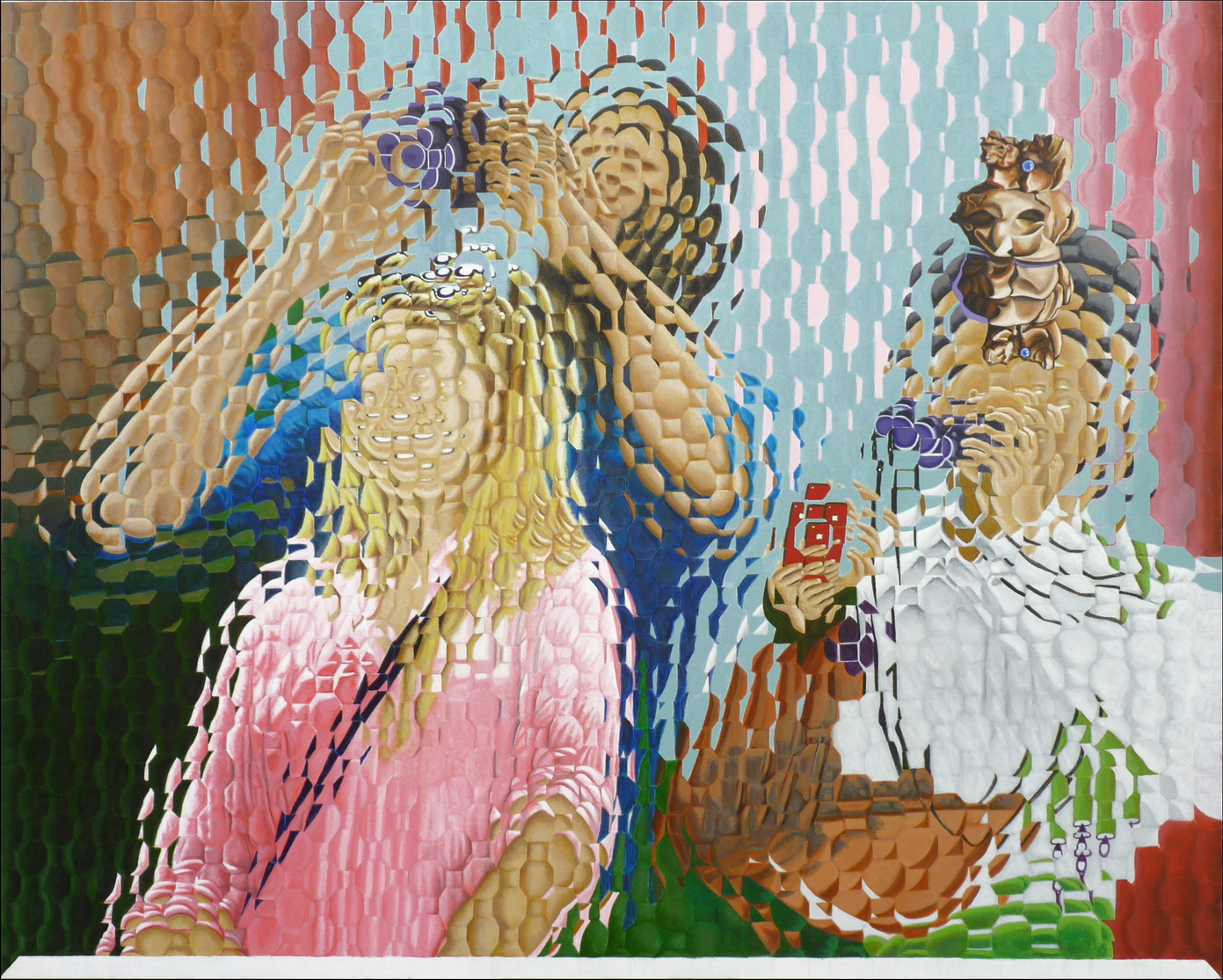
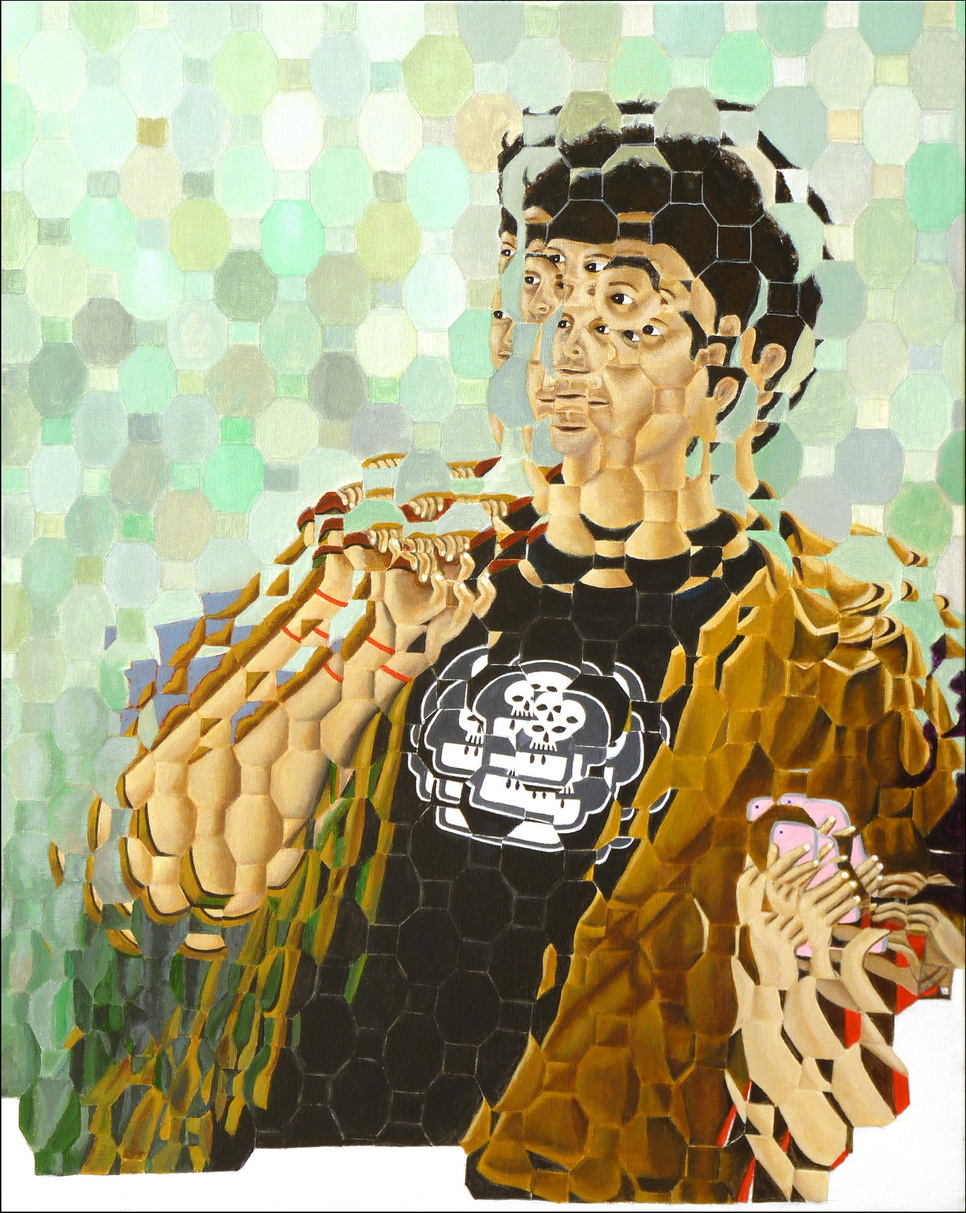
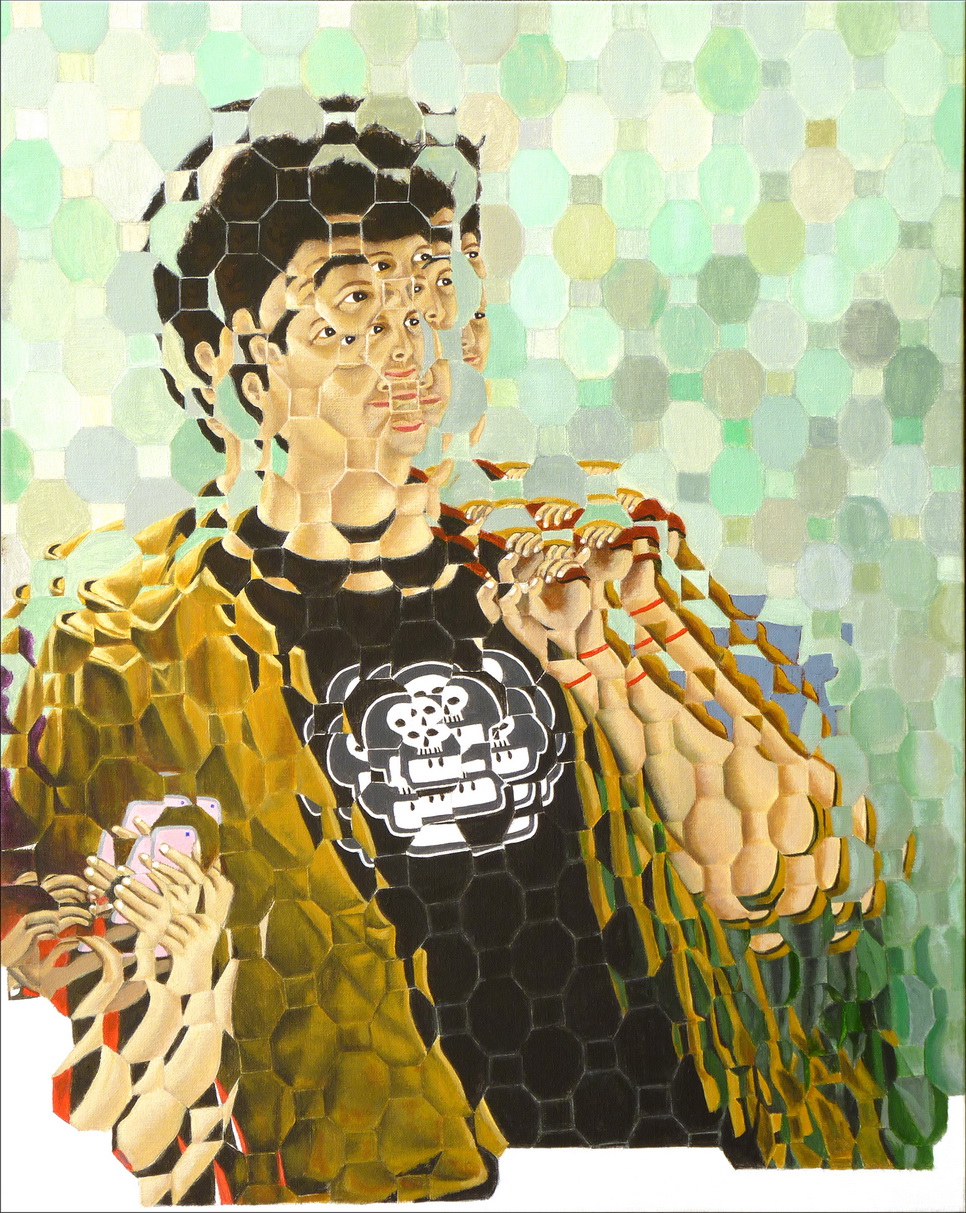
"Non-Mental Image Series No. 19-20 - Born of Death" (2016-17) is a mirror image study, an experimental attempt at portrait figures formed by multiple crystal fragments. A boy with piercing eyes wears a beige top and black T-shirt with a gray skull image, referencing contemporary human vanity and arrogance, and the allegory of fearing death and loving life. A pair of slender hands appears in the left or lower right corner secretly taking photos with a mobile phone, embodying current situations. 'Taking' is indeed the itch of contemporary people. Since 2018, challenging complex group portraits, "Non-Mental Image Series No. 21 - Look Here" (2018) depicts a dramatic scene surrounded by mobile phones, where three women and one man are taking photos. Four or five hands interweave in exaggerated formal poses. Blue, red, green, and purple create spatial structures and form-color rhythms. Amidst the green jungle under the mobile phone, a arrogant, reveling chocolate rabbit appears, metaphorically representing the current human situation of loving life but dreaming of death.
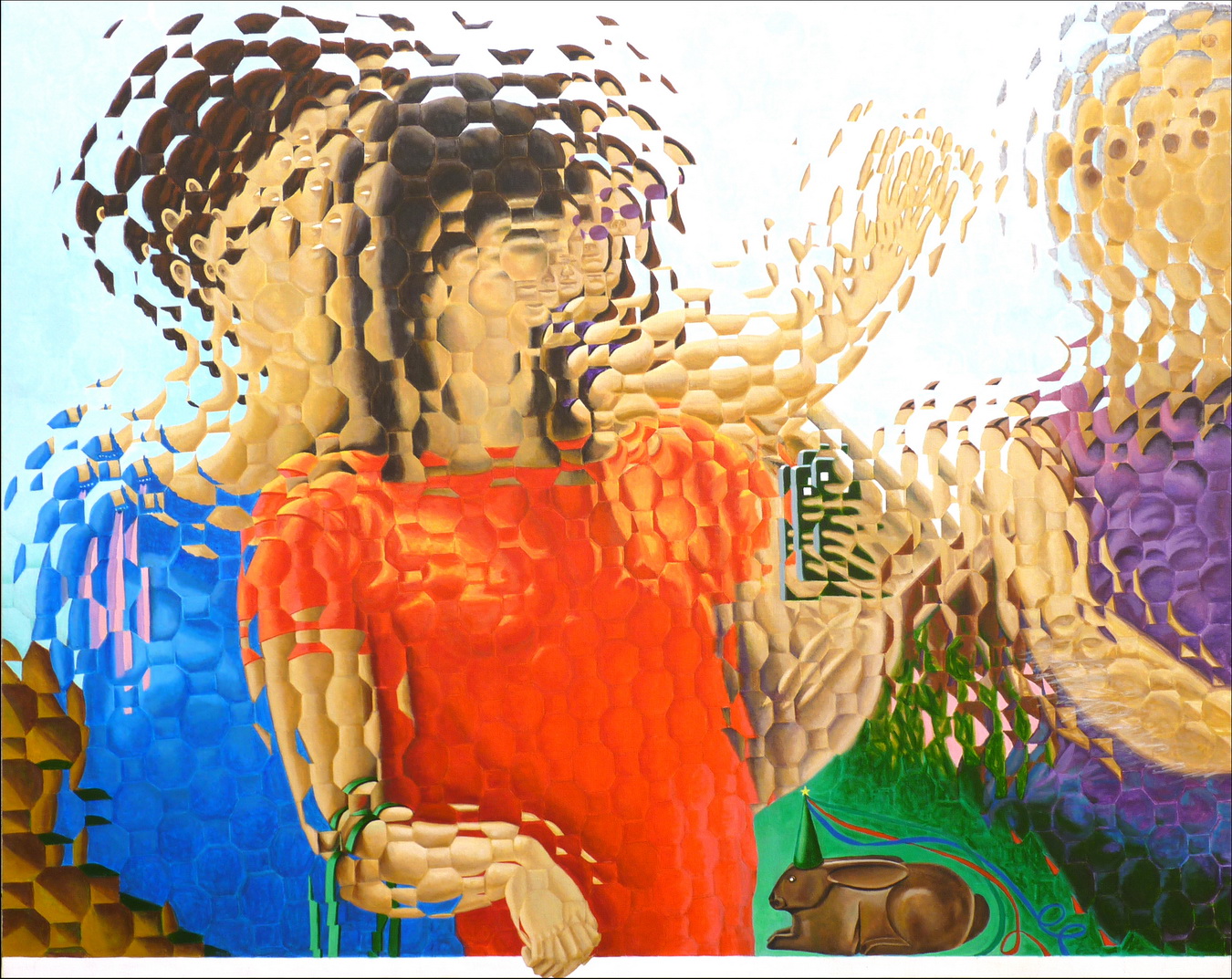
"Non-Mental Image Series No. 22 - Action!" (2018-19), whether filming or sneaking shots, has become a contemporary addiction, a sensation, especially the thrill of sneaking shots. A dramatic scene of two men and one woman starting to film: a man in blue is filming his smiling girlfriend, while a middle-aged man wearing a hat nearby holds a camera to sneak shot this scene. Unexpectedly, an Apple phone appears behind, also sneakily filming this dramatic moment. On the middle-aged man's hat appears a mysterious mask-like mirror image, is it the surveillance "Heavenly Eye" above people's heads? Filming, sneaking shots, or looking back and forth all manifest the current digitalized society of "surveillance and governance."
Form is sensation; color becomes argumentation. Delicate, complex forms, created through repetitive simple geometry, generate vibrational energy and continuous temporality, extending spatial fields to form visual dynamics. Through color integration, illusory realms of light and shadow appear. Static images sometimes contain illusions of space-time transformation; stillness reveals dynamic development. Between sensibility and expression, time and space, allegory and metaphor, construction and deconstruction, rhythm and structure, motion within stillness, and change within constancy, diverse perspectives and imaginative spaces arise, all attempting to probe the mysteries of existence through mirror images.
Three portrait paintings illustrate social situations in the digital age and humanity's confusion about its future. The current world changes so rapidly that everyone carries a phone, creating today's "phubbers" (head-down tribe). Sliding phones and checking in everywhere, they are immersed in tablets unable to extricate themselves. Space and time are hijacked by tools; eyes cannot keep up, confined all day to small screens, addicted to the point of poisoning. Convenient for the digital age, the mobile phone has become the core of life. With one phone in hand, everything seems smooth, and the whole world fits on this screen. Thus, questions get answers instantly. Contemporary human life's lightness is handed over entirely to Google search engines; there is no need to think anymore. The evergreen tree of life withers into something flat, forgetting the colorful feelings of life itself. In this era of knowledge and information explosion, knowledge is actually the scarcest resource. Controlled by information media without realizing it, the arrival of the "retarded era" means no judgment leads to no critical power. Living in the ethereal, void world of the cloud, current regimes or authoritarian governments also rely on digital technology as a tool for "surveillance and governance" of society and restricting people's lives. Great progress leads people to the edge of disaster, touching the nerves of current life, reflecting the era's labor pains and shocks.