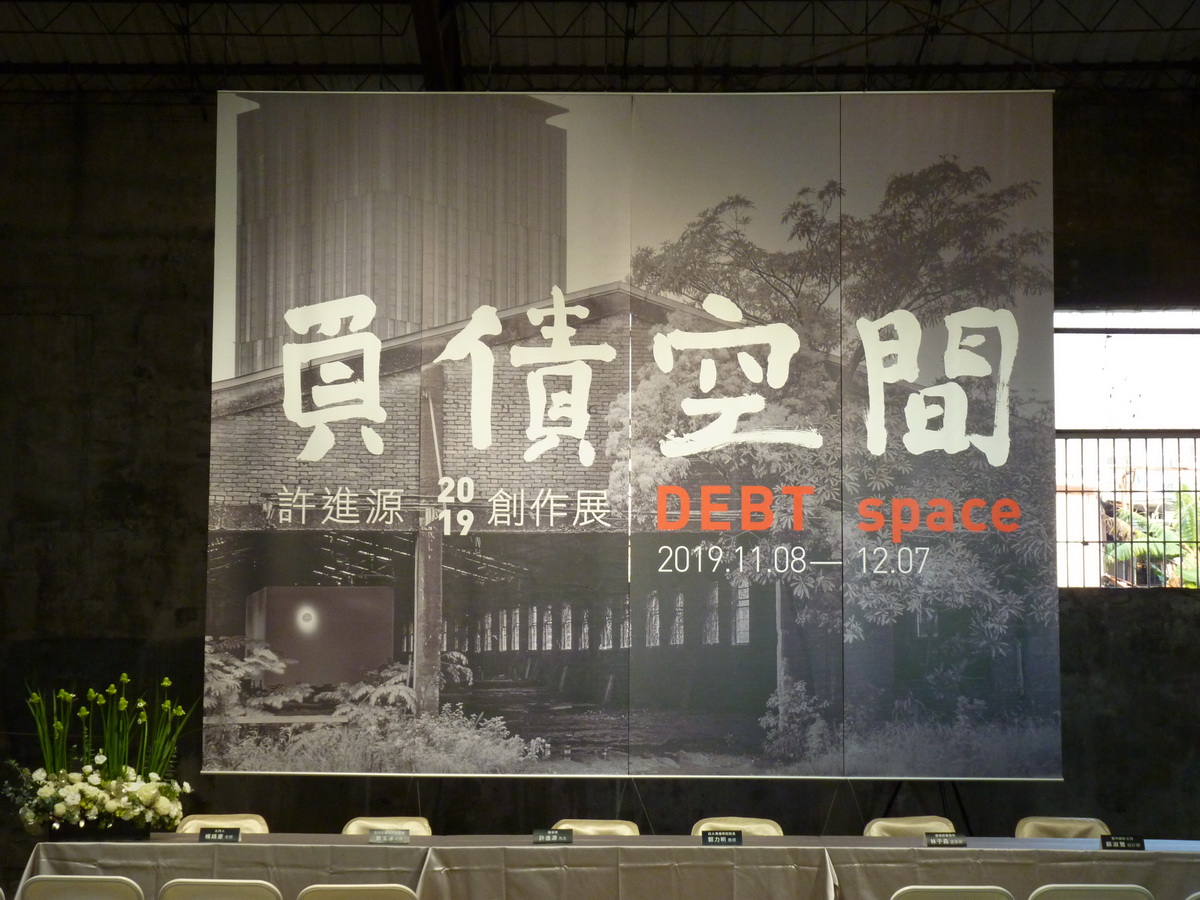
Hsu Chin-Yuan "Debt Space" 2019 Creative Exhibition
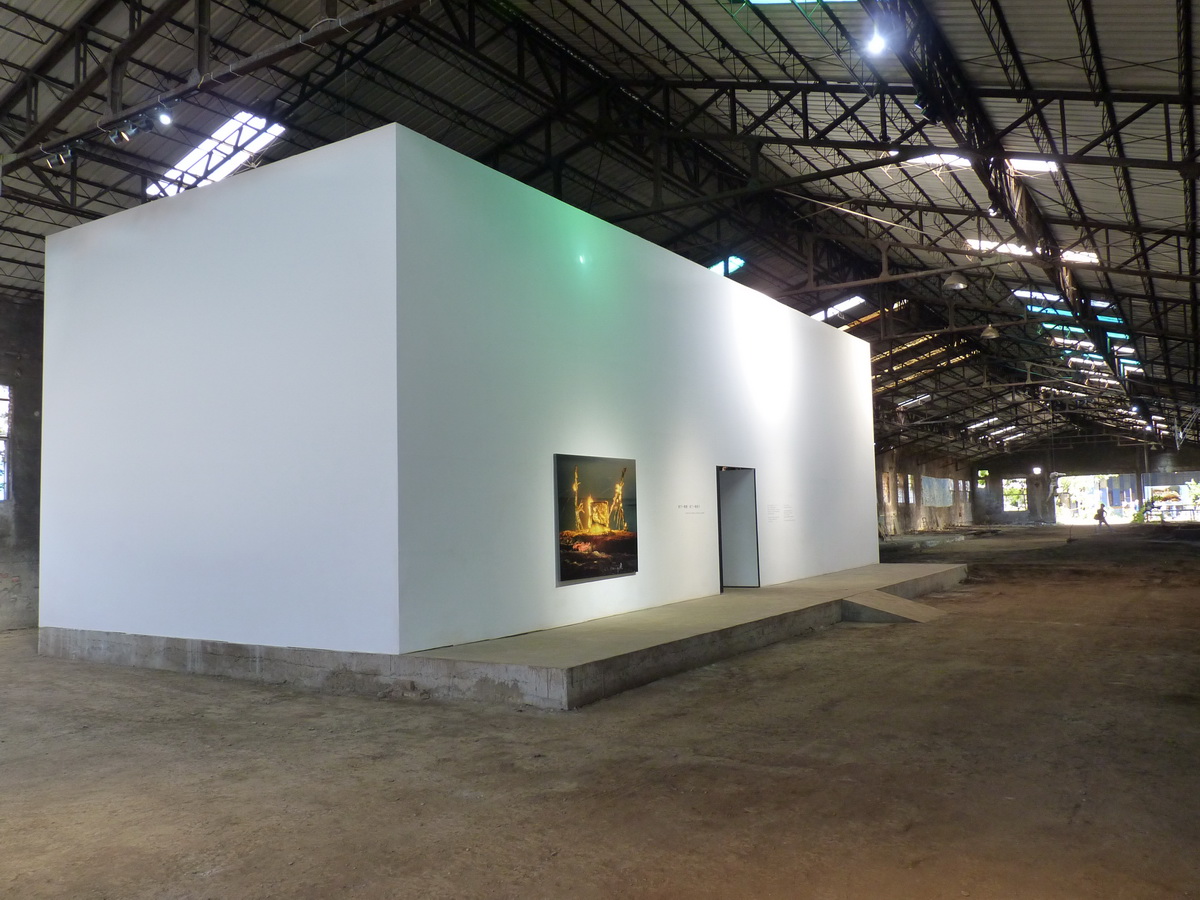
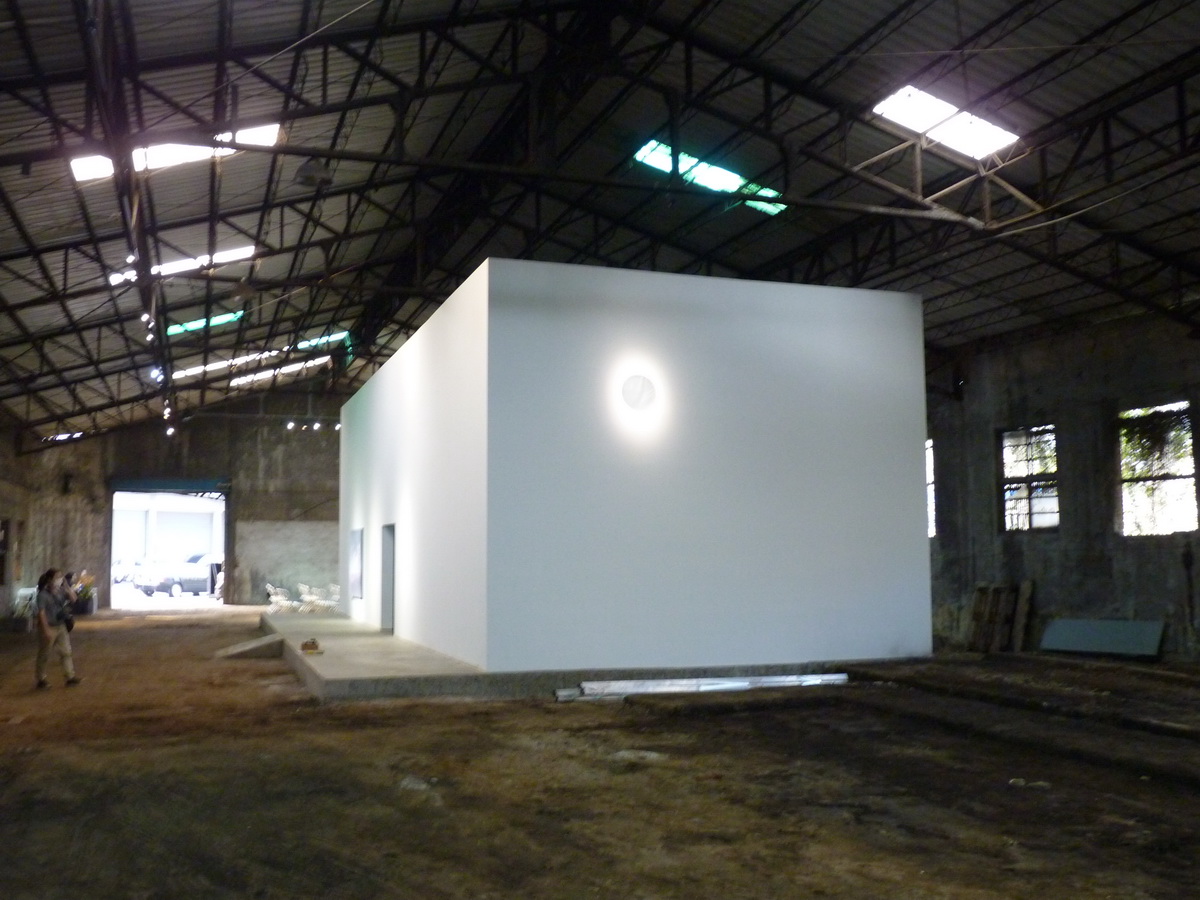
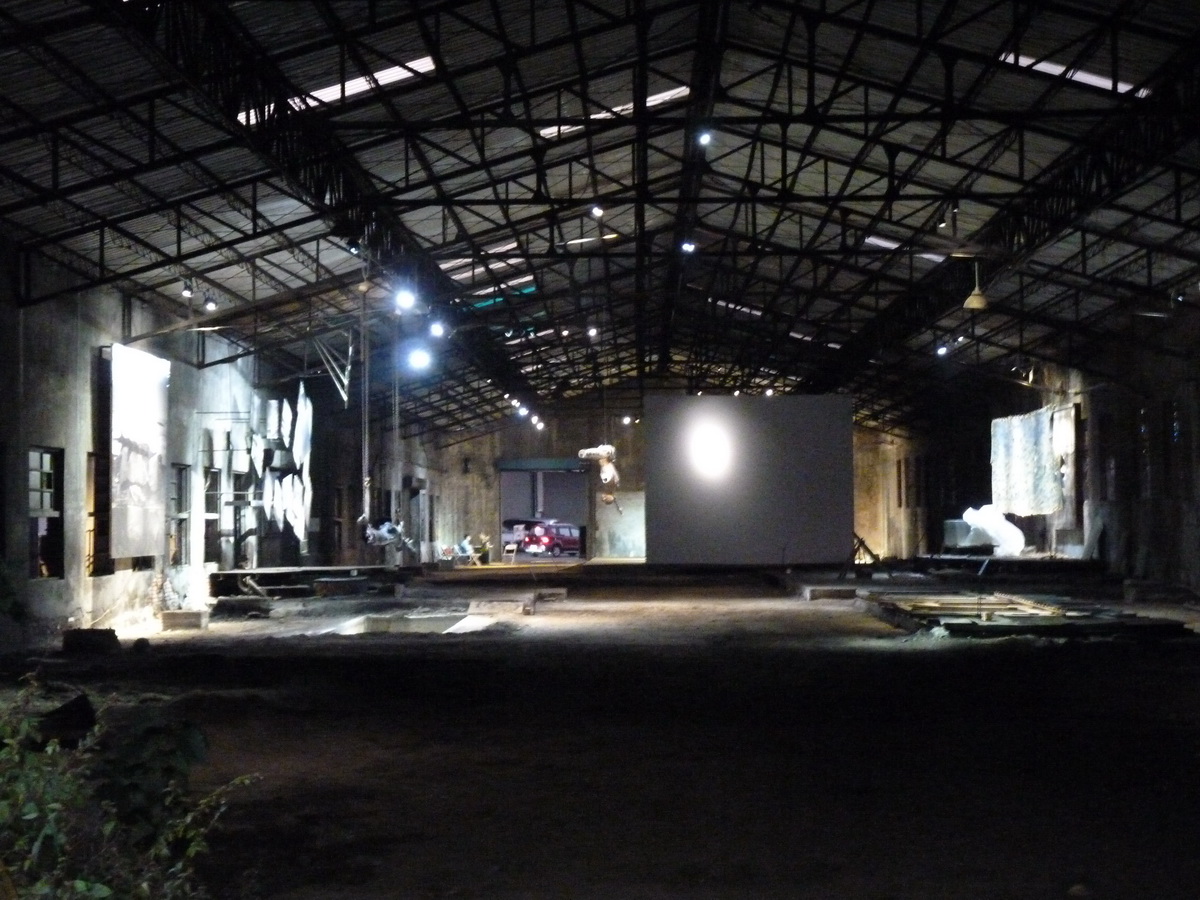
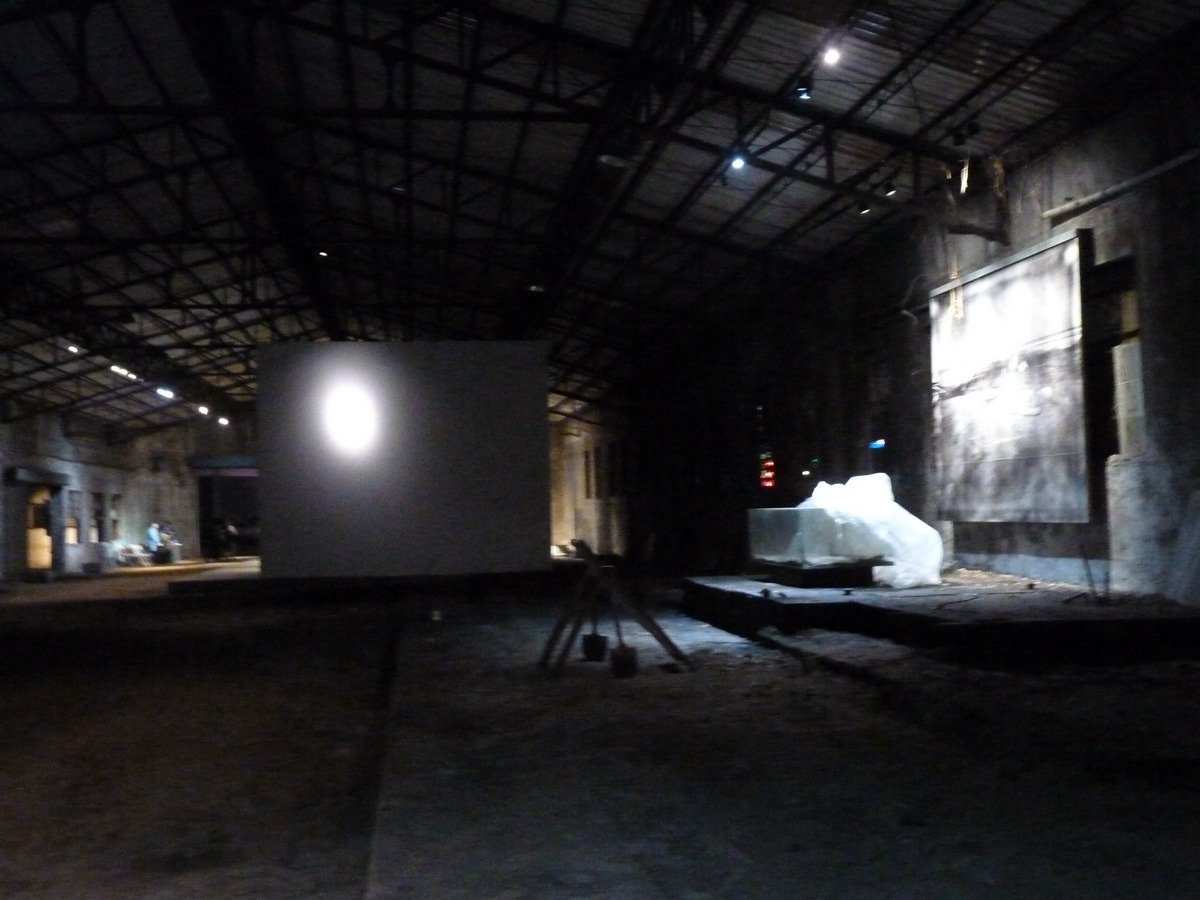
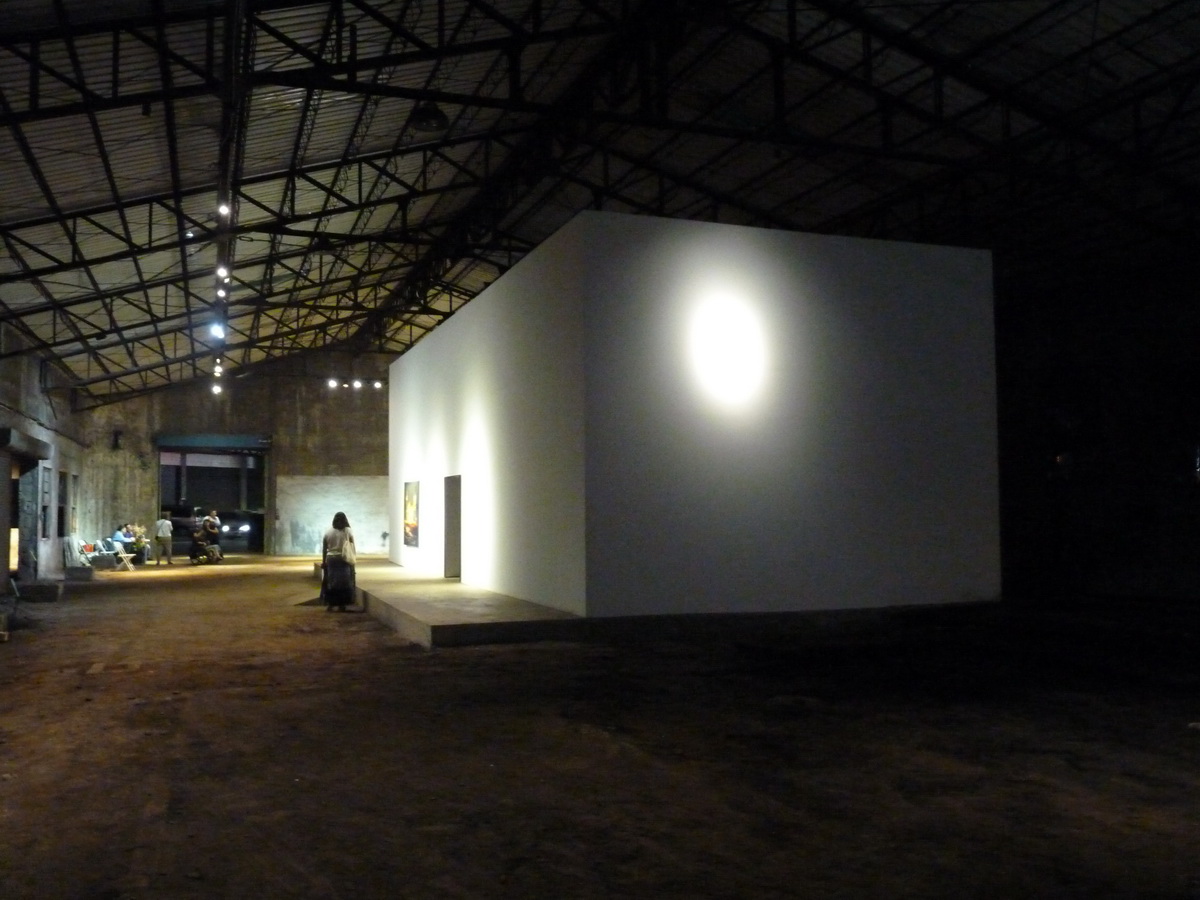
The white box becomes the core of the "Debt Space" creative exhibition.
Text and photos / Chen Chi-Hsiang
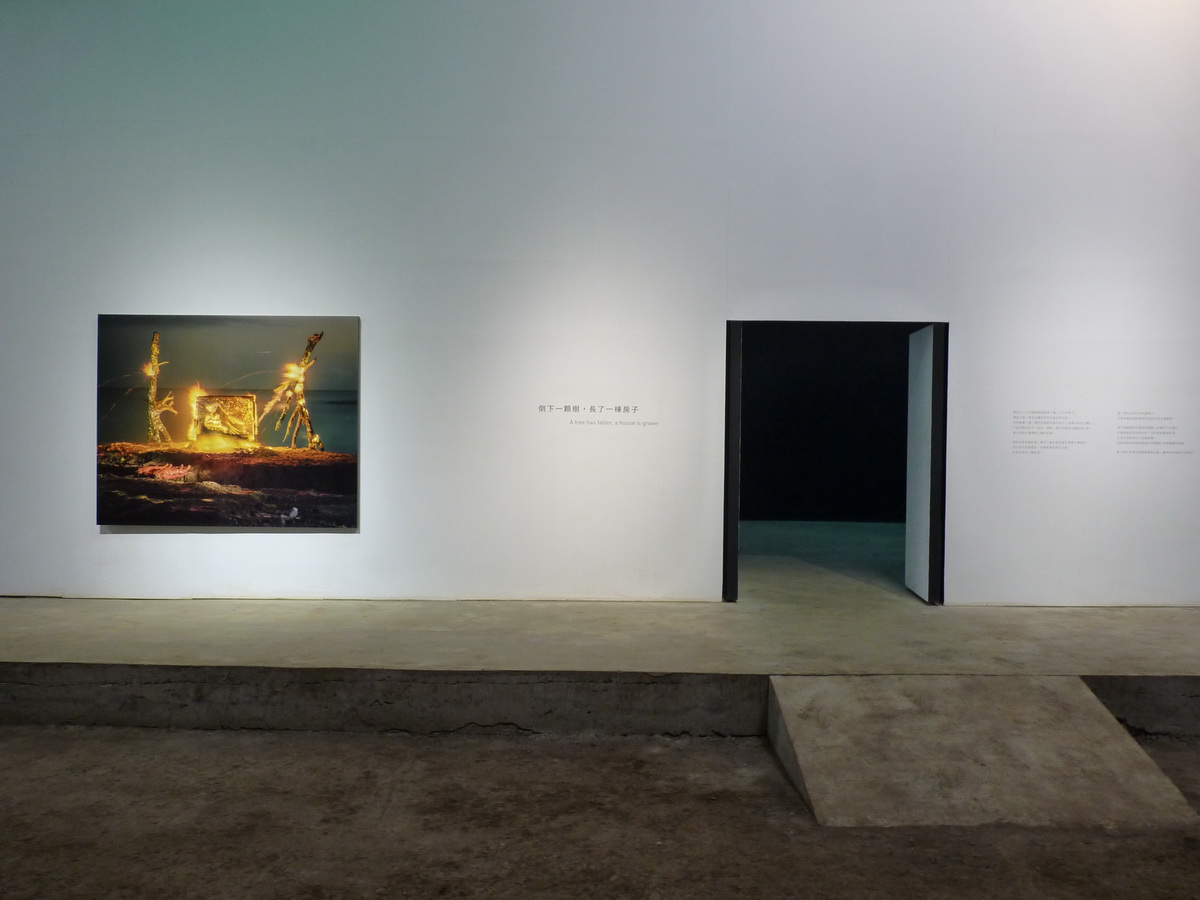
“Fell a tree, grew a house”
Hsu Chin-Yuan (Note 1)
Time: November 08 - December 07. Open hours: Fridays, Saturdays, Sundays 14:00-19:00. Location: No. 250, Section 1, Ziyou Road, Sanmin District, Kaohsiung City. Hsu Chin-Yuan is an emerging talent in the Taiwanese art scene, living and creating in Kaohsiung. In 2017, he won the Kaohsiung Award with his director-style photographic series “Trapped · Imprisoned,” becoming the most mature artist by age to receive this award in its history. From real estate developer to alternative photographic creator, he uses unique amateur-style imagery to articulate his consciousness of existence. Having engaged in real estate development for thirty years and built over a thousand housing units, his adventurous spirit and rich experience in architecture and construction sites have cultivated his keen social observation skills, which form the cornerstone of his artistic creation. After retiring, he led a group of workers into the artistic creation he loves, using large-format cameras as his primary medium. Without academic or institutional frameworks, he bravely attempts and experiments, exploring various possibilities. In recent years, he has actively explored everything from static images to video, performance, and environmental space installations.
The exhibition title “Debt Space” stems from the artist’s past experiences in real estate development. “Debt” implies capitalist loan investments and development; loans represent the operation and development of resources in industrial and commercial society, becoming energy that drives social progress. What does “Debt Space” refer to here? For developers, it refers to the various spaces built through home purchase loans. Land development means “fell a tree, grew a house,” playing the active role in today’s cementification of metropolitan processes. Every high-rise built requires pushing down countless trees, making nature cruelly like a butcher. This is the collective fate of humanity brought about by civilized evolution.
After stopping building houses, he wandered along the unique coastlines of the South Pacific Islands, entering Tainan’s Beimen Baishuiwan—a place both familiar and strange—to photograph dead wood and shrubs on the beach. Watching the windbreak forests fallen by the coast and driftwood floating to the sea outlet evoked mixed feelings, making him seem to see the spirits of those trees buried deep beneath high-rises. Through creation, he rethinks the meaning of debt: in front of nature, everyone is a debtor, and everyone lives in a debt space. (Note 2)
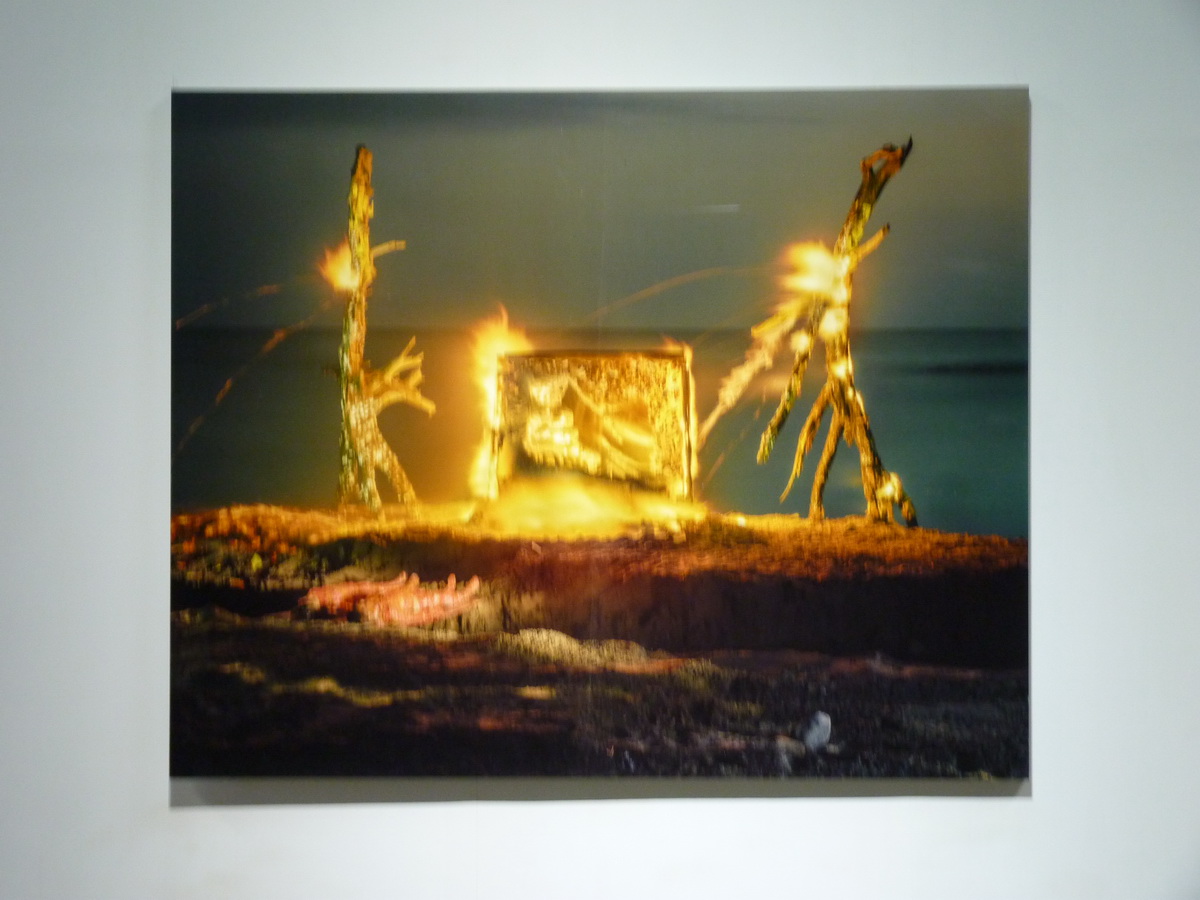
Hsu Chin-Yuan’s “Debt Space” creative exhibition is held in an abandoned old iron factory in an industrial zone in Kaohsiung. The challenge is not just the works but also establishing the spatial context for them. This exhibition constructs environmental space installations within a highly challenging old factory. Featuring five works—photography, video, installation, iron sculpture, and object-based composite media—the comprehensive spatial installation “Fell a Tree, Grew a House” is placed in a pure white long cubic box resembling a mourning hall, narrating the salvation of tree souls. Following traditional Taiwanese religious rituals, it becomes the core of this creative exhibition. On the entrance wall of the white long cube is the photo “Burning the King Boat” (2018). The ritual first takes place on the beach in Beimen, Tainan. The dramatic scene shows the king boat carrying gold, silver, treasures, and offerings (a pair of naked men and women) sailing towards the Black Water Ditch. Through fire sublimation, it prays for national peace and prosperity, implying the connotation of a debt space between humans and gods.
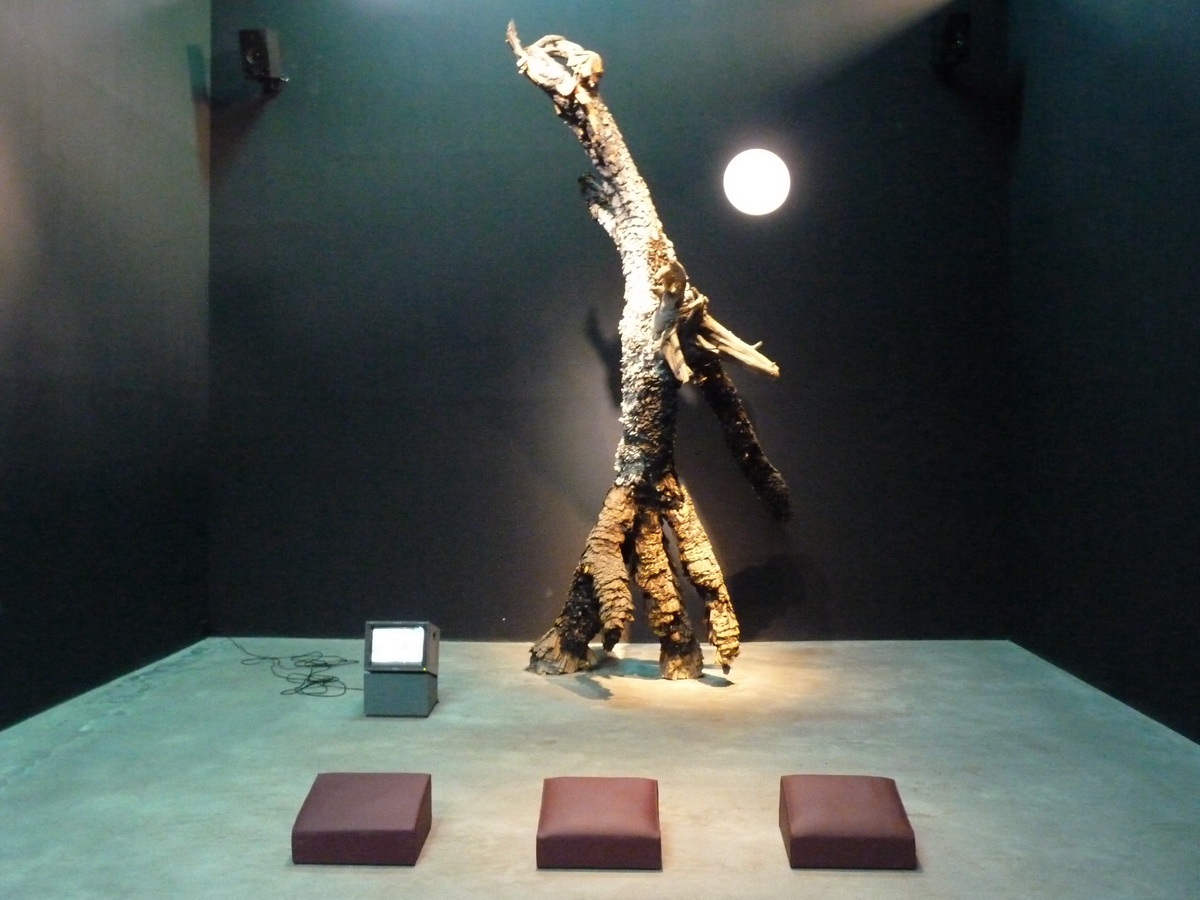
A dialogue between two works facing each other in the white box and black space: Continuing to build new objects based on the “Burning the King Boat” image, then using an excavator to move the spirits of two trees next to the “King Boat” from the beach in Beimen, Tainan. Along the coastline, countryside, and bustling city streets, they are finally parked in the abandoned factory. This spirit-moving process is photographed with a pinhole camera from the excavator’s perspective using long exposure. On the left is a photo compressing time and space records of the spirit-moving process; the result of long exposure deconstructs reality—intending to illustrate dimensions of time and space. On the right stands an object left over from burning the king boat, showing traces of gold paper being burned—spirits of dead trees. In front, three small kneeling cushions are arranged like an altar. A full moon on the wall? One can see the artist’s careful spatial management. Next to the tree, a small screen plays a black-and-white documentary of the spirit-moving process, metaphysically peering into unknown and hyper-dimensional spaces and worlds. Under a solemn and sacred atmosphere, viewers contemplate and reflect; the artist’s actions seem to become those of a priest.
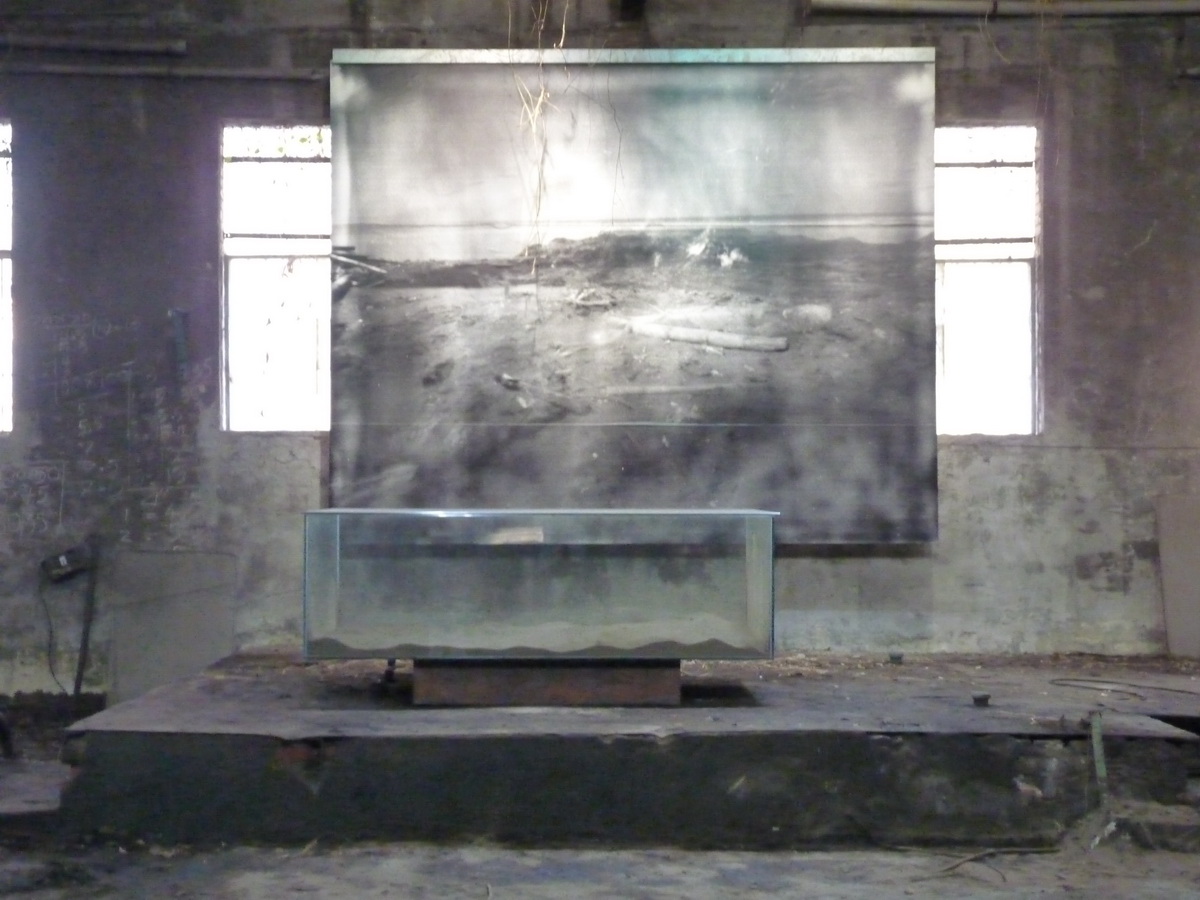
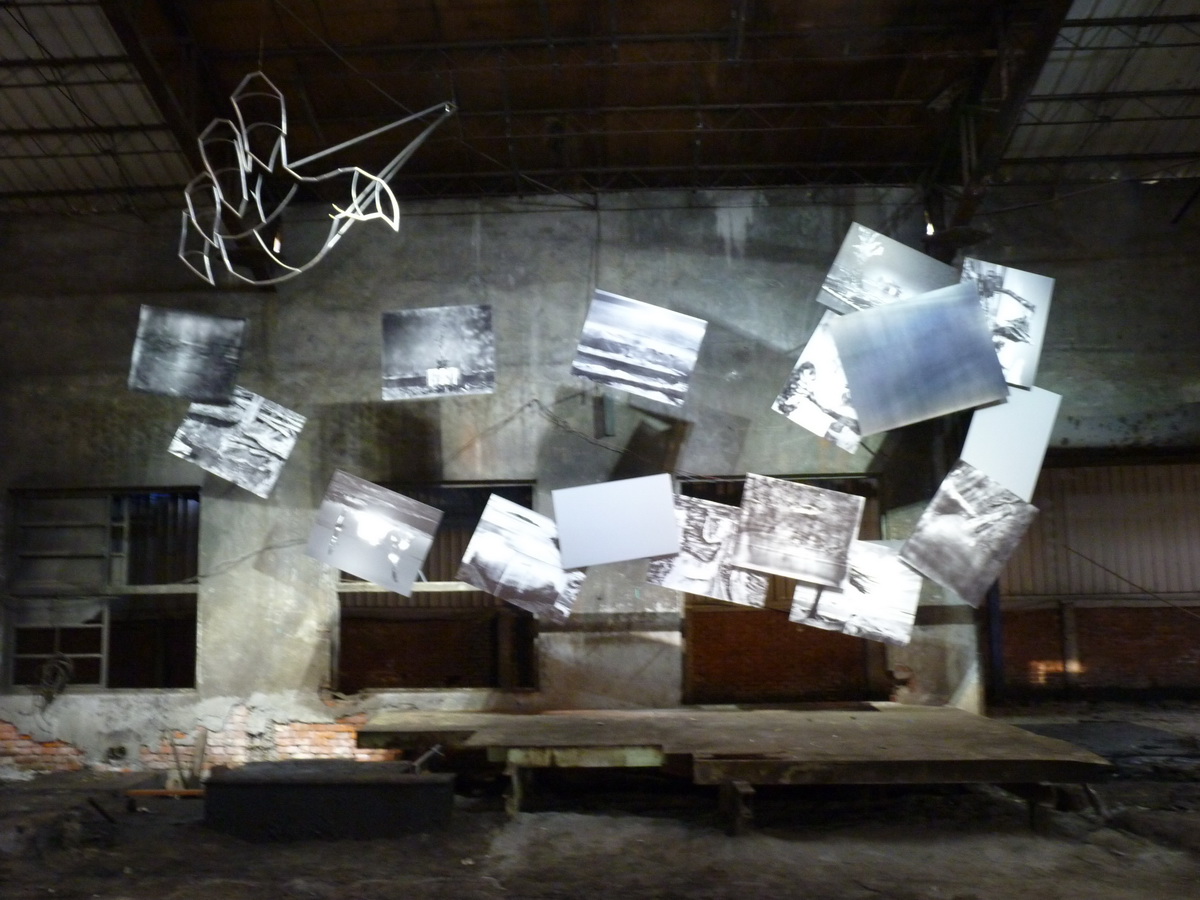
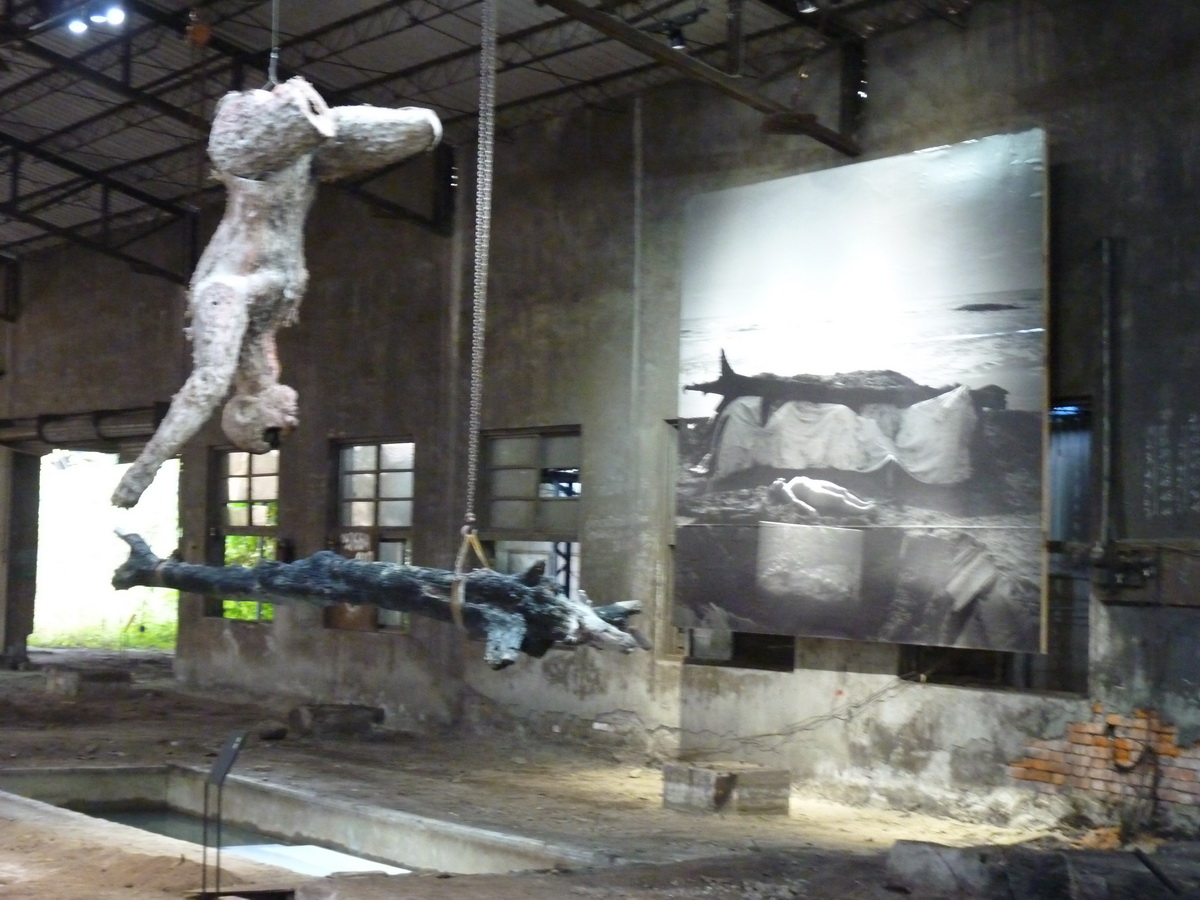
A comparative spatial installation between the black-and-white photo “Coffin and Coffin” and an object consisting of a transparent glass coffin filled with sand. The slightly blurred image presents a silent body (corpse) on the beach. Life and death are natural phenomena of humanity; death is a return to nature between heaven and earth. Under the minimalist horizon, undulating dune curves, and two diagonal structures (body and driftwood raft), it illustrates the natural return of the life body and the immortality of the soul. Looking ahead, the transparent coffin becomes a symbol of civilized evolution. Alas, it also denaturalizes death (the coffin becomes a class-based ritual drama in human society, only satisfying human vanity). The distance between humans and nature seems even farther. Intending to use images and the transparent glass coffin object to illustrate the dialogue of debt relationships between worldly attachments and cares. “The Distance Between Humans and Nature”: Since the Industrial Revolution sounded the death knell for nature, this series consists of 16 black-and-white photos of beach scenes combined to form a streamlined spatial installation. It contrasts strongly with the geometric platforms of the abandoned iron factory below. Hanging in front is an object symbolizing industrial evolution, such as an iron claw steel sculpture, and an inverted broken mannequin shot on the beach, referring to the ritualistic scene of conflict between industrial civilization evolution and nature. It points out the greedy imagery in the concept of human progress and the uncontrolled development of natural resources, warning of the destruction of the natural ecological environment and the ominous implications of natural disasters and human calamities. Indeed, as the artist stated, “In front of nature, everyone is a debtor, and everyone lives in a debt space.” (Note 3)
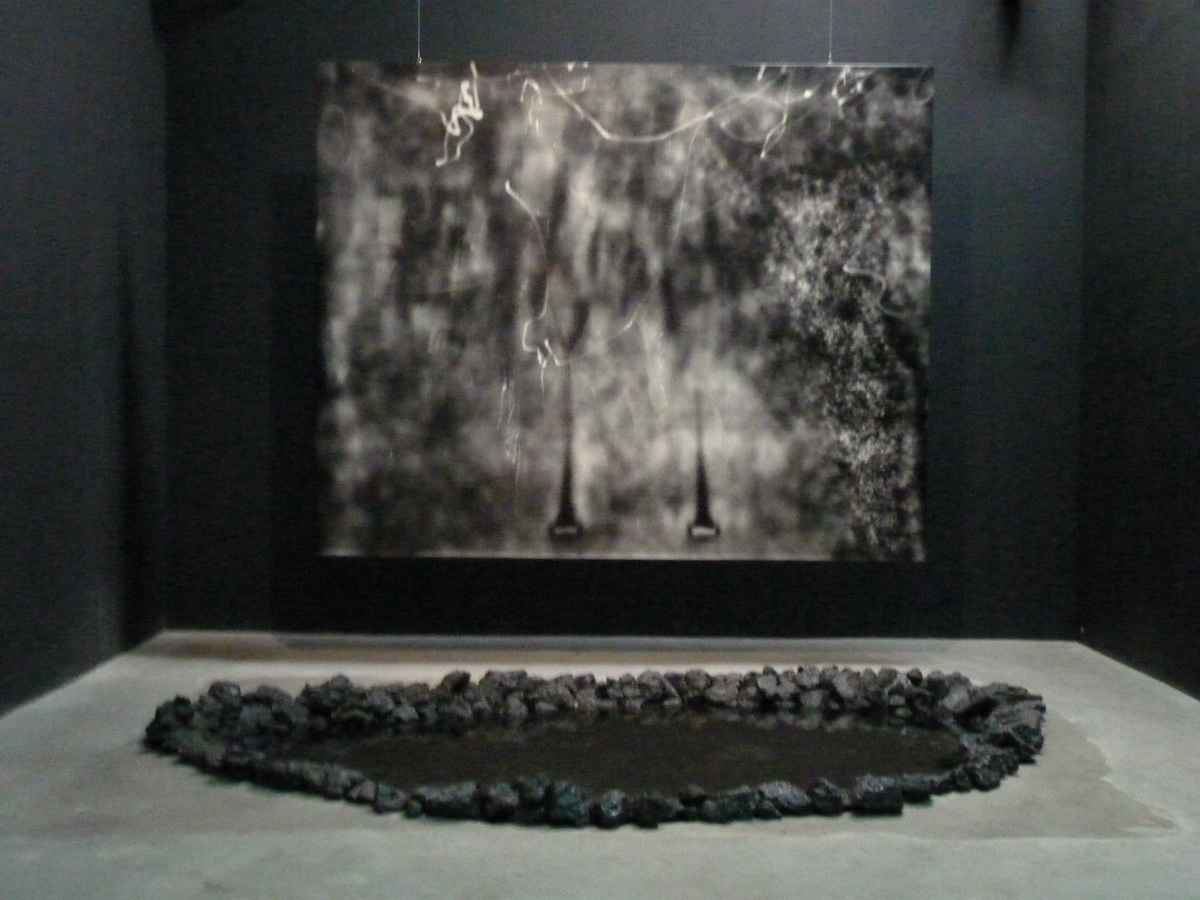
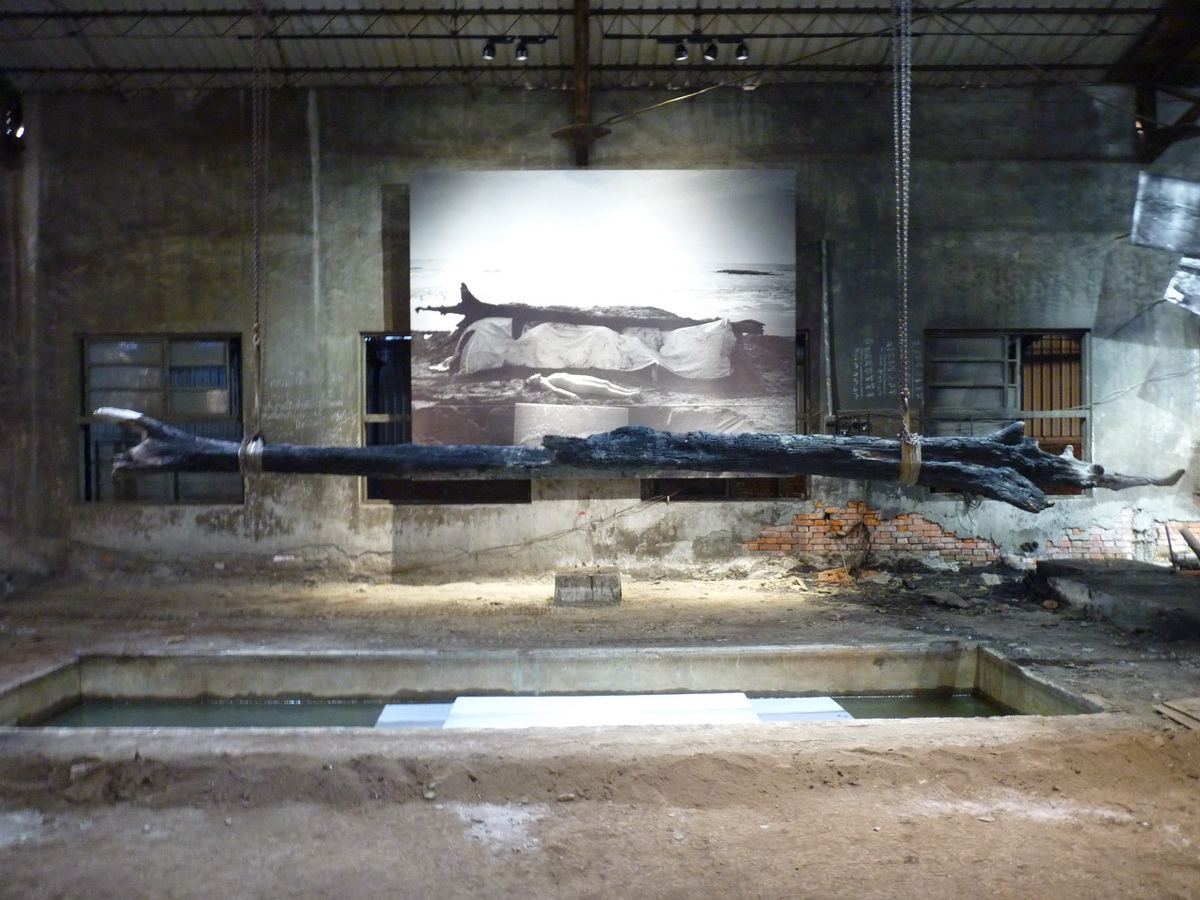
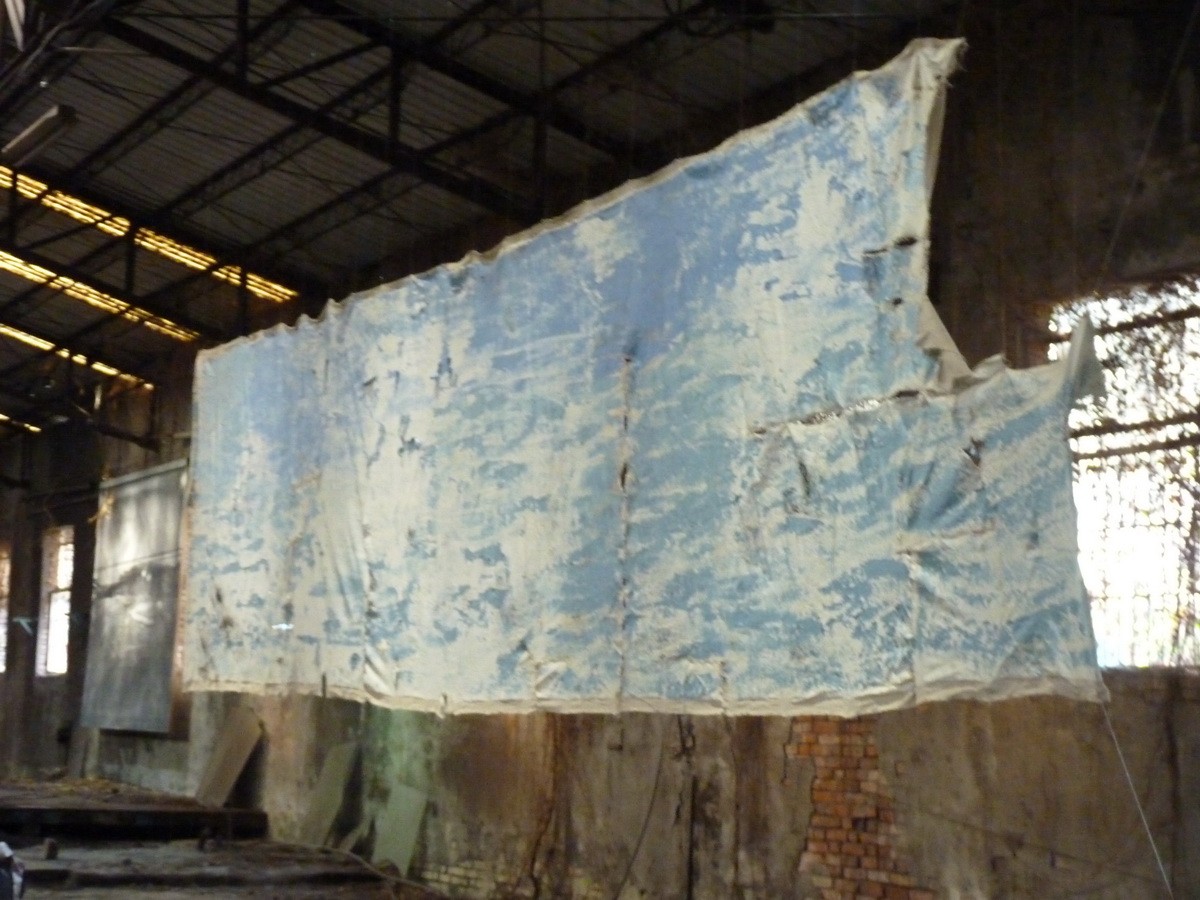
Another work, “Untitled,” is a piece by the artist mourning his grandmother. It presents a pile of objects covered with Kaohsiung blue canvas on the beach, with a thick black burnt tree trunk on top. In front lies a naked woman, dramatically echoing the horizon, constructing a dramatic situation and scene, metaphorically expressing the artist’s emotions and consciousness, calling for connection and care for the ruthless motherland. The artist extracts objects from the image elements to reconstruct them as environmental space installations with concepts of resurrection and rebirth: In front is a long pool of water, dividing a white cloth on the horizontal plane. Above the pool hangs the thick black burnt tree trunk from the image, with the object and image dialoguing and arguing with each other. Opposite hangs a tattered Kaohsiung blue (the artist’s painting of the sea, showing traces washed by time and seawater). Because it hangs, it flutters slightly with the breeze, showing the dimension of time and responding to the image in front. This ingenious method of constructing uniqueness from a single image is quite brilliant; its construction process becomes a force of artistic transformation, elaborated through a ritualistic presentation.
Finally, at the rear of the factory, the circulating work space installation returns to the “King Boat” object from the first piece “Fell a Tree, Grew a House” burning the king boat. This is a hand-painted king boat attached to glass, sealed with traces of ash after the fire sublimation ritual. Fire sublimation creates possibilities for art and dimensions of time and space, echoing the previous four installations, drawing a perfect period to the exhibition discourse.
Appendix: When the sun sets and night slowly swallows the earth, as the lights come on, the factory exhibition space is dyed with several lamps carefully managed by the artist under light and halos, forming a magical realm, transforming into another warm atmosphere and situation. Focusing more on the presentation of the works, highlighting the dimensions of space, immersed in a deep mysterious atmosphere, unexpectedly encountering a beautiful situation with the spatial field from day to night.
November 15, 2019, at Zhuluo Mountain Taocheng
Note 1: Refer to the manuscript for Hsu Chin-Yuan’s 2019 “Debt Space” Creative Exhibition. Note 2: Refer to the manuscript for Hsu Chin-Yuan’s 2019 “Debt Space” Creative Exhibition. Note 3: Refer to the manuscript for Hsu Chin-Yuan’s 2019 “Debt Space” Creative Exhibition.