Exploring the Category of Productivity - 3 Exhibition
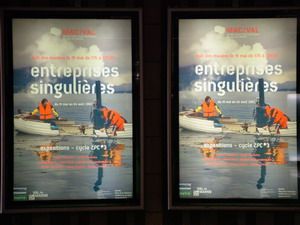
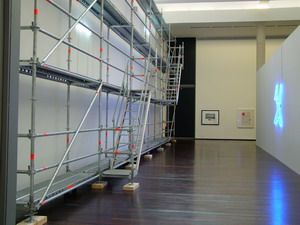
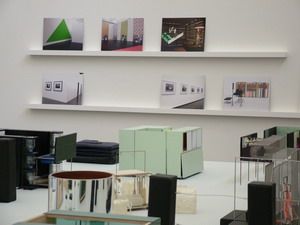
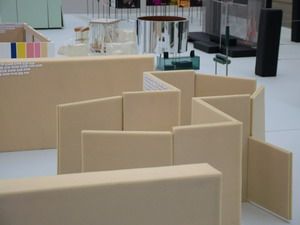
(Fig. 1) Exhibition poster box for "Exploring the Category of Productivity - 3". (Fig. 2 Left) Left: Jerome Saint-Loubert Bie's 2007 spatial installation constructed with iron frames; Right: Pierre Petit's 2007 work. (Fig. 2 Right) Front: Tatianna Trouve's 2007 architectural model; Back: Jerome Sain
The exhibition "Exploring the Category of Productivity - 3" (Zones de Productivités Concertees - 3) was held from May 20 to August 26, 2007, at the Musée d'Art Contemporain du Val-de-Marne in the southern suburbs of Paris. This is the third installment of a groundbreaking series exploring the category of artistic productivity and its relationship with economics. In today's globalized economic system, the economization of contemporary art or the artification of the economy has become a prominent field of study. As new museums and various large-scale art exhibition systems and market mechanisms develop, artistic creativity is increasingly viewed as market productivity and vitality. While all artistic creation is a form of productivity, not all explorations within diverse arts focus on productivity. Postmodern and globalized art inquiries often target art institutions and market mechanisms, where anti-systemic productivity frequently centers on exposing and critiquing these structures (as seen in avant-garde art), seeking an expansive artistic world or broadening the scope of art. However, under today's postmodern and globalized cynicism, all productivity (even anti-productivity) is absorbed and corrupted by capitalism and the international art system, reduced to market prices. The international art system becomes the cradle of productivity, while the market serves as the index and direction for current art; clearly, those not incorporated into this system remain marginalized, self-alienated, and invisible.
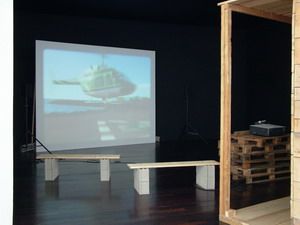
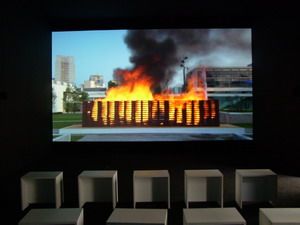
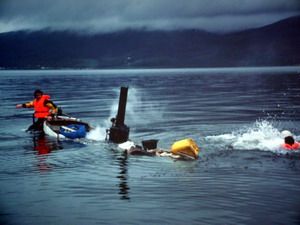
Francis Baudoin (born 1964) presents two series: first, transforming commercial and industrial logos into geometric abstract paintings; second, his latest series reconfigures international trademarks and advertisements into postmodern advertising paintings, exploring the possibilities of new painting through the transformation of daily economics. Serge Lhermitte (born 1970) analyzes French social phenomena regarding identity and production value. One series addresses the productivity of civil servants during RTT rest days and after retirement; another compares the salaries of cultural workers, taking shape through photographs and video installations in environmental spaces. Arnaud Maguet (born 1975) stages production scenes—installations resembling open-air cinemas and constructing small wooden cabin screening rooms—to project films and rock music myths he resides with, developing artistic productivity within visual space installations. Pierre Petit (born 1949) strips industrial objects of their systems, transforming them into sculptures, constructing his artistic exploration within the complex structures of products, benefit circulation, and global trade. Jerome Saint-Loubert Bie (born 1970) analyzes the mechanical establishment of art based on the possession of tool economies, re-installing museum photographic materials to present new meanings, akin to conceptual art. Stefan Shankland (born 1967) performs acts of transformation, relocation, and alteration. In this exhibition, he displays a 20-cent coin and a small object found in medieval archaeological digs, treating them like sculptural objects within a conceptual art attitude. Another video work explores the construction of standardized pallets under globalization and contrasts the evolutionary process of turning to ash via fire. Tatiana Trouve (born 1968) constructs architectural models of offices and advertising columns involved in activities, simulating economic production structures to establish such work as signs of economic production. Simon Starling (born 1967) shows particular interest in processes of formation, activity, and energy. He produces works in types such as anti-capitalist productive economic methods. In his video art, he enacts the submersion of production forms, documenting the entire process of a ship sailing at sea until the artist dismantles it until it sinks.
Looking over this series of three exhibitions on the theme of "Exploring the Category of Productivity," it is clear that current art focuses on several aspects of productivity: creative power (including reception, transformation, and possession) is itself productivity; the expansion and development of the economic category of art institutional productivity; the economic relationship between museum exhibitions and artistic productivity; clarifying capitalist productivity through artistic exploration; various possibilities of contemporary artistic economic productivity; or production through non-productive (or anti-productive) economic methods.