Chen Chi-Hsiang - "Back Garden" Solo Exhibition
Advertisement for the Back Garden solo exhibition in Collection Art Magazine.
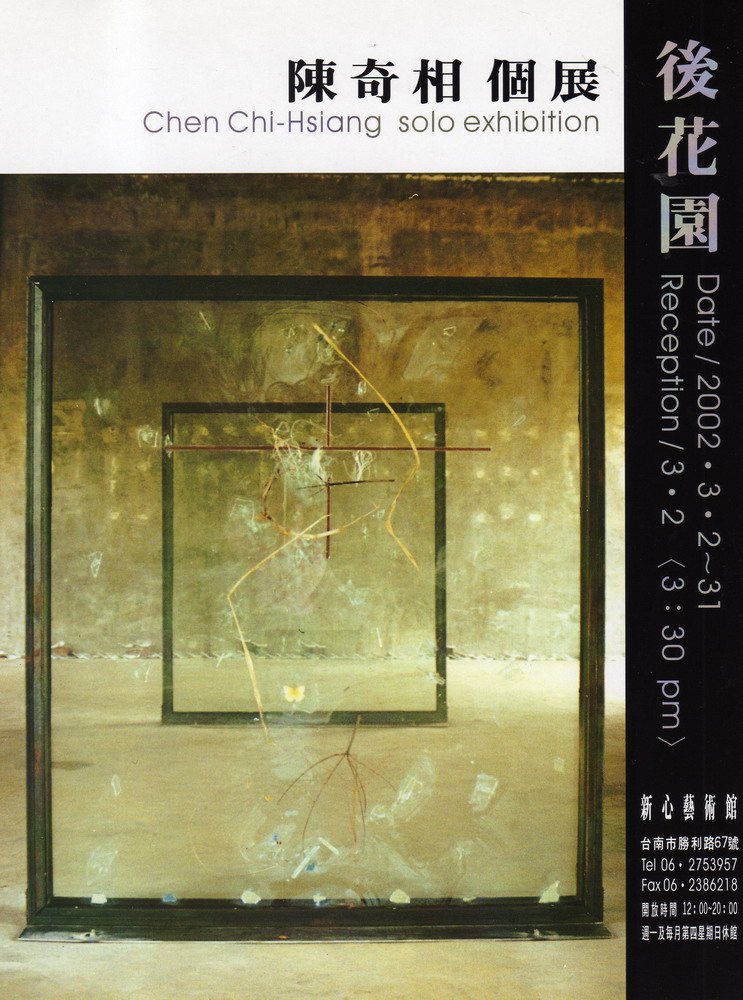
Advertisement for the Back Garden solo exhibition in Collection Art Magazine
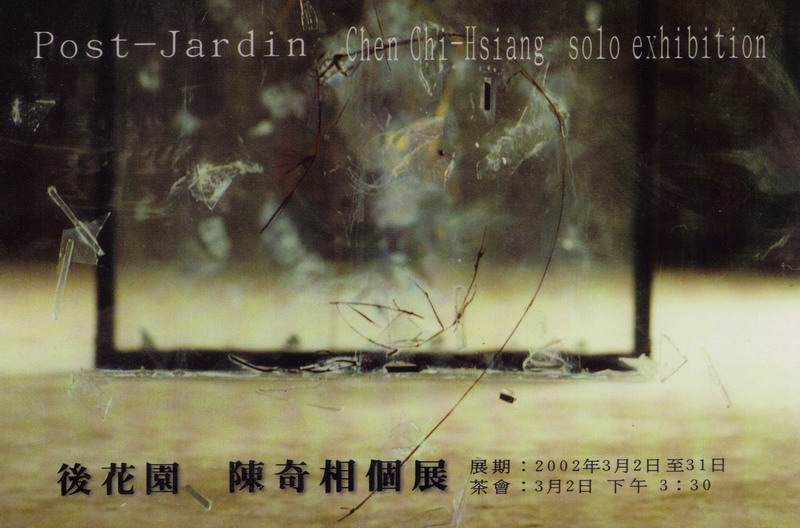
Invitation card for Chen Chi-Hsiang's Back Garden solo exhibition
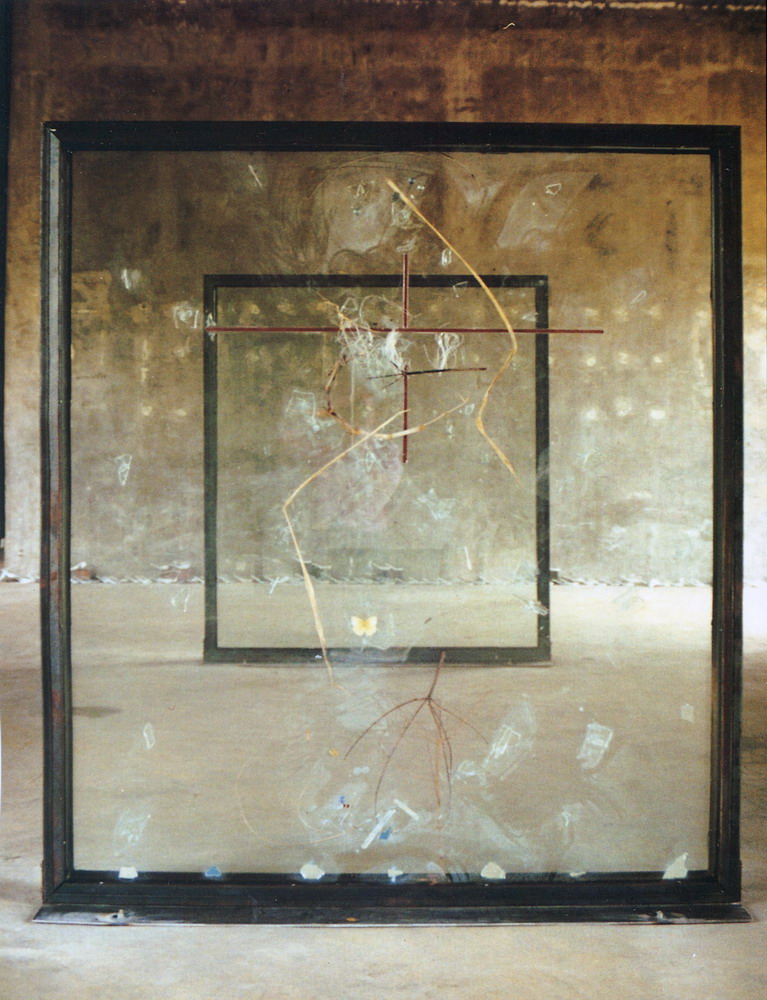
"In the Realm, Within the Realm," each 150×180 cm. Iron frame, tempered glass, objects, plants, and broken glass shards, etc. Elevation object painting - spatial installation. 2000
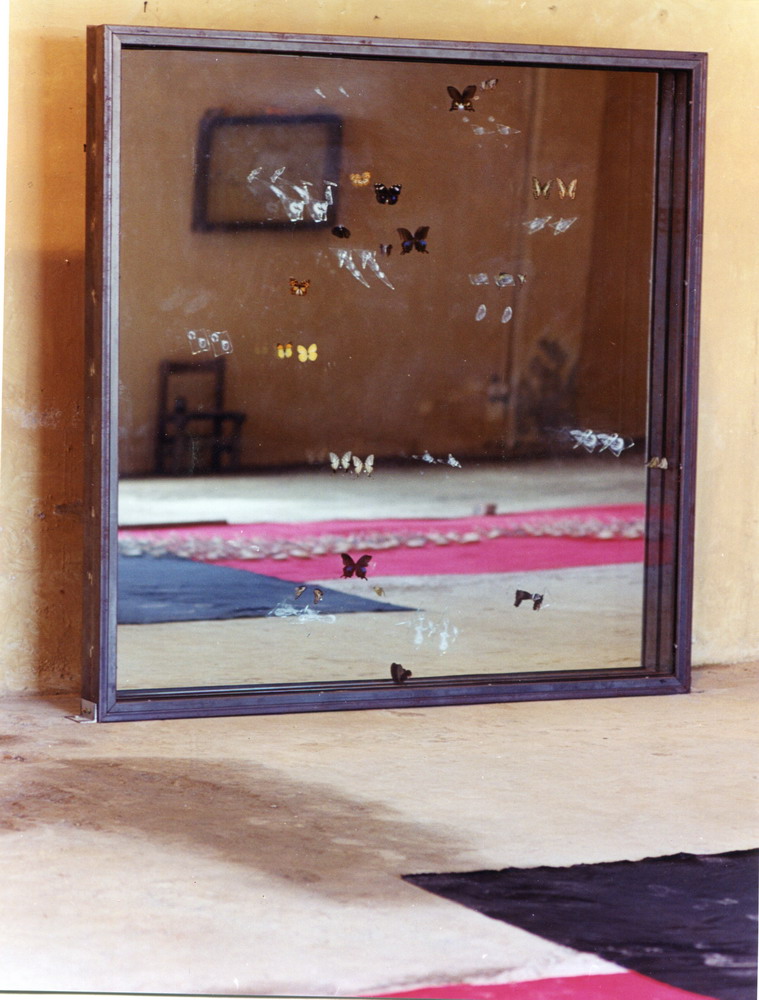
"In the Realm, Within the Realm," 180×180 cm. Iron frame, tempered glass, glass, butterflies, plants, and broken glass shards, etc. Elevation object painting - spatial installation. 2000
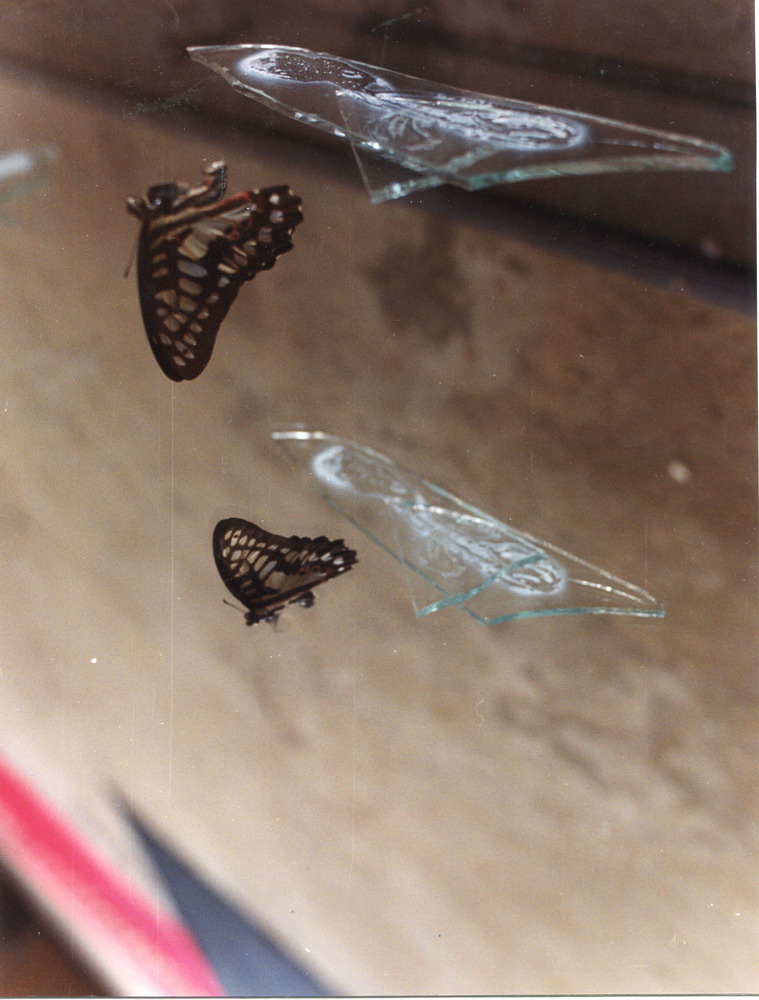
Detail of "In the Realm, Within the Realm," 180×180 cm. Iron frame, tempered glass, glass, butterflies, plants, and broken glass shards, etc. Elevation object painting - spatial installation. 2000
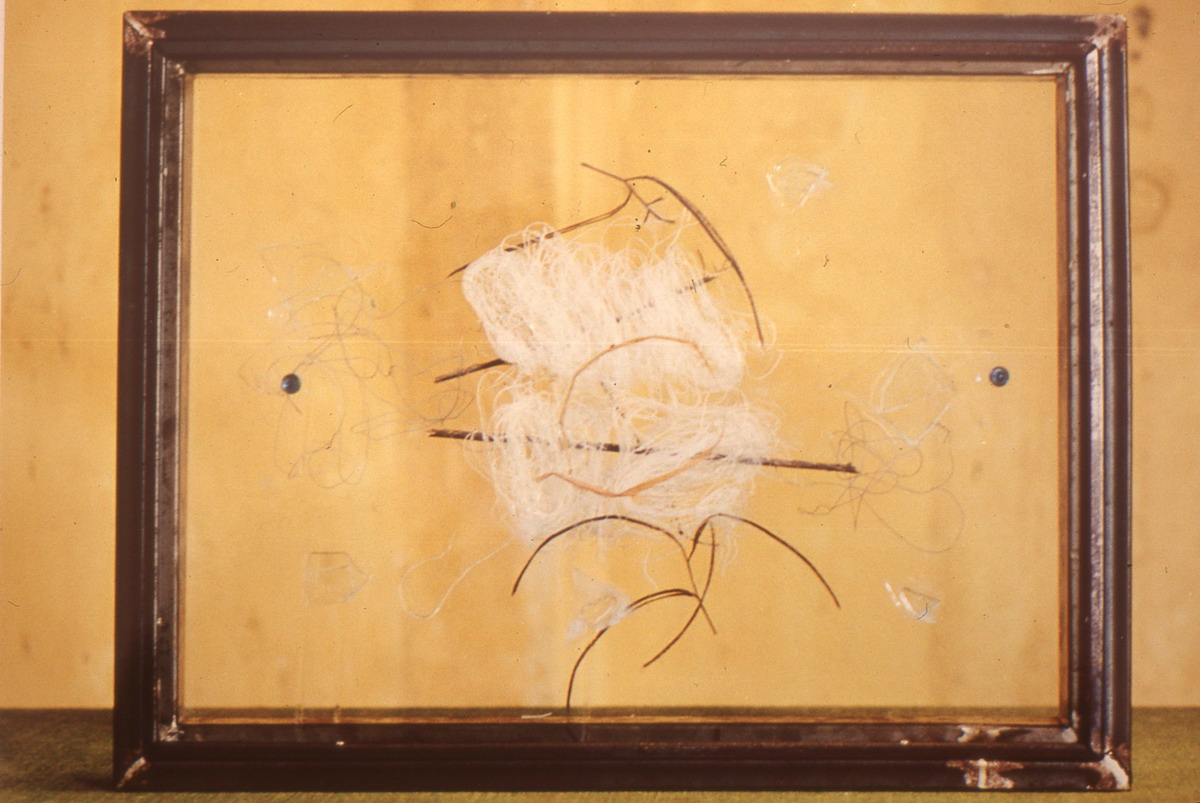
"Inner Landscape," front view, 60×80 cm. Iron frame, tempered glass, glass, vermicelli noodles, grass. Elevation object painting. 2000. Private collection, Taipei
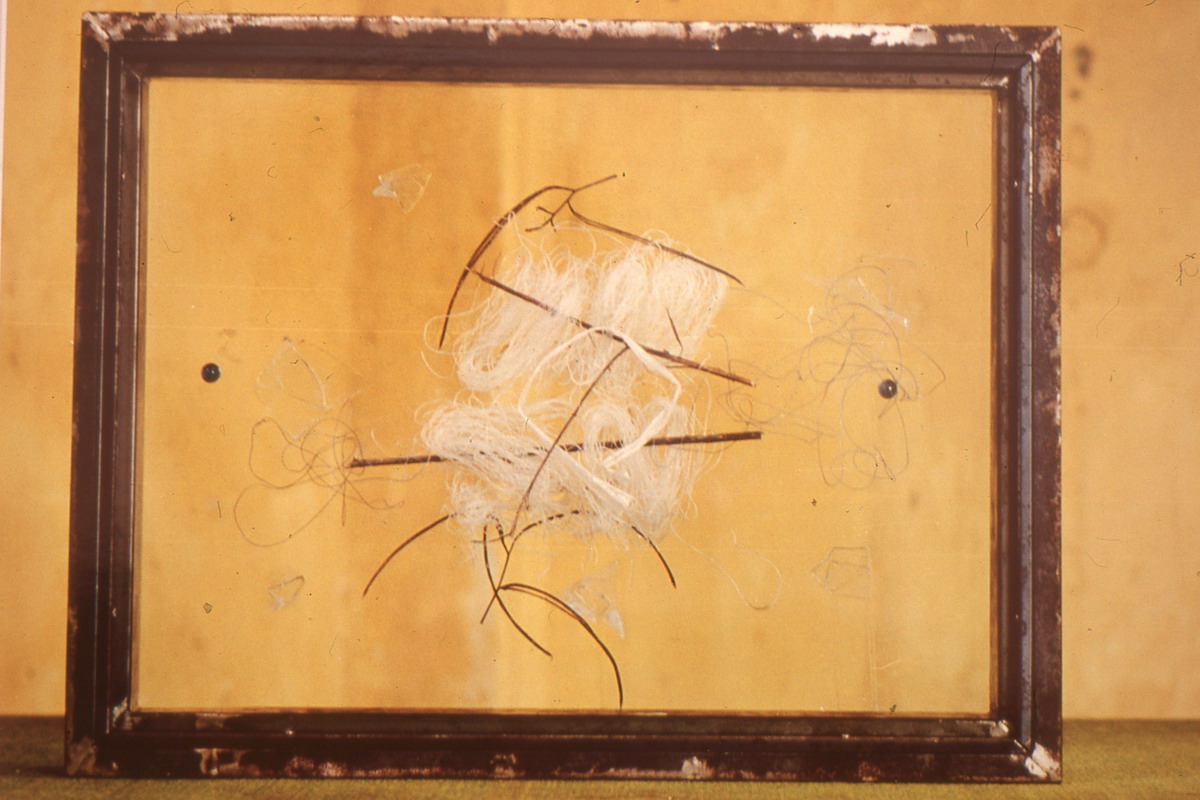
"Inner Landscape," back view, 60×80 cm. Iron frame, tempered glass, glass, vermicelli noodles, grass. Elevation object painting. 2000. Private collection, Taipei
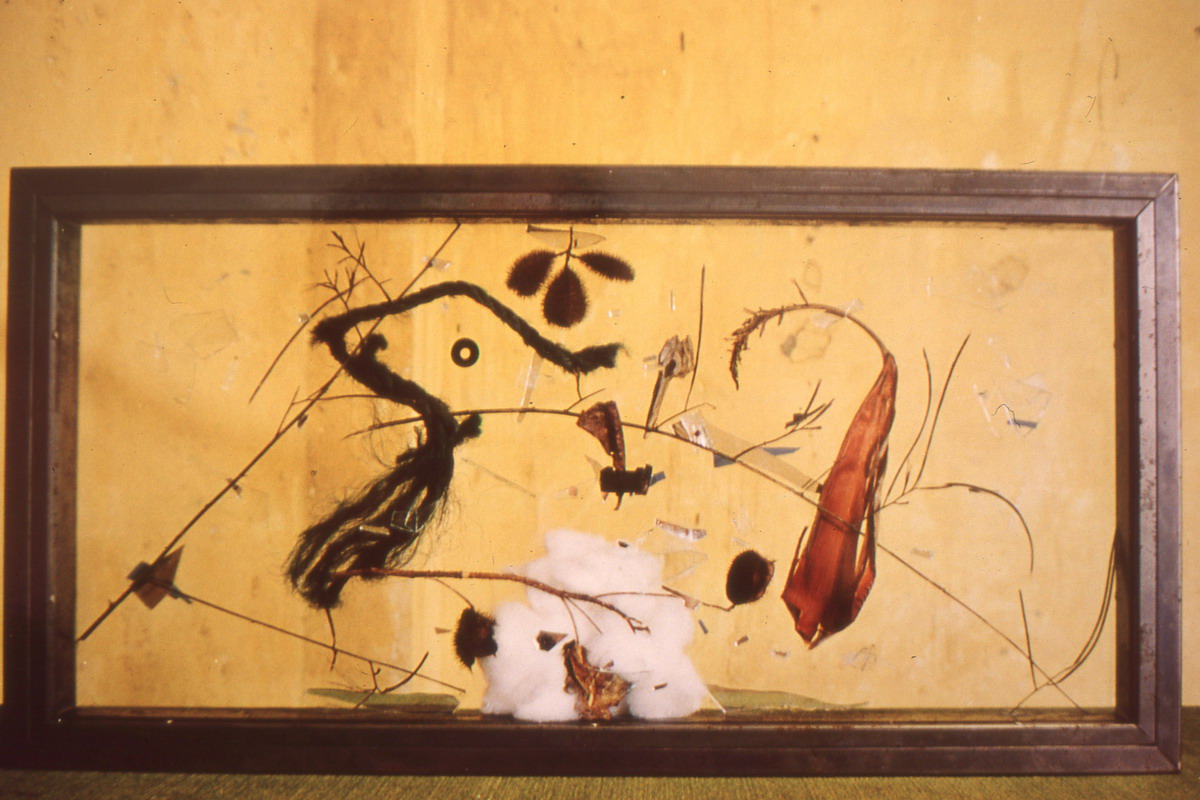
"Meditation," 60×120 cm. Iron frame, tempered glass, glass, ropes, cotton, grass, branches, tree fruits, betel leaves, and rubber rings, etc. Elevation object painting. 2000
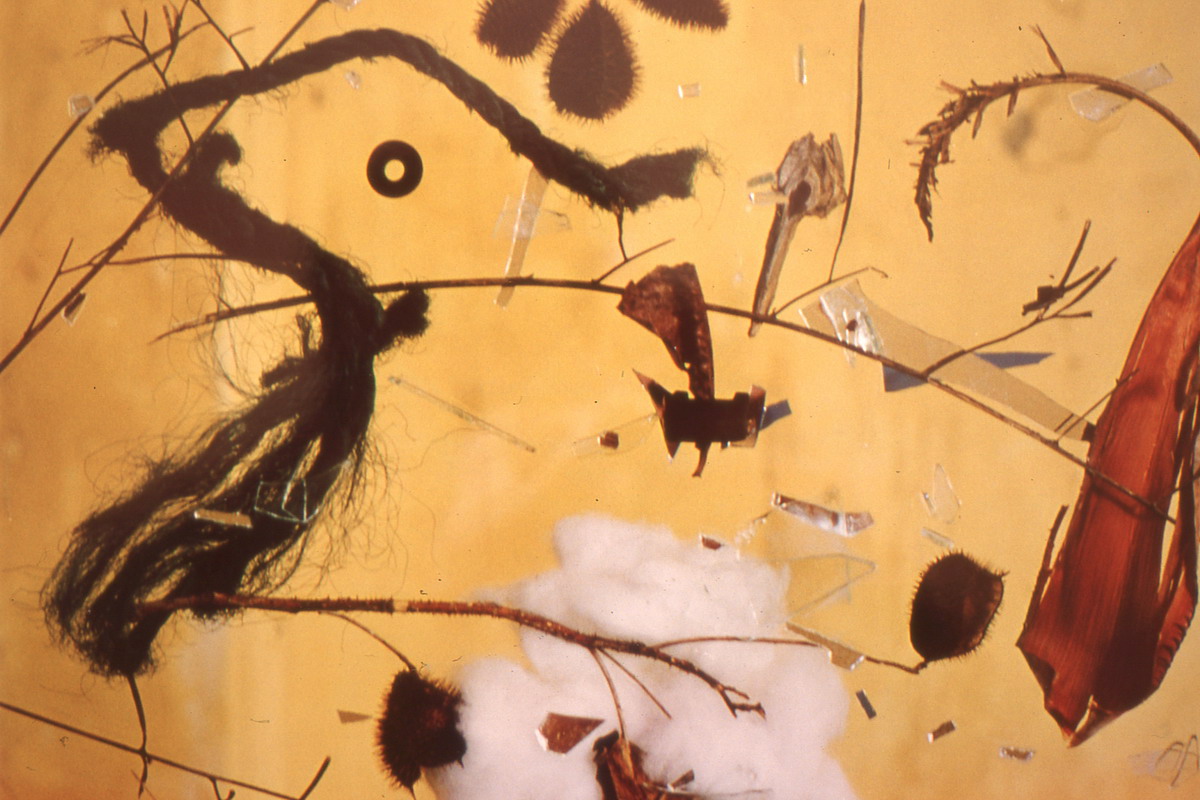
Detail of "Meditation," 60×120 cm. Iron frame, tempered glass, glass, ropes, cotton, grass, branches, tree fruits, betel leaves, and rubber rings, etc. Elevation object painting. 2000
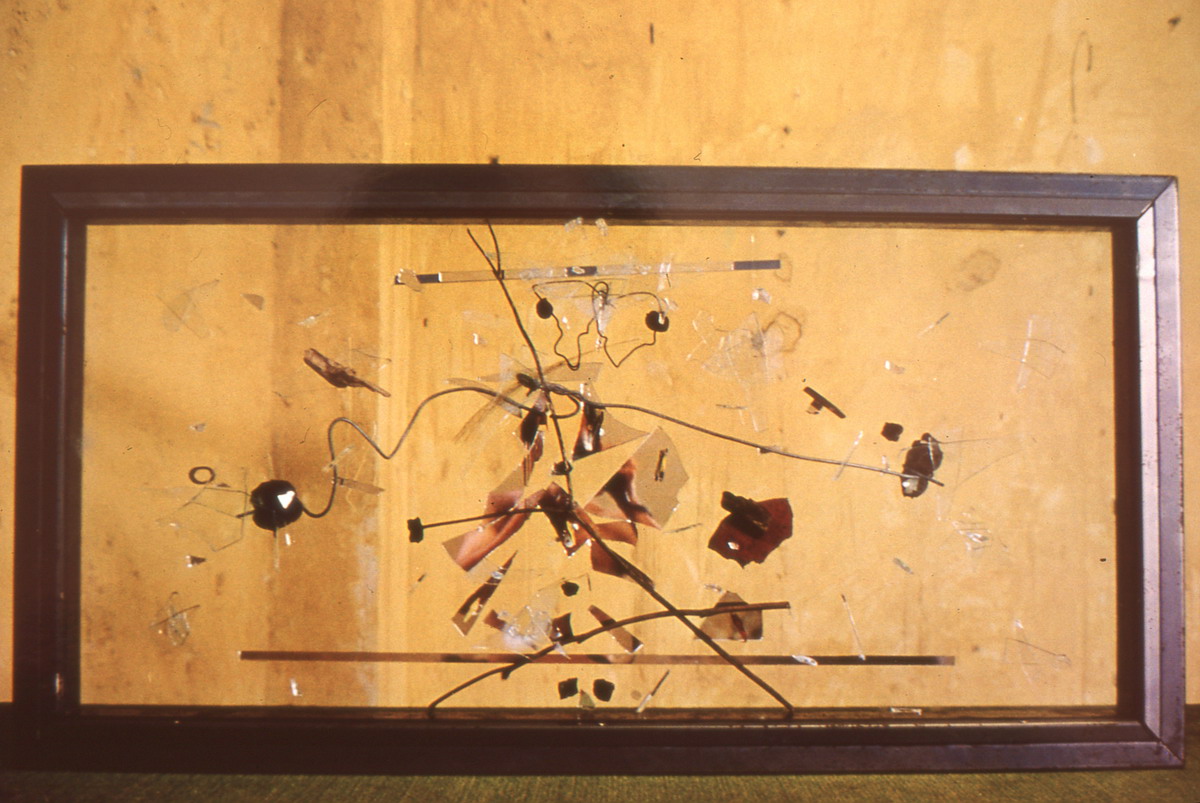
"Introspection," 60×120 cm. Iron frame, tempered glass, glass, wire, broken mirror pieces, branches, tree fruits, butterflies, and wood chips, etc. Elevation object painting. 2000
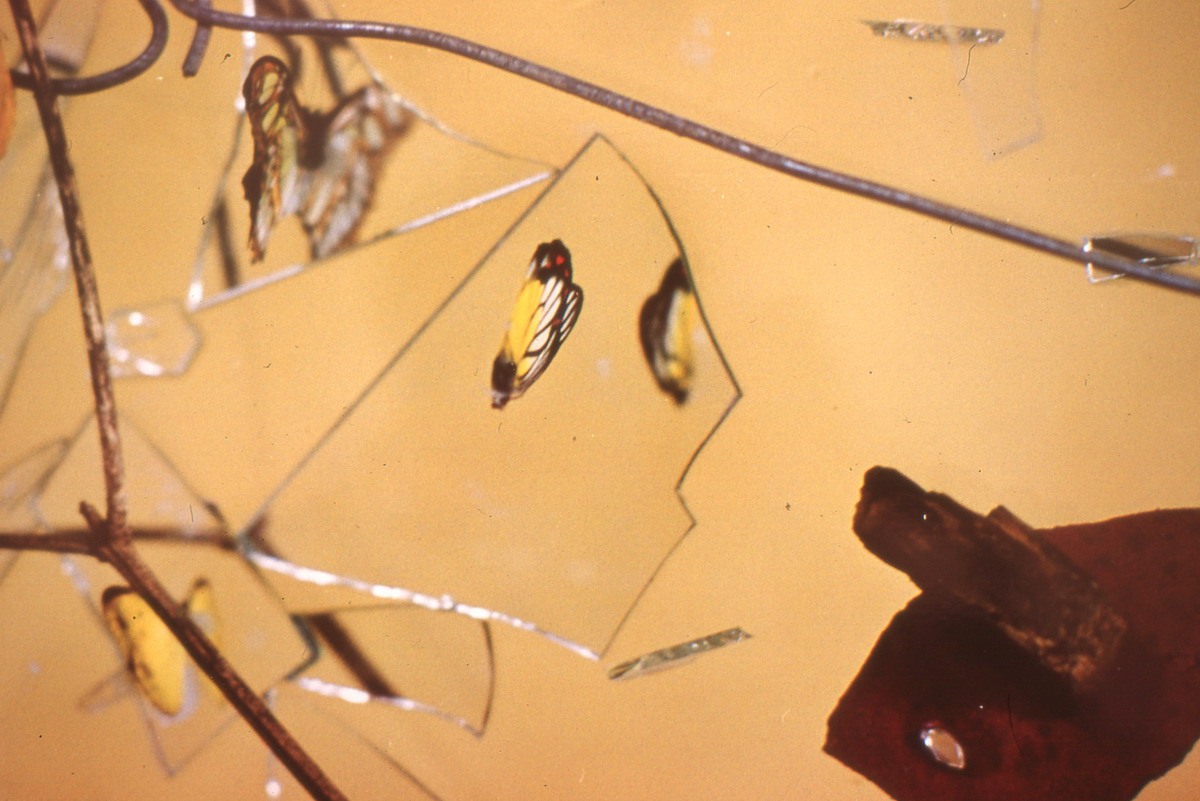
Detail of "Introspection," 60×120 cm. Iron frame, tempered glass, glass, wire, broken mirror pieces, branches, tree fruits, butterflies, and wood chips, etc. Elevation object painting. 2000
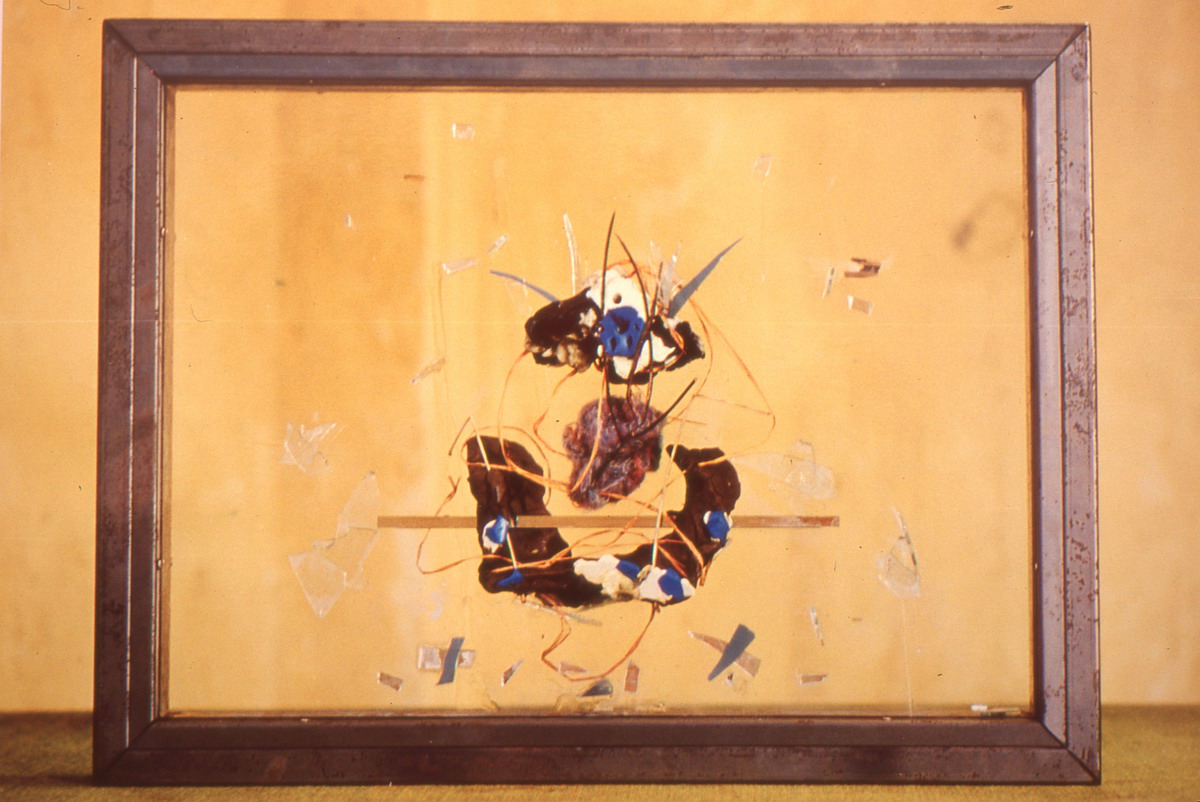
"Imagination," 60×80 cm. Iron frame, tempered glass, glass, paper clay, broken mirror pieces, straw, and branches, etc. Elevation object painting. 2000
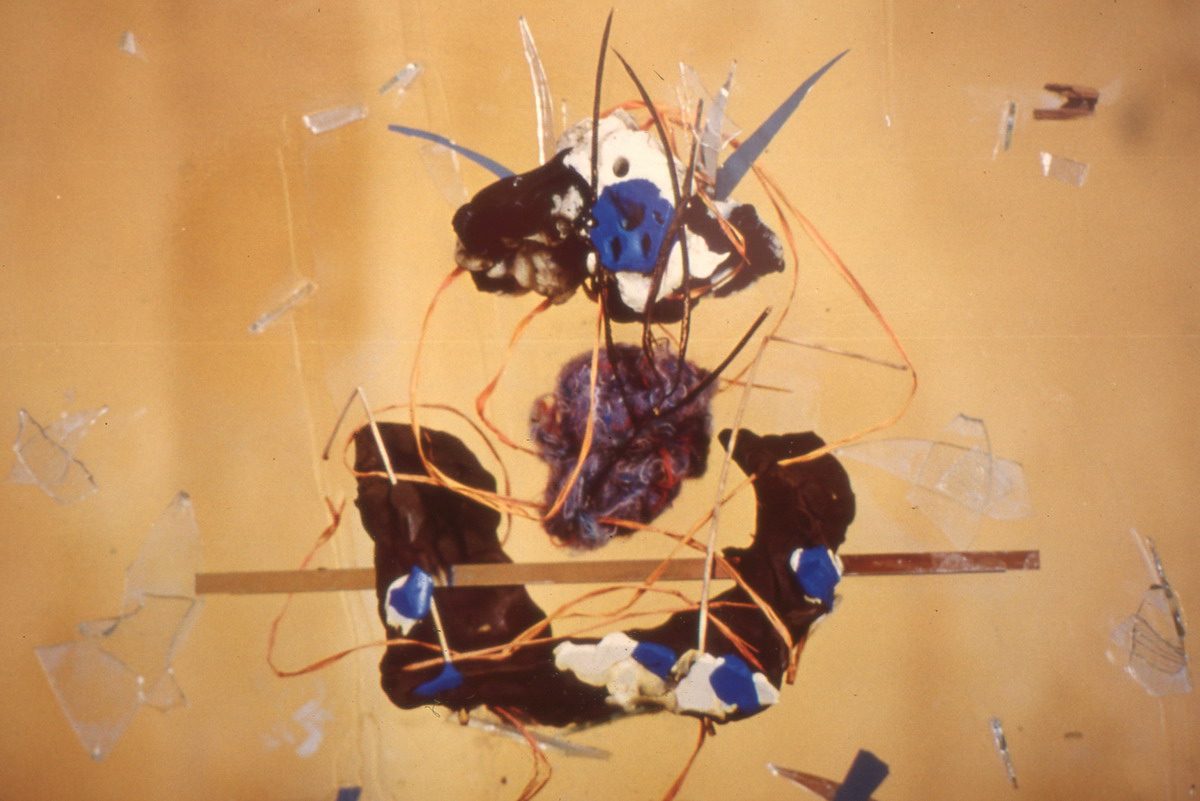
Detail of "Imagination," 60×80 cm. Iron frame, tempered glass, glass, paper clay, broken mirror pieces, straw, and branches, etc. Elevation object painting. 2000
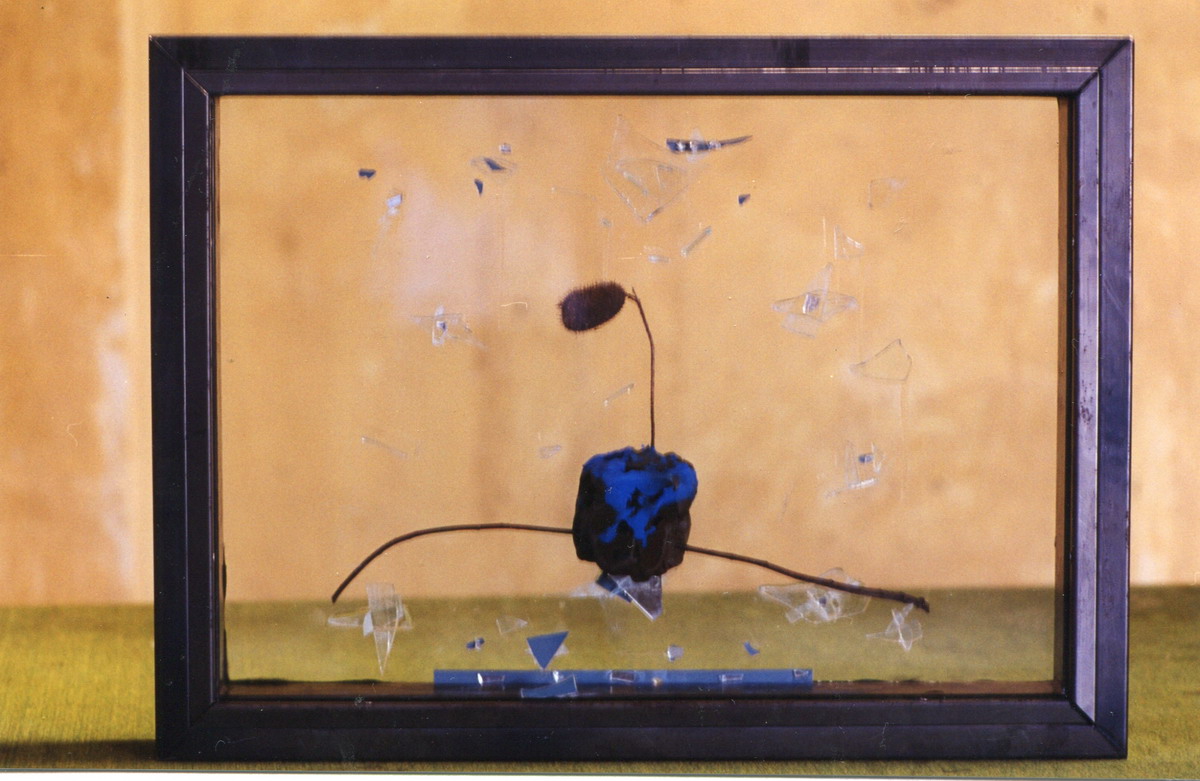
"Meditation," 60×80 cm. Iron frame, tempered glass, glass, flowers, fruits, food, paper clay, and branches, etc. Elevation object painting. 2000. Private collection, Tainan
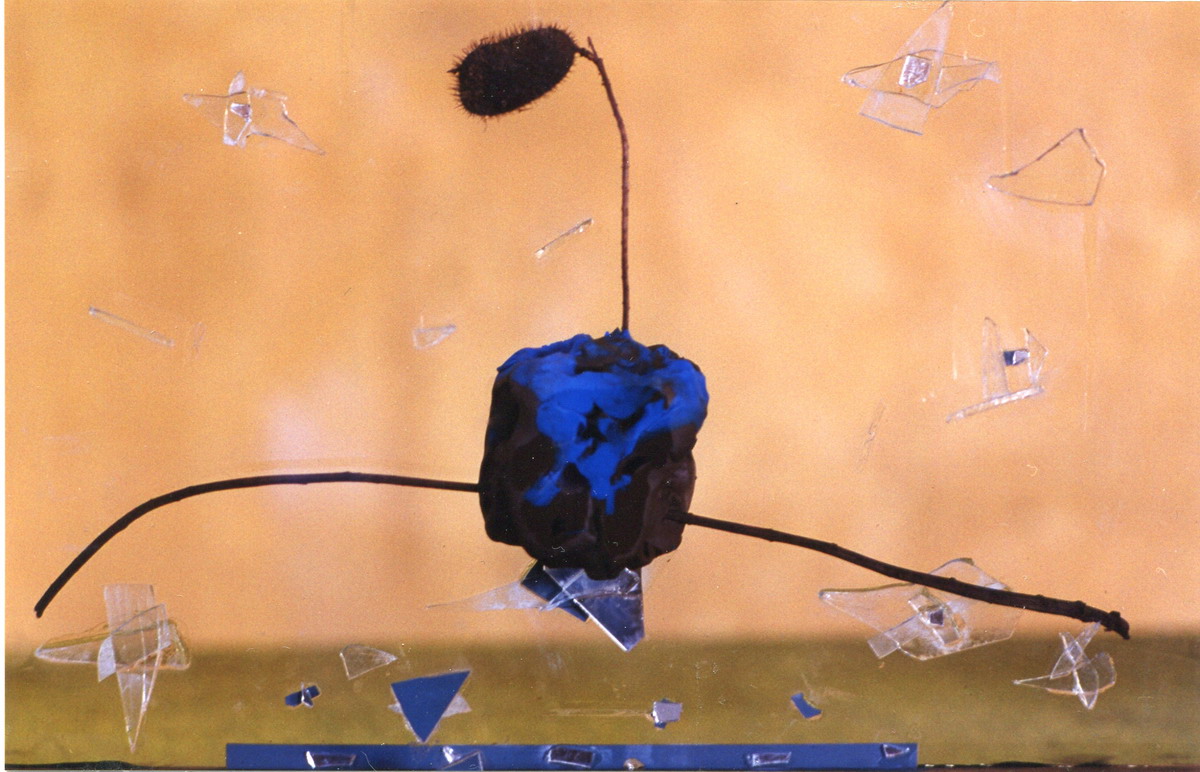
"Meditation," front view, 60×80 cm. Iron frame, tempered glass, glass, flowers, fruits, food, paper clay, and branches, etc. Elevation object painting. 2000. Private collection, Tainan
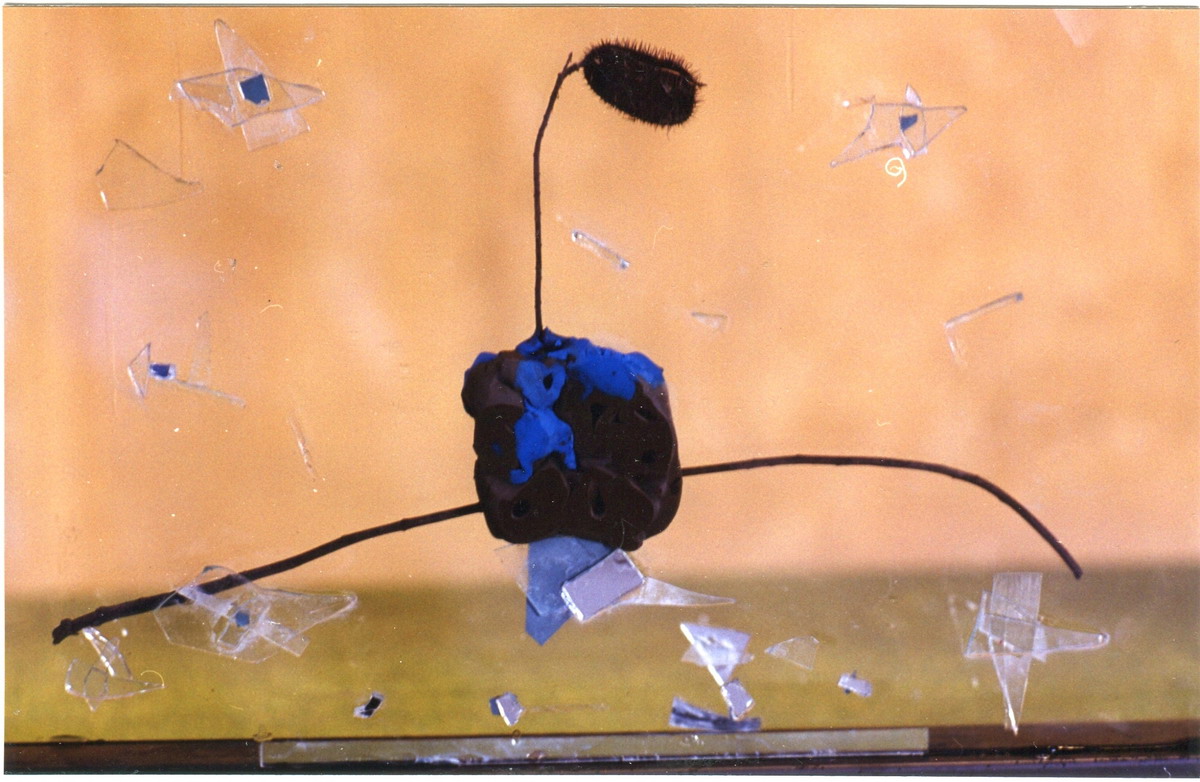
"Meditation," back view, 60×80 cm. Iron frame, tempered glass, glass, flowers, fruits, food, paper clay, and branches, etc. Elevation object painting. 2000. Private collection, Tainan
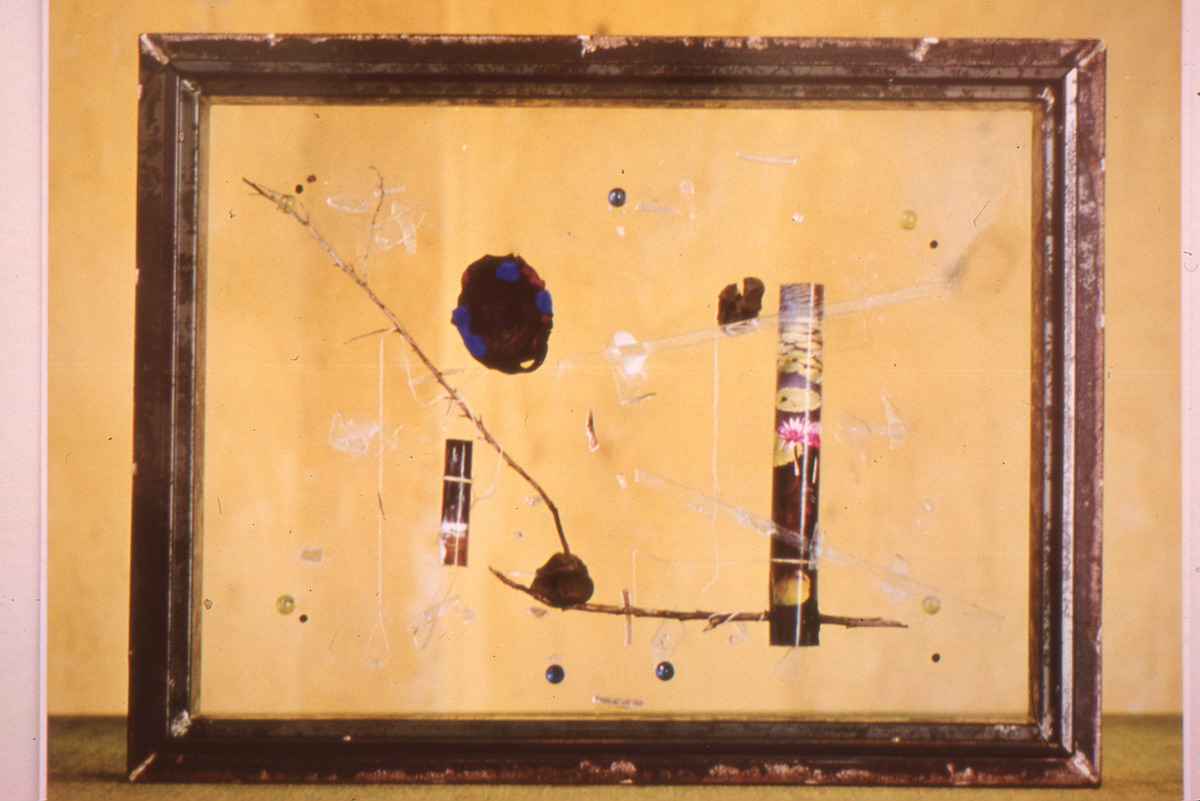
"Silent Contemplation," 60×80 cm. Iron frame, tempered glass, glass, photographs, broken mirror pieces, paper clay, and branches, etc. Elevation object painting. 2000. Private collection
Analysis of Works from the "Back Garden" Solo Exhibition:
Appreciation is broadly divided into two types: Opening the eyes (external vision): Observing the vast world, thinking and imagining, enhancing intellect and sensibility, and understanding the logic of things. Closing the eyes (internal vision): Perceiving inner landscapes, exploring the spirit, opening the spiritual world, and sensing the essence of life.
Painting: Conveys the illusionistic imagery of three-dimensional space through a two-dimensional plane, constructed from combinations of points, lines, surfaces, forms, colors, and space. It is categorized into realistic, figurative, non-figurative, and abstract styles.
Sculpture: Refers to true three-dimensional objects. Through linear, planar, formal, structural, volumetric, and light-and-shadow variations, it explores space. Like painting, it is divided into realistic, figurative, non-figurative, and abstract categories, and today also includes object sculpture.
Objects: Originating from Dadaism, particularly Duchamp’s readymades, this is known as object art. Through Surrealism and Neo-Dada, it spread to Pop Art and New Realism, becoming even more prevalent under today’s advanced material civilization. Indeed, all three-dimensional objects possess the conditions for sculpture or art, depending on the artist’s management and construction.
Object art divides into two trends: First, appropriating, converting, and altering objects within a linguistic semiotic framework, falling under conceptual art; famous examples include Duchamp’s urinal Fountain or a cup of water titled Atlantic. Second, using objects as sculptural media, combining them to form sculptures that convey visual formal language symbols and special meanings.
The Back Garden landscaping series works exist between painting, sculpture, and objects, possessing characteristics of all three. Constructed from iron frames, double tempered glass, and objects, they hang as paintings, stand as elevation paintings, and can be viewed as sculpture or object art. These works become elements of spatial installations, presenting various possible situations and environmental states according to exhibition space conditions, highlighting not just objects but the spatial field itself. The objects are daily items like rice noodles, vermicelli, photographs, and paper clay, alongside natural materials like branches, straw, and butterflies, thus also viewing them as object art.
Due to their construction of glass and mirrors, close viewing appreciates the concrete beauty of material form, structure, light, space, and texture, situated between figurative, non-figurative, and abstract formal symbol languages. From a distance, especially large works, they become mirrors or interfaces reflecting surrounding environments and scenery, incorporating them into the work’s elements to present a state of time and space, oscillating between phenomenon/image/reality, matter/form/space, appearance/disappearance/reappearance, existence/illusion/apparentness.
March 2002, in the Ancient City