A Brief Comparative Table of New York School Abstract Expressionism and Paris School Lyrical Abstraction
Franz Kline (1910-62) Meryon 1960-61 Collection of Tate Britain, UK
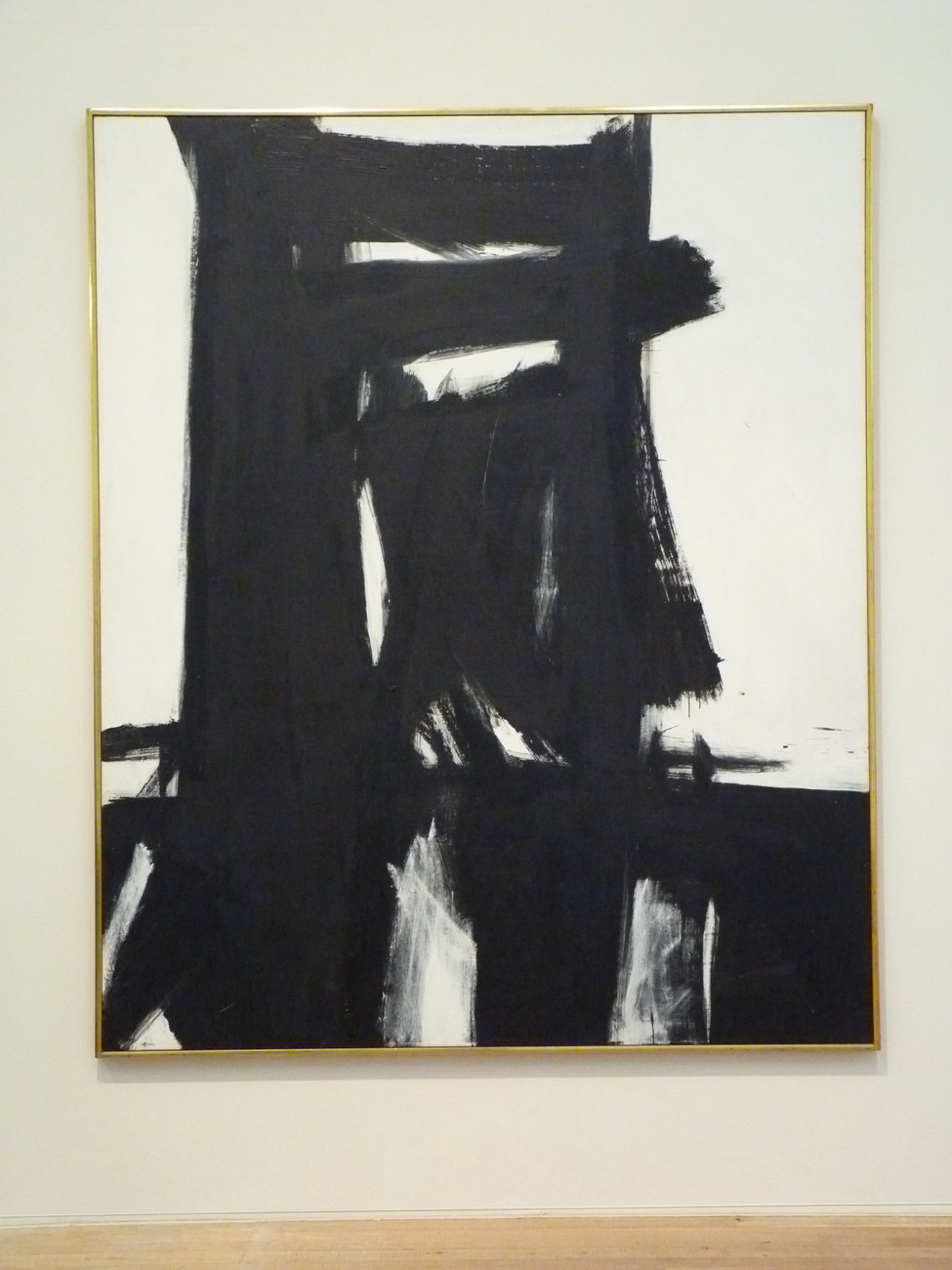
Abstract World of the 1950s: A Comparison of the New York School – Abstract Expressionism and the Paris School – Lyrical Abstraction.
Commonalities: Both inherited the expressive imagery underlying Cubism, Expressionism, and abstract art (such as Kandinsky and Mondrian), or grasped the unconscious behavior of pure spirit in Surrealism. Through automatic techniques, they expressed the inner world of humanity, emphasizing mental imagery to reveal a sensual language and imaginative spatial forms in painting.
Differences: New York School – Abstract Expressionism: Freed from depicting object forms, focusing on formal language on the canvas surface. Pursuing formal language, attempting to develop painting form aesthetics (formalist). Optimistic and enterprising, open and full of vitality (optimistic towards industrial civilization, assuming a posture of overcoming strong powers, becoming the political and economic leader of Western society).
Paris School – Lyrical Abstraction: While freeing itself from depicting object forms, it still retained abstraction based on natural forms. Pursuing formal language, incorporating European traditional humanistic spirit (non-formalist). Calm and melancholic—welcoming a new future amidst rebirth and disillusionment (mostly born around World War I, growing up during World War II).
Style: New York School – Abstract Expressionism: Bold and unconstrained. Paris School – Lyrical Abstraction: Conservative and bound by tradition.
Expression: New York School – Abstract Expressionism: Passionate, generous, and majestic. Paris School – Lyrical Abstraction: Lyrical, contemplative, and elegant.
Sensual Display of New York School Abstract Expressionism and Paris School Lyrical Abstraction: Purely contemplation of visual formal language, not merely the appearance of painting, but an expression of sensibility.
Development of Painting Materials: The use of non-oil paints by Pollock, Fautrier’s plaster materials, Francis’s water-based pigments, Burri’s and Tàpies’ application of non-traditional materials, etc., all had a profound impact on later abstract art.