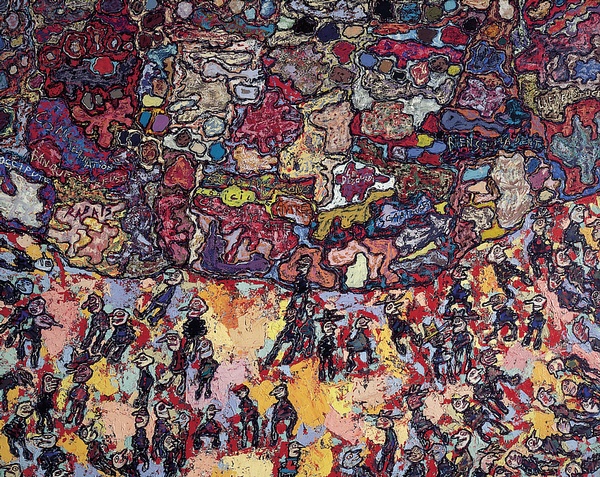
Dubuffet (J. Dubuffet) - "Pedestrians on the Street"
Pedestrians, 129.5×161.5 cm, 1961. Collection of Centre Pompidou, Paris. Image from www.Centre Pompidou.com.
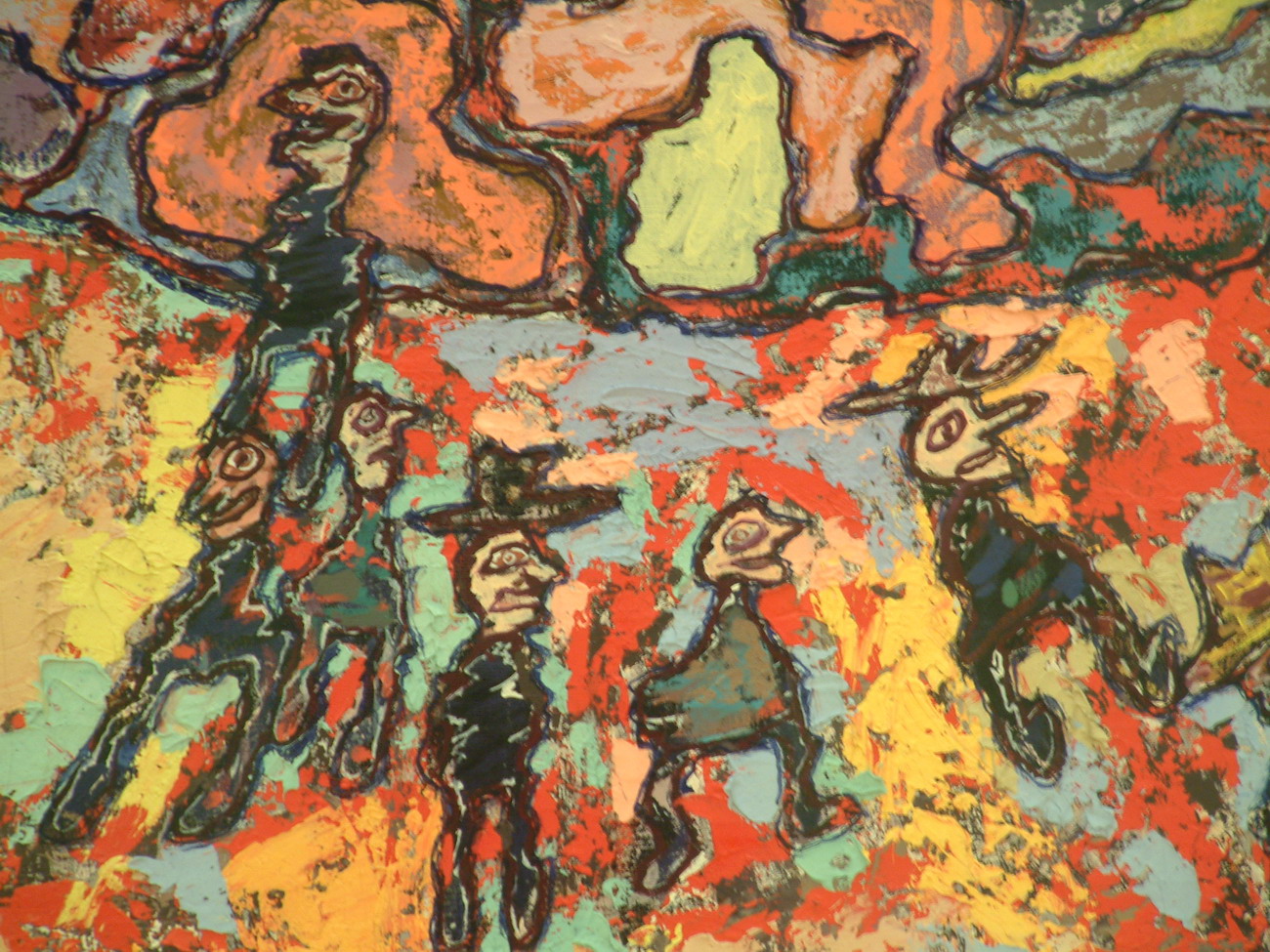
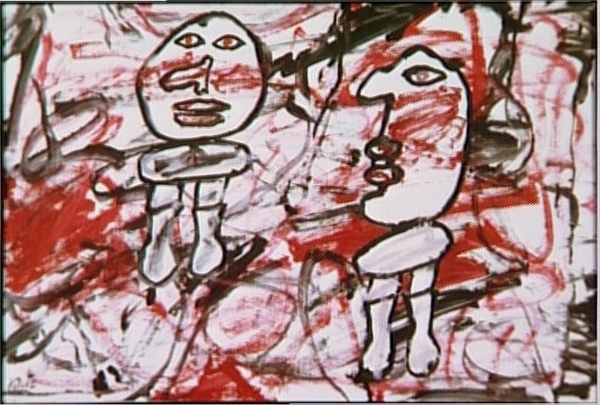
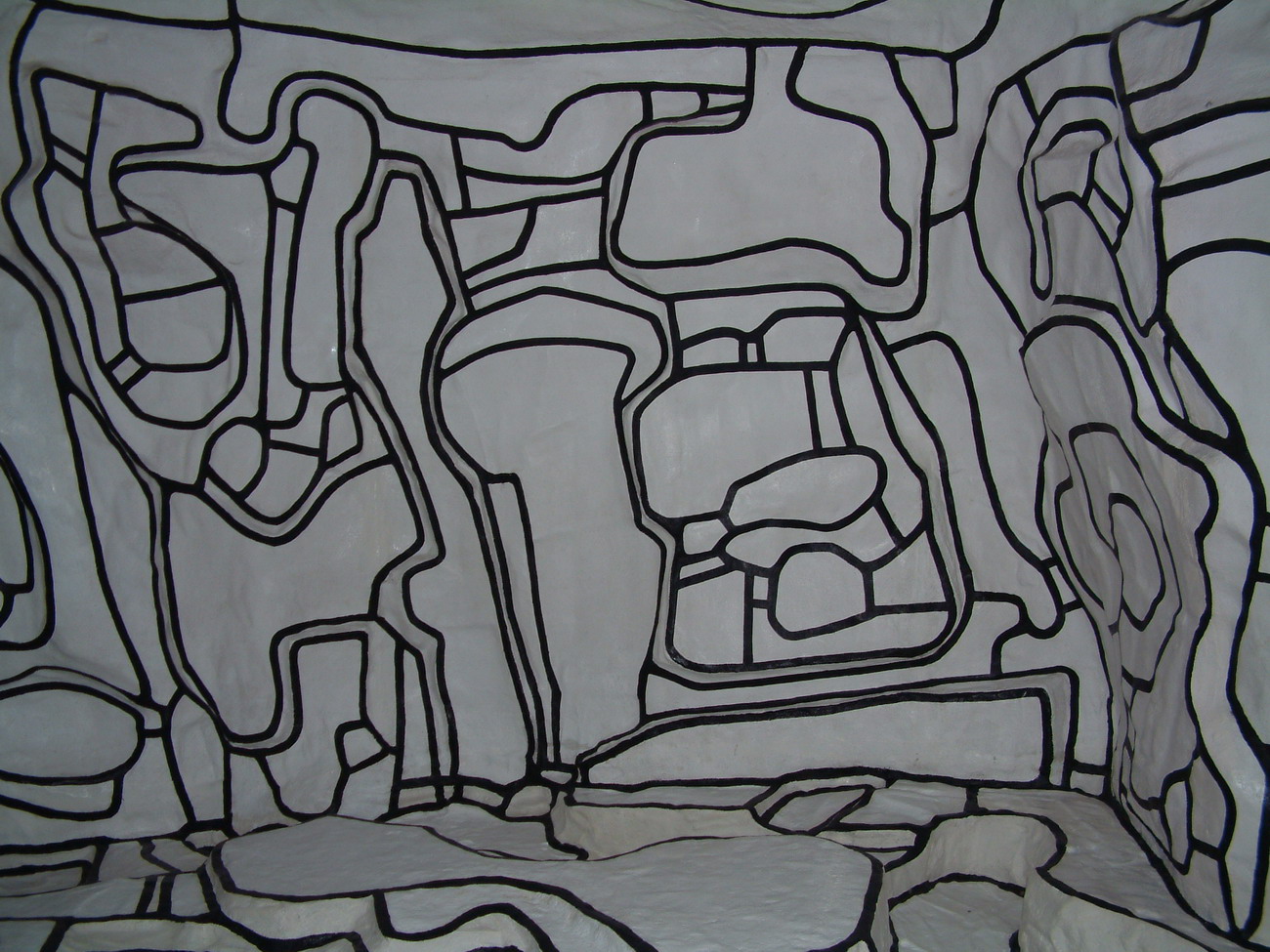
Throughout his life, Dubuffet challenged all academicism with a radical anti-cultural attitude, thereby denying elitism in art and stylization in creation. He preferred to return to the spontaneity of human ancestors' hands, drawing reference from primitive art. The Traveler Without a Compass and Mass of the Earth are both works created using poor materials. The Traveler Without a Compass is a product of resin and the accidental effects of mixed pigments; like geology, we see this clumsy traveler (figure) seemingly lost in an endless space. In Mass of the Earth, figures disappear into matter, yet traces of humanity remain on the ground. Material texture becomes the power of the painting itself, constituting an anti-civilization painting language. Dubuffet wrote: "Why do I value these uncivilized qualities so highly? Because they are instinctive, passionate, willful, intense, and mad." He also said: "A wise art—what a foolish notion! Art only makes people intoxicated and crazy."
Pedestrians on the Street resembles colorful mosaic tiles, strongly challenging people's senses and confusing the viewer's retina. After returning from rough, barren materials, Dubuffet returned to painting themes and colors, liberating forms in an overflowing Baroque style. A curve divides the composition: the upper half consists of various forms making up Paris's colorful shops, with shop names written on each color block. The lower half shows various passersby hurrying through Paris streets. These figures are quite witty, as cute and sharp as children's drawings, humorous and comical, with amorphous heads, long noses, bodies only, no visible hands, some wearing hats. Under the dual perspective of looking down and facing forward, some figures seem to be lying down (especially in the bottom right corner).