A. Watteau: Pilgrimage to the Island of Cythera
Pilgrimage to the Island of Cythera (1717), 129 x 194 cm, oil on canvas, in the Louvre Museum. Antoine Watteau (1684-1721) is the most representative painter of French 18th-century Rococo style...
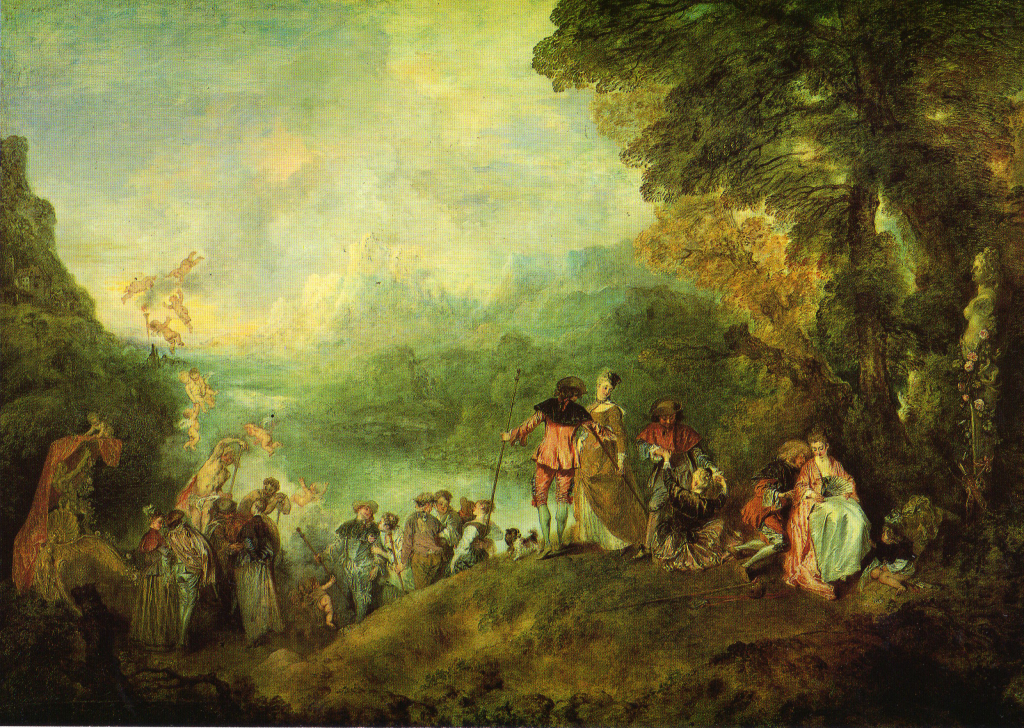
Pilgrimage to the Island of Cythera (1717), 129 x 194 cm, oil on canvas, in the Louvre Museum. Antoine Watteau (1684-1721) is the most representative painter of French 18th-century Rococo style. He was not influenced by the 17th-century Academic school, but developed his art using special methods from Rubens and Venetian painters within refined social environments. He excelled at using color, especially under that original, nervous brushwork. Notably, all his works were inspired by sensitive and nostalgic poetry.
In this poetic work, couples accompany each other on a pilgrimage to the Island of Cythera. Here, there are no longer the solemn, grand themes of Baroque painting; instead, there are lighter, more joyful romantic love stories. Love is a traditional literary theme, especially in France, an open and romantic country. In the 17th century, the writer Tallemant imagined in his book "Journey to the Island of Lovers" that the fate of love was like a voyage heading toward the island of happiness. By the 18th century, the concept of the Island of Cythera in love stories returned to the opera stage, particularly in Italian comedies, which may have been the inspiration for Watteau's painting, as his works possess a dramatic style.
In this highly dramatic scene, romantics are overjoyed, full of happiness in this wild, mountainous land. Couples, dressed in gorgeous clothes, hold hands, whisper sweet words, talk and laugh, preparing to take a boat to the Island of Cythera (or perhaps they are already on the island, about to return!). Under Watteau's skilled technique, much like an opera, with rich soft colors, thick brushstrokes, and rhythmic forms, especially the distant misty, almost blue mountains, one recalls the background in Leonardo da Vinci's Mona Lisa. Also here is another masterpiece by Watteau, "The Clown," depicting the Italian comedian Belloni, famous for his skill in playing clown roles. Watteau specially used white as the main tone, and under his perfect realistic technique, the figure is lifelike.