Agnes Martin - Retrospective at Tate Modern, London
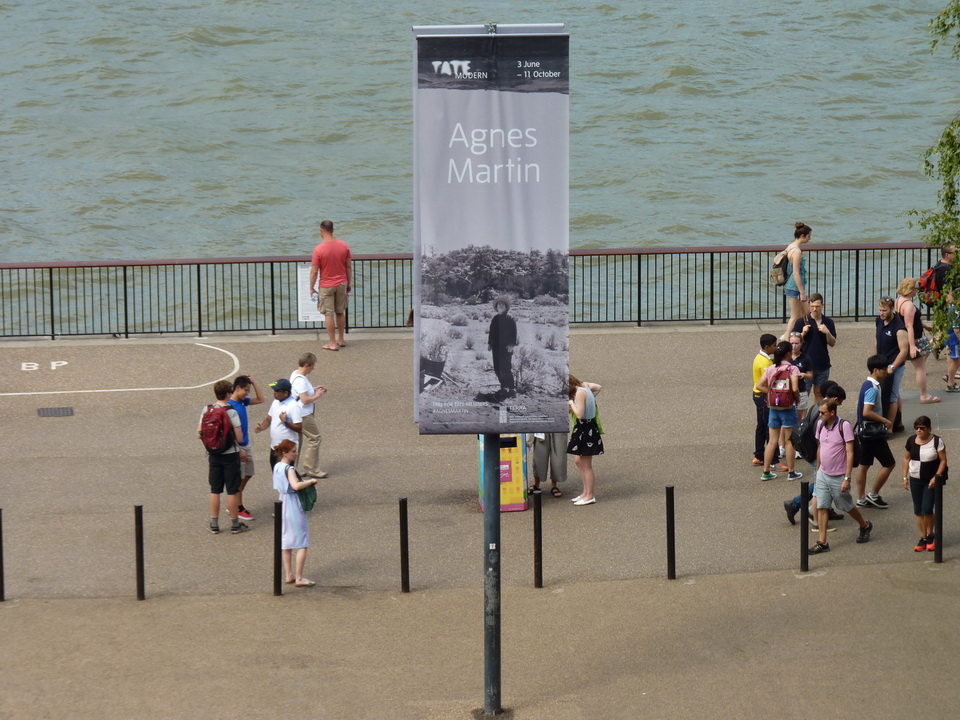
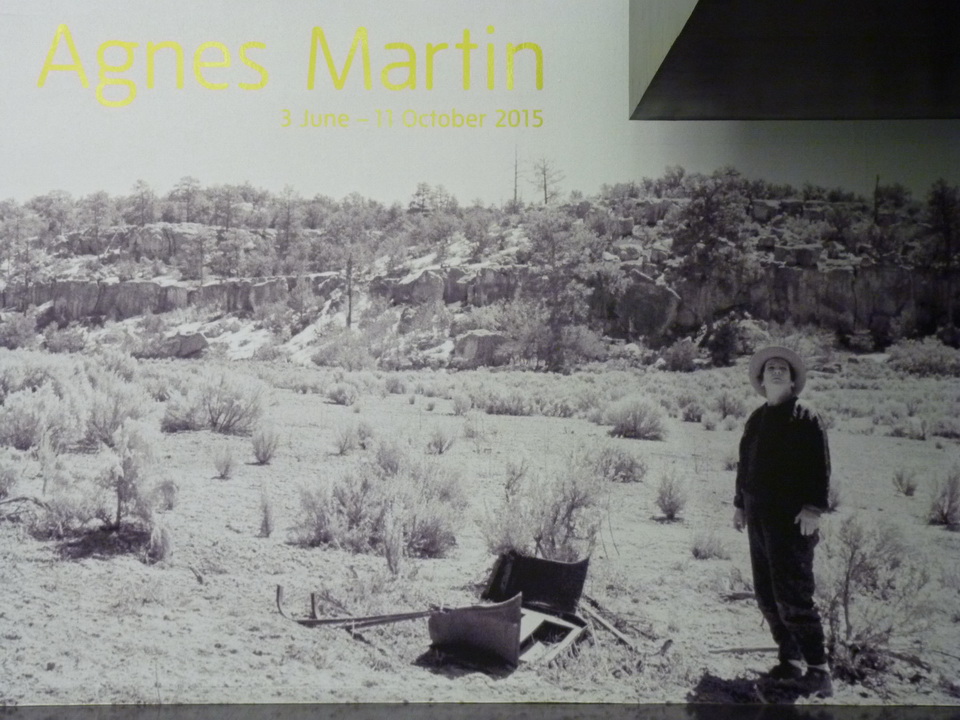
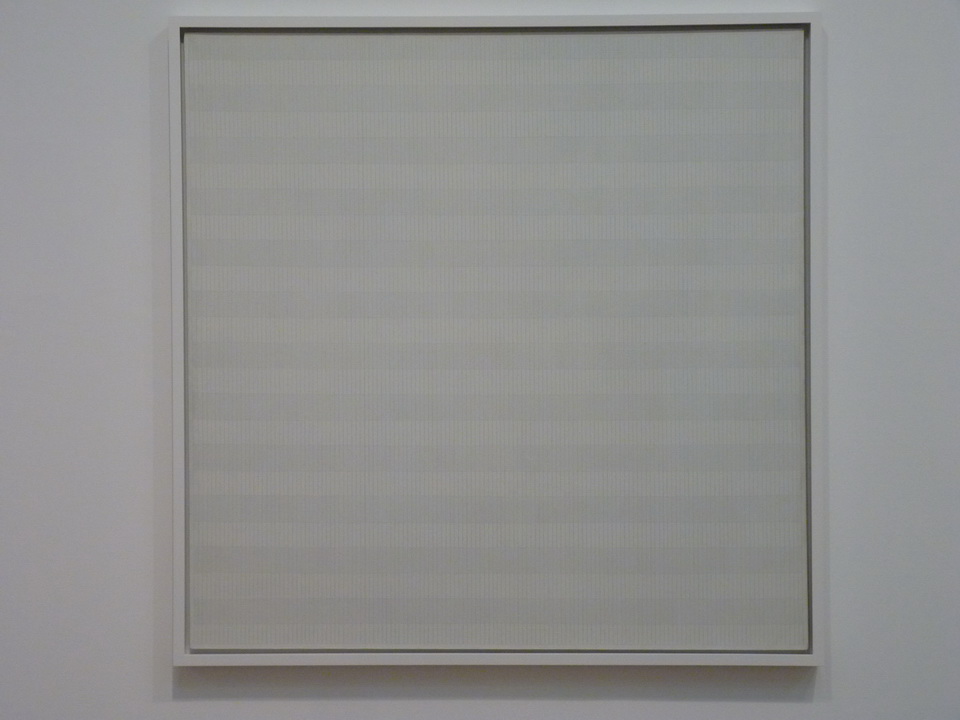
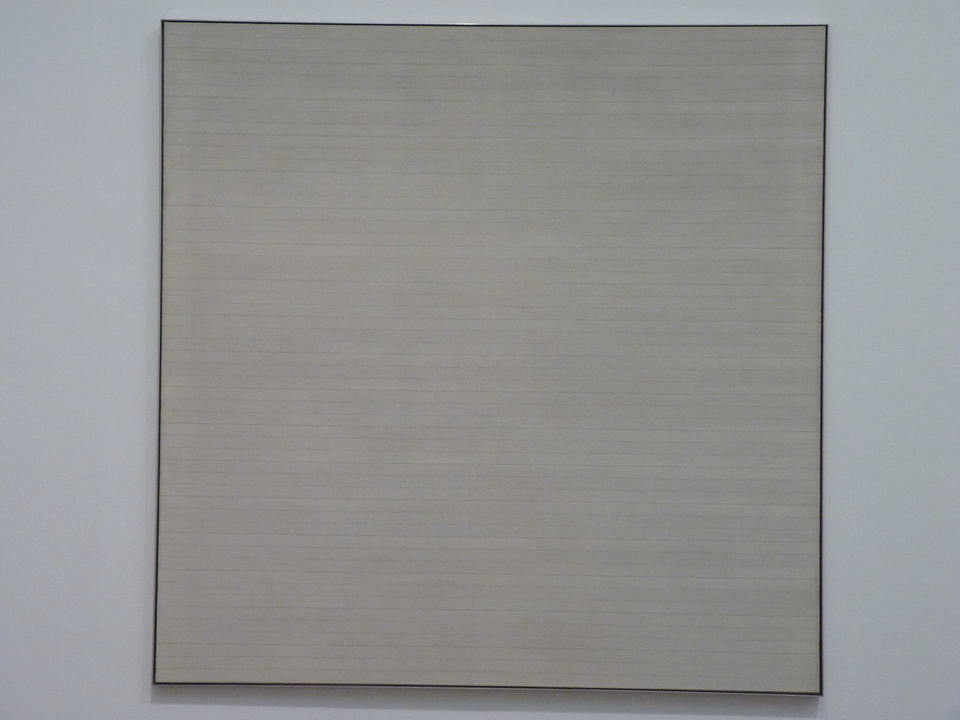
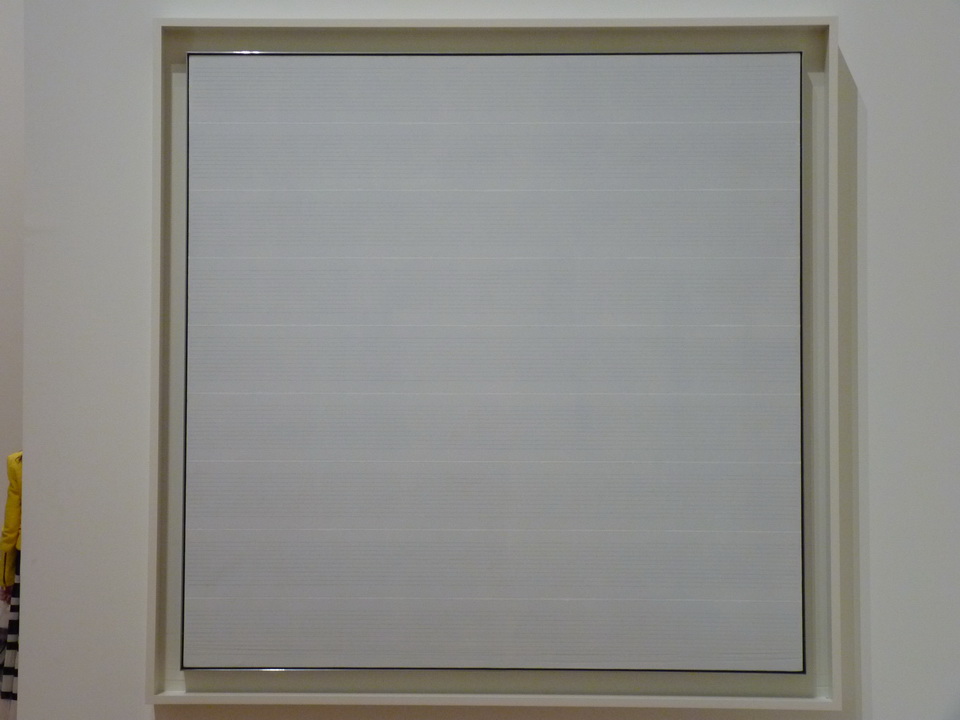
Text/Photos by Chen Chi-Hsiang. Dates: June 3 to October 11. Location: London, Tate Modern. Two solo exhibitions of American artists from the 1970s during my trip to London art museums this July summer vacation.
"When I think of art, I feel it is beauty; beauty is the mystery of life. It is not seen with the eyes, but felt with the heart." — Agnes Martin
Agnes Martin (1921–2004) was one of the most forward-looking artists of American Minimalism and one of the few female artists in this movement who specialized in two-dimensional painting. She began creating paintings in the late 1940s. In her early years, within sensual Abstract Expressionism, her style was close to that of Gorky, Rothko, and Gottlieb. She can be called a pioneer of American Minimalism because, amidst the storm of Abstract Expressionism and the rising tide of later Color Field abstraction, she affirmed minimalist art with a radical attitude in 1958. Within the rigorous characteristics of linear organization, she explored the relationship between form and space.
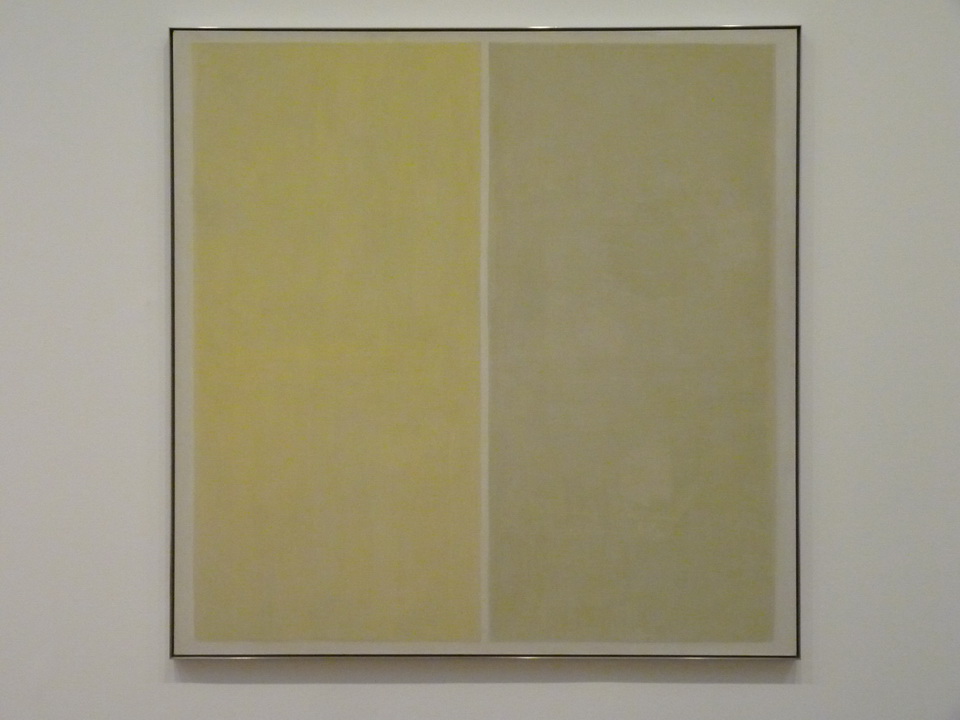
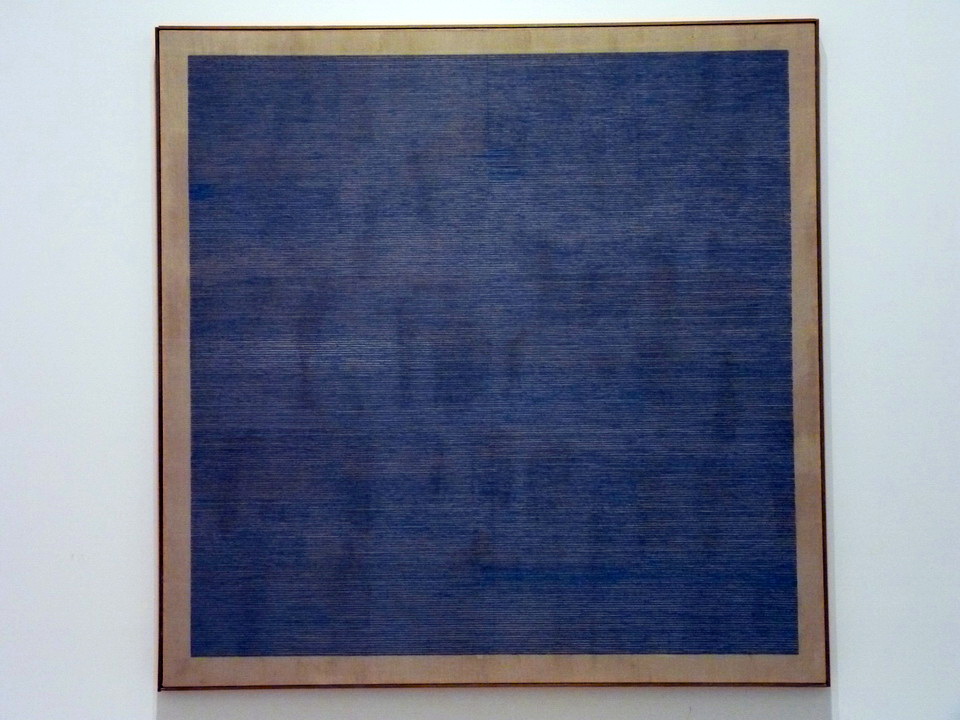
From 1963 onward, her works reached a mature stage, purified into a state of minimal spirit. She focused on white square canvases, using fine, sensitive pencils or sensual gray grids to draw vertical or parallel lines, organizing and constructing the picture plane. This kind of sensitive, purified painting subsequently became Martin’s most iconic artistic vocabulary and style. Specializing in standard-sized (200 × 200 cm) square canvases, she considered this the most neutral form, akin to Black and Reinhardt. Martin stated regarding this: "My forms are all square, yet my grids have never truly been composed of squares: rather than being four-square, this establishes an anomalous type, a dissonance, which I did not want from the beginning."
By 1967, Martin’s exploration reached its limit; she resolutely interrupted her artistic creation and retreated to the desert of New Mexico. She did not return until 1972, attempting to explore vast, boundless white spaces of contemplation on a more purified, substantial, and almost ethereal new level. The entire large square canvas was traversed by only four or six fine blue or pink vertical or parallel lines. The substantial colors, combined with acute sensitivity, created an unprecedented sensibility, like a sudden flash of inspiration, quite mesmerizing. By the 1980s, her work became even more purified and reduced to merely two vertical or parallel lines crossing the boundless white space, approaching a sensitive white monochrome painting.
Martin attempted to express her most pure existence, a state nearly ethereal. These are the most spiritualized works in the Minimalist movement, established in a metaphysical world and symbolic concepts. This exploration lies between the works of Newman and Rothko.